
 A river, a gulf, and a seaway are named in his honor. A number of Christian congregations and almost anyone known as "Larry" likewise owe their names to this martyr of the ancient Christian Church.
Early in the third century A.D., Lawrence (Latin, Laurentius, also often known as "Lorenz," "Laurence," or "Lorenzo"), who was most likely born in Spain, made his way to Rome. There he was appointed chief of the seven deacons and was given the responsibility to manage church property and finances.
The emperor at the time, thinking that the church had valuable things worth confiscating, ordered Lorenz to produce the "treasures of the church." Saint Lorenz brought before the emperor the poor whose lives had been touched by Christian charity. He was then jailed and eventually executed in the year 258. Many accounts tell of his being roasted on a gridiron until dead. However, some scholars think that this tradition came about due to a faulty transcription and that the phrase assus est (he roasted) should have been rendered passus est (he suffered).
His martyrdom left a deep impression on the young church. Almost immediately, the date of His death, 10 August, became a permanent fixture on the commemorative calendar of the early Church.
Lection
Psalm 65:1-8 or 34:1-10
Deuteronomy 33:1-3 or Isaiah 26:1-4, 8-9, 12-13, 19-21
Revelation 7: 2-17 or 21:9-11, 22-27; 22:1-5
Matthew 5:1-12
Collect
Stir up, O merciful Father, Your people to true brotherly affection that we may gladly do good and serve our neighbor, as did Your servant Saint Lawrence, when he emptied the treasure of the Church to help the poor; through our Lord Jesus Christ, who lives and reigns with You and the Holy Spirit, one God, now and forever.
Labels: biography, christianity, church history, commemoration, feasts, hagiography, lawrence, lorenz, martyrdom, roman empire
¶ 00:00 | 0 comments |

 Remembered as a disciple of Martin Luther, Robert Barnes is considered to be among the first Lutheran martyrs. Born in 1495, he became the prior of the Augustinian monastery at Cambridge, England. Converted to Lutheran teaching, he shared his insights with many English scholars through writings and personal contacts.
During a time of exile to Germany he became a friend of Luther and later wrote a Latin summary of the main doctrines of the Augsburg Confession titled Sententiae.
Upon his return to England, Barnes shared his Lutheran doctrines and views in person with King Henry VIII and initially had a positive reception. In 1529 Barnes was named royal chaplain.
The changing political and ecclesiastical climate in England later claimed him as a victim; he was burned at the stake in Smithfield in 1540.
His final confession of faith was published by Luther, who called his friend Barnes "our good, pious table companion and guest of our home, this holy martyr, Saint Robertus."
For a bit more on Barnes, please read the introduction to Lutheran Carnival 26 at A Beggar at the Table.
Labels: biography, christianity, church history, commemoration, english history, hagiography, lutheranism, martin luther, martyrdom, reformation, robert barnes
¶ 00:00 | 0 comments |
 Ólafr Haraldsson (also known as Olav, Olafe, Oláfr hinn helgi, and Olavus rex) was born in 995 to Harald Grenske and Åsta Gudbrandsdatter. While Snoore says that he was baptized in 998 in Norway, it's more likely that it was by the hand of Archbishop Robert in Rouen, France around 1010. As was common among young Norsemen, he spent much of his youth going a-viking (raiding), first in the Baltic, then Denmark, and finally in the British Isles. He was nicknamed "Digre" (physically large) and some believed him to be a reincarnation of a previous (pagan) Viking king Olav Digre. While involved in numerous armed conflicts, Olaf also developed a deep interest in Christianity.
Olaf declared himself King of Norway in 1015. Following battles with various petty kings, he ruled until 1029, although his strength was greatly reduced following his loss in the Battle of the Helgeå (1026). As monarch, he struggled to root out heathenism and make Christianity the religion of the realm. Like his ancestor Olaf Trygvesson, he frequently attacked the old faith and customs. Olaf destroyed pagan temples and built Christian churches in their place. He brought many bishops and priests from England, a practice later followed by King Saint Canute of Denmark. It appears that he based ecclesiastical organization on the Anglo-Saxon model.
The rebellion against Olaf stemmed but in part from his unflinching Christianity. Many of the nobles were also exasperated by his ongoing struggle with the old Norse method of governance and his never-ending desire for a truly united Norway. The governing clans enlisted King Canute of Denmark and England for help in ousting Olaf. Once he was banished, the clans elected Canute as King of Norway. Therefore, he became not only an icon of the Christian Faith but also one of Norwegian nationalism — an image he carries even among secular Norwegians to this day.
 After Canute's vassal Håkon Eiriksson died, Olaf returned from his two year exile and met the rebellious clans at Stiklestad on 29 July 1030. Although neither King Canute or the Danes took part, Olaf — who fought courageously — was mortally wounded at that battle and died in the battlefield. His final recorded words were the prayer, "God help me."
He was disinterred a year after his death and his remains moved to the Church of St. Clement in Nidaros (current Trondhjem). There, Bishop Grimkel and Earl Einar Tambeskjelver placed his corpse in a coffin and laid it on the church's high altar. At that time, the bishop also declared Olaf a saint. Although Olaf was embraced by most Norwegian Lutherans, his remains disappeared as part of the iconoclasm that occasionally accompanied the Reformation.
His cult spread widely in the Middle Ages, moving from Norway to Denmark, Sweden, and even parts of England. Although a rather harsh ruler and prone to rough treatment of his enemies, Olaf became Norway's patron saint. The cult of Olaf not only unified the country, it also fulfilled the conversion of the people, something for which the king had fought so hard. While divisive in life, Olaf in death held a unifying power that defied outside state and religious rulers attempts to undo his dream.
Although Olav was certainly not the first to introduce Christianity to Norway, he first codified the faith in 1024, laying the basis for the Church of Norway. So high did Olaf's legal arrangements for the Church of Norway come to stand in the eyes of the Norwegian people and clergy, that when Pope Gregory VII attempted to make clerical celibacy binding on the priests of Western Europe in 1074-75, the Norwegians largely ignored him, since celibacy wasn't mentioned in Olaf's legal code for their church. Although he continued to be known through most of his life as Olaf digre, in death he remains best known by as Olav den hellige (Olaf the Holy).
The coat of arms of Norway is a lion holding the battle axe of St. Olaf in his forepaws.
Suggested Lection
Wisdom 10:10-14
Psalm 31:1-7
James 1:2-4, 12
Matthew 16:24-28
Collect
Almighty, eternal God, you are the crown of kings and the triumph of martyrs. We thank You for the bold confession made by Your blessed martyr, Olav We praise your greatness in his death and we pray You give us the crown of life that You have promised those who believe in Your Son Jesus Christ, who lives and reigns with you and the Holy Spirit, one God, forever and ever.
See Wikipedia, the Catholic Encyclopedia, and the Christian Cyclopedia for more.
Labels: biography, christianity, church history, commemoration, hagiography, iconoclasm, lutheranism, martyrdom, norway, olaf, scandanavia
¶ 00:00 | 0 comments |
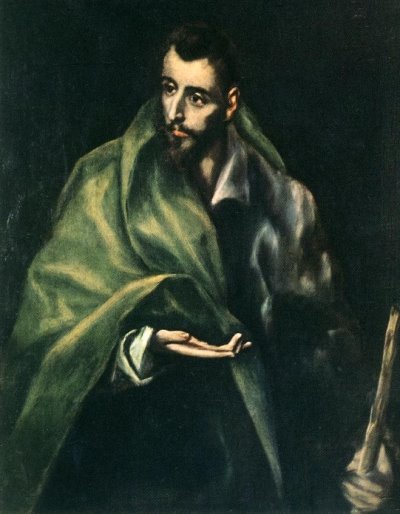 James, son of Zebedee, and his brother John were among Our Lord's twelve disciples. Together with Peter, these two were privileged to behold the Transfiguration (Matthew 17:1; Mark 9:2; Luke 9:28). They witnessed the healing of Peter's mother-in-law (Mark 1:29-31) and the raising of the daughter of Jairus (Mark 5:37; Luke 8:51). Jesus called them aside to watch and pray with Him in the garden of Gethsemane on the night before His death (Matthew 26:37; Mark 14:33).
James and John may have been from a higher social level than the average fisherman. Their father could afford hired servants (Mark 1:20), and John (assuming him to be identical with the "beloved disciple") had connections with the high priest (John 18:15).
Jesus nicknamed the brothers Boanerges — Sons of Thunder — (Mark 3:17), probably commenting upon their headstrong, hot-tempered, and impulsive natures. So they seem to be in two incidents reported in the Gospels. Once, Jesus and the disciples were refused the hospitality of a Samaritan village, and James and John proposed to call down fire from heaven on the offenders (Luke 9:51-56). On another occasion, they asked Jesus for a special place of honor in the Kingdom, and were told that the place of honor is the place of suffering (Matthew 20:20-23; Mark 10:35-41).
 In about AD 42, shortly before Passover (Acts 12:1-2), James was beheaded by order of Herod Agrippa I, grandson of Herod the Great (who tried to kill the infant Jesus; see Matthew 2), nephew of Herod Antipas (who killed John the Baptist — Mark 6:14-29 — and examined Jesus on Good Friday — Luke 23:6-16), and father of Herod Agrippa II (who heard the defense of Paul before Festus — Acts 25:13-26:32). James was first among the Twelve to suffer martyrdom, and the only one whose death is recorded in the New Testament.
James is often called "James Major" (also "the Greater" or "the Elder") to distinguish him from other New Testament people named James. Tradition has it that he made a missionary journey to Spain, and that after his death his body was taken to Spain and buried there at Compostela. His supposed burial place there was a major site of pilgrimage in the Middle Ages, and the Spaniards fighting to drive their Moorish conquerors out of Spain took "Santiago de Compostela!" (Saint James of Compostela) as one of their chief war-cries. (The Spanish form of "James" is Diego or Iago. In most languages, "James" and "Jacob" are identical. Where an English Bible has "James," a Greek Bible has Iakobos.
The sword (the instrument of his death) and the scallop shell are both traditional representations of the apostle.
Lection
Psalm 56
Acts 11:27-12:5
Romans 8:28-39
Mark 10:35-45
Collect
Grant, O Lord, that as Saint James the apostle readily followed the calling of Your Son Jesus Christ, we may by Your grace be enabled to forsake all false and passing allurements and follow Him alone; through Jesus Christ, our Lord, who lives and reigns with You and the Holy Spirit, one God, now and forever.
Labels: apostle, bible, biography, disciple, feasts, festivals, gospels, hagiography, jacob, james, jesus, john, martyrdom, new testament, zebedee
¶ 00:00 | 0 comments |
The Confession of Saint Peter ("You are the Christ, the Son of the Living God") is commemorated on 18 January, and the Conversion of Saint Paul on his approach to Damascus a week later, on 25 January. On 29 June we commemorate the martyrdoms of both apostles. The date is the anniversary of a day around AD 258, under the Valerian persecution, when what were believed to be the remains of the two apostles were both moved temporarily to prevent them from falling into the hands of the persecutors.
 The Scriptures do not record the deaths of Peter or Paul, or indeed any of the Apostles' deaths except for James the son of Zebedee (Acts 12:2), but they are clearly anticipated (see the readings below), and from an early date it has been said that they were martyred at Rome at the command of the Emperor Nero, and buried there. As a Roman citizen, St. Paul would probably have been beheaded with a sword. An early tradition claims that St. Peter was crucified head downward.
The present Church of St. Peter in Rome replaces earlier churches built on the same site going back to the time of the Emperor Constantine, in whose reign a church was built on what was believed to be the burial site of Peter. Excavations under the church suggest that the belief that this is the true home of his burial predates Constantine.
Lection
Psalm 46
Acts 15:1-12 (13-21)
Galatians 2:1-10
Matthew 16:13-19
Collect
Merciful and eternal God, from whom the holy apostles Saint Peter and Saint Paul received grace and strength to lay down their lives for the sake of Your Son, grant that, strengthened by the Holy Spirit, we may with like constancy confess Your truth and be at all times ready to lay down our lives for Him who laid down His life for us; even Jesus Christ, our Lord, who lives and reigns with You and the Holy Spirit, one God, now and forever.
Labels: apostle, biography, commemorations, feasts, festivals, hagiography, martyrdom, nero, rome, saint paul, saint peter
¶ 00:00 | 2 comments |
 The man who later became known as Saint Boniface was born around AD 670-680 at Crediton, Devonshire, England and baptized Winfrid or Wynfrith. Although he was educated, he became a monk — at that time a calling often avoided by people of learning or means. While still in England, he was ordained as a presbyter and was inspired by the example of others to become a missionary.
Upon receiving a papal commission in 719 to work in Germany, Winfrid devoted himself to starting, organizing, and reforming churches and monasteries in Hesse, Thuringia, and Bavaria. After becoming an archbishop, Boniface was assigned to the See of Mainz in 743. Ten years later he resigned his position to engage in mission work in the Netherlands.
His time of activity overlapped the period in which Pippin the Younger and Charlemagne reigned and his work of converting the Saxons to Christianity was seen as a boon for expansion of Frankish rule. Yet Boniface never operated as a pawn of the kingdom of the left hand. Instead, he balanced alliances among the Carolingians, Bavarian rulers, and the papacy and often consecrated bishops who were already his followers in order to keep others from meddling in ecclesiastical affairs.
History isn't clear as to exactly when people began calling Winfrid "Boniface," Latin for "good deeds." However, his entire life gives ample testimony to events which would lead to this appellation.
Among his most famous exploits was the felling of Thor's Oak, an ancient tree believed sacred to the Nordic and Germanic god of thunder. Accounts from the period relate that when Thor (or Donar/Donner) didn't strike him dead with a lightning bolt, the locals agreed that the Christian God was supreme and agreed to be baptized. In a practical yet also symbolic gesture, Boniface used the wood of the fallen tree in the construction of a chapel in Fritzlar.
On June 5, 754, while awaiting a group of converts for confirmation, Boniface and his companions were murdered by a band of pagans in Friesland. The above picture is a commemorative statue in Dokkum, The Netherlands — a town near where he was martyred. Erected in 2004, it commemorated the 1250th anniversary of his death. Boniface is known as a great missionary and is sometimes called the "Apostle to the Germans." According to historian Christopher Dawson, no other Englishman had any greater influence upon Europe's history.
Suggested Lection
Psalm 115:1-8 or 31:1-5
Acts 20:17-28
Luke 24:44-53
Collect
Almighty God, who called Your faithful servant Boniface to be a witness and martyr in the lands of Germany and Friesland, and by his labor and suffering raised up a people for Your own possession, pour forth Your Holy Spirit upon your Church in every land, that by the service and sacrifice of many Your holy Name may be glorified and Your kingdom enlarged; through Jesus Christ our Lord, who lives and reigns with You and the Holy Spirit, one God, now and forever.
Labels: biography, boniface, charlemagne, commemoration, friesland, german history, hagiography, martyrdom, missionary, saxony, two kingdoms
¶ 00:00 | 0 comments |
Born in Flavia Neapolis, Palestine around AD 100, near the close of the New Testament period, Justin was the son of pagan Greek parents. He was a philosophy student who studied in Alexandria, moving from Stoicism to Pythagoreanism and then Platonism as he sought to make sense of life. He converted to the Christian faith and became a teacher in Ephesus and Rome. Justin wrote that his conversion came as he observed the steadfast faith of Ephesian martyrs and through an elderly Christian whom he met along the shore of the sea.
 Justin probably wrote much more than we have preserved, but three extant works show his intellect, his never completely abandoned Platonic philosophical education, and his inclination toward apologetics — that is, an intellectual defense of the Faith.
In his First Apology, addressed to Emperor Antoninus Pius and his adopted sons, Justin defended Christianity as the only rational creed. He included accounts of contemporary baptismal and communion rites, quite possibly designed to rebut distorted accounts from anti-Christian sources. Some of these anti-Christian writings claimed that Christians were cannibals (probably because of a distorted second hand understanding of the Lord's Supper).
He addressed his Second Apology to the Roman Senate. It counters spurious charges of immorality and the like that were being made against Christians. He said that only those who misunderstood the Faith would accuse it of undermining Roman society and countered that Christians made good citizens.
His Dialogue with Trypho the Jewish rabbi shows him at his strength. He carefully defended Christian teaching while allowing that the Church would continue to welcome Jews and would let them remain faithful to the laws of the Torah. While he may have edited it to provide himself with a few good lines, the text reads as a faithful exposition of an actual conversation.
Justin was living in Rome when the cynic philosopher Crescens stirred up trouble for the Christians. After refusing to make pagan sacrifices, Justin was arrested, tried and executed, along with six other believers, including Charites, Paeon, and Liberianus. The official Roman court proceedings of his trial before Rusticius, a Roman prelate, document his confession of faith. The account of his martyrdom became a source of great encouragement to the early Christian community.
Much of what we know of early liturgical practice comes from Justin. For example, in the First Apology he gave this brief description of Holy Communion: "On finishing the prayers we greet each other with a kiss. Then bread and a cup of water mixed with wine are brought to the leader and he, taking them, sends up praise and glory to the Father of the Universe through the name of the Son and of the Holy Spirit, and offers thanksgiving at some length that we have been deemed worthy to receive these things. When the leader has finished the prayers and thanksgivings, the whole congregation assents, saying, 'Amen.' ('Amen' is Hebrew for 'So be it.') Then those whom we call deacons give to each of those present a portion of the consecrated bread and wine and water, and they take it to the absent."
Suggested Lection
Psalm 16:5-11 or 116:1-8
1 Corinthians 1:18-25
John 12:44-50
Collect
Almighty and everlasting God, who found Your martyr Justin wandering from teacher to teacher, seeking the true God, and revealed to him the sublime wisdom of Your eternal Word, grant that all who seek You, or a deeper knowledge of You, may find and be found by You; through Jesus Christ our Lord, who lives and reigns with you and the Holy Spirit, one God, now and forever.
Labels: apologetics, biography, church history, dialogue, hagiography, justin, liturgics, martyr, martyrdom, patristics, philosophy, platonism, trypho
¶ 00:00 | 0 comments |
 At the dawn of the Third Century, Roman emperor Septimus Severus banned conversions to Christianity. Among those disobeying that edict were Vibia Perpetua, a young noblewoman, and her maidservant Felicitas. Both were jailed at Carthage in North Africa along with three fellow Christians, Saturus and his pupils Revocatus and Saturninus.
Perpetua and at least some of the others had not completed catechesis and weren't yet baptized when arrested. Evidently, they received Holy Baptism before being taken to prison. She was also a new mother and a fairly recent widow. Felicitas (or Felicity) was near the end of her own pregnancy when arrested.
During their imprisonment, Perpetua and Felicitas witnessed to their faith with such conviction that the officer in charge became a follower of Jesus. For some time, doubts remained about their fates, but Perpetua had a vision of a golden ladder guarded by a fierce dragon. She climbed it, stepping on the dragon's head to do so. At the top, she found a green meadow with many white-robed figures. In their midst stood a Shepherd, who welcomed her and gave her cheese from the sheep's milk. She awoke understanding that martyrdom was assured but that she would triumph.
 Perpetua's father came to plead that she recant her confession of faith and renounce Jesus Christ. This she steadfastly refused.
Roman law forbade the execution of pregnant women and Felicitas feared that Perpetua and the men being held at the same time would face martyrdom but leave her behind. However, she gave birth two days before the scheduled execution and was allowed to join her companions in the arena on 7 March.
The women first made arrangements for the well-being of their children. This was possible because the imperial decree only concerned recent converts to Christianity (or Judaism). Since those entrusted with their children's care were believers of long standing, they were safe from persecution, at least for the time being.
The accounts say that the five were first scourged at the crowd's urging. Then the men faced a boar, a bear, and a leopard while a wild cow was set against the women. After they were all injured, Perpetua and Felicity exchanged the kiss of peace before the Romans put them to the sword. One tradition holds that Perpetua showed mercy to her captors by guiding the sword of a trembling young gladiator to her own heart because he could not bear to put her to death.
The martyrs were interred in Carthage in North Africa and the story spread throughout Christendom. Later, a basilica was erected over their tomb. The story of the martyrdom of Saint Perpetua, Saint Felicitas, and their faithful companions has served for centuries as encouragement to persecuted Christians.
Lection
Psalm 34:1-8 or 124
Hebrews 10:32-39
Matthew 24:9-14
Collect
O God the true Emperor of Your saints, who strengthened Your servants Perpetua and Felicitas and their companions to make a good confession, staunchly resisting, for the cause of Christ, the claims of human affection, and encouraging one another in their time of trial, grant that we who cherish their blessed memory may share their pure and steadfast faith, and win with them the palm of victory; through Jesus Christ our Lord, who lives and reigns with You and the Holy Spirit, one God, forever and ever.
Labels: african history, biography, carthage, church history, commemoration, felicitas, hagiography, martyrdom, perpetua, roman empire, saints
¶ 00:00 | 0 comments |
 After the Ascension of Our Lord, Jesus' followers at Jerusalem chose Matthias to replace Judas: "And they cast lots for them, and the lot fell on Matthias, and he was numbered with the eleven apostles. (Acts 1:26)" Apart from the information given in the first chapter of Acts (vv. 12-26), we know nothing about him.
One extra-biblical account says that Saint Matthias was slain by cannibals in Ethiopia; another traditions claims that he was stoned and then beheaded by Jews in Jerusalem. This account lends itself to his customary representation in religious art: Sometimes the blade from his beheading is superimposed over a book or scroll representing Holy Scripture; at others, he is depicted holding ax or sword himself.
Lection
Psalm 134
Isaiah 66:1-2
Acts 1:15-26
Matthew 11:25-30
Collect
Almighty God, You chose Your servant Matthias to be numbered among the Twelve. Grant that Your Church, ever preserved from false teachers, may be taught and guided by faithful and true pastors; through Jesus Christ, our Lord, who lives and reigns with You and the Holy Spirit, one God, now and forever.
Labels: acts, apostle, bible, feasts, festivals, judas, martyrdom, new testament, saint matthias
¶ 00:00 | 0 comments |
 Born around AD 69, Saint Polycarp was a central figure in the early church. Said to be disciple of the holy evangelist and apostle Saint John, he provides a link between the first generation of believers and later Christians, including Saint Irenaeus, Bishop of Lyons, who later wrote of him. Saint Ignatius of Antioch also knew and wrote to him. His home town of Smryna (modern Izmir, Turkey) was one of the seven churches addressed in Revelation (see 2:8-11 for the details).
After serving for many years as bishop of Smyrna, Polycarp was caught up in a local persecution of Christians. While willing to be martyred, others encouraged him to flee. However, he was later arrested, tried, and executed for his faith on 23 February c. AD 156. An eyewitness narrative of his death, The Martyrdom of Polycarp, continues to encourage believers in times of persecution.
 According to the ancient records, he was tried solely on the charge of being a Christian. When the proconsul urged him to save his life by cursing Christ, he replied: "Eighty-six years I have served Him, and He never did me any wrong. How can I blaspheme my King who saved me?" According the the customary reckoning of his birth and death, this means that he must have been baptized as an infant, raised as a Christian, and lived his entire life as in the Faith. His fidelity follows the encouragement given by the Lord to the church in Smyrna in Revelation 2:10, "Be faithful unto death, and I will give you the crown of life. (ESV)"
The following prayer is recorded as his immediately prior to the fire being kindled for his martyrdom:
Lord God Almighty, Father of Your blessed and beloved Son Jesus Christ, through whom we have received knowledge of You, God of angels and hosts and all creation, and of the whole race of the upright who live in Your presence: I bless You that You have thought me worthy of this day and hour, to be numbered among the martyrs and share in the cup of Christ, for resurrection to eternal life, for soul and body in the incorruptibility of the Holy Spirit. Among them may I be accepted before You today, as a rich and acceptable sacrifice, just as You, the faithful and true God, have prepared and foreshown and brought about. For this reason and for all things I praise You, I bless You, I glorify You, through the eternal heavenly high priest Jesus Christ, Your beloved Son, through whom be glory to You, with Him and the Holy Spirit, now and for the ages to come. Amen.
Collect
O God, the maker of heaven and earth, who gave to Your venerable servant, the holy and gentle Polycarp, boldness to confess Jesus Christ as King and Savior, and steadfastness to die for the Faith, give us grace, following his example, to share the cup of Christ and rise to eternal life; through Jesus Christ our Lord, who lives and reigns with You and the Holy Spirit, one God, now and forever.
Labels: baptism, biography, church history, commemoration, hagiography, irenaeus, john, martyrdom, patristics, polycarp, smyrna, turkish history
¶ 00:00 | 0 comments |
 Details of ancient Christianity are sketchy since for much of the Church's early years, it was a crime to be a Christian and records were hidden or kept purposely incomplete to protect believers. Thus, the story of Saint Valentine, as well as those of many others ancient believers, must be pieced together from fragmentary evidence.
Some ancient accounts record a physician and priest living in Rome during the rule of the Emperor Claudius II. This Valentine become one of the noted martyrs of the third century. It seems that his main "crime" was joining couples in marriage. Specifically, Valentine married Roman soldiers. Evidently, Claudius thought that single men made better soldiers while Valentine and the Church resisted the immorality of less-permanent relationships.
The commemoration of his death, thought to have occurred during the year 270, became part of the calendar of remembrance in the early Western Church. Tradition suggests that on the day of his execution for his Christian faith, he left a note of encouragement for a child of his jailer. The note was written on an irregularly-shaped piece of paper which suggested the shape of a heart. This greeting became a pattern for millions of written expressions of love and caring that now are the highlight of Valentine's Day in many nations.
Lection
Psalm 95:1-7a
Ezekiel 18:1-9
1 Peter 4:12-19
John 2:1-11
Collect
Almighty and everlasting God, who kindled the flame of Your love in the heart of Your holy martyr Valentine, grant to us, Your humble servants, a like faith and power of love, that we who rejoice in his triumph may profit by his example; through Jesus Christ our Lord, who lives and reigns with You and the Holy Spirit, one God, now and forever.
Labels: biography, church history, commemoration, hagiography, marriage, martyrdom, patristics, roman empire, valentine
¶ 00:00 | 0 comments |
 This day commemorates the slaughter of Bethlehem's children by Herod the Great (Matthew 2:16-18), as he attempted to destroy the Usurper to his throne.
Herod, his jealousy inflamed by the account given by the Wise Men (Matthew 2:7), sent his soldiers to kill all the town's boys two years old and younger in order to protect his throne and lineage. This was one of the last major decisions made in a life filled with vainglory and increasing insanity. His plan went awry, since the Lord sent an angel to warn Joseph, who led Jesus and Mary to safety in Egypt, where they stayed until the tyrant's death.
 The commemorations of Stephen, John, and the Innocents remind us that not all receive the Gift of Christmas with joy. However, God's plan of salvation spreads in spite of hatred. Even today, much of the world actively rejects the Gospel and persecutes those who preach and live it.
Yet through all the years, the Church has continued to proclaim Christ — Christ incarnate, Christ crucified, Christ resurrected, Christ ascended, Christ returning. The very resistance of the Devil, the hard-hearts of others, and the testimony of our own sinful natures all provide ample evidence of the world's desperate need for His forgiveness. God grant that we faithfully believe and steadfastly confess this saving message, the Good News of forgiveness of sins in Christ Jesus.
Lection
Psalm 54
Jeremiah 31:15-17
Revelation 14:1-5
Matthew 2:13-18
Collect
Almighty God, the martyred innocents of Bethlehem showed forth Your praise not by speaking but by dying. Put to death in us all that is in conflict with Your will that our lives may bear witness to the faith we profess with our lips; through Lord Jesus, our Christ, who lives and reigns with You and the Holy Spirit, one God, now and forever.
Labels: bethlehem, christmas, feasts, festivals, gospels, herod, holy innocents, jesus, magi, martyrdom, new testament, wise men
¶ 00:00 | 0 comments |
 Saint Stephen's Day remembers the first recorded martyr of the Church. Stephen knew the gift of Christmas: His Lord came in human flesh to bring forgiveness and as Jesus forgave His killers, so Stephen forgave those whose stones smashed away his life. The account of his calling, witness, and death is in Acts 6:1-8:2. Notice how closely the martyr's responses echo those of His Savior as each approached death.
In art, Stephen is often represented by the stones which took his life and by the palm branch, an ancient symbol of triumph and, especially in Christianity, of martyrdom. Both stones and branch are prominent in this Carlo Crivelli painting from the Demidoff Altarpiece.
Stephen's feast day supposedly occasioned of a great act of charity by the later martyred Wenceslaus, Kníže of Bohemia. Wenceslaus (or Václav) is remembered in the carol Good King Wenceslaus.
Lection
Psalm 119:137-144
2 Chronicles 24:17-22
Acts 6:8-7:2a, 51-60
Matthew 23:34-39
Collect
Heavenly Father, in the midst of our sufferings for Christ grant us grace to follow the example of the first martyr, Stephen, that we may also look to the One who suffered and was crucified on our behalf and pray for those who do us wrong; through our Jesus Christ, our Lord, who lives and reigns with You and the Holy Spirit, one God, now and forever.
Labels: acts, christ, christology, deacon, feasts, festivals, jesus, martyrdom, new testament, stephen, stoning
¶ 00:00 | 0 comments |
The Apostle Thomas (Hebrew or Aramaic for "twin") was also called Didymus (Greek for "twin"); either his parents gave him a most peculiar name or else he consistently went by his nickname.
 Absent when the Risen Lord appeared to the other apostles on the evening of Easter Day, He refused to believe that Christ had indeed risen until he had seen Him for himself. When he saw Him the following week, he said to Jesus, "My Lord and My God."
Because of this, he has been known ever since as "Doubting Thomas," although "Disbelieving Thomas" or even "Faithless Thomas" probably would be more accurate. See John 20:19-29 for the full account.
We also remember his earlier words, when Jesus announced His intention of going to Jerusalem, even though His life was in danger there: Thomas said to the others, "Let us also go, that we may die with him." (John 11:7-16) Thus, we see that Thomas was sturdily loyal.
At the Last Supper, Jesus said: "In my Father's house are many rooms. If it were not so, would I have told you that I go to prepare a place for you? And if I go and prepare a place for you, I will come again and will take you to myself, that where I am you may be also. And you know the way to where I am going." Thomas was the one who responded, "Lord, we do not know where you are going. How can we know the way?" To this Jesus answered: "I am the way, and the truth, and the life. No one comes to the Father except through me. (see John 14:1-6)"
 John 21 records Thomas as one of the seven disciples fishing on the Sea of Galilee when the Lord appeared to them. Aside from these Biblical accounts, he appears only as a name on lists of the Apostles.
A few centuries later, a story circulated in the Mediterranean world that he went to preach in India; a community in the Kerala district claims descent from Christians converted by the preaching of Thomas. Among Indian Christians, tradition claims that Thomas was speared to death near Madras, and accordingly is often pictured holding a spear.
Since he was credited with the building up of the Church through his missionary journeys, a carpenter's square also is a regular symbol of the apostle.
Lection
Psalm 136:1-4
Judges 6:36-40
Ephesians 4:7, 11-16
John 20:24-29
Collect
Almighty and ever living God, who upheld and strengthened Your apostle Thomas with sure and certain faith in Your Son's resurrection, grant us perfect and unwavering belief in Jesus Christ, our resurrected Lord and God, that our faith may never be found wanting in Your sight; through this same Jesus Christ, who lives and reigns with You and the Holy Spirit, one God, now and forever.
Labels: apostle, biography, christ, disciple, doubting thomas, feasts, festivals, gospels, hagiography, jesus, martyrdom, new testament, resurrection, saint thomas, thomas
¶ 00:00 | 0 comments |
 Lucia (also Lucy or Lukia) was one of the victims of the great persecution under the Roman emperor Diocletian. She met her death at Syracuse on the island of Sicily because of her Christian faith. Known for her charity, "Santa Lucia" (as she is called in Italy) gave away her dowry and remained a virgin until her execution by the sword. Some accounts, similar to those surrounding Saint Polycarp, claim that Lucy was first sentenced to be burned and that when this failed, she was stabbed to death.
Various stories are told about her. Some claim that she refused to marry a pagan and was killed; others say that forfeiting her dowry led her unbelieving fiancé to denounce her to the authorities as a Christian. Another account tells us that either during or at a time before her execution, her eyes were gouged out but that God restored her sight.
 The name Lucia means "light." Because of that, festivals of light held in her honor became popular throughout Europe, especially in the Scandinavian countries. There, her feast day corresponds with the time of year when there is the least amount of daylight. Under the Julian Calendar, her feast day actually fell on the shortest, darkest day of the year but this connection vanished with adoption of the Gregorian Calendar.
Ecclesiastical art often portrays Saint Lucia holding a palm branch, the traditional sign of victory or martyrdom; a sword may also be shown piercing her breast or throat. Sometimes, as in the pictures above, we see her holding her missing eyes in her hand or on a plate before her.
 Another common portrayal has the saint dressed in a white baptismal gown, wearing a wreath of candles upon her head. In many Nordic homes, this attire is mimicked on her feast day. One of the girls or women of a household, often the eldest daughter, wakes early on Lucy's feast day, prepares a special breakfast, dons a headpiece of candles, and moves through the home with the meal honoring the saint.
Lucy's name was applied to various people and places in the centuries following her death. Among the most noted would be the Santa Lucia area of Naples, celebrated in the Neapolitan song Santa Lucia. The tune calls Lucy's namesake area impero dell'armonia (the empire of harmony).
Agatha, 5 February AD 290
With Lucy, the Church sometimes also honors the virgin martyr Agatha. She came from Catania in Sicily, and was most likely martyred in the late 200s. Aside from her name on the lists of early martyrs, we know nothing of her.
Lection
Psalm 65:1-8
Deuteronomy 33:1-3
Revelation 7:2-17
Matthew 5:1-12
Collect
O Almighty God, by whose grace and power Your holy martyr(s) Lucy (and Agatha) triumphed over suffering and was (were) faithful even unto death, grant us, who now remember her (them) with thanksgiving, to be so faithful in our witness to You in this world, that we may receive with her (them) the crown of life; through Jesus Christ our Lord, who lives and reigns with You and the Holy Spirit, one God, forever and ever.
Hymn Stanza
For holy martyr Lucy, Who faced the tyrant's sword
And through her death gave witness, We praise Your name, O Lord.
Your light she showed in darkness; May we thus also shine
Until, our struggles ended, We see Your face divine.
Hymn text © 2006 by Walter P. Snyder. Permission granted for use with proper attestation.
Labels: agatha, biography, church history, commemoration, diocletian, european history, italian history, light, lucia, lucy hagiography, martyrdom, roman empire, scandanavia
¶ 00:00 | 0 comments |
 Today we celebrate the Feast of Saint Andrew, Apostle of our Lord Jesus Christ. Most New Testament references include him on a list of the Twelve Apostles or group him with his brother, Simon Peter. But we see him acting as an individual three times. When a number of Greeks (or Greek-speaking Jews) wished to speak with Jesus, they approached Philip, who told Andrew, and the two of them told Jesus (John 12:20-22). Since "Philip" and "Andrew" are Greek names, these petitioners may have sought them out. Before Jesus fed the Five Thousand, Andrew said, "There is a boy here who has five barley loaves and two fish, but what are they for so many? (John 6:9)"
The first two disciples whom John reports as attaching themselves to Jesus (John 1:35-42) are Andrew and another disciple (unnamed, but commonly supposed to be John himself — John never mentioned himself by name, a widespread literary convention). After meeting Jesus, Andrew found his brother Simon and brought him to Jesus. Thus, on each occasion when he is mentioned as an individual, we see him bringing others to meet the Savior.
Just as Andrew was the first of the Apostles, so the Western Church uses his feast to mark the beginning of the Church Year. The First Sunday of Advent is defined as the Sunday on or nearest his feast. (The way the reckoning was designed, it also means that there are always four Sundays in Advent. This year, the First Sunday in Advent was the day before Saint Andrew's Day.
 Scotland considers Andrew to be its national saint. Meanwhile, George (23 April), Pádraig (17 March), and Dewi (1 March) fill these roles for England, Ireland, and Wales, respectively. George, a soldier, is customarily pictured as a knight with a shield that bears a red cross on a white background. This became the national flag of England.
Tradition says that Andrew was crucified on a Cross Saltire — an "X"-shaped cross, which became his symbol and later, the national flag of Scotland. One symbol of Patrick is a red cross saltire on a white background. The crosses of George and Andrew were combined to form the Union Jack, or flag of Great Britain; later the cross of Patrick was added to create the present Union Jack.
Alas, poor Wales ... it doesn't appear on the British flag, perhaps because Dewi didn't have such a representative symbol.
Lection
Psalm 139:1-12
Ezekiel 3:16-21
Romans 10:8b-18
John 1:35-42a
Collect
Almighty God, by Your grace the blessed apostle Andrew obeyed the call of Your Son to be a disciple. Grant us also to follow the same Lord Jesus Christ in heart and life, who lives and reigns with You and the Holy Spirit, one God, now and forever.
Labels: advent, andrew, apostle, christ, church year, disciple, feasts, festivals, gospels, jesus, martyrdom, new testament, philip, scotland
¶ 00:00 | 0 comments |
 Saint Clement (ca. A.D. 35–100) is remembered for establishing the pattern of apostolic authority that governed the Christian Church during the first and second centuries. He insisted on keeping Christ at the center of the Church's worship and outreach. In a letter to the Corinthian Christians, he emphasized the centrality of Jesus' death and resurrection: "Let us fix our eyes on the blood of Christ, realizing how precious it is to His Father, since it was poured out for our salvation and brought the grace of repentance to the whole world" (1 Clement 6:31).
Early accounts claim that he suffered a martyr's death by drowning — specifically, he was said to have been tied to an anchor, hence his normal symbol is an anchor. Before his death, he displayed a steadfast, Christ-like love for all of God's redeemed people, serving as inspiration for future generations to continue building the Church on the foundation of the prophets and apostles, with Christ as the one and only cornerstone. His Epistle to the Corinthians addresses what he considered to be the improper dismissal of a bishop. It works both for good order and for abounding charity among the Corinthian Christians.
Here follows an excerpt from his Epistle to the Corinthians:
Let the one truly possessed by the love of Christ keep his commandments. Who can express the binding power of divine love? Who can find words for the splendor of its beauty? Beyond all description are the heights to which it lifts us. Love unites us to God; "it cancels innumerable sins," has no limits to its endurance, bears everything patiently. Love is neither servile nor arrogant. It does not provoke schisms or form cliques, but always acts in harmony with others. By it all God's chosen ones have been sanctified; without it, it is impossible to please him. Out of love the Lord took us to himself; because he loved us and it was God's will, our Lord Jesus Christ gave his life's blood for us — he gave his body for our body, his soul for our soul.
See then, beloved, what a great and wonderful thing love is, and how inexpressible its perfection. Who are worthy to possess it unless God makes them so? To him therefore we must turn, begging of his mercy that there may be found in us a love free from human partiality and beyond reproach. Every generation from Adam's time to ours has passed away; but those who by God's grace were made perfect in love and have a dwelling now among the saints, and when at last the kingdom of Christ appears, they will be revealed. "Take shelter in your rooms for a little while," says Scripture, "until my wrath subsides. Then I will remember the good days, and will raise you from your graves."
Happy are we, beloved, if love enables us to live in harmony and in the observance of God's commandments, for then it will also gain for us the remission of our sins. Scripture pronounces "happy those whose transgressions are pardoned, whose sins are forgiven. Happy the one," it says, "to whom the Lord imputes no fault, on whose lips there is no guile." This is the blessing given those whom God has chosen through Jesus Christ our Lord. To him be glory for ever and ever.. . .
Let us fix our attention on the blood of Christ and recognize how precious it is to God his Father, since it was shed for our salvation and brought the grace of repentance to all the world.
If we review the various ages of history, we will see that in every generation the Lord has "offered the opportunity of repentance" to any who were willing to turn to him. When Noah preached God's message of repentance, all who listened to him were saved. Jonah told the Ninevites they were going to be destroyed, but when they repented, their prayers gained God's forgiveness for their sins, and they were saved, even though they were not of God's people.
Under the inspiration of the Holy Spirit, the ministers of God's grace have spoken of repentance; indeed, the Master of the whole universe himself spoke of repentance with an oath: "As I live," says the Lord, "I do not wish the death of the sinner but the sinner's repentance." He added this evidence of his goodness: "House of Israel, repent of your wickedness. Tell my people: If their sins should reach from earth to heaven, if they are brighter than scarlet and blacker than sackcloth, you need only turn to me with your whole heart and say, 'Father,' and I will listen to you as to a holy people."
In other words, God wanted all his beloved ones to have the opportunity to repent and he confirmed this desire by his own almighty will. That is why we should obey his sovereign and glorious will and prayerfully entreat his mercy and kindness. We should be suppliant before him and turn to his compassion, rejecting empty works and quarreling and jealousy which only lead to death.
We should be humble in mind, putting aside all arrogance, pride, and foolish anger. Rather, we should act in accordance with the Scriptures, as the Holy Spirit says: "The wise must not glory in wisdom nor the strong in strength nor the rich in riches. Rather, let the one who glories glory in the Lord, by seeking him and doing what is right and just." Recall especially what the Lord Jesus said when he taught gentleness and forbearance. "Be merciful," he said, "so that you may have mercy shown to you. Forgive, so that you may be forgiven. As you treat others, so you will be treated. As you give, so you will receive. As you judge, so you will be judged. As you are kind to others, so you will be treated kindly. The measure of your giving will be the measure of your receiving."
Let these commandments and precepts strengthen us to live in humble obedience to his sacred words. As Scripture asks: "Whom shall I look upon with favor except the humble, peaceful one who trembles at my words?"
Sharing then in the heritage of so many vast and glorious achievements, let us hasten toward the goal of peace, set before us from the beginning. Let us keep our eyes firmly fixed on the Father and Creator of the whole universe, and hold fast to his splendid and transcendent gifts of peace and all his blessings.

Tradition dating back to at least the 3rd Century AD associates him with the man mentioned by Paul in the Epistle to the Ephesians: "Yes, I ask you also, true companion, help these women, who have labored side by side with me in the gospel together with Clement and the rest of my fellow workers, whose names are in the book of life. (4:3 ESV)"
Lection
Psalm 78:3-7 or 85:8-13
2 Timothy 2:1-7
Luke 6:37-45
Collect
Almighty God, who chose Your servant Clement of Rome to recall the Church in Corinth to obedience and stability, grant that Your Church may be grounded and settled in Your truth by the indwelling of the Holy Spirit, and may evermore be kept blameless in Your service; through Jesus Christ our Lord, who lives and reigns with You and the Holy Spirit, one God, now and forever.
Labels: biography, church history, clement, commemoration, hagiography, martyrdom, patristics, rome
¶ 00:00 | 0 comments |
 On All Saints' Day, we thank God for the faith of our fellow saints and for their example in the Christian life. But most of all, we praise God for His faithfulness to His saints, for keeping them in His merciful favor. God promises to be faithful to us just as He has been faithful to our fellow saints before us.
The day came about in large part because of a glut of canonized saints, including many of the martyrs of the early centuries, in the Roman Catholic Church. So many had been established that the calendar overflowed with saints' days. Therefore, the Church combined many of the "lesser" saints and moved them to the joint commemoration we still celebrate on 1 November.
Until recent times, much of Lutheranism kept a multi-tiered approach to the remembrance of the saints. Some, such as the apostles and evangelists, retained their traditional feast days. Others were also listed, not with major feasts but by various commemorations. All Saints' Day remained a catch-all for some of the special heroes of the faith, both biblical and in later history.
The following day, the Commemoration of the Faithful Departed, was reserved as a time of remembering and thanking God for the saints who had lived among us and who had direct influence upon our lives. The current LCMS calendar drops this distinction in favor of one celebration.
For more on why we continue these special celebrations, see Remembering the Saints at Ask the Pastor.
Lection
Psalm 149
Revelation 7:(2-8) 9-17
1 John 3:1-3
Matthew 5:1-12
Collect
Almighty and everlasting God, You knit together Your faithful people of all times and places into one holy communion, the mystical body of Your Son, Jesus Christ. Grant us so to follow Your blessed saints in all virtuous and godly living that, together with them, we may come to the unspeakable joys You have prepared for those who love You; through Jesus Christ, our Lord, who lives and reigns with You and the Holy Spirit, one God, now and forever.
Labels: all saints, christianity, church history, feasts, festivals, hagiography, martyrdom, saints
¶ 00:00 | 0 comments |
 The New Testament refers to this James as the brother of Jesus (Galatians 1:19). He led the Christian congregation in Jerusalem for many years, garnering the title "Bishop of Jerusalem" among many in Christendom. He is often credited with authorship of the Epistle of James, although the Epistle itself does not state this explicitly.
James is mentioned briefly in connection with Jesus' visit to Nazareth (Matthew 13:55; Mark 6:3). John 7:2-5 tells us that Jesus' brothers did not believe in Him and from this, as well as references in early Christian writers, we infer that James was not a disciple of the Lord until after the Resurrection. When Paul lists our Lord's resurrection appearances (1 Corinthians 15:3-8), he includes an appearance to James. Peter, about to leave Jerusalem after escaping from Herod, left a message for James and the Apostles (Acts 12:17). When a council met at Jerusalem to consider what rules Gentile Christians should be required to keep, James formulated the final consensus (Acts 15:13-21).
On his last recorded visit to Jerusalem, Paul visited James (others were present, but no other names are given) and spoke of his ministry to the Gentiles (Acts 21:18).
Outside the New Testament, the Jewish historian Josephus called James "the brother of Jesus the so-called Christ," and reported that even the Pharisees greatly respected his piety and strict observance of the Law but that his enemies took advantage of an interval between Roman governors in AD 62 to have him put to death. Numerous references in early Christian documents also show the esteem with which the early Church held him.
While debate continues, this particular James is likely the one called "James the Just" (or "James the Righteous") by much of the Church. The source of this appellation seems to come from an early tradition that James took vows as a Nazarite and that his life, both in Judaism and after conversion to the Faith, was marked by deep piety.
For a bit more on James' possible blood relationship to Jesus, whether they were "half- or step-brothers or cousins," see the Ask the Pastor post the Names of Jesus' Brothers. An explanation in the hagiography for Saint Philip and Saint James, Apostles helps discern among the different New Testament people sharing this name.
Lection
Psalm 133
Acts 15:12-22a
James 1:1-12
Matthew 13:54-58
Collect
Heavenly Father, shepherd of Your people, You raised up James the Just to lead and guide Christ's Church in her early days. Grant that we may follow his example of prayer and reconciliation and be strengthened by the witness of his death; through Jesus Christ, Your Son, our Lord, who lives and reigns with You and the Holy Spirit, one God, now and forever.
Labels: acts, church history, feasts, festivals, gospels, hagiography, james, jerusalem, jesus, josephus, martyrdom, new testament, saint paul
¶ 00:00 | 0 comments |
 St. Ignatius was the bishop of Antioch in Syria (near contemporary Antakya, Turkey) at the beginning of the second century AD and an early Christian martyr. Antioch was a port on the Orontes River in Syria with access to the Mediterranean Sea, just north of the modern country of Lebanon. Its importance included spice and other valuable trades and it was closely connected to the Silk Road and the Persian Royal Road.
The city was important to early Christianity, especially after the destruction of Jerusalem in AD 70. Followers of Jesus were first called Christians in Antioch (cf. Acts 11:26). Paul began three of his missionary journeys from there. It is believed that Matthew wrote his Gospel in Antioch.
The Didache, the Teaching of the Twelve Apostles, was probably written in Syria and likely in Antioch. The city was one of five patriarchates of early Christianity under Constantine, along with Jerusalem, Constantinople, Alexandria, and Rome. Saint John Chrysostom (AD 349-407), the Bishop of Constantinople, was born in Antioch. The Maronite Eastern Catholic Church of Lebanon originates from Christian Antioch.
 Near the end of the reign of Trajan (98-117), Ignatius refused to worship the Roman emperor. He was arrested, taken in chains to Rome, and eventually thrown to the wild beasts in the arena.
On the way to Rome, he wrote letters to the Christians at Ephesus, Magnesia, Tralles, Rome, Philadelphia, and Smyrna, and also to Polycarp, bishop of Smyrna. In the letters, which are beautifully pastoral in tone, Ignatius warned against certain heresies (false teachings). He also repeatedly stressed the full humanity and deity of Christ, the reality of Christ's bodily presence in the Lord's Supper, the supreme authority of the bishop, and the unity of the Church found in her bishops.
Ignatius was the first to use the word catholic to describe the universality of the Church. His Christ-centeredness, his courage in the face of martyrdom, and his zeal for the truth over against false doctrine remain his lasting legacy to the Church.
From His Writings
For I know and believe that he was in the flesh even after the Resurrection. And when he came to those with Peter he said to them: "Take, handle me and see that I am not a phantom without a body." And they immediately touched him and believed, being mingled both with his flesh and spirit. Therefore they despised even death, and were proved to be above death. And after his Resurrection he ate and drank with them as a being of flesh, although he was united in spirit to the Father. Letter of Ignatius of Antioch to the Smyrnaeans III
I am writing to all the churches and am insisting to everyone that I die for God of my own free will — unless you hinder me. I implore you: do not be unseasonably kind to me. Let me be food for the wild beasts, through whom I can reach God. I am God's wheat, and I am being ground by the teeth of the wild beasts, that I may be found pure bread of Christ. Letter of Ignatius of Antioch to the Romans IV
Lection
Psalm 116:1-8 or 31:1-5
Romans 8:35-39
John 12:23-26
Collect
Almighty God, we praise you for your bishop and martyr Ignatius of Antioch, who offered himself as grain to be ground by the teeth of wild beasts that he might present to you the pure bread of sacrifice. Accept the willing tribute of our lives, and give us a share in the pure and spotless offering of your Son Jesus Christ; who lives and reigns with you and the Holy Spirit, one God, now and forever.
Credits
Russian icon of Ignatius public domain. Biblical world map from Logos Bible Software.
Labels: antioch, biography, christianity, commemoration, hagiography, ignatius, martyrdom, middle eastern history, patristics, resurrection, theology
¶ 00:00 | 0 comments |


