
 Saint Joseph is mentioned in all four Gospels. He came from a small village called Arimathea in the hill country of Judea and was a respected member of the Sanhedrin, the Jewish ruling council in Jerusalem. Scholars presume that Joseph was a man of considerable means, since he owned his own unused tomb in a garden not far from the site of Jesus' crucifixion (Matthew 27:60).
A man waiting expectantly for the kingdom of God, he went to Pontius Pilate after the death of Jesus and asked for Jesus' body (Mark 15:43). Along with Nicodemus, Joseph removed the body and placed it in the tomb (John 19:39). Their public devotion contrasted greatly to the fearfulness of the disciples who abandoned Jesus.
The perfume flask depicted here reminds us of Joseph's hurried work of preparing Christ's body for burial, which would have included rubbing the spices brought by Nicodemus on the body and the wrapping cloths.
Labels: biography, commemoration, crucifixion, good friday, gospels, hagiography, jesus, john, joseph of arimathea, luke, mark, matthew, new testament, nicodemus
¶ 00:00 | 0 comments |

 Mary, Martha, and Lazarus were disciples with whom Jesus had a special bond of love and friendship. The Gospel According to Saint John records that "Jesus loved Martha and her sister and Lazarus (11:5)."
On one occasion, Martha welcomed Jesus into their home for a meal. While she did all the work, Mary sat at Jesus' feet listening to his Word and was commended by Jesus for choosing the "good portion, which will not be taken away from her (Luke 10:38-42)."
When their brother Lazarus died, Jesus spoke to Martha this beautiful Gospel promise: "I am the Resurrection and the Life. Whoever believes in me, though he die, yet shall he live." We note that in this instance, it was Martha who made the wonderful confessions of faith in Christ (John 11:1-44).
Ironically, raising Lazarus from the dead made Jesus' enemies among the Jewish leaders more determined than ever to kill Him (11:45-57).
Six days before Jesus was crucified, Mary anointed His feet with a very expensive fragrant oil and wiped them with her hair, not knowing at the time that she was doing it in preparation for her Lord's burial (John 12:1-8).
Labels: bethany, biography, commemoration, gospels, hagiography, jesus, john, lazarus, luke, martha, mary, new testament, resurrection
¶ 00:00 | 1 comments |
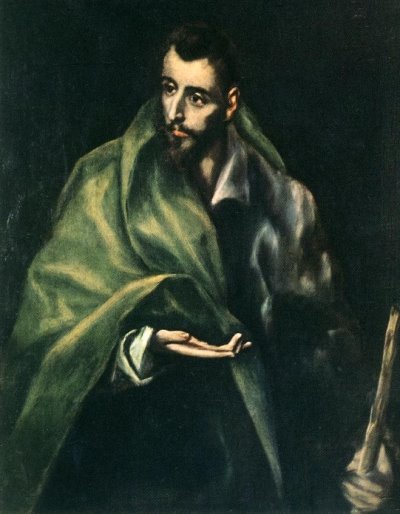 James, son of Zebedee, and his brother John were among Our Lord's twelve disciples. Together with Peter, these two were privileged to behold the Transfiguration (Matthew 17:1; Mark 9:2; Luke 9:28). They witnessed the healing of Peter's mother-in-law (Mark 1:29-31) and the raising of the daughter of Jairus (Mark 5:37; Luke 8:51). Jesus called them aside to watch and pray with Him in the garden of Gethsemane on the night before His death (Matthew 26:37; Mark 14:33).
James and John may have been from a higher social level than the average fisherman. Their father could afford hired servants (Mark 1:20), and John (assuming him to be identical with the "beloved disciple") had connections with the high priest (John 18:15).
Jesus nicknamed the brothers Boanerges — Sons of Thunder — (Mark 3:17), probably commenting upon their headstrong, hot-tempered, and impulsive natures. So they seem to be in two incidents reported in the Gospels. Once, Jesus and the disciples were refused the hospitality of a Samaritan village, and James and John proposed to call down fire from heaven on the offenders (Luke 9:51-56). On another occasion, they asked Jesus for a special place of honor in the Kingdom, and were told that the place of honor is the place of suffering (Matthew 20:20-23; Mark 10:35-41).
 In about AD 42, shortly before Passover (Acts 12:1-2), James was beheaded by order of Herod Agrippa I, grandson of Herod the Great (who tried to kill the infant Jesus; see Matthew 2), nephew of Herod Antipas (who killed John the Baptist — Mark 6:14-29 — and examined Jesus on Good Friday — Luke 23:6-16), and father of Herod Agrippa II (who heard the defense of Paul before Festus — Acts 25:13-26:32). James was first among the Twelve to suffer martyrdom, and the only one whose death is recorded in the New Testament.
James is often called "James Major" (also "the Greater" or "the Elder") to distinguish him from other New Testament people named James. Tradition has it that he made a missionary journey to Spain, and that after his death his body was taken to Spain and buried there at Compostela. His supposed burial place there was a major site of pilgrimage in the Middle Ages, and the Spaniards fighting to drive their Moorish conquerors out of Spain took "Santiago de Compostela!" (Saint James of Compostela) as one of their chief war-cries. (The Spanish form of "James" is Diego or Iago. In most languages, "James" and "Jacob" are identical. Where an English Bible has "James," a Greek Bible has Iakobos.
The sword (the instrument of his death) and the scallop shell are both traditional representations of the apostle.
Lection
Psalm 56
Acts 11:27-12:5
Romans 8:28-39
Mark 10:35-45
Collect
Grant, O Lord, that as Saint James the apostle readily followed the calling of Your Son Jesus Christ, we may by Your grace be enabled to forsake all false and passing allurements and follow Him alone; through Jesus Christ, our Lord, who lives and reigns with You and the Holy Spirit, one God, now and forever.
Labels: apostle, bible, biography, disciple, feasts, festivals, gospels, hagiography, jacob, james, jesus, john, martyrdom, new testament, zebedee
¶ 00:00 | 0 comments |
 Born around AD 69, Saint Polycarp was a central figure in the early church. Said to be disciple of the holy evangelist and apostle Saint John, he provides a link between the first generation of believers and later Christians, including Saint Irenaeus, Bishop of Lyons, who later wrote of him. Saint Ignatius of Antioch also knew and wrote to him. His home town of Smryna (modern Izmir, Turkey) was one of the seven churches addressed in Revelation (see 2:8-11 for the details).
After serving for many years as bishop of Smyrna, Polycarp was caught up in a local persecution of Christians. While willing to be martyred, others encouraged him to flee. However, he was later arrested, tried, and executed for his faith on 23 February c. AD 156. An eyewitness narrative of his death, The Martyrdom of Polycarp, continues to encourage believers in times of persecution.
 According to the ancient records, he was tried solely on the charge of being a Christian. When the proconsul urged him to save his life by cursing Christ, he replied: "Eighty-six years I have served Him, and He never did me any wrong. How can I blaspheme my King who saved me?" According the the customary reckoning of his birth and death, this means that he must have been baptized as an infant, raised as a Christian, and lived his entire life as in the Faith. His fidelity follows the encouragement given by the Lord to the church in Smyrna in Revelation 2:10, "Be faithful unto death, and I will give you the crown of life. (ESV)"
The following prayer is recorded as his immediately prior to the fire being kindled for his martyrdom:
Lord God Almighty, Father of Your blessed and beloved Son Jesus Christ, through whom we have received knowledge of You, God of angels and hosts and all creation, and of the whole race of the upright who live in Your presence: I bless You that You have thought me worthy of this day and hour, to be numbered among the martyrs and share in the cup of Christ, for resurrection to eternal life, for soul and body in the incorruptibility of the Holy Spirit. Among them may I be accepted before You today, as a rich and acceptable sacrifice, just as You, the faithful and true God, have prepared and foreshown and brought about. For this reason and for all things I praise You, I bless You, I glorify You, through the eternal heavenly high priest Jesus Christ, Your beloved Son, through whom be glory to You, with Him and the Holy Spirit, now and for the ages to come. Amen.
Collect
O God, the maker of heaven and earth, who gave to Your venerable servant, the holy and gentle Polycarp, boldness to confess Jesus Christ as King and Savior, and steadfastness to die for the Faith, give us grace, following his example, to share the cup of Christ and rise to eternal life; through Jesus Christ our Lord, who lives and reigns with You and the Holy Spirit, one God, now and forever.
Labels: baptism, biography, church history, commemoration, hagiography, irenaeus, john, martyrdom, patristics, polycarp, smyrna, turkish history
¶ 00:00 | 0 comments |
 Saint John, Apostle and Evangelist, a son of Zebedee, was one of the twelve apostles. With his brother James and Simon Peter, he formed an inner circle among the Twelve: Those three beheld the Great Catch of Fish (Luke 5:10), the healing of Peter's mother-in-law (Mark 1:29-31), the raising of Jairus' daughter(Mark 5:37; Luke 8:51), the Transfiguration (Matthew 17:1; Mark 9:2; Luke 9:28), and Gethsemane's agony (Matthew 26:37; Mark 14:33).
He expressed willingness to undergo martyrdom (Matthew 20:22; Mark 10:39) — as did the other apostles (Matthew 26:35; Mark 14:31). However, ancient testimony says that even though he was imprisoned and exiled, he was eventually released and died a natural death in Ephesus.
According to Mark 3:17, Jesus gave James and John "the name Boanerges, that is, Sons of Thunder." He is credited with the writing three epistles and one Gospel. He is also the probable author of Revelation, although this identification is less certain.
His symbol in ecclesiastical art is usually the eagle. This and the images used for the other evangelists come from the visions of the four living creatures around God's throne in heaven. See the biography of Saint Matthew for the specifics of each.
Lection
Psalm 11
Revelation 1:1-6
1 John 1:1-2:2
John 21:20-25
Collect
Merciful Lord, cast the bright beams of Your light upon Your Church that we, being instructed in the doctrine of Your blessed apostle and evangelist John, may come to the light of everlasting life; for You live and reign with the Father and the Holy Spirit, one God, now and forever.
Labels: apostle, boanerges, christ, disciple, evangelist, feasts, festivals, gospels, jesus, john, new testament, revelation
¶ 00:00 | 0 comments |
Saint Joseph is mentioned in all four Gospels. He came from a small village called Arimathea in the hill country of Judea and was a respected member of the Sanhedrin, the Jewish ruling council in Jerusalem. Scholars presume that Joseph was a man of considerable means, since he owned his own unused tomb in a garden not far from the site of Jesus' crucifixion (Matthew 27:60).A man waiting expectantly for the kingdom of God, he went to Pontius Pilate after the death of Jesus and asked for Jesus' body (Mark 15:43). Along with Nicodemus, Joseph removed the body and placed it in the tomb (John 19:39). Their public devotion contrasted greatly to the fearfulness of the disciples who abandoned Jesus.
The perfume flask depicted here reminds us of Joseph's hurried work of preparing Christ's body for burial, which would have included rubbing the spices brought by Nicodemus on the body and the wrapping cloths.
Labels: biography, commemoration, crucifixion, good friday, gospels, hagiography, jesus, john, joseph of arimathea, luke, mark, matthew, new testament, nicodemus
¶ 00:00 | 0 comments |
Mary, Martha, and Lazarus were disciples with whom Jesus had a special bond of love and friendship. The Gospel According to Saint John records that "Jesus loved Martha and her sister and Lazarus (11:5)."On one occasion, Martha welcomed Jesus into their home for a meal. While she did all the work, Mary sat at Jesus' feet listening to his Word and was commended by Jesus for choosing the "good portion, which will not be taken away from her (Luke 10:38-42)."
When their brother Lazarus died, Jesus spoke to Martha this beautiful Gospel promise: "I am the Resurrection and the Life. Whoever believes in me, though he die, yet shall he live." We note that in this instance, it was Martha who made the wonderful confessions of faith in Christ (John 11:1-44).
Ironically, raising Lazarus from the dead made Jesus' enemies among the Jewish leaders more determined than ever to kill Him (11:45-57).
Six days before Jesus was crucified, Mary anointed His feet with a very expensive fragrant oil and wiped them with her hair, not knowing at the time that she was doing it in preparation for her Lord's burial (John 12:1-8).
Labels: bethany, biography, commemoration, gospels, hagiography, jesus, john, lazarus, luke, martha, mary, new testament, resurrection
¶ 00:00 | 0 comments |
James, son of Zebedee, and his brother John were among Our Lord's twelve disciples. Together with Peter, these two were privileged to behold the Transfiguration (Matthew 17:1; Mark 9:2; Luke 9:28). They witnessed the healing of Peter's mother-in-law (Mark 1:29-31) and the raising of the daughter of Jairus (Mark 5:37; Luke 8:51). Jesus called them aside to watch and pray with Him in the garden of Gethsemane on the night before His death (Matthew 26:37; Mark 14:33).James and John may have been from a higher social level than the average fisherman. Their father could afford hired servants (Mark 1:20), and John (assuming him to be identical with the "beloved disciple") had connections with the high priest (John 18:15).
Jesus nicknamed the brothers Boanerges — Sons of Thunder — (Mark 3:17), probably commenting upon their headstrong, hot-tempered, and impulsive natures. So they seem to be in two incidents reported in the Gospels. Once, Jesus and the disciples were refused the hospitality of a Samaritan village, and James and John proposed to call down fire from heaven on the offenders (Luke 9:51-56). On another occasion, they asked Jesus for a special place of honor in the Kingdom, and were told that the place of honor is the place of suffering (Matthew 20:20-23; Mark 10:35-41).
In about AD 42, shortly before Passover (Acts 12:1-2), James was beheaded by order of Herod Agrippa I, grandson of Herod the Great (who tried to kill the infant Jesus; see Matthew 2), nephew of Herod Antipas (who killed John the Baptist — Mark 6:14-29 — and examined Jesus on Good Friday — Luke 23:6-16), and father of Herod Agrippa II (who heard the defense of Paul before Festus — Acts 25:13-26:32). James was first among the Twelve to suffer martyrdom, and the only one whose death is recorded in the New Testament.James is often called "James Major" (also "the Greater" or "the Elder") to distinguish him from other New Testament people named James. Tradition has it that he made a missionary journey to Spain, and that after his death his body was taken to Spain and buried there at Compostela. His supposed burial place there was a major site of pilgrimage in the Middle Ages, and the Spaniards fighting to drive their Moorish conquerors out of Spain took "Santiago de Compostela!" (Saint James of Compostela) as one of their chief war-cries. (The Spanish form of "James" is Diego or Iago. In most languages, "James" and "Jacob" are identical. Where an English Bible has "James," a Greek Bible has Iakobos.
The sword (the instrument of his death) and the scallop shell are both traditional representations of the apostle.
Lection
Psalm 56
Acts 11:27-12:5
Romans 8:28-39
Mark 10:35-45
Collect
Grant, O Lord, that as Saint James the apostle readily followed the calling of Your Son Jesus Christ, we may by Your grace be enabled to forsake all false and passing allurements and follow Him alone; through Jesus Christ, our Lord, who lives and reigns with You and the Holy Spirit, one God, now and forever.
Labels: apostle, biography, disciple, feasts, festivals, gospels, hagiography, jacob, james, jesus, john, martyrdom, new testament, zebedee
¶ 00:00 | 0 comments |
Born around AD 69, Saint Polycarp was a central figure in the early church. Said to be disciple of the holy evangelist and apostle Saint John, he provides a link between the first generation of believers and later Christians, including Saint Irenaeus, Bishop of Lyons, who later wrote of him. Saint Ignatius of Antioch also knew and wrote to him. His home town of Smryna (modern Izmir, Turkey) was one of the seven churches addressed in Revelation (see 2:8-11 for the details).After serving for many years as bishop of Smyrna, Polycarp was caught up in a local persecution of Christians. While willing to be martyred, others encouraged him to flee. However, he was later arrested, tried, and executed for his faith on 23 February c. AD 156. An eyewitness narrative of his death, The Martyrdom of Polycarp, continues to encourage believers in times of persecution.
According to the ancient records, he was tried solely on the charge of being a Christian. When the proconsul urged him to save his life by cursing Christ, he replied: "Eighty-six years I have served Him, and He never did me any wrong. How can I blaspheme my King who saved me?" According the the customary reckoning of his birth and death, this means that he must have been baptized as an infant, raised as a Christian, and lived his entire life as in the Faith. His fidelity follows the encouragement given by the Lord to the church in Smyrna in Revelation 2:10, "Be faithful unto death, and I will give you the crown of life. (ESV)"The following prayer is recorded as his immediately prior to the fire being kindled for his martyrdom:
Lord God Almighty, Father of Your blessed and beloved Son Jesus Christ, through whom we have received knowledge of You, God of angels and hosts and all creation, and of the whole race of the upright who live in Your presence: I bless You that You have thought me worthy of this day and hour, to be numbered among the martyrs and share in the cup of Christ, for resurrection to eternal life, for soul and body in the incorruptibility of the Holy Spirit. Among them may I be accepted before You today, as a rich and acceptable sacrifice, just as You, the faithful and true God, have prepared and foreshown and brought about. For this reason and for all things I praise You, I bless You, I glorify You, through the eternal heavenly high priest Jesus Christ, Your beloved Son, through whom be glory to You, with Him and the Holy Spirit, now and for the ages to come. Amen.
Collect
O God, the maker of heaven and earth, who gave to Your venerable servant, the holy and gentle Polycarp, boldness to confess Jesus Christ as King and Savior, and steadfastness to die for the Faith, give us grace, following his example, to share the cup of Christ and rise to eternal life; through Jesus Christ our Lord, who lives and reigns with You and the Holy Spirit, one God, now and forever.
Labels: baptism, biography, church history, commemoration, hagiography, irenaeus, john, martyrdom, patristics, polycarp, smyrna, turkish history
¶ 00:00 | 0 comments |
Saint John, Apostle and Evangelist, a son of Zebedee, was one of the twelve apostles. With his brother James and Simon Peter, he formed an inner circle among the Twelve: Those three beheld the Great Catch of Fish (Luke 5:10), the healing of Peter's mother-in-law (Mark 1:29-31), the raising of Jairus' daughter(Mark 5:37; Luke 8:51), the Transfiguration (Matthew 17:1; Mark 9:2; Luke 9:28), and Gethsemane's agony (Matthew 26:37; Mark 14:33).He expressed willingness to undergo martyrdom (Matthew 20:22; Mark 10:39) — as did the other apostles (Matthew 26:35; Mark 14:31). However, ancient testimony says that even though he was imprisoned and exiled, he was eventually released and died a natural death in Ephesus.
According to Mark 3:17, Jesus gave James and John "the name Boanerges, that is, Sons of Thunder." He is credited with the writing three epistles and one Gospel. He is also the probable author of Revelation, although this identification is less certain.
His symbol in ecclesiastical art is usually the eagle. This and the images used for the other evangelists come from the visions of the four living creatures around God's throne in heaven. See the biography of Saint Matthew for the specifics of each.
Lection
Psalm 11
Revelation 1:1-6
1 John 1:1-2:2
John 21:20-25
Collect
Merciful Lord, cast the bright beams of Your light upon Your Church that we, being instructed in the doctrine of Your blessed apostle and evangelist John, may come to the light of everlasting life; for You live and reign with the Father and the Holy Spirit, one God, now and forever.
Labels: apostle, boanerges, christ, disciple, evangelist, feasts, festivals, gospels, jesus, john, new testament, revelation
¶ 00:00 | 0 comments |
James, son of Zebedee, and his brother John were among Our Lord's twelve disciples. Together with Peter, these two were privileged to behold the Transfiguration (Matthew 17:1; Mark 9:2; Luke 9:28). They witnessed the healing of Peter's mother-in-law (Mark 1:29-31) and the raising of the daughter of Jairus (Mark 5:37; Luke 8:51). Jesus called them aside to watch and pray with Him in the garden of Gethsemane on the night before His death (Matthew 26:37; Mark 14:33).James and John may have been from a higher social level than the average fisherman. Their father could afford hired servants (Mark 1:20), and John (assuming him to be identical with the "beloved disciple") had connections with the high priest (John 18:15).
Jesus nicknamed the brothers Boanerges — Sons of Thunder — (Mark 3:17), probably commenting upon their headstrong, hot-tempered, and impulsive natures. So they seem to be in two incidents reported in the Gospels. Once, Jesus and the disciples were refused the hospitality of a Samaritan village, and James and John proposed to call down fire from heaven on the offenders (Luke 9:51-56). On another occasion, they asked Jesus for a special place of honor in the Kingdom, and were told that the place of honor is the place of suffering (Matthew 20:20-23; Mark 10:35-41).
In about AD 42, shortly before Passover (Acts 12:1-2), James was beheaded by order of Herod Agrippa I, grandson of Herod the Great (who tried to kill the infant Jesus; see Matthew 2), nephew of Herod Antipas (who killed John the Baptist — Mark 6:14-29 — and examined Jesus on Good Friday — Luke 23:6-16), and father of Herod Agrippa II (who heard the defense of Paul before Festus — Acts 25:13-26:32). James was first among the Twelve to suffer martyrdom, and the only one whose death is recorded in the New Testament.James is often called "James Major" (also "the Greater" or "the Elder") to distinguish him from other New Testament people named James. Tradition has it that he made a missionary journey to Spain, and that after his death his body was taken to Spain and buried there at Compostela. His supposed burial place there was a major site of pilgrimage in the Middle Ages, and the Spaniards fighting to drive their Moorish conquerors out of Spain took "Santiago de Compostela!" (Saint James of Compostela) as one of their chief war-cries. (The Spanish form of "James" is Diego or Iago. In most languages, "James" and "Jacob" are identical. Where an English Bible has "James," a Greek Bible has Iakobos.
The sword (the instrument of his death) and the scallop shell are both traditional representations of the apostle.
Lection
Psalm 56
Acts 11:27-12:5
Romans 8:28-39
Mark 10:35-45
Collect
Grant, O Lord, that as Saint James the apostle readily followed the calling of Your Son Jesus Christ, we may by Your grace be enabled to forsake all false and passing allurements and follow Him alone; through Jesus Christ, our Lord, who lives and reigns with You and the Holy Spirit, one God, now and forever.
Labels: apostle, biography, disciple, feasts, festivals, gospels, hagiography, jacob, james, jesus, john, martyrdom, new testament, zebedee
¶ 00:00 | 0 comments |


