
 The honor paid to Saint Mary, the virgin mother of Jesus Christ our Lord, God, and Savior goes back to the earliest days of the Church. Indeed, it goes back farther: Even before the birth of her Son, Mary prophesied, "From now on all generations will call me blessed. (Luke 1:48 ESV)" Confessing her as "Mother of God" also confesses that the One whom she bore was and is, indeed, true God.
The New Testament records several incidents from the life of the Virgin: her betrothal to Joseph, the Annunciation by the angel Gabriel that she was to bear the Messiah, her Visitation to Elizabeth the mother of John the Baptist, the Nativity of our Lord, the visits of the shepherds and the magi, her Purification and the Presentation of the infant Jesus in the Temple at the age of forty days, the flight into Egypt, the Passover visit to the Temple when Jesus was twelve, (Matthew 1:16, 18-25; Matthew 2; Luke 1:26-56; Luke 2); the wedding at Cana in Galilee and the performance of her Son's first miracle (at Mary's intercession, see John 2:1-11), the occasions when observers basically said of Jesus, "How can this man be special? We know his family!" (Matthew 13:54-56; Mark 6:1-3; Luke 4:22; see also John 6:42); an instance when she came with others to see Him while he was preaching (Matthew 12:46-50; Mark 3:31-35; Luke 8:19-21); and her presence at His crucifixion, where Jesus commended her to the care of His Beloved Disciple (John 19:25-27). Mary was also present with the apostles in Jerusalem following the Ascension, waiting for the promised Spirit (Acts 1:14). Thus, we see her present at many of the chief events of her Son's life.

The other name in the Creeds is that of Mary. They say that Christ was "born of the virgin Mary." That is, they assert that he was truly and fully human, born of a woman and not descended from the skies like an angel. Jesus was not a spirit temporarily cloaked in a robe of human-seeming flesh.
Telling us that His mother was a virgin excludes the theory that Jesus was an ordinary man who was so virtuous that he eventually, at His baptism, became filled with a "Christ Spirit" by God. His virgin birth attests that He was always more than merely human, always one whose presence among us was in itself a miracle, from the first moment of His earthly existence. In Mary, Virgin and Mother, God gives us a sign that Jesus is both truly God and truly man. Emphasizing this point, the Council of Ephesis in AD 431 officially titled her Theotokos (God-bearer) and rejected and condemned the title Christotokos (Christ-bearer). Ask the Pastor comments on the distinction in Blessed Virgin Mary: Mother of God.
We know Little of Mary's life except as it intersects with the life of her Son; this is appropriate. The Scriptures record her words to the angel Gabriel, to her kinswoman Elizabeth, and to her Son on two occasions. The only recorded saying of hers to "ordinary" hearers is her instruction to the servants at the wedding feast: "Do whatever he [Jesus] tells you. (John 2:5 ESV)" Perhaps this should be the summation of her message to the world. To this day, she reminds us, "Listen to Jesus. Pay attention to my Son. Do as He says."

In different parts of the Church, the date is remembered in various ways. Roman Catholicism celebrates the Assumption of Mary and claims that she was taken, body and soul, to heaven. However, I've found contradictory teachings in the Roman Church, arguing whether she was translated in the manner of Enoch or Elijah, if she died and was resurrected on earth and then taken to heaven, or if her dead body was taken and then rejoined with her soul in heaven.
Meanwhile, Eastern Orthodoxy celebrates the Dormition of the Theotokos. It claims that Mary certainly died but that when Thomas visited three days later, her body was gone from the tomb. As to whether the body will be kept in heaven until the general resurrection on the Last Day or already rejoined with her spirit, Orthodoxy will not make a final dogmatic pronouncement.
In the rest of Christendom that follows a sanctorial calendar, the general belief seems to be that she likely died and awaits the resurrection with all others who departed in the Faith.
Lection
Psalm 45:10-17
Isaiah 61:7-11
Galatians 4:4-7
Luke 1:(39-45) 46-55
Collect of the Day
Almighty God, You chose the virgin Mary to be the mother of Your only Son. Grant that we, who are redeemed by His blood, may share with her in the glory of Your eternal kingdom; through Jesus Christ, Your Son, our Lord, who lives and reigns with You and the Holy Spirit, one God, now and forever.
or
Grant, we humbly pray, O Lord, to Your servants the gift of Your heavenly blessing that, as the Son of the Virgin Mary has granted us salvation, we may daily grow in Your favor; through Jesus Christ, Your Son, our Lord, who lives and reigns with You and the Holy Spirit, one God, now and forever.
Labels: acts, assumption, biography, christianity, creed, dormition, feasts, festivals, gospels, hagiography, jesus, mary, new testament, theotokos, virgin
¶ 00:00 | 0 comments |

 These "myrrh bearers" or "faithful women," as they're called among some Christians, with Mary Magdalene, are named in Scripture as the first visitors to the tomb of the crucified Christ early on the first day of the week. Their trek to His sepulcher was recorded in each of the Synoptic Gospels, although each includes different details. (see Matthew 28:1-8, Mark 16:1-8, and Luke 24:1-11).
Joanna was the wife of Chuza, a steward in Herod's household (Luke 8:3). Mary, the mother of James the son of Alphaeus, also faithfully provided care for Jesus and His disciples from the time of His Galilean ministry through His burial after the crucifixion. Salome, the mother of the sons of Zebedee (Matthew 27:56), joined with the women both at the cross and in the bringing of the spices to the garden tomb.
These "faithful women" have been honored in the Church throughout the centuries as examples of humble and devoted service to the Lord.
Suggested Lection
Psalm 45:1-9
1 Corinthians 15:1-11
Luke 23:54-24:11 or Mark 16:1-8
Suggested Collect
Blessed Lord, through Your only-begotten Son You overcame death and by Your Holy Spirit You call us to Him that we might believe and be saved. Grant that as the women came to His tomb on Easter morn and found joy where they expected sorrow, so we might also come to Christ Jesus, casting our cares upon Him and receiving forgiveness, peace, and the sure and certain hope of everlasting life through Him who reigns eternally with You and the Holy Spirit, one God, now and forever.
Labels: biography, commemoration, easter, gospels, hagiography, jesus, joanna, mary, mary magdalene, new testament, resurrection, salome
¶ 00:00 | 1 comments |
 Saint Joseph is mentioned in all four Gospels. He came from a small village called Arimathea in the hill country of Judea and was a respected member of the Sanhedrin, the Jewish ruling council in Jerusalem. Scholars presume that Joseph was a man of considerable means, since he owned his own unused tomb in a garden not far from the site of Jesus' crucifixion (Matthew 27:60).
A man waiting expectantly for the kingdom of God, he went to Pontius Pilate after the death of Jesus and asked for Jesus' body (Mark 15:43). Along with Nicodemus, Joseph removed the body and placed it in the tomb (John 19:39). Their public devotion contrasted greatly to the fearfulness of the disciples who abandoned Jesus.
The perfume flask depicted here reminds us of Joseph's hurried work of preparing Christ's body for burial, which would have included rubbing the spices brought by Nicodemus on the body and the wrapping cloths.
Labels: biography, commemoration, crucifixion, good friday, gospels, hagiography, jesus, john, joseph of arimathea, luke, mark, matthew, new testament, nicodemus
¶ 00:00 | 0 comments |
 Mary, Martha, and Lazarus were disciples with whom Jesus had a special bond of love and friendship. The Gospel According to Saint John records that "Jesus loved Martha and her sister and Lazarus (11:5)."
On one occasion, Martha welcomed Jesus into their home for a meal. While she did all the work, Mary sat at Jesus' feet listening to his Word and was commended by Jesus for choosing the "good portion, which will not be taken away from her (Luke 10:38-42)."
When their brother Lazarus died, Jesus spoke to Martha this beautiful Gospel promise: "I am the Resurrection and the Life. Whoever believes in me, though he die, yet shall he live." We note that in this instance, it was Martha who made the wonderful confessions of faith in Christ (John 11:1-44).
Ironically, raising Lazarus from the dead made Jesus' enemies among the Jewish leaders more determined than ever to kill Him (11:45-57).
Six days before Jesus was crucified, Mary anointed His feet with a very expensive fragrant oil and wiped them with her hair, not knowing at the time that she was doing it in preparation for her Lord's burial (John 12:1-8).
Labels: bethany, biography, commemoration, gospels, hagiography, jesus, john, lazarus, luke, martha, mary, new testament, resurrection
¶ 00:00 | 1 comments |
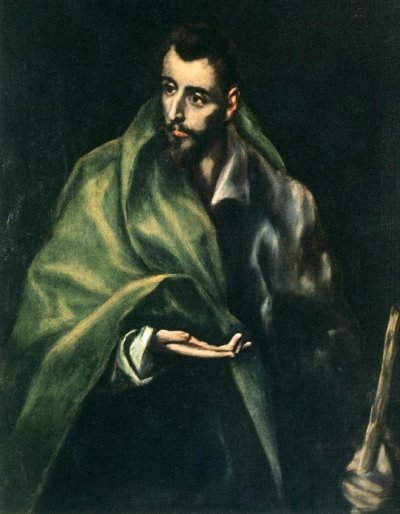 James, son of Zebedee, and his brother John were among Our Lord's twelve disciples. Together with Peter, these two were privileged to behold the Transfiguration (Matthew 17:1; Mark 9:2; Luke 9:28). They witnessed the healing of Peter's mother-in-law (Mark 1:29-31) and the raising of the daughter of Jairus (Mark 5:37; Luke 8:51). Jesus called them aside to watch and pray with Him in the garden of Gethsemane on the night before His death (Matthew 26:37; Mark 14:33).
James and John may have been from a higher social level than the average fisherman. Their father could afford hired servants (Mark 1:20), and John (assuming him to be identical with the "beloved disciple") had connections with the high priest (John 18:15).
Jesus nicknamed the brothers Boanerges — Sons of Thunder — (Mark 3:17), probably commenting upon their headstrong, hot-tempered, and impulsive natures. So they seem to be in two incidents reported in the Gospels. Once, Jesus and the disciples were refused the hospitality of a Samaritan village, and James and John proposed to call down fire from heaven on the offenders (Luke 9:51-56). On another occasion, they asked Jesus for a special place of honor in the Kingdom, and were told that the place of honor is the place of suffering (Matthew 20:20-23; Mark 10:35-41).
 In about AD 42, shortly before Passover (Acts 12:1-2), James was beheaded by order of Herod Agrippa I, grandson of Herod the Great (who tried to kill the infant Jesus; see Matthew 2), nephew of Herod Antipas (who killed John the Baptist — Mark 6:14-29 — and examined Jesus on Good Friday — Luke 23:6-16), and father of Herod Agrippa II (who heard the defense of Paul before Festus — Acts 25:13-26:32). James was first among the Twelve to suffer martyrdom, and the only one whose death is recorded in the New Testament.
James is often called "James Major" (also "the Greater" or "the Elder") to distinguish him from other New Testament people named James. Tradition has it that he made a missionary journey to Spain, and that after his death his body was taken to Spain and buried there at Compostela. His supposed burial place there was a major site of pilgrimage in the Middle Ages, and the Spaniards fighting to drive their Moorish conquerors out of Spain took "Santiago de Compostela!" (Saint James of Compostela) as one of their chief war-cries. (The Spanish form of "James" is Diego or Iago. In most languages, "James" and "Jacob" are identical. Where an English Bible has "James," a Greek Bible has Iakobos.
The sword (the instrument of his death) and the scallop shell are both traditional representations of the apostle.
Lection
Psalm 56
Acts 11:27-12:5
Romans 8:28-39
Mark 10:35-45
Collect
Grant, O Lord, that as Saint James the apostle readily followed the calling of Your Son Jesus Christ, we may by Your grace be enabled to forsake all false and passing allurements and follow Him alone; through Jesus Christ, our Lord, who lives and reigns with You and the Holy Spirit, one God, now and forever.
Labels: apostle, bible, biography, disciple, feasts, festivals, gospels, hagiography, jacob, james, jesus, john, martyrdom, new testament, zebedee
¶ 00:00 | 0 comments |
 The Gospels mention Mary of Magdala as one of the women of Galilee who followed Jesus and His disciples. She witnessed His crucifixion and burial, and went to the tomb on Easter Sunday to anoint His body. She was the first recorded witness of the risen Christ and was sent by Him to tell the disciples. Thus, early Christian writings sometimes refer to her as "the apostle to the apostles" (apostle means "one who is sent").
Confusion sometimes abounds as to whether she is the same person as Mary of Bethany (sister of Martha and Lazarus) or the unnamed woman who anointed Jesus's feet (Luke 7:36-48). Add in the statement that Jesus cast seven demons out of her (Luke 8:2) and you get the origins of a tradition that she was a prostitute before she met Jesus.
Following the assumption (possibly quite misguided) that Mary Magdalene truly had been a spectacular sinner whose penitential sorrow was deep and complete — and possibly because John described her as crying at the tomb of Jesus — artists often portray her either as weeping or with red eyes from having wept. This appearance (and a slight corruption in translation) led to the English word "maudlin," meaning "effusively or tearfully sentimental." Magdalen College at Oxford and Magdalene College at Cambridge (note the different spellings) — both pronounced "Maudlin" — derive their names from this Saint Mary.
Since the printing of Dan Brown's book The Da Vinci Code and the subsequent motion picture, ancient, heretical ideas about marriage or a less permanent sexual relationship between Mary and Jesus have gained ground. Some even twist an offhand statement from Martin Luther to buttress this argument. Contrary to these false teachings, please read Was Jesus Married and Luther, Jesus, and Mary Magdalene.
Lection
Psalm 73:23-28
Proverbs 31:10-31
Acts 13:26-31
John 20:1-2, 11-18
Collect
Almighty God, Your Son, Jesus Christ, restored Mary Magdalene to health and called her to be the first witness of His resurrection. Heal us from all our infirmities, and call us to know You in the power of Your Son’s unending life; through the same Jesus Christ, our Lord, who lives and reigns with You and the Holy Spirit, one God, now and forever.
Labels: apostle, bible, biography, christianity, easter, feasts, festivals, gospels, hagiography, jesus, mary, mary magdalene, new testament, resurrection
¶ 00:00 | 0 comments |
 Ruth, the subject of the book bearing her name, is an inspiring example of God's grace. Although she was a Gentile, God made her the great-grandmother of King David (Ruth 4:17), and an ancestress of Jesus Himself (Matthew 1:1-17).
A famine in Israel led Elimelech and Naomi of Bethlehem to emigrate to the neighboring nation of Moab with their two sons. The sons married Moabite women, Orpah and Ruth, but after about ten years, Elimelech and his sons died (Ruth 1:1-5).
Naomi then decided to return to Bethlehem and urged her daughters-in-law to return to their families. Orpah listened to Naomi's plea, but Ruth refused, replying with the stirring words: "Where you go I will go, and where you lodge I will lodge. Your people shall be my people, and your God my God. (1:16)"
After Ruth arrived in Bethlehem, Boaz, a close relative of Elimelech, agreed to be Ruth's "redeemer" (3:7-13; 4:9-12). He took her as his wife, and Ruth gave birth to Obed, the grandfather of David (4:13-17), thus preserving the Messianic seed. See Boaz, Ruth, and the Genealogy of Jesus at Ask the Pastor for a deeper theological examination of the account of Ruth and Boaz, including its Christological connection.
Ruth's kindness and selfless loyalty toward Naomi — and her faith in Naomi's God — have long endeared her to the faithful and redounded to God's praise for His merciful choice of one so unexpected.
Labels: biography, boaz, christianity, christology, commemorations, david, feasts, festivals, genealogy, gospels, hagiography, jesus, matthew, naomi, old testament, ruth
¶ 00:00 | 1 comments |
 Isaiah son of Amoz is considered to be the greatest of the writing prophets and is quoted in the New Testament more than any other Old Testament prophet. His name means "Yahweh [the Lord] saves." Isaiah prophesied to the people of Jerusalem and Judah from about 740 B.C. to 700 B.C. and was a contemporary of the prophets Amos, Hosea, and Micah.
Isaiah was a fierce preacher of God's Law, condemning the sin of idolatry. He was also a comforting proclaimer of the Gospel, repeatedly emphasizing the Lord's grace and forgiveness. For this he is sometimes called the "Evangelist of the Old Testament." No prophet more clearly prophesied about the coming Messiah and His saving kingdom. He foretold the Messiah's miraculous birth (Isaiah 7:14; 9:6), His endless reign (2:1–5; 11:1–16), and His public ministry (61:1–3), but most notably His "Suffering Servant" role and atoning death (52:13-53:12).
The apostle John's description of Isaiah, that Isaiah saw Jesus' glory and spoke of Him (John 12:41), is an apt summary of Isaiah's prophetic ministry. The seraphim's refrain of, "Holy, holy, holy is the Lord of hosts, (Isaiah 6:3)" during his call into the prophetic ministry (Isaiah 6) is the basis of many Christian hymns and liturgical pieces.
Hymn: Isaiah, Mighty Seer
Isaiah, mighty seer, in days of old
The Lord of all in Spirit did behold
High on a lofty throne, in splendor bright,
With flowing train that filled the Temple quite.
Above the throne were stately seraphim,
Six wings had they, these messengers of Him.
With twain they veiled their faces, as was meet,
With twain in reverent awe they hid their feet,
And with the other twain aloft they soared,
One to the other called and praised the Lord:
"Holy is God, the Lord of Sabaoth!
Holy is God, the Lord of Sabaoth!
Holy is God, the Lord of Sabaoth!
Behold, His glory filleth all the earth!"
The beams and lintels trembled at the cry,
And clouds of smoke enwrapped the throne on high. (from Isaiah 6:1-4)
Canticle: Isaiah 12
You will say in that day:
"I will give thanks to you, O Lord,
for though you were angry with me,
your anger turned away,
that you might comfort me.
Behold, God is my salvation;
I will trust, and will not be afraid;
for the Lord God is my strength and my song,
and he has become my salvation."
With joy you will draw water
from the wells of salvation.
And you will say in that day:
"Give thanks to the Lord,
call upon his name,
make known his deeds among the peoples,
proclaim that his name is exalted.
Sing praises to the Lord, for he has done gloriously;
let this be made known in all the earth.
Shout, and sing for joy, O inhabitant of Zion,
for great in your midst is the Holy One of Israel."
See Happenings for a hymn stanza written for the Commemoration of Isaiah.
Labels: biography, christianity, christology, church history, commemoration, hagiography, isaiah, jesus, lutheranism, old testament, prophet
¶ 00:00 | 3 comments |
 This major Christological feast commemorates the joyous visit Mary paid to her relative (probably her cousin) Elizabeth, following The Annunciation. Inspired by the amazing news that she was to become the mother of the Christ and in response to the joyous word that her old and previously barren kinswoman was also pregnant, she joined Elizabeth during her sixth month of pregnancy (see Luke 1:39-56).
After Mary declared the wondrously good news, Elizabeth replied to the Virgin, "Blessed are you among women, and blessed is the fruit of your womb! ... Behold, when the sound of your greeting came to my ears, the baby in my womb leaped for joy. (vv. 42, 44)" She concluded by giving full credit and glory to God while also commending her young cousin's hearty faith: "Blessed is she who believed that there would be a fulfillment of what was spoken to her from the Lord. (av. 45)"
Mary responded with the Magnificat, the beautiful song of praise beginning, "My soul magnifies the Lord. (vv. 46-55)" It's not clear whether Mary stayed there until after the birth of John or if she left immediately beforehand; Luke merely said that the Virgin "remained with her about three months and returned to her home. (v. 56)"
And so, as we encounter God sending the Forerunner and the Messiah into the world, we see a study in contrasts. Two women stand before each other. One seemingly too old to bear children now carries the final prophet of the Old Covenant. The other, youthful and as yet unwed — completely unprepared in the eyes of the world — carries the One who brings both the Advent and the Fulfillment of the New Testament. And again we see, in the fullness of time, one age passing away while another age begins — an age that has no end but which lasts unto eternity.
The reaction of Jesus' unborn cousin and the words of his mother also serve as reminders to many Christians about the sanctity of life. Christian pro-lifers point to John's celebration as clear evidence of the humanity and the consciousness of children who are still in utero.
In Roman Catholicism, Vatican II changed the date of the observation from 2 July to 31 May in order to more accurately reflect the Bible's chronology regarding the life of Christ. Several other Western churches followed suit. In The Lutheran Church —Missouri Synod, today is celebrated in the One Year Lectionary while the Three Year Lectionary moves the feast date to 31 May.
Note: This illustration by Albrecht Dürer is from the Web Gallery of Art.
Lection
Psalm 138
Isaiah 11:1-5
Romans 12:9-16
Luke 1:39-56
Collect
Almighty God, You chose the virgin Mary to be the mother of Your Son and made known through her Your regard for the poor and lowly and despised. Grant that we may receive Your Word in humility and faith, and so be made one with Jesus Christ, Your Son, our Lord, who lives and reigns with You and the Holy Spirit, one God, now and forever.
The Magnificat
My soul magnifies the Lord,
and my spirit rejoices in God my Savior,
for He has looked on the humble estate of his servant.
For behold, from now on all generations will call me blessed;
for He who is mighty has done great things for me,
and holy is His name.
And His mercy is for those who fear Him
from generation to generation.
He has shown strength with His arm;
He has scattered the proud in the thoughts of their hearts;
He has brought down the mighty from their thrones
and exalted those of humble estate;
He has filled the hungry with good things,
and the rich He has sent empty away.
He has helped His servant Israel,
in remembrance of His mercy,
as He spoke to our fathers,
to Abraham and to his offspring forever.
Labels: christianity, christology, church history, elizabeth, feasts, festivals, gospels, jesus, john the baptist, luke, magnificat, mary, new testament, visitation
¶ 00:00 | 0 comments |
 This day celebrates the birth of a son to the elderly and previously childless couple Elizabeth and Zechariah the priest. On the eighth day, his parents had him circumcised according the the Law and named him John ("Yahweh is gracious").
John would grow up to be the last prophet of the Old Testament and the Forerunner of the coming Messiah, his younger cousin Jesus. Notice that today's date is six months before Christmas — the Nativity of Our Lord — since the Annunciation to Saint Mary came "in the sixth month" of Elizabeth's pregnancy.
The Christian Church remembers Saint John the Baptizer's prophetic ministry and commemorates his martyrdom on 29 August.
Lection
Psalm 85:(1-6) 7-13
Isaiah 40:1-5
Acts 13:13-26
Luke 1:57-80
Collect
Almighty God, through John the Baptist, the forerunner of Christ, You once proclaimed salvation; now grant that we may know this salvation and serve You in holiness and righteousness all the days of our life; through Jesus Christ, Your Son, who lives and reigns with You and the Holy Spirit, one God, now and forever.
Additional Reading
Past Elder's post on The Nativity of St. John has some background material and some interesting notes about the Christian Calendar, the dating of Biblical events, and the kalends.
Labels: christology, elizabeth, feasts, festivals, forerunner, gospels, hagiography, jesus, john the baptist, luke, new testament, old testament, prophecy, zechariah
¶ 22:56 | 0 comments |
 Pentecost, an Israelite festival connected to the spring harvest, was the time chosen by the Lord for the special outpouring of the Holy Spirit upon the disciples as they waited in Jerusalem.
With wind and fire, the Holy Spirit manifested Himself upon the apostles. Immediately, they rushed out to begin proclaiming the Gospel of Jesus Christ crucified for our sins and raised for our justification. The account is in Acts 2:1-41. Such was the power of the Holy Spirit working through Law and Gospel preaching that He converted over 3000 people faith in Christ at one time.
In Christianity, Pentecost is a "movable feast." Under the Old Covenant, including among modern Jews, Pentecost was (and is) the fiftieth day of Passover. The Christian Church, as more Gentiles swelled its ranks, kept the idea of the fiftieth day but based the celebration on the date for Easter rather than for Passover. See the second question under Notes on the Christian Calendar for a bit more on how we arrive at a date each year.
If you're preaching on the Genesis text, take a look at Upon the Plain of Shinar, a hymn by Pastor Walter Snyder.
Lection: Three Year Cycle, Series A
Psalm 25:1-15
Numbers 11:24-30
Acts 2:1-21
John 7:37-39
Lection: One Year Cycle
Psalm 143
Genesis 11:1-9
Acts 2:1-21
John 14:23-31
Collect
O God, on this day You once taught the hearts of Your faithful people by sending them the light of Your Holy Spirit. Grant us in our day by the same Spirit to have a right understanding in all things and evermore to rejoice in His holy consolation; through Jesus Christ, Your Son, our Lord, who lives and reigns with You and the Holy Spirit, one God, now and forever.
Labels: acts, apostle, christ, church history, conversion, disciple, easter, feasts, festivals, gospel, holy ghost, holy spirit, jesus, new testament, pentecost, pneumatology, translation
¶ 00:00 | 0 comments |
This major Christological feast commemorates the joyous visit Mary paid to her relative (probably her cousin) Elizabeth, following The Annunciation. Inspired by the amazing news that she was to become the mother of the Christ and in response to the joyous word that her old and previously barren kinswoman was also pregnant, she joined Elizabeth during her sixth month of pregnancy (see Luke 1:39-56).After Mary declared the wondrously good news, Elizabeth replied to the Virgin, "Blessed are you among women, and blessed is the fruit of your womb! ... Behold, when the sound of your greeting came to my ears, the baby in my womb leaped for joy. (vv. 42, 44)" She concluded by giving full credit and glory to God while also commending her young cousin's hearty faith: "Blessed is she who believed that there would be a fulfillment of what was spoken to her from the Lord. (v. 45)"
Mary responded with the Magnificat, the beautiful song of praise beginning, "My soul magnifies the Lord. (vv. 46-55)" It's not clear whether Mary stayed there until after the birth of John or if she left immediately beforehand; Luke merely said that the Virgin "remained with her about three months and returned to her home. (v. 56)"
And so, as we encounter God sending the Forerunner and the Messiah into the world, we see a study in contrasts. Two women stand before each other. One seemingly too old to bear children now carries the final prophet of the Old Covenant. The other, youthful and as yet unwed — completely unprepared in the eyes of the world — carries the One who brings both the Advent and the Fulfillment of the New Testament. And again we see, in the fullness of time, one age passing away while another age begins — an age that has no end but which lasts unto eternity.
The reaction of Jesus' unborn cousin and the words of his mother also serve as reminders to many Christians about the sanctity of life. Christian pro-lifers point to John's celebration as clear evidence of the humanity and the consciousness of children who are still in utero.
In Roman Catholicism, Vatican II changed the date of the observation from 2 July to 31 May in order to more accurately reflect the Bible's chronology regarding the life of Christ. Several other Western churches followed suit. In The Lutheran Church — Missouri Synod, today is celebrated in congregations following the Three Year Lectionary while the One Year Lectionary retains the July feast date.
Note: This illustration by Albrecht Dürer is from the Web Gallery of Art.
Lection
Psalm 138
Isaiah 11:1-5
Romans 12:9-16
Luke 1:39-56
Collect
Almighty God, You chose the virgin Mary to be the mother of Your Son and made known through her Your regard for the poor and lowly and despised. Grant that we may receive Your Word in humility and faith, and so be made one with Jesus Christ, Your Son, our Lord, who lives and reigns with You and the Holy Spirit, one God, now and forever.
The Magnificat
My soul magnifies the Lord,
and my spirit rejoices in God my Savior,
for He has looked on the humble estate of his servant.
For behold, from now on all generations will call me blessed;
for He who is mighty has done great things for me,
and holy is His name.
And His mercy is for those who fear Him
from generation to generation.
He has shown strength with His arm;
He has scattered the proud in the thoughts of their hearts;
He has brought down the mighty from their thrones
and exalted those of humble estate;
He has filled the hungry with good things,
and the rich He has sent empty away.
He has helped His servant Israel,
in remembrance of His mercy,
as He spoke to our fathers,
to Abraham and to his offspring forever.
Labels: christ, christology, elizabeth, feasts, festivals, gospels, incarnation, jesus, john the baptist, magnificat, mary, nativity, new testament, visitation
¶ 00:00 | 0 comments |
Lection
† Psalm 110 (1-year Lectionary) or Psalm 47 (3-year)
† 2 Kings 2:5-15 (1-year) or Acts 1:1-11 (3-year)
† Acts 1:1-11 (1-year) or Ephesians 1:15-23 (3-year)
† Mark 16:14-20 or Luke 24:44-53 (1-year) or Luke 24:44-53 (3-year)
Collect
Almighty God, as Your only-begotten Son, our Lord Jesus Christ, ascended into the heavens, so may we also ascend in heart and mind and continually dwell there with Him, who lives and reigns with You and the Holy Spirit, one God, now and forever.
An Ascension Hymn
Alleluia! Sing to Jesus
Alleluia! Sing to Jesus; His the scepter, His the throne;
Alleluia! His the triumph, His the victory alone.
Hark! The songs of peaceful Zion Thunder like a mighty flood:
" Jesus out of every nation Has redeemed us by His blood."
Alleluia! Not as orphans Are we left in sorrow now;
Alleluia! He is near us: Faith believes, nor questions how.
Though the cloud from sight received Him When the forty days were over,
Shall our hearts forget His promise: "I am with you ever-more"?
Alleluia! Bread of heaven, Here on earth our food, our stay;
Alleluia! Here the sinful Flee to You from day to day.
Intercessor, Friend of sinners, Earth’s Redeemer, hear our plea
Where the songs of all the sinless Sweep across the crystal sea.
Alleluia! King eternal, Lord omnipotent we own;
Alleluia! Born of Mary, Earth Your foot-stool, heaven Your throne.
As within the veil You entered, Robed in flesh, our great high priest,
Here on earth both priest and victim In the eucharistic feast.
Alleluia! Sing to Jesus; His the scepter, His the throne;
Alleluia! His the triumph, His the victory alone.
Hark! The songs of peaceful Zion Thunder like a mighty flood:
"Jesus out of every nation Has redeemed us by His blood."
Labels: acts, ascension, christology, church year, easter, feasts, festivals, gospels, jesus, luke, new testament
¶ 16:56 | 0 comments |
 Easter Sermon from John Chrysostom
Are there any who are devout lovers of God?
Let them enjoy this beautiful bright festival!
Are there any who are grateful servants?
Let them rejoice and enter into the joy of their Lord!
Are there any weary with fasting?
Let them now receive their wages!
If any have toiled from the first hour,
let them receive their due reward;
If any have come after the third hour,
let him with gratitude join in the Feast!
And he that arrived after the sixth hour,
let him not doubt; for he too shall sustain no loss.
And if any delayed until the ninth hour,
let him not hesitate; but let him come too.
And he who arrived only at the eleventh hour,
let him not be afraid by reason of his delay.
For the Lord is gracious and receives the last even as the first.
He gives rest to him that comes at the eleventh hour, as well as to him that toiled from the first.
To this one He gives, and upon another He bestows.
He accepts the works as He greets the endeavor.
The deed He honors and the intention He commends.
Let us all enter into the joy of the Lord!
First and last alike receive your reward; rich and poor, rejoice together!
Sober and slothful, celebrate the day!
You that have kept the fast, and you that have not, rejoice today for the Table is richly laden!
Feast royally on it, the calf is a fatted one.
Let no one go away hungry.
Partake, all, of the cup of faith.
Enjoy all the riches of His goodness!
Let no one grieve at his poverty,
for the universal kingdom has been revealed.
Let no one mourn that he has fallen again and again;
for forgiveness has risen from the grave.
Let no one fear death, for the Death of our Savior has set us free.
He has destroyed it by enduring it.
He destroyed Hell when He descended into it.
He put it into an uproar even as it tasted of His flesh.
Isaiah foretold this when he said, “You, O Hell, have been troubled by encountering Him below.”
Hell was in an uproar because it was done away with.
It was in an uproar because it is mocked.
It was in an uproar, for it is destroyed.
It is in an uproar, for it is annihilated.
It is in an uproar, for it is now made captive.
Hell took a body, and discovered God.
It took earth, and encountered Heaven.
It took what it saw, and was overcome by what it did not see.
O death, where is thy sting?
O Hell, where is thy victory?
Christ is Risen, and you, O Death, are annihilated!
Christ is Risen, and the evil ones are cast down!
Christ is Risen, and the angels rejoice!
Christ is Risen, and life is liberated!
Christ is Risen, and the tomb is emptied of its dead;
for Christ having risen from the dead,
is become the first-fruits of those who have fallen asleep.
To Him be Glory and Power forever and ever. Amen!
Lection (Series A)
Easter Sunrise
Psalm 118:15-29
Exodus 14:10-15:1
1 Corinthians 15:1-11
John 20:1-18
Easter Day
Psalm 16
Acts 10:34-43 or Jeremiah 31:1-6
1 Corinthians 15:19-26
Matthew 28:1-10
Easter Evening
Psalm 100
Exodus 15:1-18 or Daniel 12:1c-3
Acts 10:34-43 or 1 Corinthians 5:6b-8
Luke 24:13-35 (36-49)
Lection (One Year)
Easter Sunrise
Psalm 16
Isaiah 25:6-9 or Exodus 14:10-15:1
1 Corinthians 15:1-11 or 1 Corinthians 15:12-25
John 20:1-18
Easter Day
Psalm 118:15-29
Job 19:23-27
1 Corinthians 5:6-8 or 1 Corinthians 15:51-57
Mark 16:1-8
Easter Evening
Psalm 100
Exodus 15:1-18
Acts 10:34-43
Luke 24:13-35
Collect
Easter Sunrise
Almighty and most merciful God, pour out on us Your abundant blessing that all who in true faith share this time in joyful celebration of the resurrection of our Lord Jesus Christ from the dead may be filled with Your heavenly benediction. Once we were in darkness, but now we are in the Light, even Jesus Christ, our Lord.
Easter Day
Almighty God the Father, through Your only-begotten Son, Jesus Christ, You have overcome death and opened the gate of everlasting life to us. Grant that we, who celebrate with joy the day of our Lord’s resurrection, may be raised from the death of sin by Your life-giving Spirit; through Jesus Christ, our Lord, who lives and reigns with You and the Holy Spirit, one God, now and forever.
Labels: christ, christology, easter, feasts, festivals, gospels, jesus, john chrysostom, lectionary, life, new testament, resurrection, series a
¶ 00:00 | 0 comments |
 The Father chose to sacrifice His Son rather than banish sinful mankind to an eternity of suffering. Also, Christ died because the Scriptures which point to the coming Savior "require" his suffering and death.
The most noted of these prophecies is probably Isaiah 52:13-53:12. Through the prophet, the Lord predicts what would happen to His faithful Servant: "He was wounded for our transgressions; he was crushed for our iniquities. (53:5)" He was "like a lamb that is led to the slaughter (53:7)" and "was cut off out of the land of the living. (53:8)" Finally, "They made his grave with the wicked and with a rich man in his death, although he had done no violence, and there was no deceit in his mouth. (53:9)"
God cannot go back on His Word. From Creation's dawn, He warned that sin always results in death. Someone had to die, either one innocent Man or millions and billions of guilty people. Through Paul, God said, "The wages of sin is death (Romans 6:23a)"
However, God applied the life-giving "wages" earned by His sinless Son as payment in full on our accounts and credited us with Jesus' perfection. Likewise, the deadly wages that were our due were paid in full to Jesus in His suffering and death. Because of this, "the free gift of God is eternal life in Christ Jesus our Lord. (23b)" (Adapted from Jesus' Death at Ask the Pastor; used by permission.)
Lection — Three Year Cycle
Psalm 22 or Psalm 31
Isaiah 52:13-53:12
Hebrews 4:14-16; 5:7-9
John 18:1-19:42 or John 19:17-30
Lection — One Year Cycle
Psalm 22 or Psalm 31
Isaiah 52:13-53:12
2 Corinthians 5:14-21
John 18:1-19:42
Collects
Almighty God, Your Son Jesus Christ was lifted high upon the cross so that He might draw the whole world to Himself. Grant that we who glory in His death for our salvation may also glory in His call to take up our cross and follow Him; through Your Son, Jesus Christ, our Lord, who lives and reigns with You and the Holy Spirit, one God, now and forever.
Almighty God, graciously behold this Your family for whom our Lord Jesus Christ was willing to be betrayed, to be given into the hands of sinners, and to suffer death on the cross; through the same Jesus Christ, who now lives and reigns with You and the Holy Spirit, one God, now and forever.
Labels: christ, christology, crucifixion, death, feasts, festivals, good friday, holy week, jesus, series a, series b, series c, suffering
¶ 00:00 | 0 comments |
 The Church uses this fifth day of Holy Week to remember the institution of the Lord's Supper. From the account of the Upper Room in John 13:1-15, some have called it the Day of Foot Washing.
"Maundy" may come from the Latin Bible's rendering of John 13:34, where Jesus gave the disciples a new mandatum (commandment) in the upper room: "A new commandment I give to you, that you love one another: just as I have loved you, you also are to love one another."
Another idea is that it grew out from an ancient custom of carrying gifts to the poor in hand baskets (known as "maunds" or "maund baskets") on that day.
Of much more importance than the name of the day is the gift Jesus gave. For on this night on which He was betrayed, our Savior gave first to His disciples His very body and blood for them to eat and to drink. Under bread and wine, He continues to give this gift, that we also might eat His flesh, drink His blood, and receive forgiveness of sins, life, and salvation.
Lection — Three Year Cycle
Option I
Psalm 116:12-19
Exodus 24:3-11
Hebrews 9:11-22
Matthew 26:17-30
Option II
Psalm 116:12-19
Exodus 12:1-14
1 Corinthians 11:23-32
John 13:1-17, 31b-35
Lection — One Year Cycle
Psalm 116:12-19
Exodus 12:1-14 or Exodus 24:3-11
1 Corinthians 11:23-32
John 13:1-15 (34-35)
Collect
O Lord, in this wondrous Sacrament You have left us a remembrance of Your passion. Grant that we may so receive the sacred mystery of Your body and blood that the fruits of Your redemption may continually be manifest in us; for You live and reign with the Father and the Holy Spirit, one God, now and forever.
Labels: christ, communion, feasts, festivals, holy thursday, holy week, jesus, judas, last supper, lord's supper, maundy thursday, series a
¶ 00:00 | 0 comments |
9 April AD 2017
 The Sunday before His crucifixion, our Lord Christ rode into Jerusalem on a donkey. Accompanied by His disciples, He heard the people crying, "Hosanna!" This ancient petition translates, "Save now!" It stems from the same root as does the name "Jesus."
Palm Sunday thereby reminds us of the Annunciation, when Gabriel told Mary what to name the Child. Even more so, it recalls the angel's visit to Joseph, who heard the angel tell him of Mary's Son, "You shall call his name Jesus, for he will save his people from their sins (Matthew 1:21)" and also The Circumcision and Name of Jesus.
Jesus heard this prayer and answered according to His Father's will. Their salvation — and our salvation — was nigh, for in a few short days, He would gift His Church with a new meal of His own body and blood and would then be betrayed and would suffer and die to forgive us all our sins. All four evangelists record the events of this day. However, only Saint John included mention of palm branches being cut as part of the apparent victory parade, yet this one mention gave this day its classic title.
 More recently, many liturgical churches have begun using "Passion Sunday" or "Sunday of the Passion" instead. This name emphasizes less the triumphal entry at the week's beginning but points more to the blood-stained exit on Friday as Jesus went to Golgotha.
Actually, as some of the Church's hymnody points out, both titles have their place and both exist well in relationship to each other. For expanded commentary on palms, Passion, and hymns, see Hosannas and Palm Branches at Ask the Pastor.
The traditional color for this day is purple, as it has been throughout Lent. However, many church bodies have gone to using scarlet as the preferred color for Holy Week, either until Holy Thursday or Good Friday. White is the other appropriate color for Maundy Thursday while Good Friday's paraments and vestments should be black — or they should not be used at all.
Lection — Three Year Cycle: Series A
John 12:12-19 (Palm Sunday Procession)
Psalm 118:19-29 or 31:9-16
Isaiah 50:4-9a
Philippians 2:5-11
Matthew (26:1-27:10) 27:11-66 or John 12:20-43
Lection — One Year Cycle
Matthew 21:1-9 or John 12:12-19 (Palm Sunday Procession)
Psalm 118:19-29 or 31:9-16
Zechariah 9:9-12
Philippians 2:5-11
Matthew 26:1-27:66 or Matthew 27:11-54
Collects
Most merciful God, as the people of Jerusalem, with palms in their hands, gathered to greet Your dearly beloved Son when He came into His Holy City, grant that we may ever hail Him as our King and, when He comes again, may go forth to meet Him with trusting and steadfast hearts and follow Him in the way that leads to eternal life; through the same Jesus Christ, our Lord, who lives and reigns with You and the Holy Spirit, one God, now and forever. (Collect for the Palm Sunday Procession)
Almighty and everlasting God, You sent Your Son, our Savior Jesus Christ, to take upon Himself our flesh and to suffer death upon the cross. Mercifully grant that we may follow the example of His great humility and patience and be made partakers of His resurrection; through the same Jesus Christ, our Lord, who lives and reigns with You and the Holy Spirit, one God, now and forever. (Collect of the Day for the Sunday of the Passion)
Paintings by Pietro Lorenzetti from the Web Gallery of Art.
Tags: Palm Sunday | Passion Sunday | Sunday of the Passion | Lent | Holy Week | Good Friday | Easter | Jesus | Jesus Christ | Christ | Jerusalem | Church Year | liturgical calendar | Christianity | Christian feasts| historical theology | Church history | Bible history | New Testament | Gospel | palms | donkey
Labels: christ, christology, feasts, festivals, gospels, holy week, jerusalem, jesus, new testament, palm sunday, sunday of the passion
¶ 00:00 | 0 comments |
Transferred to 4 April AD 2016
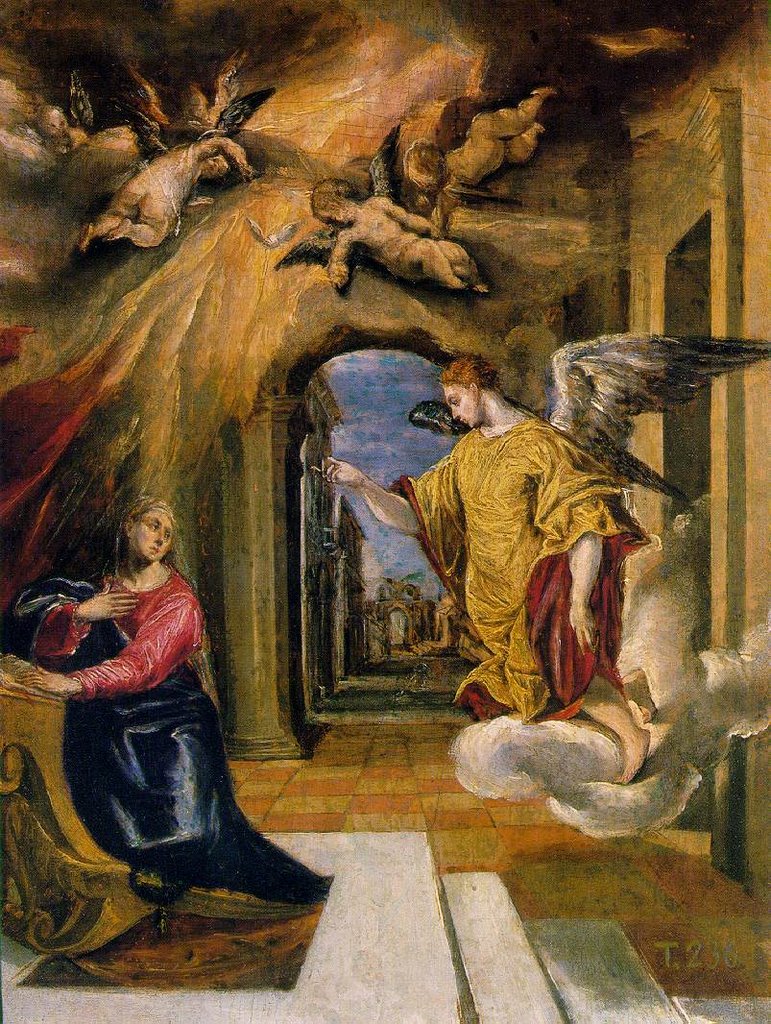 Luke 1:26-38 tells us how the angel Gabriel announced to Mary of Nazareth that she had been chosen to be the mother of the Christ and her response. Mary, a virgin pledged to marry Joseph, briefly wondered how this could be, since she had not had sex with any man.
Once Gabriel told her that the Child was conceived by the Holy Spirit, she humbly accepted this sacred obligation: "Behold, I am the servant of the Lord; let it be to me according to your word. (v. 38)"
Nothing prevents us from supposing that Our Lord was conceived immediately after this. Since the Church from early days observed 25 March as the date of the Annunciation, the celebration of the Christ's Nativity is observed on 25 December, nine months later.
For centuries in vast parts of Europe, 25 March also marked the change to the new year. While it seems somewhat odd and abrupt to change years in the middle of a month, we can imagine that those accustomed to that calendar easily made the adjustment. Furthermore, they could take to heart the reminder that God's chosen time, that most special time when He sent His Son into human flesh, merited such a "strange" circumstance.
Even though the Visitation of Mary to her cousin Elizabeth took place six months later (see Luke 1:39-56) — as Elizabeth neared the end of her own pregnancy with the child who would grow to become John the Baptizer — Mary's song of celebration at that time is also appropriate to remember on the Feast of the Annunciation. In the Magnificat (Luke 1:46-55) the virgin mother of God celebrated God's gift to her, to Israel, and to all people.
Martin Luther wrote a commentary on this canticle. About verse 49, he said, "The 'great things' are nothing less than that she became the Mother of God, in which work so many and such great good things are bestowed upon her as pass man's understanding. For on this there follows all honor, all blessedness, and her unique place in the whole of mankind, among whom she has no equal, namely, that she had a child by the Father in Heaven, and such a child.
"She herself is unable to find a name for this work, it is too exceedingly great; all she can do is break out in the fervent cry: 'They are great things,' impossible to describe or define. Hence men have crowded all her glory into a single word, calling her the Mother of God.
"No one can say anything greater of her or to her, though he had as many tongues as there are leaves on the trees, or grass in the fields, or stars in the sky, or sand by the sea. It needs to be pondered in the heart, what it means to be the Mother of God."
The Annunciation is such an important Christological feast that it takes precedence over even the Sundays in Lent in much of Christendom. See Looking Ahead at Weedon's Blog for details.
Lection
Psalm 45:7-17
Isaiah 7:10-14
Hebrews 10:4-10
Luke 1:26-38
Collect
O Lord, as we have known the incarnation of Your Son Jesus Christ by the message of the angel to the virgin Mary, so by His cross and Passion bring us to the glory of His resurrection; through the same Jesus Christ, our Lord, who lives and reigns with You and the Holy Spirit, one God, now and forever.
NOTE: Regarding the occasional transfer of this major feast, the Lutheran Service Book: Altar Book states on page 960, It is appropriate to observe this feast day in all its fullness during Lent. However, according to historical precedent, when the Annunciation falls during Holy Week or on Easter Day (or also on the Fifth Sunday in Lent in the one-year series), it should not be observed at those times but may be transferred to a weekday following the Second Sunday of Easter. In most of Eastern Christendom, rather than transferring the Annunciation, it is celebrated fully. In Orthodoxy, this normally means the celebratory Liturgy of John Chrysostom.
Luther quote from Luther's Works, Vol. 21, p. 326, ed. Jaroslav Pelikan, Concordia Publishing House © 1956.
Labels: annunciation, christ, christology, feasts, festivals, gabriel, gospels, incarnation, jesus, luke, mary, new testament, theotokos
¶ 00:00 | 0 comments |
 Today celebrates the Conversion of Saint Paul through the revelation of the risen Christ to him on the road to Damascus. The zealous Pharisee Saul was traveling to arrest followers of Jesus. Instead of capturing Christians, Paul found Himself made captive by his Savior's boundless grace and became Christ's primary apostle to the Gentiles. Accounts of the event are in Acts 9:1-22; Acts 26:9-21; and Galatians 1:11-24.
Paul's normal symbol in ecclesiastical art is a shield with sword and open Bible. The Latin words Spiritus Gladius (sword of the Spirit) come from the apostle's words about the armor of God, where he urges believers to take up "the sword of the Spirit, which is the Word of God. (Ephesians 6:17)" The sword also reminds us of the traditional accounts of his martyr's death, which speak of his beheading during the Neronian Persecution.
Lection
Psalm 67
Acts 9:1-22
Galatians 1:11-24
Matthew 19:27-30
Collect
Almighty God, as You turned the heart of him who persecuted the Church and by his preaching caused the light of the Gospel to shine throughout the world, grant us ever to rejoice in the saving light of Your Gospel and to spread it to the uttermost parts of the earth; through Jesus Christ, Your Son, our Lord, who lives and reigns with You and the Holy Spirit, one God, now and forever.
Labels: acts, ananias, apostle, christ, conversion, damascus, epistles, feasts, festivals, jesus, new testament, saint paul, saul
¶ 00:00 | 1 comments |


