
 The honor paid to Saint Mary, the virgin mother of Jesus Christ our Lord, God, and Savior goes back to the earliest days of the Church. Indeed, it goes back farther: Even before the birth of her Son, Mary prophesied, "From now on all generations will call me blessed. (Luke 1:48 ESV)" Confessing her as "Mother of God" also confesses that the One whom she bore was and is, indeed, true God.
The New Testament records several incidents from the life of the Virgin: her betrothal to Joseph, the Annunciation by the angel Gabriel that she was to bear the Messiah, her Visitation to Elizabeth the mother of John the Baptist, the Nativity of our Lord, the visits of the shepherds and the magi, her Purification and the Presentation of the infant Jesus in the Temple at the age of forty days, the flight into Egypt, the Passover visit to the Temple when Jesus was twelve, (Matthew 1:16, 18-25; Matthew 2; Luke 1:26-56; Luke 2); the wedding at Cana in Galilee and the performance of her Son's first miracle (at Mary's intercession, see John 2:1-11), the occasions when observers basically said of Jesus, "How can this man be special? We know his family!" (Matthew 13:54-56; Mark 6:1-3; Luke 4:22; see also John 6:42); an instance when she came with others to see Him while he was preaching (Matthew 12:46-50; Mark 3:31-35; Luke 8:19-21); and her presence at His crucifixion, where Jesus commended her to the care of His Beloved Disciple (John 19:25-27). Mary was also present with the apostles in Jerusalem following the Ascension, waiting for the promised Spirit (Acts 1:14). Thus, we see her present at many of the chief events of her Son's life.

The other name in the Creeds is that of Mary. They say that Christ was "born of the virgin Mary." That is, they assert that he was truly and fully human, born of a woman and not descended from the skies like an angel. Jesus was not a spirit temporarily cloaked in a robe of human-seeming flesh.
Telling us that His mother was a virgin excludes the theory that Jesus was an ordinary man who was so virtuous that he eventually, at His baptism, became filled with a "Christ Spirit" by God. His virgin birth attests that He was always more than merely human, always one whose presence among us was in itself a miracle, from the first moment of His earthly existence. In Mary, Virgin and Mother, God gives us a sign that Jesus is both truly God and truly man. Emphasizing this point, the Council of Ephesis in AD 431 officially titled her Theotokos (God-bearer) and rejected and condemned the title Christotokos (Christ-bearer). Ask the Pastor comments on the distinction in Blessed Virgin Mary: Mother of God.
We know Little of Mary's life except as it intersects with the life of her Son; this is appropriate. The Scriptures record her words to the angel Gabriel, to her kinswoman Elizabeth, and to her Son on two occasions. The only recorded saying of hers to "ordinary" hearers is her instruction to the servants at the wedding feast: "Do whatever he [Jesus] tells you. (John 2:5 ESV)" Perhaps this should be the summation of her message to the world. To this day, she reminds us, "Listen to Jesus. Pay attention to my Son. Do as He says."

In different parts of the Church, the date is remembered in various ways. Roman Catholicism celebrates the Assumption of Mary and claims that she was taken, body and soul, to heaven. However, I've found contradictory teachings in the Roman Church, arguing whether she was translated in the manner of Enoch or Elijah, if she died and was resurrected on earth and then taken to heaven, or if her dead body was taken and then rejoined with her soul in heaven.
Meanwhile, Eastern Orthodoxy celebrates the Dormition of the Theotokos. It claims that Mary certainly died but that when Thomas visited three days later, her body was gone from the tomb. As to whether the body will be kept in heaven until the general resurrection on the Last Day or already rejoined with her spirit, Orthodoxy will not make a final dogmatic pronouncement.
In the rest of Christendom that follows a sanctorial calendar, the general belief seems to be that she likely died and awaits the resurrection with all others who departed in the Faith.
Lection
Psalm 45:10-17
Isaiah 61:7-11
Galatians 4:4-7
Luke 1:(39-45) 46-55
Collect of the Day
Almighty God, You chose the virgin Mary to be the mother of Your only Son. Grant that we, who are redeemed by His blood, may share with her in the glory of Your eternal kingdom; through Jesus Christ, Your Son, our Lord, who lives and reigns with You and the Holy Spirit, one God, now and forever.
or
Grant, we humbly pray, O Lord, to Your servants the gift of Your heavenly blessing that, as the Son of the Virgin Mary has granted us salvation, we may daily grow in Your favor; through Jesus Christ, Your Son, our Lord, who lives and reigns with You and the Holy Spirit, one God, now and forever.
Labels: acts, assumption, biography, christianity, creed, dormition, feasts, festivals, gospels, hagiography, jesus, mary, new testament, theotokos, virgin
¶ 00:00 | 0 comments |

Transferred to 12 June for Trinity Sunday
 "Joseph, who was also called by the apostles Barnabas (which means son of encouragement), a Levite, a native of Cyprus, sold a field that belonged to him and brought the money and laid it at the apostles' feet" (Acts 4:36-37). Here Scripture makes first mention of Saint Barnabas.
This name given by the Apostles matches what we know of his actions. When Saul of Tarsus (or Paul) came to Jerusalem after his conversion, most of the congregation wanted nothing to do with him. They knew him only as a persecutor and an enemy of Christ's Church. Barnabas, however, willingly gave him a second chance. He sought him out, spoke with him, and brought him to meet the other Christians, vouching for him.
Later, Paul and Barnabas went on a missionary journey together, taking Barnabas's cousin Mark along. Part way, Mark turned back and went home. When Paul and Barnabas were about to set out on another such journey, Barnabas proposed to take Mark along, and Paul was against it, saying that Mark had shown himself undependable. Barnabas wanted to give Mark a second chance, and so he and Mark went off on one journey, while Paul took Silas and went on another. Apparently Mark responded well to the trust given him by the "son of encouragement," since we find that Paul later spoke of him as a valuable assistant (2 Timothy 4:11; see also Colossians 4:10 and Philemon 24).
Lection
Psalm 112
Isaiah 42:5-12
Acts 11:19-30; 13:1-3
Mark 6:7-13
Collect
Almighty God, Your faithful servant Barnabas sought not his own renown but gave generously of his life and substance for the encouragement of the apostles and their ministry. Grant that we may follow his example in lives given to charity and the proclamation of the Gospel; through Your Son, Jesus Christ, our Lord, who lives and reigns with You and the Holy Spirit, one God, now and forever.
Labels: acts, barnabas, feasts, festivals, missionary, new testament, saint mark, saint paul, saint peter
¶ 00:00 | 0 comments |
 Pentecost, an Israelite festival connected to the spring harvest, was the time chosen by the Lord for the special outpouring of the Holy Spirit upon the disciples as they waited in Jerusalem.
With wind and fire, the Holy Spirit manifested Himself upon the apostles. Immediately, they rushed out to begin proclaiming the Gospel of Jesus Christ crucified for our sins and raised for our justification. The account is in Acts 2:1-41. Such was the power of the Holy Spirit working through Law and Gospel preaching that He converted over 3000 people faith in Christ at one time.
In Christianity, Pentecost is a "movable feast." Under the Old Covenant, including among modern Jews, Pentecost was (and is) the fiftieth day of Passover. The Christian Church, as more Gentiles swelled its ranks, kept the idea of the fiftieth day but based the celebration on the date for Easter rather than for Passover. See the second question under Notes on the Christian Calendar for a bit more on how we arrive at a date each year.
If you're preaching on the Genesis text, take a look at Upon the Plain of Shinar, a hymn by Pastor Walter Snyder.
Lection: Three Year Cycle, Series A
Psalm 25:1-15
Numbers 11:24-30
Acts 2:1-21
John 7:37-39
Lection: One Year Cycle
Psalm 143
Genesis 11:1-9
Acts 2:1-21
John 14:23-31
Collect
O God, on this day You once taught the hearts of Your faithful people by sending them the light of Your Holy Spirit. Grant us in our day by the same Spirit to have a right understanding in all things and evermore to rejoice in His holy consolation; through Jesus Christ, Your Son, our Lord, who lives and reigns with You and the Holy Spirit, one God, now and forever.
Labels: acts, apostle, christ, church history, conversion, disciple, easter, feasts, festivals, gospel, holy ghost, holy spirit, jesus, new testament, pentecost, pneumatology, translation
¶ 00:00 | 0 comments |
Lection
† Psalm 110 (1-year Lectionary) or Psalm 47 (3-year)
† 2 Kings 2:5-15 (1-year) or Acts 1:1-11 (3-year)
† Acts 1:1-11 (1-year) or Ephesians 1:15-23 (3-year)
† Mark 16:14-20 or Luke 24:44-53 (1-year) or Luke 24:44-53 (3-year)
Collect
Almighty God, as Your only-begotten Son, our Lord Jesus Christ, ascended into the heavens, so may we also ascend in heart and mind and continually dwell there with Him, who lives and reigns with You and the Holy Spirit, one God, now and forever.
An Ascension Hymn
Alleluia! Sing to Jesus
Alleluia! Sing to Jesus; His the scepter, His the throne;
Alleluia! His the triumph, His the victory alone.
Hark! The songs of peaceful Zion Thunder like a mighty flood:
" Jesus out of every nation Has redeemed us by His blood."
Alleluia! Not as orphans Are we left in sorrow now;
Alleluia! He is near us: Faith believes, nor questions how.
Though the cloud from sight received Him When the forty days were over,
Shall our hearts forget His promise: "I am with you ever-more"?
Alleluia! Bread of heaven, Here on earth our food, our stay;
Alleluia! Here the sinful Flee to You from day to day.
Intercessor, Friend of sinners, Earth’s Redeemer, hear our plea
Where the songs of all the sinless Sweep across the crystal sea.
Alleluia! King eternal, Lord omnipotent we own;
Alleluia! Born of Mary, Earth Your foot-stool, heaven Your throne.
As within the veil You entered, Robed in flesh, our great high priest,
Here on earth both priest and victim In the eucharistic feast.
Alleluia! Sing to Jesus; His the scepter, His the throne;
Alleluia! His the triumph, His the victory alone.
Hark! The songs of peaceful Zion Thunder like a mighty flood:
"Jesus out of every nation Has redeemed us by His blood."
Labels: acts, ascension, christology, church year, easter, feasts, festivals, gospels, jesus, luke, new testament
¶ 16:56 | 0 comments |
 People frequently confuse Philip the Apostle with Philip the Deacon, whose story is included in the Acts of the Apostles. See Acts 6:1-6; 8:5-40; and Acts 21:7-9 for accounts from his life. This Philip's commemoration is on 6 June. Philip the Apostle appears in the Synoptic Gospels and in Acts only as a name on the list of the Twelve, but he figures in several incidents in the Gospel according to John.
Philip was one of the first men Jesus called to be a disciple (John 1:43-44), and promptly brought his friend Nathanael to Jesus as well (v. 45). When some Greeks (or Greek-speaking Jews) wished to speak with Jesus, they began by approaching Philip, who took Andrew and went to Jesus. This led Jesus to His declaration, "I, when I am lifted up from the earth, will draw all people to myself." (12:20-33). At the Last Supper, he said to Jesus, "Lord, show us the Father, and it is enough for us." Jesus responded, "Whoever has seen me has seen the Father." (See the account in 14:1-14.)
Before feeding the Five Thousand (John 6:1-15), Jesus turned to Philip and asked Him, "Where are we to buy bread, so that these people may eat?" Philip answered, "Two hundred denarii would not buy enough bread for each of them to get a little."
Some scholars think it might be significant that Jesus asked Philip rather than one of the others. Luke 9:10 says that the Feeding of the Five Thousand took place near Bethsaida, and John 1:44 shows Philip coming from Bethsaida. If they were in Philip's home area, it would seem natural to ask him for directions. (As an aside, we note that Peter and Andrew also came from Bethsaida, but appear to have moved to Capernaum.)
James the son of Alphaeus (sometimes spelled "Alpheus") appears on lists of the Twelve Apostles, usually in the ninth place, but is never mentioned otherwise. He is called James the Less, or James Minor, or James the Younger. (See Matthew 10:3; Mark 3:18; Luke 6:15; Acts 1:13) Thus, we know nothing of him from the New Testament except that he was one of Jesus' original disciples and one of the Apostles. However, because of other Jameses being mentioned in the New Testament, we get the impression that he is everywhere. This isn't because of James the Less, but because he shared his name with several others — after all, it was one of the most common names among the Jews.
Why was James such a popular name in Israel? It was the given name of the original Israel: The English James is a variant of the name Jacob. While we may think of them as unrelated, the distinction grew after Bible times. In Hebrew, the name is Ya'akov. In Greek, it is Iakobos. In Latin, two forms developed, Jacobus and Jacomus. The former gives us the English Jacob and the Spanish Diego and Iago. The latter grew into the English James, the Scottish Hamish, the Spanish Jaime, and so on.
That ends what we hear of Saints Philip and James in the New Testament and we don't get much additional help from extrabiblical tradition. One story says that Philip preached in Phrygia and died in Hierapolis, and that his remains were brought to Rome and buried in the Basilica of the Twelve Apostles, where an ancient inscription indicates that this church was formerly dedicated to Philip and James.
Lection
Psalm 36:5-12
Isaiah 30:18-21
Ephesians 2:19-22
John 14:1-14
Collect
Almighty God, Your Son revealed Himself to Philip and James and gave them the knowledge of everlasting life. Grant us perfectly to know Your Son, Jesus Christ, to be the Way, the Truth, and the Life, and steadfastly to walk in the way that leads to eternal life; through the same Jesus Christ, our Lord, who lives and reigns with You and the Holy Spirit, one God, now and forever.
Labels: acts, apostle, disciple, feasts, festivals, gospels, james, nathaniel, new testament, philip, saint james, saint philip
¶ 00:00 | 0 comments |
 The book of Acts mentions a Mark, or John Mark, later called a kinsman of Barnabas (Colossians 4:10). The house of his mother Mary was a meeting place for Christians in Jerusalem (Acts 12:12). When Paul and Barnabas, who had been in Antioch, came to Jerusalem, they brought Mark back to Antioch with them (12:25), and he accompanied them on their first missionary journey (13:5), but left them prematurely and returned to Jerusalem (13:13).
When Paul and Barnabas were about to set out on a second missionary journey, Barnabas proposed to take Mark, but Paul thought him unreliable, so that eventually Barnabas made one journey taking Mark, and Paul another journey taking Silas (15:36-40). Mark is not mentioned again in Acts. However, it appears that he became more reliable, for Paul mentions him as a trusted assistant in Colossians 4:10 and again in 2 Timothy 4:11.
The Apostle Peter had a co-worker whom he refers to as "my son Mark" (1 Peter 5:13). Papias, an early second century writer, in describing the origins of the Gospels, tells us that Mark was the "interpreter" of Peter, and that he wrote down ("but not in order") the stories that he had heard Peter tell in his preaching about the life and teachings of Jesus. Debate continues as to the veracity of some of Papias' records, but this one is considered genuine by many scholars.
The Gospel According to Saint Mark, in describing the arrest of Jesus (14:43-52), speaks of a young man who followed the arresting party, wearing only a linen cloth wrapped around his body, whom the arresting party tried to seize, but who left the cloth in their hands and fled naked. Many think that this young man was the writer himself, since the detail is hardly worth mentioning if he were not.
Tradition holds that after Peter's death, Mark left Rome and went to preach in Alexandria, Egypt, where he was eventually martyred.
It is natural to identify the John Mark of Acts with the Gospel-writer and interpreter of Peter, and this identification is standard in liturgical references to Mark. However, "Mark" is the commonest of Latin first names, and they may well have been separate people.
Mark's symbol in Christian art is a often a lion, usually winged. In Revelation 4 and throughout much of his vision, John sees about the throne of God four winged creatures — a lion, an ox, a man, and an eagle. (Compare with the beings in Ezekiel 1 and 10.) Custom supposes that these represent the four Gospels or the four Evangelists (Gospel-writers).
One way to match the creatures with the Evangelists is to say that the man stands for Matthew, whose narrative begins with the human genealogy of Jesus and who often quotes Christ speaking of Himself as "the Son of Man"; the lion stands for Mark, whose narrative begins with John the Baptist crying out in the desert (a lion roars in the desert); the ox, a sacrificial animal, stands for Luke, whose narrative begins in the Temple; the eagle, then, stands for John, whose narrative begins in Heaven with the eternal Word and who writes in a lofty style.
Lection
Psalm 146
Isaiah 52:7-10
2 Timothy 4:5-18
Mark 16:14-20
Collect
O almighty God, You have enriched Your Church with the proclamation of the Gospel through the evangelist Mark. Grant that we may firmly believe these glad tidings and daily walk according to Your Word; through Jesus Christ, Your Son, our Lord, who lives and reigns with You and the Holy Spirit, one God, now and forever.
Labels: acts, evangelist, feasts, festivals, gethsemane, gospels, lion, mark, new testament, saint luke, saint mark, saint paul, saint peter
¶ 00:00 | 0 comments |
 After the Ascension of Our Lord, Jesus' followers at Jerusalem chose Matthias to replace Judas: "And they cast lots for them, and the lot fell on Matthias, and he was numbered with the eleven apostles. (Acts 1:26)" Apart from the information given in the first chapter of Acts (vv. 12-26), we know nothing about him.
One extra-biblical account says that Saint Matthias was slain by cannibals in Ethiopia; another traditions claims that he was stoned and then beheaded by Jews in Jerusalem. This account lends itself to his customary representation in religious art: Sometimes the blade from his beheading is superimposed over a book or scroll representing Holy Scripture; at others, he is depicted holding ax or sword himself.
Lection
Psalm 134
Isaiah 66:1-2
Acts 1:15-26
Matthew 11:25-30
Collect
Almighty God, You chose Your servant Matthias to be numbered among the Twelve. Grant that Your Church, ever preserved from false teachers, may be taught and guided by faithful and true pastors; through Jesus Christ, our Lord, who lives and reigns with You and the Holy Spirit, one God, now and forever.
Labels: acts, apostle, bible, feasts, festivals, judas, martyrdom, new testament, saint matthias
¶ 00:00 | 0 comments |
 Aquila and his wife Priscilla (Prisca) were Jewish contemporaries of Saint Paul. They traveled widely, perhaps in part for business reasons but later certainly because of unrest and persecution in Rome. They went to Corinth and met the apostle, who joined them for a time in the tent-making trade (Acts 18:1-3).
Priscilla and Aquila, in turn, teamed with Paul in his mission of proclaiming the Christian Gospel. The couple later traveled with him from Corinth to Ephesus (Acts 18:18), where the two of them established a home that served as hospitality headquarters for new converts to Christianity.
Apollos, an eloquent man, was one of their numerous Jewish pupils in the faith: "Being fervent in spirit, he spoke and taught accurately the things concerning Jesus. (Acts 18:25)" Apollos later traveled from Corinth to the province of Achaia, where he showed "by the Scriptures that the Christ was Jesus. (Acts 18:28)"
We especially remember these three for their great missionary zeal.
Labels: acts, apollos, aquila, biography, church history, commemoration, hagiography, new testament, priscilla, saint paul
¶ 00:00 | 0 comments |
 Saint Paul chose Silas, a leader in the church at Jerusalem, to accompany him on his second missionary journey from Antioch to Asia Minor and Macedonia (Acts 15:40). Silas, also known as Silvanus, was imprisoned with Paul in Philippi (Acts 16:16-40) and experienced the riots in Thessalonica (Acts 17:1-9) and Berea (Acts 17:10-15).
They were apart for some length of time, after which he rejoined Paul in Corinth (Acts 18:1-5). Apparently, he remained there for an extended period.
One account stands out for most readers of the New Testament. The time Paul and Silas shared in the Philippian prison gave them a special opportunity to proclaim the Gospel. God freed their bonds during an earthquake but they refused to escape and instead saved their jailer from committing suicide because of his responsibility for them. The Lord used these two and the surrounding events to witness to the jailer about His love and forgiveness through Christ Jesus. Working through the Gospel, the Holy Spirit brought him and his household to faith in Jesus and led them to be baptized.
Aside from these accounts, the Scriptures record little else about Silas and his relationship with Paul.
Labels: acts, biography, commemoration, hagiography, new testament, saint paul, silas, silvanus
¶ 00:00 | 0 comments |
 Today celebrates the Conversion of Saint Paul through the revelation of the risen Christ to him on the road to Damascus. The zealous Pharisee Saul was traveling to arrest followers of Jesus. Instead of capturing Christians, Paul found Himself made captive by his Savior's boundless grace and became Christ's primary apostle to the Gentiles. Accounts of the event are in Acts 9:1-22; Acts 26:9-21; and Galatians 1:11-24.
Paul's normal symbol in ecclesiastical art is a shield with sword and open Bible. The Latin words Spiritus Gladius (sword of the Spirit) come from the apostle's words about the armor of God, where he urges believers to take up "the sword of the Spirit, which is the Word of God. (Ephesians 6:17)" The sword also reminds us of the traditional accounts of his martyr's death, which speak of his beheading during the Neronian Persecution.
Lection
Psalm 67
Acts 9:1-22
Galatians 1:11-24
Matthew 19:27-30
Collect
Almighty God, as You turned the heart of him who persecuted the Church and by his preaching caused the light of the Gospel to shine throughout the world, grant us ever to rejoice in the saving light of Your Gospel and to spread it to the uttermost parts of the earth; through Jesus Christ, Your Son, our Lord, who lives and reigns with You and the Holy Spirit, one God, now and forever.
Labels: acts, ananias, apostle, christ, conversion, damascus, epistles, feasts, festivals, jesus, new testament, saint paul, saul
¶ 00:00 | 1 comments |
 Saint Stephen's Day remembers the first recorded martyr of the Church. Stephen knew the gift of Christmas: His Lord came in human flesh to bring forgiveness and as Jesus forgave His killers, so Stephen forgave those whose stones smashed away his life. The account of his calling, witness, and death is in Acts 6:1-8:2. Notice how closely the martyr's responses echo those of His Savior as each approached death.
In art, Stephen is often represented by the stones which took his life and by the palm branch, an ancient symbol of triumph and, especially in Christianity, of martyrdom. Both stones and branch are prominent in this Carlo Crivelli painting from the Demidoff Altarpiece.
Stephen's feast day supposedly occasioned of a great act of charity by the later martyred Wenceslaus, Kníže of Bohemia. Wenceslaus (or Václav) is remembered in the carol Good King Wenceslaus.
Lection
Psalm 119:137-144
2 Chronicles 24:17-22
Acts 6:8-7:2a, 51-60
Matthew 23:34-39
Collect
Heavenly Father, in the midst of our sufferings for Christ grant us grace to follow the example of the first martyr, Stephen, that we may also look to the One who suffered and was crucified on our behalf and pray for those who do us wrong; through our Jesus Christ, our Lord, who lives and reigns with You and the Holy Spirit, one God, now and forever.
Labels: acts, christ, christology, deacon, feasts, festivals, jesus, martyrdom, new testament, stephen, stoning
¶ 00:00 | 0 comments |
These exemplary Christian women demonstrated their faith by their material support of Christ's Church.
 Dorcas (or "Tabitha" — both names mean "gazelle") was well-known and much loved for her acts of charity in the city of Joppa, especially for her making clothes for the poor. When Dorcas died suddenly, the members of her congregation sent to the neighboring city of Lydda for the Apostle Peter, who came and raised her from the dead (Acts 9:36-43).
Lydia was a woman of Thyatira, who worked at Philippi selling a famous purple dye that was so much in demand in the ancient world. She was also a "worshiper of God," although we cannot be sure if there was an active local she affiliated herself in any way with a local synagogue. When the Apostle Paul encountered her in prayer among other proselyte women, his preaching of the Word brought Lydia to faith in Christ. She and her friends thus became the nucleus of the Christian community in Philippi (16:11-15). It was to her house that Paul and Silas returned following the conversion of the Philippian jailer (16:16-40).
Phoebe was another faithful woman associated with the Apostle Paul. She was a church servant (perhaps "deaconess") from Cenchreae (one of the ports of Corinth) whom Paul sent to the church in Rome with his Epistle to the Romans. In it he writes of her support for the work of the early Church (Romans 16:1-2).
All of these women continue to be honored by the Church and emulated by many Christian women. Each of them, particularly Dorcas, have lent their names to various women's societies in many congregations.
Illustration is a public domain Bible card from 1897. To find similar cards and other illustrations, please follow the clipart link from The Bread Site.
Suggested Lection
Psalm 37:1-6 (27-40)
Acts 16:9-15 or 9:36-43
Romans 16:1-16
Matthew 10:40-42
Collect
Almighty God, You guided Your servants Dorcas, Lydia, and Phoebe to sustain and expand Your Holy Church by their loving service and generous deeds; open our hearts to hear You, grant us the will to obey You, and strengthen our hands to love our neighbors with the same love You pour out upon us, for the sake of Your Son Jesus Christ our Lord, who lives and reigns with You and the Holy Spirit, one God, now and forever.
Labels: acts, biography, commemoration, deaconess, dorcas, hagiography, lydia, new testament, phoebe, saint paul, saint peter, tabitha
¶ 00:00 | 0 comments |
 The New Testament refers to this James as the brother of Jesus (Galatians 1:19). He led the Christian congregation in Jerusalem for many years, garnering the title "Bishop of Jerusalem" among many in Christendom. He is often credited with authorship of the Epistle of James, although the Epistle itself does not state this explicitly.
James is mentioned briefly in connection with Jesus' visit to Nazareth (Matthew 13:55; Mark 6:3). John 7:2-5 tells us that Jesus' brothers did not believe in Him and from this, as well as references in early Christian writers, we infer that James was not a disciple of the Lord until after the Resurrection. When Paul lists our Lord's resurrection appearances (1 Corinthians 15:3-8), he includes an appearance to James. Peter, about to leave Jerusalem after escaping from Herod, left a message for James and the Apostles (Acts 12:17). When a council met at Jerusalem to consider what rules Gentile Christians should be required to keep, James formulated the final consensus (Acts 15:13-21).
On his last recorded visit to Jerusalem, Paul visited James (others were present, but no other names are given) and spoke of his ministry to the Gentiles (Acts 21:18).
Outside the New Testament, the Jewish historian Josephus called James "the brother of Jesus the so-called Christ," and reported that even the Pharisees greatly respected his piety and strict observance of the Law but that his enemies took advantage of an interval between Roman governors in AD 62 to have him put to death. Numerous references in early Christian documents also show the esteem with which the early Church held him.
While debate continues, this particular James is likely the one called "James the Just" (or "James the Righteous") by much of the Church. The source of this appellation seems to come from an early tradition that James took vows as a Nazarite and that his life, both in Judaism and after conversion to the Faith, was marked by deep piety.
For a bit more on James' possible blood relationship to Jesus, whether they were "half- or step-brothers or cousins," see the Ask the Pastor post the Names of Jesus' Brothers. An explanation in the hagiography for Saint Philip and Saint James, Apostles helps discern among the different New Testament people sharing this name.
Lection
Psalm 133
Acts 15:12-22a
James 1:1-12
Matthew 13:54-58
Collect
Heavenly Father, shepherd of Your people, You raised up James the Just to lead and guide Christ's Church in her early days. Grant that we may follow his example of prayer and reconciliation and be strengthened by the witness of his death; through Jesus Christ, Your Son, our Lord, who lives and reigns with You and the Holy Spirit, one God, now and forever.
Labels: acts, church history, feasts, festivals, gospels, hagiography, james, jerusalem, jesus, josephus, martyrdom, new testament, saint paul
¶ 00:00 | 0 comments |
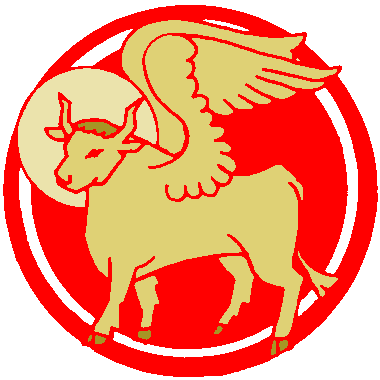 Saint Luke the Evangelist was a physician (Colossians 4:14) and a companion of St. Paul on some of his missionary journeys (see Acts 16:10ff; 20:5ff; 27-28).
Material found in his Gospel account and not elsewhere includes the Annunciation and almost all we know of Jesus' birth, infancy, and boyhood. He recounts some of the most moving parables, including the Good Samaritan and the Prodigal Son. He also provides three of the sayings of Christ on the Cross: "Father, forgive them (23:34)"; "Today, you will be with me in Paradise (23:43)"; and "Father, into your hands I commit my spirit! (23:46)"
Luke's Gospel account emphasizes the human love of Christ, His compassion for sinners and for suffering and unhappy persons, for outcasts such as the Samaritans, tax collectors, lepers, shepherds (not a respected profession), and for the poor. Christ's treatment of women and their important supporting role in His ministry is also emphasized in Luke more than in the other Gospels.
Much of Christianity uses each of the four living creatures (see Ezekiel 1 and Revelation 4) as a symbol one of the four evangelists. While attributions vary in parts of Christendom, most of the Western Church assigns the winged ox to Saint Luke. The association probably comes because the ox was one of the major sacrificial animals under the Old Covenant while Luke strongly highlighted the sacrificial elements of Christ's life, suffering, and death. See the commemoration of Saint Matthew for details of the other evangelists' symbols in ecclesiastical art.
Lection
Psalm 147:1-11
Isaiah 35:5-8
2 Timothy 4:5-18
Luke 10:1-9
Collect
Almighty God, our Father, Your blessed Son called Luke the physician to be an evangelist and physician of the soul. Grant that the healing medicine of the Gospel and the Sacraments may put to flight the diseases of our souls that with willing hearts we may ever love and serve You; through Jesus Christ, Your Son, our Lord, who lives and reigns with You and the Holy Spirit, one God, now and forever.
Scripture quoted from The Holy Bible, English Standard Version®, © 2001 by Crossway Bibles.
Labels: acts, biography, christianity, christology, church history, evangelist, feasts, festivals, gospels, hagiography, jesus, luke, new testament, paul
¶ 00:00 | 0 comments |
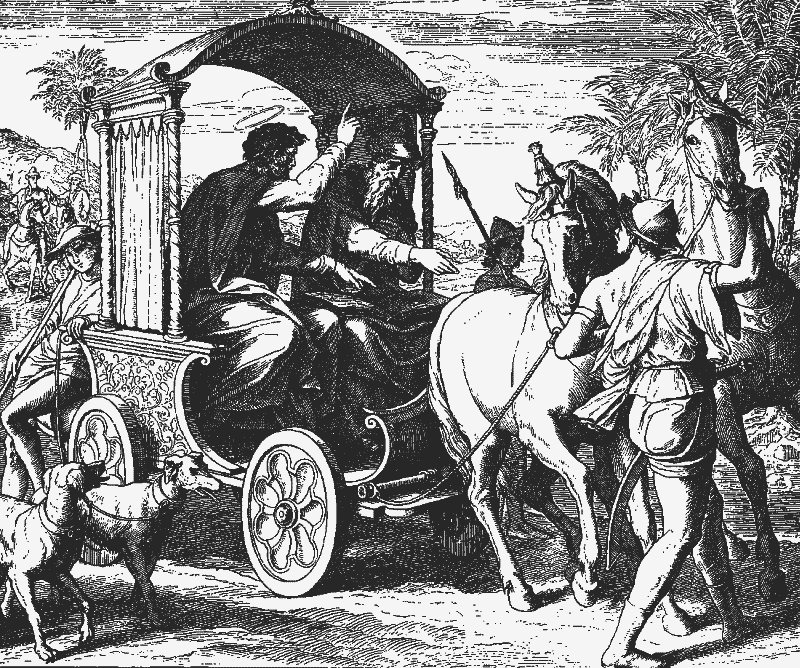 The deacon Philip, was also called an evangelist (see Acts 21:8). He was one of the seven men appointed to assist in the work of the twelve Apostles and of the rapidly growing early church by overseeing the distribution of food to the poor, especially to the widows who had limited support (6:1-6).
Unless Saint Luke omitted some portion of the selection process, this Philip is not the Philip we meet in the Gospels, whose feast is celebrated on 1 May with James, son of Alphaeus. For if they are the same person, why would one of the twelve Apostles separate himself from the ministry into which Christ had called him and go off to "serve tables" (Acts 6:2)? Therefore, we are dealing with at least two separate Philips in the New Testament.
Following the martyrdom of Stephen, Philip proclaimed the Gospel in Samaria and led Simon the Sorcerer to become a believer in Christ (8:4-13). He was also instrumental in bringing about the conversion of the Ethiopian eunuch (8:26-39), through whom Philip became indirectly responsible for bringing the Good News of Jesus to the people on the continent of Africa.
Here we make two historical asides. First, the "Ethiopia" known to the Mediterranean world of Philip's time may actually have been part of modern-day Sudan. Second, while a "eunuch" is technically a castrated male, it also served at times as a generic term for royal officials, including some where records indicate that they were capable of siring children.
Saint Philip's final appearance in Scripture comes in conjunction with Saint Paul. He hosted the apostle in the town of Caesarea before the apostle completed his final visit to Jerusalem (21:8-15). During this meeting, Luke also discovered and informs his readers that Philip "had four unmarried daughters, who prophesied (21:9)"
Collect
Almighty and everlasting God, we thank You for Your servant Philip the Deacon, whom You called to proclaim the Gospel to the peoples of Samaria and Ethiopia. Raise up in this and every land heralds and evangelists of Your kingdom, that your Church may make known the immeasurable riches of our Savior Jesus Christ, who lives and reigns with you and the Holy Spirit, one God, now and forever.
Labels: acts, african history, biography, christianity, church history, commemoration, deacon, hagiography, new testament, philip
¶ 00:00 | 0 comments |
The honor paid to Saint Mary, the virgin mother of Jesus Christ our Lord, God, and Savior goes back to the earliest days of the Church. Indeed, it goes back farther: Even before the birth of her Son, Mary prophesied, "From now on all generations will call me blessed. (Luke 1:48 ESV)" Confessing her as "Mother of God" also confesses that the One whom she bore was and is, indeed, true God.The New Testament records several incidents from the life of the Virgin: her betrothal to Joseph, the Annunciation by the angel Gabriel that she was to bear the Messiah, her Visitation to Elizabeth the mother of John the Baptist, the Nativity of our Lord, the visits of the shepherds and the magi, her Purification and the Presentation of the infant Jesus in the Temple at the age of forty days, the flight into Egypt, the Passover visit to the Temple when Jesus was twelve, (Matthew 1:16, 18-25; Matthew 2; Luke 1:26-56; Luke 2); the wedding at Cana in Galilee and the performance of her Son's first miracle (at Mary's intercession, see John 2:1-11), the occasions when observers basically said of Jesus, "How can this man be special? We know his family!" (Matthew 13:54-56; Mark 6:1-3; Luke 4:22; see also John 6:42); an instance when she came with others to see Him while he was preaching (Matthew 12:46-50; Mark 3:31-35; Luke 8:19-21); and her presence at His crucifixion, where Jesus commended her to the care of His Beloved Disciple (John 19:25-27). Mary was also present with the apostles in Jerusalem following the Ascension, waiting for the promised Spirit (Acts 1:14). Thus, we see her present at many of the chief events of her Son's life.
The other name in the Creeds is that of Mary. They say that Christ was "born of the virgin Mary." That is, they assert that he was truly and fully human, born of a woman and not descended from the skies like an angel. Jesus was not a spirit temporarily cloaked in a robe of human-seeming flesh.
Telling us that His mother was a virgin excludes the theory that Jesus was an ordinary man who was so virtuous that he eventually, at His baptism, became filled with a "Christ Spirit" by God. His virgin birth attests that He was always more than merely human, always one whose presence among us was in itself a miracle, from the first moment of His earthly existence. In Mary, Virgin and Mother, God gives us a sign that Jesus is both truly God and truly man. Emphasizing this point, the Council of Ephesis in AD 431 officially titled her Theotokos (God-bearer) and rejected and condemned the title Christotokos (Christ-bearer). Ask the Pastor comments on the distinction in Blessed Virgin Mary: Mother of God.
We know Little of Mary's life except as it intersects with the life of her Son; this is appropriate. The Scriptures record her words to the angel Gabriel, to her kinswoman Elizabeth, and to her Son on two occasions. The only recorded saying of hers to "ordinary" hearers is her instruction to the servants at the wedding feast: "Do whatever he [Jesus] tells you. (John 2:5 ESV)" Perhaps this should be the summation of her message to the world. To this day, she reminds us, "Listen to Jesus. Pay attention to my Son. Do as He says."
In different parts of the Church, the date is remembered in various ways. Roman Catholicism celebrates the Assumption of Mary and claims that she was taken, body and soul, to heaven. However, I've found contradictory teachings in the Roman Church, arguing whether she was translated in the manner of Enoch or Elijah, if she died and was resurrected on earth and then taken to heaven, or if her dead body was taken and then rejoined with her soul in heaven.
Meanwhile, Eastern Orthodoxy celebrates the Dormition of the Theotokos. It claims that Mary certainly died but that when Thomas visited three days later, her body was gone from the tomb. As to whether the body will be kept in heaven until the general resurrection on the Last Day or already rejoined with her spirit, Orthodoxy will not make a final dogmatic pronouncement.
In the rest of Christendom that follows a sanctorial calendar, the general belief seems to be that she likely died and awaits the resurrection with all others who departed in the Faith.
Lection
Psalm 45:10-17
Isaiah 61:7-11
Galatians 4:4-7
Luke 1:(39-45) 46-55
Collect of the Day
Almighty God, You chose the virgin Mary to be the mother of Your only Son. Grant that we, who are redeemed by His blood, may share with her in the glory of Your eternal kingdom; through Jesus Christ, Your Son, our Lord, who lives and reigns with You and the Holy Spirit, one God, now and forever.
or
Grant, we humbly pray, O Lord, to Your servants the gift of Your heavenly blessing that, as the Son of the Virgin Mary has granted us salvation, we may daily grow in Your favor; through Jesus Christ, Your Son, our Lord, who lives and reigns with You and the Holy Spirit, one God, now and forever.
Labels: acts, assumption, biography, christianity, creed, dormition, feasts, festivals, gospels, hagiography, jesus, mary, new testament, theotokos, virgin
¶ 00:00 | 0 comments |
"Joseph, who was also called by the apostles Barnabas (which means son of encouragement), a Levite, a native of Cyprus, sold a field that belonged to him and brought the money and laid it at the apostles' feet" (Acts 4:36-37). Here Scripture makes first mention of Saint Barnabas.This name given by the Apostles matches what we know of his actions. When Saul of Tarsus (or Paul) came to Jerusalem after his conversion, most of the congregation wanted nothing to do with him. They knew him only as a persecutor and an enemy of Christ's Church. Barnabas, however, willingly gave him a second chance. He sought him out, spoke with him, and brought him to meet the other Christians, vouching for him.
Later, Paul and Barnabas went on a missionary journey together, taking Barnabas's cousin Mark along. Part way, Mark turned back and went home. When Paul and Barnabas were about to set out on another such journey, Barnabas proposed to take Mark along, and Paul was against it, saying that Mark had shown himself undependable. Barnabas wanted to give Mark a second chance, and so he and Mark went off on one journey, while Paul took Silas and went on another. Apparently Mark responded well to the trust given him by the "son of encouragement," since we find that Paul later spoke of him as a valuable assistant (2 Timothy 4:11; see also Colossians 4:10 and Philemon 24).
Lection
Psalm 112
Isaiah 42:5-12
Acts 11:19-30; 13:1-3
Mark 6:7-13
Collect
Almighty God, Your faithful servant Barnabas sought not his own renown but gave generously of his life and substance for the encouragement of the apostles and their ministry. Grant that we may follow his example in lives given to charity and the proclamation of the Gospel; through Your Son, Jesus Christ, our Lord, who lives and reigns with You and the Holy Spirit, one God, now and forever.
Tags: Saint Barnabas | St. Barnabas | Barnabas | Joseph | apostle | missionary | missions | Saint Paul | Saint Mark | Jesus | Jesus Christ | Christ | Church Year | liturgical calendar | Christianity | Christian feasts | biography | hagiography | commemoration | historical theology | Church history | Bible history | New Testament | The Acts of the Apostles
Labels: acts, barnabas, feasts, festivals, missionary, new testament, saint mark, saint paul, saint peter
¶ 00:00 | 0 comments |
Pentecost, an Israelite festival connected to the spring harvest, was the time chosen by the Lord for the special outpouring of the Holy Spirit upon the disciples as they waited in Jerusalem.With wind and fire, the Holy Spirit manifested Himself upon the apostles. Immediately, they rushed out to begin proclaiming the Gospel of Jesus Christ crucified for our sins and raised for our justification. The account is in Acts 2:1-41. Such was the power of the Holy Spirit working through Law and Gospel preaching that He converted over 3000 people faith in Christ at one time.
In Christianity, Pentecost is a "movable feast." Under the Old Covenant, including among modern Jews, Pentecost was (and is) the fiftieth day of Passover. The Christian Church, as more Gentiles swelled its ranks, kept the idea of the fiftieth day but based the celebration on the date for Easter rather than for Passover. See the second question under Notes on the Christian Calendar for a bit more on how we arrive at a date each year.
If you're preaching on the Genesis text, take a look at Upon the Plain of Shinar, a hymn by Pastor Walter Snyder.
Lection: Three Year Cycle, Series C
Psalm 143
Genesis 11:1-9
Acts 2:1-21
John 14:23-31
Lection: One Year Cycle
Psalm 143
Genesis 11:1-9
Acts 2:1-21
John 14:23-31
Collect
O God, on this day You once taught the hearts of Your faithful people by sending them the light of Your Holy Spirit. Grant us in our day by the same Spirit to have a right understanding in all things and evermore to rejoice in His holy consolation; through Jesus Christ, Your Son, our Lord, who lives and reigns with You and the Holy Spirit, one God, now and forever.
Labels: acts, apostle, christ, church history, conversion, disciple, easter, feasts, festivals, gospel, holy ghost, holy spirit, jesus, new testament, pentecost, pneumatology, translation
¶ 00:00 | 0 comments |
Lection
† Psalm 110 (1-year Lectionary) or Psalm 47 (3-year)
† 2 Kings 2:5-15 (1-year) or Acts 1:1-11 (3-year)
† Acts 1:1-11 (1-year) or Ephesians 1:15-23 (3-year)
† Mark 16:14-20 or Luke 24:44-53 (1-year) or Luke 24:44-53 (3-year)
Collect
Almighty God, as Your only-begotten Son, our Lord Jesus Christ, ascended into the heavens, so may we also ascend in heart and mind and continually dwell there with Him, who lives and reigns with You and the Holy Spirit, one God, now and forever.
An Ascension Hymn
Alleluia! Sing to Jesus
Alleluia! Sing to Jesus; His the scepter, His the throne;
Alleluia! His the triumph, His the victory alone.
Hark! The songs of peaceful Zion Thunder like a mighty flood:
" Jesus out of every nation Has redeemed us by His blood."
Alleluia! Not as orphans Are we left in sorrow now;
Alleluia! He is near us: Faith believes, nor questions how.
Though the cloud from sight received Him When the forty days were over,
Shall our hearts forget His promise: "I am with you ever-more"?
Alleluia! Bread of heaven, Here on earth our food, our stay;
Alleluia! Here the sinful Flee to You from day to day.
Intercessor, Friend of sinners, Earth’s Redeemer, hear our plea
Where the songs of all the sinless Sweep across the crystal sea.
Alleluia! King eternal, Lord omnipotent we own;
Alleluia! Born of Mary, Earth Your foot-stool, heaven Your throne.
As within the veil You entered, Robed in flesh, our great high priest,
Here on earth both priest and victim In the eucharistic feast.
Alleluia! Sing to Jesus; His the scepter, His the throne;
Alleluia! His the triumph, His the victory alone.
Hark! The songs of peaceful Zion Thunder like a mighty flood:
"Jesus out of every nation Has redeemed us by His blood."
Labels: acts, ascension, christology, church year, easter, feasts, festivals, gospels, jesus, luke, new testament
¶ 00:00 | 0 comments |
The book of Acts mentions a Mark, or John Mark, later called a kinsman of Barnabas (Colossians 4:10). The house of his mother Mary was a meeting place for Christians in Jerusalem (Acts 12:12). When Paul and Barnabas, who had been in Antioch, came to Jerusalem, they brought Mark back to Antioch with them (12:25), and he accompanied them on their first missionary journey (13:5), but left them prematurely and returned to Jerusalem (13:13).When Paul and Barnabas were about to set out on a second missionary journey, Barnabas proposed to take Mark, but Paul thought him unreliable, so that eventually Barnabas made one journey taking Mark, and Paul another journey taking Silas (15:36-40). Mark is not mentioned again in Acts. However, it appears that he became more reliable, for Paul mentions him as a trusted assistant in Colossians 4:10 and again in 2 Timothy 4:11.
The Apostle Peter had a co-worker whom he refers to as "my son Mark" (1 Peter 5:13). Papias, an early second century writer, in describing the origins of the Gospels, tells us that Mark was the "interpreter" of Peter, and that he wrote down ("but not in order") the stories that he had heard Peter tell in his preaching about the life and teachings of Jesus. Debate continues as to the veracity of some of Papias' records, but this one is considered genuine by many scholars.
The Gospel According to Saint Mark, in describing the arrest of Jesus (14:43-52), speaks of a young man who followed the arresting party, wearing only a linen cloth wrapped around his body, whom the arresting party tried to seize, but who left the cloth in their hands and fled naked. Many think that this young man was the writer himself, since the detail is hardly worth mentioning if he were not.
Tradition holds that after Peter's death, Mark left Rome and went to preach in Alexandria, Egypt, where he was eventually martyred.
It is natural to identify the John Mark of Acts with the Gospel-writer and interpreter of Peter, and this identification is standard in liturgical references to Mark. However, "Mark" is the commonest of Latin first names, and they may well have been separate people.
Mark's symbol in Christian art is a often a lion, usually winged. In Revelation 4 and throughout much of his vision, John sees about the throne of God four winged creatures — a lion, an ox, a man, and an eagle. (Compare with the beings in Ezekiel 1 and 10.) Custom supposes that these represent the four Gospels or the four Evangelists (Gospel-writers).
One way to match the creatures with the Evangelists is to say that the man stands for Matthew, whose narrative begins with the human genealogy of Jesus and who often quotes Christ speaking of Himself as "the Son of Man"; the lion stands for Mark, whose narrative begins with John the Baptist crying out in the desert (a lion roars in the desert); the ox, a sacrificial animal, stands for Luke, whose narrative begins in the Temple; the eagle, then, stands for John, whose narrative begins in Heaven with the eternal Word and who writes in a lofty style.
Lection
Psalm 146
Isaiah 52:7-10
2 Timothy 4:5-18
Mark 16:14-20
Collect
O almighty God, You have enriched Your Church with the proclamation of the Gospel through the evangelist Mark. Grant that we may firmly believe these glad tidings and daily walk according to Your Word; through Jesus Christ, Your Son, our Lord, who lives and reigns with You and the Holy Spirit, one God, now and forever.
Labels: acts, evangelist, feasts, festivals, gethsemane, gospels, lion, mark, new testament, saint luke, saint mark, saint paul, saint peter
¶ 00:00 | 0 comments |


