
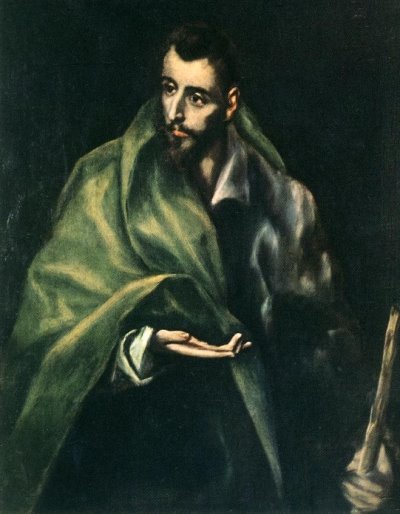
 James, son of Zebedee, and his brother John were among Our Lord's twelve disciples. Together with Peter, these two were privileged to behold the Transfiguration (Matthew 17:1; Mark 9:2; Luke 9:28). They witnessed the healing of Peter's mother-in-law (Mark 1:29-31) and the raising of the daughter of Jairus (Mark 5:37; Luke 8:51). Jesus called them aside to watch and pray with Him in the garden of Gethsemane on the night before His death (Matthew 26:37; Mark 14:33).
James and John may have been from a higher social level than the average fisherman. Their father could afford hired servants (Mark 1:20), and John (assuming him to be identical with the "beloved disciple") had connections with the high priest (John 18:15).
Jesus nicknamed the brothers Boanerges — Sons of Thunder — (Mark 3:17), probably commenting upon their headstrong, hot-tempered, and impulsive natures. So they seem to be in two incidents reported in the Gospels. Once, Jesus and the disciples were refused the hospitality of a Samaritan village, and James and John proposed to call down fire from heaven on the offenders (Luke 9:51-56). On another occasion, they asked Jesus for a special place of honor in the Kingdom, and were told that the place of honor is the place of suffering (Matthew 20:20-23; Mark 10:35-41).
 In about AD 42, shortly before Passover (Acts 12:1-2), James was beheaded by order of Herod Agrippa I, grandson of Herod the Great (who tried to kill the infant Jesus; see Matthew 2), nephew of Herod Antipas (who killed John the Baptist — Mark 6:14-29 — and examined Jesus on Good Friday — Luke 23:6-16), and father of Herod Agrippa II (who heard the defense of Paul before Festus — Acts 25:13-26:32). James was first among the Twelve to suffer martyrdom, and the only one whose death is recorded in the New Testament.
James is often called "James Major" (also "the Greater" or "the Elder") to distinguish him from other New Testament people named James. Tradition has it that he made a missionary journey to Spain, and that after his death his body was taken to Spain and buried there at Compostela. His supposed burial place there was a major site of pilgrimage in the Middle Ages, and the Spaniards fighting to drive their Moorish conquerors out of Spain took "Santiago de Compostela!" (Saint James of Compostela) as one of their chief war-cries. (The Spanish form of "James" is Diego or Iago. In most languages, "James" and "Jacob" are identical. Where an English Bible has "James," a Greek Bible has Iakobos.
The sword (the instrument of his death) and the scallop shell are both traditional representations of the apostle.
Lection
Psalm 56
Acts 11:27-12:5
Romans 8:28-39
Mark 10:35-45
Collect
Grant, O Lord, that as Saint James the apostle readily followed the calling of Your Son Jesus Christ, we may by Your grace be enabled to forsake all false and passing allurements and follow Him alone; through Jesus Christ, our Lord, who lives and reigns with You and the Holy Spirit, one God, now and forever.
Labels: apostle, bible, biography, disciple, feasts, festivals, gospels, hagiography, jacob, james, jesus, john, martyrdom, new testament, zebedee
¶ 00:00 | 0 comments |

 Pentecost, an Israelite festival connected to the spring harvest, was the time chosen by the Lord for the special outpouring of the Holy Spirit upon the disciples as they waited in Jerusalem.
With wind and fire, the Holy Spirit manifested Himself upon the apostles. Immediately, they rushed out to begin proclaiming the Gospel of Jesus Christ crucified for our sins and raised for our justification. The account is in Acts 2:1-41. Such was the power of the Holy Spirit working through Law and Gospel preaching that He converted over 3000 people faith in Christ at one time.
In Christianity, Pentecost is a "movable feast." Under the Old Covenant, including among modern Jews, Pentecost was (and is) the fiftieth day of Passover. The Christian Church, as more Gentiles swelled its ranks, kept the idea of the fiftieth day but based the celebration on the date for Easter rather than for Passover. See the second question under Notes on the Christian Calendar for a bit more on how we arrive at a date each year.
If you're preaching on the Genesis text, take a look at Upon the Plain of Shinar, a hymn by Pastor Walter Snyder.
Lection: Three Year Cycle, Series A
Psalm 25:1-15
Numbers 11:24-30
Acts 2:1-21
John 7:37-39
Lection: One Year Cycle
Psalm 143
Genesis 11:1-9
Acts 2:1-21
John 14:23-31
Collect
O God, on this day You once taught the hearts of Your faithful people by sending them the light of Your Holy Spirit. Grant us in our day by the same Spirit to have a right understanding in all things and evermore to rejoice in His holy consolation; through Jesus Christ, Your Son, our Lord, who lives and reigns with You and the Holy Spirit, one God, now and forever.
Labels: acts, apostle, christ, church history, conversion, disciple, easter, feasts, festivals, gospel, holy ghost, holy spirit, jesus, new testament, pentecost, pneumatology, translation
¶ 00:00 | 0 comments |
 People frequently confuse Philip the Apostle with Philip the Deacon, whose story is included in the Acts of the Apostles. See Acts 6:1-6; 8:5-40; and Acts 21:7-9 for accounts from his life. This Philip's commemoration is on 6 June. Philip the Apostle appears in the Synoptic Gospels and in Acts only as a name on the list of the Twelve, but he figures in several incidents in the Gospel according to John.
Philip was one of the first men Jesus called to be a disciple (John 1:43-44), and promptly brought his friend Nathanael to Jesus as well (v. 45). When some Greeks (or Greek-speaking Jews) wished to speak with Jesus, they began by approaching Philip, who took Andrew and went to Jesus. This led Jesus to His declaration, "I, when I am lifted up from the earth, will draw all people to myself." (12:20-33). At the Last Supper, he said to Jesus, "Lord, show us the Father, and it is enough for us." Jesus responded, "Whoever has seen me has seen the Father." (See the account in 14:1-14.)
Before feeding the Five Thousand (John 6:1-15), Jesus turned to Philip and asked Him, "Where are we to buy bread, so that these people may eat?" Philip answered, "Two hundred denarii would not buy enough bread for each of them to get a little."
Some scholars think it might be significant that Jesus asked Philip rather than one of the others. Luke 9:10 says that the Feeding of the Five Thousand took place near Bethsaida, and John 1:44 shows Philip coming from Bethsaida. If they were in Philip's home area, it would seem natural to ask him for directions. (As an aside, we note that Peter and Andrew also came from Bethsaida, but appear to have moved to Capernaum.)
James the son of Alphaeus (sometimes spelled "Alpheus") appears on lists of the Twelve Apostles, usually in the ninth place, but is never mentioned otherwise. He is called James the Less, or James Minor, or James the Younger. (See Matthew 10:3; Mark 3:18; Luke 6:15; Acts 1:13) Thus, we know nothing of him from the New Testament except that he was one of Jesus' original disciples and one of the Apostles. However, because of other Jameses being mentioned in the New Testament, we get the impression that he is everywhere. This isn't because of James the Less, but because he shared his name with several others — after all, it was one of the most common names among the Jews.
Why was James such a popular name in Israel? It was the given name of the original Israel: The English James is a variant of the name Jacob. While we may think of them as unrelated, the distinction grew after Bible times. In Hebrew, the name is Ya'akov. In Greek, it is Iakobos. In Latin, two forms developed, Jacobus and Jacomus. The former gives us the English Jacob and the Spanish Diego and Iago. The latter grew into the English James, the Scottish Hamish, the Spanish Jaime, and so on.
That ends what we hear of Saints Philip and James in the New Testament and we don't get much additional help from extrabiblical tradition. One story says that Philip preached in Phrygia and died in Hierapolis, and that his remains were brought to Rome and buried in the Basilica of the Twelve Apostles, where an ancient inscription indicates that this church was formerly dedicated to Philip and James.
Lection
Psalm 36:5-12
Isaiah 30:18-21
Ephesians 2:19-22
John 14:1-14
Collect
Almighty God, Your Son revealed Himself to Philip and James and gave them the knowledge of everlasting life. Grant us perfectly to know Your Son, Jesus Christ, to be the Way, the Truth, and the Life, and steadfastly to walk in the way that leads to eternal life; through the same Jesus Christ, our Lord, who lives and reigns with You and the Holy Spirit, one God, now and forever.
Labels: acts, apostle, disciple, feasts, festivals, gospels, james, nathaniel, new testament, philip, saint james, saint philip
¶ 00:00 | 0 comments |
 Today we celebrate God's blessed revelation to the disciples that Jesus was more than a good man, a holy man, an outstanding teacher, or an awesome miracle worker: Thus, we also celebrate that through the Apostles and Evangelists, we also know and believe that Jesus is "the Christ, the Son of the living God. (Matthew 16:16)"
Flesh and blood still don't reveal this to us; faith is still a gift of the Holy Spirit working through the Word of God. However, with the primary means of the Gospel Word, God uses the secondary means of flesh and blood to proclaim and teach each new generation this central confession of the Christian Faith.
Thus, once the Father, working through the Holy Spirit, created faith in Peter and the others that Jesus was the Anointed One promised by the prophets, Jesus commissioned them to minister in His Name. Yet they weren't to begin immediately. Peter's great Christological "aha!" would sit in silence until after the Son of Man went to Jerusalem to "suffer many things from the elders and chief priests and scribes, and be killed, and on the third day be raised. (Matthew 16:21)"
After the Resurrection, the Apostles received the fullness of the Holy Spirit at Pentecost and immediately put this confession into the world. Preaching, teaching, baptizing, and absolving sinners, the original disciples discipled others. The Good News of the suffering, dying, and risen Messiah led thousands, then millions to the Faith.
 Using the Keys of the Kingdom of Heaven — the binding of unrepentant sinners' trangressions to them and the remission of sins for those who believe in Jesus as their Savior — remains the Church's mission. Their exercise is through the divinely created Office of the Holy Ministry, wherein Christ's called pastors continue to forgive sins on behalf of their Lord.
Through the pastoral office, Jesus continues to breathe His Spirit upon His appointed messengers. They continue the apostolic practice of forgiving sins in His stead and by His command while still firmly declaring the unremitting wrath of God against those who will not repent and believe: "If you forgive the sins of anyone, they are forgiven; if you withhold forgiveness from anyone, it is withheld. (John 20:23)"
The Lutheran Confessions are replete with many instances and expressions of this gracious office. One brief and clear section is in the Small Catechism in the writing on Confession.
Lection
Psalm 118:19-29
Acts 4:8-13
2 Peter 1:1-15
Mark 8:27-35 (36-9:1)
Collect
Dear Father in heaven, You revealed to the apostle Peter the blessed truth that Your Son Jesus is the Christ. Strengthen us by the proclamation of this truth that we too may joyfully confess that there is salvation in no one else; through the same Jesus Christ, our Lord, who lives and reigns with You and the Holy Spirit, one God, now and forever.
Labels: apostle, christ, confession, disciple, feasts, festivals, gospels, jesus, keys, new testament, saint peter
¶ 00:00 | 1 comments |
 Saint John, Apostle and Evangelist, a son of Zebedee, was one of the twelve apostles. With his brother James and Simon Peter, he formed an inner circle among the Twelve: Those three beheld the Great Catch of Fish (Luke 5:10), the healing of Peter's mother-in-law (Mark 1:29-31), the raising of Jairus' daughter(Mark 5:37; Luke 8:51), the Transfiguration (Matthew 17:1; Mark 9:2; Luke 9:28), and Gethsemane's agony (Matthew 26:37; Mark 14:33).
He expressed willingness to undergo martyrdom (Matthew 20:22; Mark 10:39) — as did the other apostles (Matthew 26:35; Mark 14:31). However, ancient testimony says that even though he was imprisoned and exiled, he was eventually released and died a natural death in Ephesus.
According to Mark 3:17, Jesus gave James and John "the name Boanerges, that is, Sons of Thunder." He is credited with the writing three epistles and one Gospel. He is also the probable author of Revelation, although this identification is less certain.
His symbol in ecclesiastical art is usually the eagle. This and the images used for the other evangelists come from the visions of the four living creatures around God's throne in heaven. See the biography of Saint Matthew for the specifics of each.
Lection
Psalm 11
Revelation 1:1-6
1 John 1:1-2:2
John 21:20-25
Collect
Merciful Lord, cast the bright beams of Your light upon Your Church that we, being instructed in the doctrine of Your blessed apostle and evangelist John, may come to the light of everlasting life; for You live and reign with the Father and the Holy Spirit, one God, now and forever.
Labels: apostle, boanerges, christ, disciple, evangelist, feasts, festivals, gospels, jesus, john, new testament, revelation
¶ 00:00 | 0 comments |
The Apostle Thomas (Hebrew or Aramaic for "twin") was also called Didymus (Greek for "twin"); either his parents gave him a most peculiar name or else he consistently went by his nickname.
 Absent when the Risen Lord appeared to the other apostles on the evening of Easter Day, He refused to believe that Christ had indeed risen until he had seen Him for himself. When he saw Him the following week, he said to Jesus, "My Lord and My God."
Because of this, he has been known ever since as "Doubting Thomas," although "Disbelieving Thomas" or even "Faithless Thomas" probably would be more accurate. See John 20:19-29 for the full account.
We also remember his earlier words, when Jesus announced His intention of going to Jerusalem, even though His life was in danger there: Thomas said to the others, "Let us also go, that we may die with him." (John 11:7-16) Thus, we see that Thomas was sturdily loyal.
At the Last Supper, Jesus said: "In my Father's house are many rooms. If it were not so, would I have told you that I go to prepare a place for you? And if I go and prepare a place for you, I will come again and will take you to myself, that where I am you may be also. And you know the way to where I am going." Thomas was the one who responded, "Lord, we do not know where you are going. How can we know the way?" To this Jesus answered: "I am the way, and the truth, and the life. No one comes to the Father except through me. (see John 14:1-6)"
 John 21 records Thomas as one of the seven disciples fishing on the Sea of Galilee when the Lord appeared to them. Aside from these Biblical accounts, he appears only as a name on lists of the Apostles.
A few centuries later, a story circulated in the Mediterranean world that he went to preach in India; a community in the Kerala district claims descent from Christians converted by the preaching of Thomas. Among Indian Christians, tradition claims that Thomas was speared to death near Madras, and accordingly is often pictured holding a spear.
Since he was credited with the building up of the Church through his missionary journeys, a carpenter's square also is a regular symbol of the apostle.
Lection
Psalm 136:1-4
Judges 6:36-40
Ephesians 4:7, 11-16
John 20:24-29
Collect
Almighty and ever living God, who upheld and strengthened Your apostle Thomas with sure and certain faith in Your Son's resurrection, grant us perfect and unwavering belief in Jesus Christ, our resurrected Lord and God, that our faith may never be found wanting in Your sight; through this same Jesus Christ, who lives and reigns with You and the Holy Spirit, one God, now and forever.
Labels: apostle, biography, christ, disciple, doubting thomas, feasts, festivals, gospels, hagiography, jesus, martyrdom, new testament, resurrection, saint thomas, thomas
¶ 00:00 | 0 comments |
 Today we celebrate the Feast of Saint Andrew, Apostle of our Lord Jesus Christ. Most New Testament references include him on a list of the Twelve Apostles or group him with his brother, Simon Peter. But we see him acting as an individual three times. When a number of Greeks (or Greek-speaking Jews) wished to speak with Jesus, they approached Philip, who told Andrew, and the two of them told Jesus (John 12:20-22). Since "Philip" and "Andrew" are Greek names, these petitioners may have sought them out. Before Jesus fed the Five Thousand, Andrew said, "There is a boy here who has five barley loaves and two fish, but what are they for so many? (John 6:9)"
The first two disciples whom John reports as attaching themselves to Jesus (John 1:35-42) are Andrew and another disciple (unnamed, but commonly supposed to be John himself — John never mentioned himself by name, a widespread literary convention). After meeting Jesus, Andrew found his brother Simon and brought him to Jesus. Thus, on each occasion when he is mentioned as an individual, we see him bringing others to meet the Savior.
Just as Andrew was the first of the Apostles, so the Western Church uses his feast to mark the beginning of the Church Year. The First Sunday of Advent is defined as the Sunday on or nearest his feast. (The way the reckoning was designed, it also means that there are always four Sundays in Advent. This year, the First Sunday in Advent was the day before Saint Andrew's Day.
 Scotland considers Andrew to be its national saint. Meanwhile, George (23 April), Pádraig (17 March), and Dewi (1 March) fill these roles for England, Ireland, and Wales, respectively. George, a soldier, is customarily pictured as a knight with a shield that bears a red cross on a white background. This became the national flag of England.
Tradition says that Andrew was crucified on a Cross Saltire — an "X"-shaped cross, which became his symbol and later, the national flag of Scotland. One symbol of Patrick is a red cross saltire on a white background. The crosses of George and Andrew were combined to form the Union Jack, or flag of Great Britain; later the cross of Patrick was added to create the present Union Jack.
Alas, poor Wales ... it doesn't appear on the British flag, perhaps because Dewi didn't have such a representative symbol.
Lection
Psalm 139:1-12
Ezekiel 3:16-21
Romans 10:8b-18
John 1:35-42a
Collect
Almighty God, by Your grace the blessed apostle Andrew obeyed the call of Your Son to be a disciple. Grant us also to follow the same Lord Jesus Christ in heart and life, who lives and reigns with You and the Holy Spirit, one God, now and forever.
Labels: advent, andrew, apostle, christ, church year, disciple, feasts, festivals, gospels, jesus, martyrdom, new testament, philip, scotland
¶ 00:00 | 0 comments |
 The name "Bartholomew" appears in the New Testament only on lists of the names of the twelve apostles. John gives no list of the Twelve, but refers to more of them individually than do any of the Synoptic writers. He doesn't name Bartholomew, but early in his account (John 1:43-50) he tells of the call to discipleship of one Nathaniel who is supposed to be the same person.
The reasoning is as follows: John's Nathanael is introduced as one of the earliest followers of Jesus, in terms suggesting that he became one of the Twelve. He is clearly not Peter, Andrew, James, John, Philip, Thomas, Judas Iscariot, or Judas (not Iscariot), all of whom John names separately.
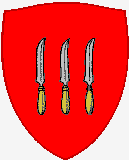 He isn't Matthew, whose call is described differently. This leaves Bartholomew, James the son of Alpheus, and Simon the Zealot. Of these, Bartholomew is the leading candidate for two reasons: (1) "Bar-tholomew" is a patronymic (a father-based name), meaning "son of Tolmai (or Talmai)." Thus, it's quite likely that he had another name. (2) Nathanael is introduced in John's narrative as a friend of Philip. Since Bartholomew is paired with Philip on three of our four lists of Apostles, it seems likely that they were associated.
We have no certain information about his later life. Some writers, including the historian Eusebius, say that he preached in India. The majority tradition, with varying details, is that Saint Bartholomew preached in Armenia, and was finally skinned alive and beheaded in Albanus or Albanopolis on the Caspian Sea, as shown above. His emblem in art is, therefore, a flaying knife or knives. Michelangelo also followed this tradition but imposed his own face on Bartholomew in his "Last Judgment" fresco, as shown in a previous commemoration.
Lection
Psalm 121
Proverbs 3:1-8
2 Corinthians 4:7-10
Luke 22:24-30 or John 1:43-51
Collect
Almighty God, Your Son, Jesus Christ, chose Bartholomew to be an apostle to preach the blessed Gospel. Grant that Your Church may love what he believed and preach what he taught; through Jesus Christ, our Lord, who lives and reigns with You and the Holy Spirit, one God, now and forever.
Labels: apostle, bartholomew, biography, disciple, feasts, festivals, gospels, hagiography, jesus, martyrdom, nathaniel, new testament
¶ 00:00 | 0 comments |
James, son of Zebedee, and his brother John were among Our Lord's twelve disciples. Together with Peter, these two were privileged to behold the Transfiguration (Matthew 17:1; Mark 9:2; Luke 9:28). They witnessed the healing of Peter's mother-in-law (Mark 1:29-31) and the raising of the daughter of Jairus (Mark 5:37; Luke 8:51). Jesus called them aside to watch and pray with Him in the garden of Gethsemane on the night before His death (Matthew 26:37; Mark 14:33).James and John may have been from a higher social level than the average fisherman. Their father could afford hired servants (Mark 1:20), and John (assuming him to be identical with the "beloved disciple") had connections with the high priest (John 18:15).
Jesus nicknamed the brothers Boanerges — Sons of Thunder — (Mark 3:17), probably commenting upon their headstrong, hot-tempered, and impulsive natures. So they seem to be in two incidents reported in the Gospels. Once, Jesus and the disciples were refused the hospitality of a Samaritan village, and James and John proposed to call down fire from heaven on the offenders (Luke 9:51-56). On another occasion, they asked Jesus for a special place of honor in the Kingdom, and were told that the place of honor is the place of suffering (Matthew 20:20-23; Mark 10:35-41).
In about AD 42, shortly before Passover (Acts 12:1-2), James was beheaded by order of Herod Agrippa I, grandson of Herod the Great (who tried to kill the infant Jesus; see Matthew 2), nephew of Herod Antipas (who killed John the Baptist — Mark 6:14-29 — and examined Jesus on Good Friday — Luke 23:6-16), and father of Herod Agrippa II (who heard the defense of Paul before Festus — Acts 25:13-26:32). James was first among the Twelve to suffer martyrdom, and the only one whose death is recorded in the New Testament.James is often called "James Major" (also "the Greater" or "the Elder") to distinguish him from other New Testament people named James. Tradition has it that he made a missionary journey to Spain, and that after his death his body was taken to Spain and buried there at Compostela. His supposed burial place there was a major site of pilgrimage in the Middle Ages, and the Spaniards fighting to drive their Moorish conquerors out of Spain took "Santiago de Compostela!" (Saint James of Compostela) as one of their chief war-cries. (The Spanish form of "James" is Diego or Iago. In most languages, "James" and "Jacob" are identical. Where an English Bible has "James," a Greek Bible has Iakobos.
The sword (the instrument of his death) and the scallop shell are both traditional representations of the apostle.
Lection
Psalm 56
Acts 11:27-12:5
Romans 8:28-39
Mark 10:35-45
Collect
Grant, O Lord, that as Saint James the apostle readily followed the calling of Your Son Jesus Christ, we may by Your grace be enabled to forsake all false and passing allurements and follow Him alone; through Jesus Christ, our Lord, who lives and reigns with You and the Holy Spirit, one God, now and forever.
Labels: apostle, biography, disciple, feasts, festivals, gospels, hagiography, jacob, james, jesus, john, martyrdom, new testament, zebedee
¶ 00:00 | 0 comments |
Pentecost, an Israelite festival connected to the spring harvest, was the time chosen by the Lord for the special outpouring of the Holy Spirit upon the disciples as they waited in Jerusalem.With wind and fire, the Holy Spirit manifested Himself upon the apostles. Immediately, they rushed out to begin proclaiming the Gospel of Jesus Christ crucified for our sins and raised for our justification. The account is in Acts 2:1-41. Such was the power of the Holy Spirit working through Law and Gospel preaching that He converted over 3000 people faith in Christ at one time.
In Christianity, Pentecost is a "movable feast." Under the Old Covenant, including among modern Jews, Pentecost was (and is) the fiftieth day of Passover. The Christian Church, as more Gentiles swelled its ranks, kept the idea of the fiftieth day but based the celebration on the date for Easter rather than for Passover. See the second question under Notes on the Christian Calendar for a bit more on how we arrive at a date each year.
If you're preaching on the Genesis text, take a look at Upon the Plain of Shinar, a hymn by Pastor Walter Snyder.
Lection: Three Year Cycle, Series C
Psalm 143
Genesis 11:1-9
Acts 2:1-21
John 14:23-31
Lection: One Year Cycle
Psalm 143
Genesis 11:1-9
Acts 2:1-21
John 14:23-31
Collect
O God, on this day You once taught the hearts of Your faithful people by sending them the light of Your Holy Spirit. Grant us in our day by the same Spirit to have a right understanding in all things and evermore to rejoice in His holy consolation; through Jesus Christ, Your Son, our Lord, who lives and reigns with You and the Holy Spirit, one God, now and forever.
Labels: acts, apostle, christ, church history, conversion, disciple, easter, feasts, festivals, gospel, holy ghost, holy spirit, jesus, new testament, pentecost, pneumatology, translation
¶ 00:00 | 0 comments |
People frequently confuse Philip the Apostle with Philip the Deacon, whose story is included in the Acts of the Apostles. See Acts 6:1-6; 8:5-40; and Acts 21:7-9 for accounts from his life. This Philip's commemoration is on 6 June. Philip the Apostle appears in the Synoptic Gospels and in Acts only as a name on the list of the Twelve, but he figures in several incidents in the Gospel according to John.Philip was one of the first men Jesus called to be a disciple (John 1:43-44), and promptly brought his friend Nathanael to Jesus as well (v. 45). When some Greeks (or Greek-speaking Jews) wished to speak with Jesus, they began by approaching Philip, who took Andrew and went to Jesus. This led Jesus to His declaration, "I, when I am lifted up from the earth, will draw all people to myself." (12:20-33). At the Last Supper, he said to Jesus, "Lord, show us the Father, and it is enough for us." Jesus responded, "Whoever has seen me has seen the Father." (See the account in 14:1-14.)
Before feeding the Five Thousand (John 6:1-15), Jesus turned to Philip and asked Him, "Where are we to buy bread, so that these people may eat?" Philip answered, "Two hundred denarii would not buy enough bread for each of them to get a little."
Some scholars think it might be significant that Jesus asked Philip rather than one of the others. Luke 9:10 says that the Feeding of the Five Thousand took place near Bethsaida, and John 1:44 shows Philip coming from Bethsaida. If they were in Philip's home area, it would seem natural to ask him for directions. (As an aside, we note that Peter and Andrew also came from Bethsaida, but appear to have moved to Capernaum.)
James the son of Alphaeus (sometimes spelled "Alpheus") appears on lists of the Twelve Apostles, usually in the ninth place, but is never mentioned otherwise. He is called James the Less, or James Minor, or James the Younger. (See Matthew 10:3; Mark 3:18; Luke 6:15; Acts 1:13) Thus, we know nothing of him from the New Testament except that he was one of Jesus' original disciples and one of the Apostles. However, because of other Jameses being mentioned in the New Testament, we get the impression that he is everywhere. This isn't because of James the Less, but because he shared his name with several others — after all, it was one of the most common names among the Jews.
Why was James such a popular name in Israel? It was the given name of the original Israel: The English James is a variant of the name Jacob. While we may think of them as unrelated, the distinction grew after Bible times. In Hebrew, the name is Ya'akov. In Greek, it is Iakobos. In Latin, two forms developed, Jacobus and Jacomus. The former gives us the English Jacob and the Spanish Diego and Iago. The latter grew into the English James, the Scottish Hamish, the Spanish Jaime, and so on.
That ends what we hear of Saints Philip and James in the New Testament and we don't get much additional help from extrabiblical tradition. One story says that Philip preached in Phrygia and died in Hierapolis, and that his remains were brought to Rome and buried in the Basilica of the Twelve Apostles, where an ancient inscription indicates that this church was formerly dedicated to Philip and James.
Lection
Psalm 36:5-12
Isaiah 30:18-21
Ephesians 2:19-22
John 14:1-14
Collect
Almighty God, Your Son revealed Himself to Philip and James and gave them the knowledge of everlasting life. Grant us perfectly to know Your Son, Jesus Christ, to be the Way, the Truth, and the Life, and steadfastly to walk in the way that leads to eternal life; through the same Jesus Christ, our Lord, who lives and reigns with You and the Holy Spirit, one God, now and forever.
Labels: apostle, disciple, feasts, festivals, gospels, james, nathaniel, new testament, philip, saint james, saint philip
¶ 00:00 | 0 comments |
Today we celebrate God's blessed revelation to the disciples that Jesus was more than a good man, a holy man, an outstanding teacher, or an awesome miracle worker: Thus, we also celebrate that through the Apostles and Evangelists, we also know and believe that Jesus is "the Christ, the Son of the living God. (Matthew 16:16)"Flesh and blood still don't reveal this to us; faith is still a gift of the Holy Spirit working through the Word of God. However, with the primary means of the Gospel Word, God uses the secondary means of flesh and blood to proclaim and teach each new generation this central confession of the Christian Faith.
Thus, once the Father, working through the Holy Spirit, created faith in Peter and the others that Jesus was the Anointed One promised by the prophets, Jesus commissioned them to minister in His Name. Yet they weren't to begin immediately. Peter's great Christological "aha!" would sit in silence until after the Son of Man went to Jerusalem to "suffer many things from the elders and chief priests and scribes, and be killed, and on the third day be raised. (Matthew 16:21)"
After the Resurrection, the Apostles received the fullness of the Holy Spirit at Pentecost and immediately put this confession into the world. Preaching, teaching, baptizing, and absolving sinners, the original disciples discipled others. The Good News of the suffering, dying, and risen Messiah led thousands, then millions to the Faith.
Using the Keys of the Kingdom of Heaven — the binding of unrepentant sinners' trangressions to them and the remission of sins for those who believe in Jesus as their Savior — remains the Church's mission. Their exercise is through the divinely created Office of the Holy Ministry, wherein Christ's called pastors continue to forgive sins on behalf of their Lord.Through the pastoral office, Jesus continues to breathe His Spirit upon His appointed messengers. They continue the apostolic practice of forgiving sins in His stead and by His command while still firmly declaring the unremitting wrath of God against those who will not repent and believe: "If you forgive the sins of anyone, they are forgiven; if you withhold forgiveness from anyone, it is withheld. (John 20:23)"
The Lutheran Confessions are replete with many instances and expressions of this gracious office. One brief and clear section is in the Small Catechism in the writing on Confession.
Lection
Psalm 118:19-29
Acts 4:8-13
2 Peter 1:1-15
Mark 8:27-35 (36-9:1)
Collect
Dear Father in heaven, You revealed to the apostle Peter the blessed truth that Your Son Jesus is the Christ. Strengthen us by the proclamation of this truth that we too may joyfully confess that there is salvation in no one else; through the same Jesus Christ, our Lord, who lives and reigns with You and the Holy Spirit, one God, now and forever.
Tags: Saint Peter | Peter | Simon Peter | Confession of Saint Peter | Jesus | apostle | Jesus Christ | Christ | Christian feasts | festivals | saints' days | biography | hagiography | commemoration | theology | Christology | historical theology | exegetical theology | Church history | Bible history | Bible | Scripture | New Testament | Aardvark Alley
Labels: apostle, christ, confession, disciple, feasts, festivals, gospels, jesus, keys, new testament, saint peter
¶ 00:00 | 0 comments |
Saint John, Apostle and Evangelist, a son of Zebedee, was one of the twelve apostles. With his brother James and Simon Peter, he formed an inner circle among the Twelve: Those three beheld the Great Catch of Fish (Luke 5:10), the healing of Peter's mother-in-law (Mark 1:29-31), the raising of Jairus' daughter(Mark 5:37; Luke 8:51), the Transfiguration (Matthew 17:1; Mark 9:2; Luke 9:28), and Gethsemane's agony (Matthew 26:37; Mark 14:33).He expressed willingness to undergo martyrdom (Matthew 20:22; Mark 10:39) — as did the other apostles (Matthew 26:35; Mark 14:31). However, ancient testimony says that even though he was imprisoned and exiled, he was eventually released and died a natural death in Ephesus.
According to Mark 3:17, Jesus gave James and John "the name Boanerges, that is, Sons of Thunder." He is credited with the writing three epistles and one Gospel. He is also the probable author of Revelation, although this identification is less certain.
His symbol in ecclesiastical art is usually the eagle. This and the images used for the other evangelists come from the visions of the four living creatures around God's throne in heaven. See the biography of Saint Matthew for the specifics of each.
Lection
Psalm 11
Revelation 1:1-6
1 John 1:1-2:2
John 21:20-25
Collect
Merciful Lord, cast the bright beams of Your light upon Your Church that we, being instructed in the doctrine of Your blessed apostle and evangelist John, may come to the light of everlasting life; for You live and reign with the Father and the Holy Spirit, one God, now and forever.
Labels: apostle, boanerges, christ, disciple, evangelist, feasts, festivals, gospels, jesus, john, new testament, revelation
¶ 00:00 | 0 comments |
The Apostle Thomas (Hebrew or Aramaic for "twin") was also called Didymus (Greek for "twin"); either his parents gave him a most peculiar name or else he consistently went by his nickname.
Absent when the Risen Lord appeared to the other apostles on the evening of Easter Day, He refused to believe that Christ had indeed risen until he had seen Him for himself. When he saw Him the following week, he said to Jesus, "My Lord and My God."Because of this, he has been known ever since as "Doubting Thomas," although "Disbelieving Thomas" or even "Faithless Thomas" probably would be more accurate. See John 20:19-29 for the full account.
We also remember his earlier words, when Jesus announced His intention of going to Jerusalem, even though His life was in danger there: Thomas said to the others, "Let us also go, that we may die with him." (John 11:7-16) Thus, we see that Thomas was sturdily loyal.
At the Last Supper, Jesus said: "In my Father's house are many rooms. If it were not so, would I have told you that I go to prepare a place for you? And if I go and prepare a place for you, I will come again and will take you to myself, that where I am you may be also. And you know the way to where I am going." Thomas was the one who responded, "Lord, we do not know where you are going. How can we know the way?" To this Jesus answered: "I am the way, and the truth, and the life. No one comes to the Father except through me. (see John 14:1-6)"
John 21 records Thomas as one of the seven disciples fishing on the Sea of Galilee when the Lord appeared to them. Aside from these Biblical accounts, he appears only as a name on lists of the Apostles.A few centuries later, a story circulated in the Mediterranean world that he went to preach in India; a community in the Kerala district claims descent from Christians converted by the preaching of Thomas. Among Indian Christians, tradition claims that Thomas was speared to death near Madras, and accordingly is often pictured holding a spear.
Since he was credited with the building up of the Church through his missionary journeys, a carpenter's square also is a regular symbol of the apostle.
Lection
Psalm 136:1-4
Judges 6:36-40
Ephesians 4:7, 11-16
John 20:24-29
Collect
Almighty and ever living God, who upheld and strengthened Your apostle Thomas with sure and certain faith in Your Son's resurrection, grant us perfect and unwavering belief in Jesus Christ, our resurrected Lord and God, that our faith may never be found wanting in Your sight; through this same Jesus Christ, who lives and reigns with You and the Holy Spirit, one God, now and forever.
Labels: apostle, biography, christ, disciple, doubting thomas, feasts, festivals, gospels, hagiography, jesus, martyrdom, new testament, resurrection, saint thomas, thomas
¶ 00:00 | 0 comments |
Today we celebrate the Feast of Saint Andrew, Apostle of our Lord Jesus Christ. Most New Testament references include him on a list of the Twelve Apostles or group him with his brother, Simon Peter. But we see him acting as an individual three times. When a number of Greeks (or Greek-speaking Jews) wished to speak with Jesus, they approached Philip, who told Andrew, and the two of them told Jesus (John 12:20-22). Since "Philip" and "Andrew" are Greek names, these petitioners may have sought them out. Before Jesus fed the Five Thousand, Andrew said, "There is a boy here who has five barley loaves and two fish, but what are they for so many? (John 6:9)"The first two disciples whom John reports as attaching themselves to Jesus (John 1:35-42) are Andrew and another disciple (unnamed, but commonly supposed to be John himself — John never mentioned himself by name, a widespread literary convention). After meeting Jesus, Andrew found his brother Simon and brought him to Jesus. Thus, on each occasion when he is mentioned as an individual, we see him bringing others to meet the Savior.
Just as Andrew was the first of the Apostles, so the Western Church uses his feast to mark the beginning of the Church Year. The First Sunday of Advent is defined as the Sunday on or nearest his feast. (The way the reckoning was designed, it also means that there are always four Sundays in Advent. This year, the First Sunday in Advent was the day before Saint Andrew's Day.
Scotland considers Andrew to be its national saint. Meanwhile, George (23 April), Pádraig (17 March), and Dewi (1 March) fill these roles for England, Ireland, and Wales, respectively. George, a soldier, is customarily pictured as a knight with a shield that bears a red cross on a white background. This became the national flag of England.Tradition says that Andrew was crucified on a Cross Saltire — an "X"-shaped cross, which became his symbol and later, the national flag of Scotland. One symbol of Patrick is a red cross saltire on a white background. The crosses of George and Andrew were combined to form the Union Jack, or flag of Great Britain; later the cross of Patrick was added to create the present Union Jack.
Alas, poor Wales ... it doesn't appear on the British flag, perhaps because Dewi didn't have such a representative symbol.
Lection
Psalm 139:1-12
Ezekiel 3:16-21
Romans 10:8b-18
John 1:35-42a
Collect
Almighty God, by Your grace the blessed apostle Andrew obeyed the call of Your Son to be a disciple. Grant us also to follow the same Lord Jesus Christ in heart and life, who lives and reigns with You and the Holy Spirit, one God, now and forever.
Labels: advent, andrew, apostle, christ, church year, disciple, feasts, festivals, gospels, jesus, martyrdom, new testament, philip, scotland
¶ 00:00 | 0 comments |
The name "Bartholomew" appears in the New Testament only on lists of the names of the twelve apostles. John gives no list of the Twelve, but refers to more of them individually than do any of the Synoptic writers. He doesn't name Bartholomew, but early in his account (John 1:43-50) he tells of the call to discipleship of one Nathaniel who is supposed to be the same person.The reasoning is as follows: John's Nathanael is introduced as one of the earliest followers of Jesus, in terms suggesting that he became one of the Twelve. He is clearly not Peter, Andrew, James, John, Philip, Thomas, Judas Iscariot, or Judas (not Iscariot), all of whom John names separately.
He isn't Matthew, whose call is described differently. This leaves Bartholomew, James the son of Alpheus, and Simon the Zealot. Of these, Bartholomew is the leading candidate for two reasons: (1) "Bar-tholomew" is a patronymic (a father-based name), meaning "son of Tolmai (or Talmai)." Thus, it's quite likely that he had another name. (2) Nathanael is introduced in John's narrative as a friend of Philip. Since Bartholomew is paired with Philip on three of our four lists of Apostles, it seems likely that they were associated.We have no certain information about his later life. Some writers, including the historian Eusebius, say that he preached in India. The majority tradition, with varying details, is that Saint Bartholomew preached in Armenia, and was finally skinned alive and beheaded in Albanus or Albanopolis on the Caspian Sea, as shown above. His emblem in art is, therefore, a flaying knife or knives. Michelangelo also followed this tradition but imposed his own face on Bartholomew in his "Last Judgment" fresco, as shown in a previous commemoration.
Lection
Psalm 121
Proverbs 3:1-8
2 Corinthians 4:7-10
Luke 22:24-30 or John 1:43-51
Collect
Almighty God, Your Son, Jesus Christ, chose Bartholomew to be an apostle to preach the blessed Gospel. Grant that Your Church may love what he believed and preach what he taught; through Jesus Christ, our Lord, who lives and reigns with You and the Holy Spirit, one God, now and forever.
Labels: apostle, bartholomew, biography, disciple, feasts, festivals, gospels, hagiography, jesus, martyrdom, nathaniel, new testament
¶ 00:00 | 0 comments |
James, son of Zebedee, and his brother John were among Our Lord's twelve disciples. Together with Peter, these two were privileged to behold the Transfiguration (Matthew 17:1; Mark 9:2; Luke 9:28). They witnessed the healing of Peter's mother-in-law (Mark 1:29-31) and the raising of the daughter of Jairus (Mark 5:37; Luke 8:51). Jesus called them aside to watch and pray with Him in the garden of Gethsemane on the night before His death (Matthew 26:37; Mark 14:33).James and John may have been from a higher social level than the average fisherman. Their father could afford hired servants (Mark 1:20), and John (assuming him to be identical with the "beloved disciple") had connections with the high priest (John 18:15).
Jesus nicknamed the brothers Boanerges — Sons of Thunder — (Mark 3:17), probably commenting upon their headstrong, hot-tempered, and impulsive natures. So they seem to be in two incidents reported in the Gospels. Once, Jesus and the disciples were refused the hospitality of a Samaritan village, and James and John proposed to call down fire from heaven on the offenders (Luke 9:51-56). On another occasion, they asked Jesus for a special place of honor in the Kingdom, and were told that the place of honor is the place of suffering (Matthew 20:20-23; Mark 10:35-41).
In about AD 42, shortly before Passover (Acts 12:1-2), James was beheaded by order of Herod Agrippa I, grandson of Herod the Great (who tried to kill the infant Jesus; see Matthew 2), nephew of Herod Antipas (who killed John the Baptist — Mark 6:14-29 — and examined Jesus on Good Friday — Luke 23:6-16), and father of Herod Agrippa II (who heard the defense of Paul before Festus — Acts 25:13-26:32). James was first among the Twelve to suffer martyrdom, and the only one whose death is recorded in the New Testament.James is often called "James Major" (also "the Greater" or "the Elder") to distinguish him from other New Testament people named James. Tradition has it that he made a missionary journey to Spain, and that after his death his body was taken to Spain and buried there at Compostela. His supposed burial place there was a major site of pilgrimage in the Middle Ages, and the Spaniards fighting to drive their Moorish conquerors out of Spain took "Santiago de Compostela!" (Saint James of Compostela) as one of their chief war-cries. (The Spanish form of "James" is Diego or Iago. In most languages, "James" and "Jacob" are identical. Where an English Bible has "James," a Greek Bible has Iakobos.
The sword (the instrument of his death) and the scallop shell are both traditional representations of the apostle.
Lection
Psalm 56
Acts 11:27-12:5
Romans 8:28-39
Mark 10:35-45
Collect
Grant, O Lord, that as Saint James the apostle readily followed the calling of Your Son Jesus Christ, we may by Your grace be enabled to forsake all false and passing allurements and follow Him alone; through Jesus Christ, our Lord, who lives and reigns with You and the Holy Spirit, one God, now and forever.
Labels: apostle, biography, disciple, feasts, festivals, gospels, hagiography, jacob, james, jesus, john, martyrdom, new testament, zebedee
¶ 00:00 | 0 comments |


