Aardvark Alley

Confessional Lutheran theology, hagiography, philosophy, music, culture, sports, education,
and whatever else is on the fevered mind of Orycteropus Afer
25 March 2017
The Annunciation of Our Lord
25 March, New Testament
Transferred to 4 April AD 2016
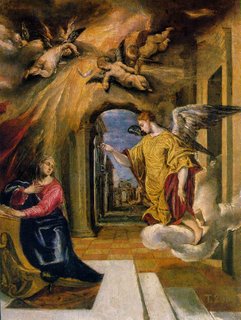 Luke 1:26-38 tells us how the angel Gabriel announced to Mary of Nazareth that she had been chosen to be the mother of the Christ and her response. Mary, a virgin pledged to marry Joseph, briefly wondered how this could be, since she had not had sex with any man.
Once Gabriel told her that the Child was conceived by the Holy Spirit, she humbly accepted this sacred obligation: "Behold, I am the servant of the Lord; let it be to me according to your word. (v. 38)"
Nothing prevents us from supposing that Our Lord was conceived immediately after this. Since the Church from early days observed 25 March as the date of the Annunciation, the celebration of the Christ's Nativity is observed on 25 December, nine months later.
For centuries in vast parts of Europe, 25 March also marked the change to the new year. While it seems somewhat odd and abrupt to change years in the middle of a month, we can imagine that those accustomed to that calendar easily made the adjustment. Furthermore, they could take to heart the reminder that God's chosen time, that most special time when He sent His Son into human flesh, merited such a "strange" circumstance.
Even though the Visitation of Mary to her cousin Elizabeth took place six months later (see Luke 1:39-56) — as Elizabeth neared the end of her own pregnancy with the child who would grow to become John the Baptizer — Mary's song of celebration at that time is also appropriate to remember on the Feast of the Annunciation. In the Magnificat (Luke 1:46-55) the virgin mother of God celebrated God's gift to her, to Israel, and to all people.
Martin Luther wrote a commentary on this canticle. About verse 49, he said, "The 'great things' are nothing less than that she became the Mother of God, in which work so many and such great good things are bestowed upon her as pass man's understanding. For on this there follows all honor, all blessedness, and her unique place in the whole of mankind, among whom she has no equal, namely, that she had a child by the Father in Heaven, and such a child.
"She herself is unable to find a name for this work, it is too exceedingly great; all she can do is break out in the fervent cry: 'They are great things,' impossible to describe or define. Hence men have crowded all her glory into a single word, calling her the Mother of God.
"No one can say anything greater of her or to her, though he had as many tongues as there are leaves on the trees, or grass in the fields, or stars in the sky, or sand by the sea. It needs to be pondered in the heart, what it means to be the Mother of God."
The Annunciation is such an important Christological feast that it takes precedence over even the Sundays in Lent in much of Christendom. See Looking Ahead at Weedon's Blog for details.
Lection
Psalm 45:7-17
Isaiah 7:10-14
Hebrews 10:4-10
Luke 1:26-38
Collect
O Lord, as we have known the incarnation of Your Son Jesus Christ by the message of the angel to the virgin Mary, so by His cross and Passion bring us to the glory of His resurrection; through the same Jesus Christ, our Lord, who lives and reigns with You and the Holy Spirit, one God, now and forever.
NOTE: Regarding the occasional transfer of this major feast, the Lutheran Service Book: Altar Book states on page 960, It is appropriate to observe this feast day in all its fullness during Lent. However, according to historical precedent, when the Annunciation falls during Holy Week or on Easter Day (or also on the Fifth Sunday in Lent in the one-year series), it should not be observed at those times but may be transferred to a weekday following the Second Sunday of Easter. In most of Eastern Christendom, rather than transferring the Annunciation, it is celebrated fully. In Orthodoxy, this normally means the celebratory Liturgy of John Chrysostom.
Luther quote from Luther's Works, Vol. 21, p. 326, ed. Jaroslav Pelikan, Concordia Publishing House © 1956.


Transferred to 4 April AD 2016
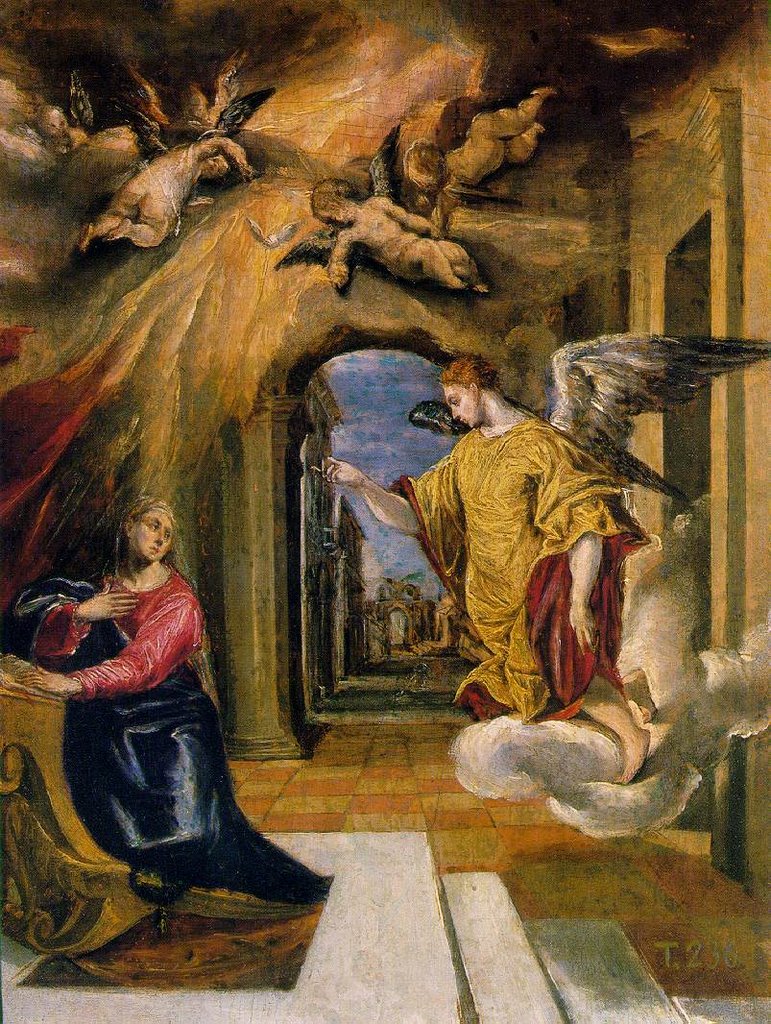 Luke 1:26-38 tells us how the angel Gabriel announced to Mary of Nazareth that she had been chosen to be the mother of the Christ and her response. Mary, a virgin pledged to marry Joseph, briefly wondered how this could be, since she had not had sex with any man.
Once Gabriel told her that the Child was conceived by the Holy Spirit, she humbly accepted this sacred obligation: "Behold, I am the servant of the Lord; let it be to me according to your word. (v. 38)"
Nothing prevents us from supposing that Our Lord was conceived immediately after this. Since the Church from early days observed 25 March as the date of the Annunciation, the celebration of the Christ's Nativity is observed on 25 December, nine months later.
For centuries in vast parts of Europe, 25 March also marked the change to the new year. While it seems somewhat odd and abrupt to change years in the middle of a month, we can imagine that those accustomed to that calendar easily made the adjustment. Furthermore, they could take to heart the reminder that God's chosen time, that most special time when He sent His Son into human flesh, merited such a "strange" circumstance.
Even though the Visitation of Mary to her cousin Elizabeth took place six months later (see Luke 1:39-56) — as Elizabeth neared the end of her own pregnancy with the child who would grow to become John the Baptizer — Mary's song of celebration at that time is also appropriate to remember on the Feast of the Annunciation. In the Magnificat (Luke 1:46-55) the virgin mother of God celebrated God's gift to her, to Israel, and to all people.
Martin Luther wrote a commentary on this canticle. About verse 49, he said, "The 'great things' are nothing less than that she became the Mother of God, in which work so many and such great good things are bestowed upon her as pass man's understanding. For on this there follows all honor, all blessedness, and her unique place in the whole of mankind, among whom she has no equal, namely, that she had a child by the Father in Heaven, and such a child.
"She herself is unable to find a name for this work, it is too exceedingly great; all she can do is break out in the fervent cry: 'They are great things,' impossible to describe or define. Hence men have crowded all her glory into a single word, calling her the Mother of God.
"No one can say anything greater of her or to her, though he had as many tongues as there are leaves on the trees, or grass in the fields, or stars in the sky, or sand by the sea. It needs to be pondered in the heart, what it means to be the Mother of God."
The Annunciation is such an important Christological feast that it takes precedence over even the Sundays in Lent in much of Christendom. See Looking Ahead at Weedon's Blog for details.
Lection
Psalm 45:7-17
Isaiah 7:10-14
Hebrews 10:4-10
Luke 1:26-38
Collect
O Lord, as we have known the incarnation of Your Son Jesus Christ by the message of the angel to the virgin Mary, so by His cross and Passion bring us to the glory of His resurrection; through the same Jesus Christ, our Lord, who lives and reigns with You and the Holy Spirit, one God, now and forever.
NOTE: Regarding the occasional transfer of this major feast, the Lutheran Service Book: Altar Book states on page 960, It is appropriate to observe this feast day in all its fullness during Lent. However, according to historical precedent, when the Annunciation falls during Holy Week or on Easter Day (or also on the Fifth Sunday in Lent in the one-year series), it should not be observed at those times but may be transferred to a weekday following the Second Sunday of Easter. In most of Eastern Christendom, rather than transferring the Annunciation, it is celebrated fully. In Orthodoxy, this normally means the celebratory Liturgy of John Chrysostom.
Luther quote from Luther's Works, Vol. 21, p. 326, ed. Jaroslav Pelikan, Concordia Publishing House © 1956.
Labels: annunciation, christ, christology, feasts, festivals, gabriel, gospels, incarnation, jesus, luke, mary, new testament, theotokos
¶ 00:00 | 0 comments |
05 September 2016
+ Zechariah and Elizabeth +
5 September, New Testament
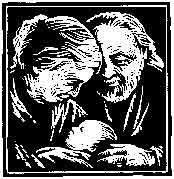 Zechariah (or Zachariah) and Elizabeth were "righteous before God, living blamelessly according to all the commandments and regulations of the Lord. (Luke 1:6)" The angel Gabriel greeted Zechariah, a priest in the temple in Jerusalem, announcing that Zechariah and Elizabeth would become parents of a son. Initially he didn't believe Gabriel because of their old age. For this, Zechariah became unable to speak.
After their son was born, Elizabeth named the boy John, which means "Yahweh (the Lord) is gracious." As friends and relatives sought to change her mind, thinking that he should be named for someone in their family, they asked Zechariah to write down what the boy's name should be. Suddenly, his voice returned and he confirmed his wife's choice.
In response to receiving his son and the return of his voice, Zechariah sang the Benedictus. This canticle beautifully summarizes God's Old Testament promises and predicts John's work as forerunner to the Messiah, who would be born in three more months (Luke 1:68-79).
We remember the faithful and pious examples of Zechariah and Elizabeth and honor them for raising the last great prophet of the coming Christ, Saint John the Baptist.
Those familiar with older English language Bibles might remember them slightly differently. That's because the Authorized Version (King James) and some other translations use the Greek form of their names, calling them Zacharias and Elisabeth.
The Benedictus
 Blessed be the Lord God of Israel,
for he has visited and redeemed his people
and has raised up a horn of salvation for us in the house of his servant David,
as he spoke by the mouth of his holy prophets from of old,
that we should be saved from our enemies
and from the hand of all who hate us;
to show the mercy promised to our fathers
and to remember his holy covenant,
the oath that he swore to our father Abraham,
to grant us that we, being delivered from the hand of our enemies,
might serve him without fear,
in holiness and righteousness before him all our days.
And you, child, will be called the prophet of the Most High;
for you will go before the Lord to prepare his ways,
to give knowledge of salvation to his people
in the forgiveness of their sins,
because of the tender mercy of our God,
whereby the sunrise shall visit us from on high
to give light to those who sit in darkness and in the shadow of death,
to guide our feet into the way of peace.
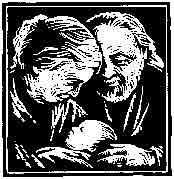 Zechariah (or Zachariah) and Elizabeth were "righteous before God, living blamelessly according to all the commandments and regulations of the Lord. (Luke 1:6)" The angel Gabriel greeted Zechariah, a priest in the temple in Jerusalem, announcing that Zechariah and Elizabeth would become parents of a son. Initially he didn't believe Gabriel because of their old age. For this, Zechariah became unable to speak.
After their son was born, Elizabeth named the boy John, which means "Yahweh (the Lord) is gracious." As friends and relatives sought to change her mind, thinking that he should be named for someone in their family, they asked Zechariah to write down what the boy's name should be. Suddenly, his voice returned and he confirmed his wife's choice.
In response to receiving his son and the return of his voice, Zechariah sang the Benedictus. This canticle beautifully summarizes God's Old Testament promises and predicts John's work as forerunner to the Messiah, who would be born in three more months (Luke 1:68-79).
We remember the faithful and pious examples of Zechariah and Elizabeth and honor them for raising the last great prophet of the coming Christ, Saint John the Baptist.
Those familiar with older English language Bibles might remember them slightly differently. That's because the Authorized Version (King James) and some other translations use the Greek form of their names, calling them Zacharias and Elisabeth.
The Benedictus
 Blessed be the Lord God of Israel,
for he has visited and redeemed his people
and has raised up a horn of salvation for us in the house of his servant David,
as he spoke by the mouth of his holy prophets from of old,
that we should be saved from our enemies
and from the hand of all who hate us;
to show the mercy promised to our fathers
and to remember his holy covenant,
the oath that he swore to our father Abraham,
to grant us that we, being delivered from the hand of our enemies,
might serve him without fear,
in holiness and righteousness before him all our days.
And you, child, will be called the prophet of the Most High;
for you will go before the Lord to prepare his ways,
to give knowledge of salvation to his people
in the forgiveness of their sins,
because of the tender mercy of our God,
whereby the sunrise shall visit us from on high
to give light to those who sit in darkness and in the shadow of death,
to guide our feet into the way of peace.
Labels: benedictus, biography, commemoration, elizabeth, gabriel, gospels, hagiography, jesus, john the baptist, new testament, zechariah
¶ 00:00 | 0 comments |
25 March 2016
The Annunciation of Our Lord
25 March, New Testament
Transferred to 4 April AD 2016
NOTE: Regarding the transfer of this major feast, the Lutheran Service Book: Altar Book states on page 960, It is appropriate to observe this feast day in all its fullness during Lent. However, according to historical precedent, when the Annunciation falls during Holy Week or on Easter Day (or also on the Fifth Sunday in Lent in the one-year series), it should not be observed at those times but may be transferred to a weekday following the Second Sunday of Easter. In most of Eastern Christendom, rather than transferring the Annunciation, it is celebrated fully. In Orthodoxy, this normally means the celebratory Liturgy of John Chrysostom.
Luke 1:26-38 tells us how the angel Gabriel announced to Mary of Nazareth that she had been chosen to be the mother of the Christ and her response. Mary, a virgin pledged to marry Joseph, briefly wondered how this could be, since she had not had sex with any man.
Once Gabriel told her that the Child was conceived by the Holy Spirit, she humbly accepted this sacred obligation: "Behold, I am the servant of the Lord; let it be to me according to your word. (v. 38)"
Nothing prevents us from supposing that Our Lord was conceived immediately after this. Since the Church from early days observed 25 March as the date of the Annunciation, the celebration of the Christ's Nativity is observed on 25 December, nine months later.
For centuries in vast parts of Europe, 25 March also marked the change to the new year. While it seems somewhat odd and abrupt to change years in the middle of a month, we can imagine that those accustomed to that calendar easily made the adjustment. Furthermore, they could take to heart the reminder that God's chosen time, that most special time when He sent His Son into human flesh, merited such a "strange" circumstance.
Even though the Visitation of Mary to her cousin Elizabeth took place six months later (see Luke 1:39-56) — as Elizabeth neared the end of her own pregnancy with the child who would grow to become John the Baptizer — Mary's song of celebration at that time is also appropriate to remember on the Feast of the Annunciation. In the Magnificat (Luke 1:46-55) the virgin mother of God celebrated God's gift to her, to Israel, and to all people.
Martin Luther wrote a commentary on this canticle. About verse 49, he said, "The 'great things' are nothing less than that she became the Mother of God, in which work so many and such great good things are bestowed upon her as pass man's understanding. For on this there follows all honor, all blessedness, and her unique place in the whole of mankind, among whom she has no equal, namely, that she had a child by the Father in Heaven, and such a child.
"She herself is unable to find a name for this work, it is too exceedingly great; all she can do is break out in the fervent cry: 'They are great things,' impossible to describe or define. Hence men have crowded all her glory into a single word, calling her the Mother of God.
"No one can say anything greater of her or to her, though he had as many tongues as there are leaves on the trees, or grass in the fields, or stars in the sky, or sand by the sea. It needs to be pondered in the heart, what it means to be the Mother of God."
The Annunciation is such an important Christological feast that it takes precedence over even the Sundays in Lent in much of Christendom. See Looking Ahead at Weedon's Blog for details.
Lection
Psalm 45:7-17
Isaiah 7:10-14
Hebrews 10:4-10
Luke 1:26-38
Collect
O Lord, as we have known the incarnation of Your Son Jesus Christ by the message of the angel to the virgin Mary, so by His cross and Passion bring us to the glory of His resurrection; through the same Jesus Christ, our Lord, who lives and reigns with You and the Holy Spirit, one God, now and forever.
Luther quote from Luther's Works, Vol. 21, p. 326, ed. Jaroslav Pelikan, Concordia Publishing House © 1956.
Transferred to 4 April AD 2016
NOTE: Regarding the transfer of this major feast, the Lutheran Service Book: Altar Book states on page 960, It is appropriate to observe this feast day in all its fullness during Lent. However, according to historical precedent, when the Annunciation falls during Holy Week or on Easter Day (or also on the Fifth Sunday in Lent in the one-year series), it should not be observed at those times but may be transferred to a weekday following the Second Sunday of Easter. In most of Eastern Christendom, rather than transferring the Annunciation, it is celebrated fully. In Orthodoxy, this normally means the celebratory Liturgy of John Chrysostom.
Luke 1:26-38 tells us how the angel Gabriel announced to Mary of Nazareth that she had been chosen to be the mother of the Christ and her response. Mary, a virgin pledged to marry Joseph, briefly wondered how this could be, since she had not had sex with any man.Once Gabriel told her that the Child was conceived by the Holy Spirit, she humbly accepted this sacred obligation: "Behold, I am the servant of the Lord; let it be to me according to your word. (v. 38)"
Nothing prevents us from supposing that Our Lord was conceived immediately after this. Since the Church from early days observed 25 March as the date of the Annunciation, the celebration of the Christ's Nativity is observed on 25 December, nine months later.
For centuries in vast parts of Europe, 25 March also marked the change to the new year. While it seems somewhat odd and abrupt to change years in the middle of a month, we can imagine that those accustomed to that calendar easily made the adjustment. Furthermore, they could take to heart the reminder that God's chosen time, that most special time when He sent His Son into human flesh, merited such a "strange" circumstance.
Even though the Visitation of Mary to her cousin Elizabeth took place six months later (see Luke 1:39-56) — as Elizabeth neared the end of her own pregnancy with the child who would grow to become John the Baptizer — Mary's song of celebration at that time is also appropriate to remember on the Feast of the Annunciation. In the Magnificat (Luke 1:46-55) the virgin mother of God celebrated God's gift to her, to Israel, and to all people.
Martin Luther wrote a commentary on this canticle. About verse 49, he said, "The 'great things' are nothing less than that she became the Mother of God, in which work so many and such great good things are bestowed upon her as pass man's understanding. For on this there follows all honor, all blessedness, and her unique place in the whole of mankind, among whom she has no equal, namely, that she had a child by the Father in Heaven, and such a child.
"She herself is unable to find a name for this work, it is too exceedingly great; all she can do is break out in the fervent cry: 'They are great things,' impossible to describe or define. Hence men have crowded all her glory into a single word, calling her the Mother of God.
"No one can say anything greater of her or to her, though he had as many tongues as there are leaves on the trees, or grass in the fields, or stars in the sky, or sand by the sea. It needs to be pondered in the heart, what it means to be the Mother of God."
The Annunciation is such an important Christological feast that it takes precedence over even the Sundays in Lent in much of Christendom. See Looking Ahead at Weedon's Blog for details.
Lection
Psalm 45:7-17
Isaiah 7:10-14
Hebrews 10:4-10
Luke 1:26-38
Collect
O Lord, as we have known the incarnation of Your Son Jesus Christ by the message of the angel to the virgin Mary, so by His cross and Passion bring us to the glory of His resurrection; through the same Jesus Christ, our Lord, who lives and reigns with You and the Holy Spirit, one God, now and forever.
Luther quote from Luther's Works, Vol. 21, p. 326, ed. Jaroslav Pelikan, Concordia Publishing House © 1956.
Labels: annunciation, christ, christology, feasts, festivals, gabriel, gospels, incarnation, jesus, luke, mary, new testament, theotokos
¶ 00:01 | 0 comments |
05 September 2015
+ Zechariah and Elizabeth +
5 September, New Testament
 Zechariah (or Zachariah) and Elizabeth were "righteous before God, living blamelessly according to all the commandments and regulations of the Lord. (Luke 1:6)" The angel Gabriel greeted Zechariah, a priest in the temple in Jerusalem, announcing that Zechariah and Elizabeth would become parents of a son. Initially he didn't believe Gabriel because of their old age. For this, Zechariah became unable to speak.
After their son was born, Elizabeth named the boy John, which means "Yahweh (the Lord) is gracious." As friends and relatives sought to change her mind, thinking that he should be named for someone in their family, they asked Zechariah to write down what the boy's name should be. Suddenly, his voice returned and he confirmed his wife's choice.
In response to receiving his son and the return of his voice, Zechariah sang the Benedictus. This canticle beautifully summarizes God's Old Testament promises and predicts John's work as forerunner to the Messiah, who would be born in three more months (Luke 1:68-79).
We remember the faithful and pious examples of Zechariah and Elizabeth and honor them for raising the last great prophet of the coming Christ, Saint John the Baptist.
Those familiar with older English language Bibles might remember them slightly differently. That's because the Authorized Version (King James) and some other translations use the Greek form of their names, calling them Zacharias and Elisabeth.
The Benedictus
Blessed be the Lord God of Israel,
for he has visited and redeemed his people
and has raised up a horn of salvation for us in the house of his servant David,
as he spoke by the mouth of his holy prophets from of old,
that we should be saved from our enemies
and from the hand of all who hate us;
to show the mercy promised to our fathers
and to remember his holy covenant,
the oath that he swore to our father Abraham,
to grant us that we, being delivered from the hand of our enemies,
might serve him without fear,
in holiness and righteousness before him all our days.
And you, child, will be called the prophet of the Most High;
for you will go before the Lord to prepare his ways,
to give knowledge of salvation to his people
in the forgiveness of their sins,
because of the tender mercy of our God,
whereby the sunrise shall visit us from on high
to give light to those who sit in darkness and in the shadow of death,
to guide our feet into the way of peace.
Zechariah (or Zachariah) and Elizabeth were "righteous before God, living blamelessly according to all the commandments and regulations of the Lord. (Luke 1:6)" The angel Gabriel greeted Zechariah, a priest in the temple in Jerusalem, announcing that Zechariah and Elizabeth would become parents of a son. Initially he didn't believe Gabriel because of their old age. For this, Zechariah became unable to speak.
After their son was born, Elizabeth named the boy John, which means "Yahweh (the Lord) is gracious." As friends and relatives sought to change her mind, thinking that he should be named for someone in their family, they asked Zechariah to write down what the boy's name should be. Suddenly, his voice returned and he confirmed his wife's choice.
In response to receiving his son and the return of his voice, Zechariah sang the Benedictus. This canticle beautifully summarizes God's Old Testament promises and predicts John's work as forerunner to the Messiah, who would be born in three more months (Luke 1:68-79).
We remember the faithful and pious examples of Zechariah and Elizabeth and honor them for raising the last great prophet of the coming Christ, Saint John the Baptist.
Those familiar with older English language Bibles might remember them slightly differently. That's because the Authorized Version (King James) and some other translations use the Greek form of their names, calling them Zacharias and Elisabeth.
The Benedictus
Blessed be the Lord God of Israel,
for he has visited and redeemed his people
and has raised up a horn of salvation for us in the house of his servant David,
as he spoke by the mouth of his holy prophets from of old,
that we should be saved from our enemies
and from the hand of all who hate us;
to show the mercy promised to our fathers
and to remember his holy covenant,
the oath that he swore to our father Abraham,
to grant us that we, being delivered from the hand of our enemies,
might serve him without fear,
in holiness and righteousness before him all our days.
And you, child, will be called the prophet of the Most High;
for you will go before the Lord to prepare his ways,
to give knowledge of salvation to his people
in the forgiveness of their sins,
because of the tender mercy of our God,
whereby the sunrise shall visit us from on high
to give light to those who sit in darkness and in the shadow of death,
to guide our feet into the way of peace.
Labels: benedictus, biography, commemoration, elizabeth, gabriel, gospels, hagiography, jesus, john the baptist, new testament, zechariah
¶ 00:00 | 0 comments |


