
 This day celebrates the birth of a son to the elderly and previously childless couple Elizabeth and Zechariah the priest. On the eighth day, his parents had him circumcised according the the Law and named him John ("Yahweh is gracious").
John would grow up to be the last prophet of the Old Testament and the Forerunner of the coming Messiah, his younger cousin Jesus. Notice that today's date is six months before Christmas — the Nativity of Our Lord — since the Annunciation to Saint Mary came "in the sixth month" of Elizabeth's pregnancy.
The Christian Church remembers Saint John the Baptizer's prophetic ministry and commemorates his martyrdom on 29 August.
Lection
Psalm 85:(1-6) 7-13
Isaiah 40:1-5
Acts 13:13-26
Luke 1:57-80
Collect
Almighty God, through John the Baptist, the forerunner of Christ, You once proclaimed salvation; now grant that we may know this salvation and serve You in holiness and righteousness all the days of our life; through Jesus Christ, Your Son, who lives and reigns with You and the Holy Spirit, one God, now and forever.
Additional Reading
Past Elder's post on The Nativity of St. John has some background material and some interesting notes about the Christian Calendar, the dating of Biblical events, and the kalends.
Labels: christology, elizabeth, feasts, festivals, forerunner, gospels, hagiography, jesus, john the baptist, luke, new testament, old testament, prophecy, zechariah
¶ 22:56 | 0 comments |

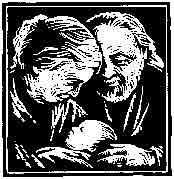 Zechariah (or Zachariah) and Elizabeth were "righteous before God, living blamelessly according to all the commandments and regulations of the Lord. (Luke 1:6)" The angel Gabriel greeted Zechariah, a priest in the temple in Jerusalem, announcing that Zechariah and Elizabeth would become parents of a son. Initially he didn't believe Gabriel because of their old age. For this, Zechariah became unable to speak.
After their son was born, Elizabeth named the boy John, which means "Yahweh (the Lord) is gracious." As friends and relatives sought to change her mind, thinking that he should be named for someone in their family, they asked Zechariah to write down what the boy's name should be. Suddenly, his voice returned and he confirmed his wife's choice.
In response to receiving his son and the return of his voice, Zechariah sang the Benedictus. This canticle beautifully summarizes God's Old Testament promises and predicts John's work as forerunner to the Messiah, who would be born in three more months (Luke 1:68-79).
We remember the faithful and pious examples of Zechariah and Elizabeth and honor them for raising the last great prophet of the coming Christ, Saint John the Baptist.
Those familiar with older English language Bibles might remember them slightly differently. That's because the Authorized Version (King James) and some other translations use the Greek form of their names, calling them Zacharias and Elisabeth.
The Benedictus
 Blessed be the Lord God of Israel,
for he has visited and redeemed his people
and has raised up a horn of salvation for us in the house of his servant David,
as he spoke by the mouth of his holy prophets from of old,
that we should be saved from our enemies
and from the hand of all who hate us;
to show the mercy promised to our fathers
and to remember his holy covenant,
the oath that he swore to our father Abraham,
to grant us that we, being delivered from the hand of our enemies,
might serve him without fear,
in holiness and righteousness before him all our days.
And you, child, will be called the prophet of the Most High;
for you will go before the Lord to prepare his ways,
to give knowledge of salvation to his people
in the forgiveness of their sins,
because of the tender mercy of our God,
whereby the sunrise shall visit us from on high
to give light to those who sit in darkness and in the shadow of death,
to guide our feet into the way of peace.
Labels: benedictus, biography, commemoration, elizabeth, gabriel, gospels, hagiography, jesus, john the baptist, new testament, zechariah
¶ 00:00 | 0 comments |
This day celebrates the birth of a son to the elderly and previously childless couple Elizabeth and Zechariah the priest. On the eighth day, his parents had him circumcised according the the Law and named him John ("Yahweh is gracious").John would grow up to be the last prophet of the Old Testament and the Forerunner of the coming Messiah, his younger cousin Jesus. Notice that today's date is six months before Christmas — the Nativity of Our Lord — since the Annunciation to Saint Mary came "in the sixth month" of Elizabeth's pregnancy.
The Christian Church remembers Saint John the Baptizer's prophetic ministry and commemorates his martyrdom on 29 August.
Lection
Psalm 85:(1-6) 7-13
Isaiah 40:1-5
Acts 13:13-26
Luke 1:57-80
Collect
Almighty God, through John the Baptist, the forerunner of Christ, You once proclaimed salvation; now grant that we may know this salvation and serve You in holiness and righteousness all the days of our life; through Jesus Christ, Your Son, who lives and reigns with You and the Holy Spirit, one God, now and forever.
Additional Reading
Past Elder's post on The Nativity of St. John has some background material and some interesting notes about the Christian Calendar, the dating of Biblical events, and the kalends.
Labels: christology, elizabeth, feasts, festivals, forerunner, gospels, hagiography, jesus, john the baptist, luke, new testament, zechariah
¶ 00:00 | 0 comments |
Zechariah (or Zachariah) and Elizabeth were "righteous before God, living blamelessly according to all the commandments and regulations of the Lord. (Luke 1:6)" The angel Gabriel greeted Zechariah, a priest in the temple in Jerusalem, announcing that Zechariah and Elizabeth would become parents of a son. Initially he didn't believe Gabriel because of their old age. For this, Zechariah became unable to speak.
After their son was born, Elizabeth named the boy John, which means "Yahweh (the Lord) is gracious." As friends and relatives sought to change her mind, thinking that he should be named for someone in their family, they asked Zechariah to write down what the boy's name should be. Suddenly, his voice returned and he confirmed his wife's choice.
In response to receiving his son and the return of his voice, Zechariah sang the Benedictus. This canticle beautifully summarizes God's Old Testament promises and predicts John's work as forerunner to the Messiah, who would be born in three more months (Luke 1:68-79).
We remember the faithful and pious examples of Zechariah and Elizabeth and honor them for raising the last great prophet of the coming Christ, Saint John the Baptist.
Those familiar with older English language Bibles might remember them slightly differently. That's because the Authorized Version (King James) and some other translations use the Greek form of their names, calling them Zacharias and Elisabeth.
The Benedictus
Blessed be the Lord God of Israel,
for he has visited and redeemed his people
and has raised up a horn of salvation for us in the house of his servant David,
as he spoke by the mouth of his holy prophets from of old,
that we should be saved from our enemies
and from the hand of all who hate us;
to show the mercy promised to our fathers
and to remember his holy covenant,
the oath that he swore to our father Abraham,
to grant us that we, being delivered from the hand of our enemies,
might serve him without fear,
in holiness and righteousness before him all our days.
And you, child, will be called the prophet of the Most High;
for you will go before the Lord to prepare his ways,
to give knowledge of salvation to his people
in the forgiveness of their sins,
because of the tender mercy of our God,
whereby the sunrise shall visit us from on high
to give light to those who sit in darkness and in the shadow of death,
to guide our feet into the way of peace.
Labels: benedictus, biography, commemoration, elizabeth, gabriel, gospels, hagiography, jesus, john the baptist, new testament, zechariah
¶ 00:00 | 0 comments |
This day celebrates the birth of a son to the elderly and previously childless couple Elizabeth and Zechariah the priest. On the eighth day, his parents had him circumcised according the the Law and named him John ("Yahweh is gracious").John would grow up to be the last prophet of the Old Testament and the Forerunner of the coming Messiah, his younger cousin Jesus. Notice that today's date is six months before Christmas — the Nativity of Our Lord — since the Annunciation to Saint Mary came "in the sixth month" of Elizabeth's pregnancy.
The Christian Church remembers Saint John the Baptizer's prophetic ministry and commemorates his martyrdom on 29 August.
Lection
Psalm 85:(1-6) 7-13
Isaiah 40:1-5
Acts 13:13-26
Luke 1:57-80
Collect
Almighty God, through John the Baptist, the forerunner of Christ, You once proclaimed salvation; now grant that we may know this salvation and serve You in holiness and righteousness all the days of our life; through Jesus Christ, Your Son, who lives and reigns with You and the Holy Spirit, one God, now and forever.
Additional Reading
Past Elder's post on The Nativity of St. John has some background material and some interesting notes about the Christian Calendar, the dating of Biblical events, and the kalends.
Labels: biography, christology, commemorations, elijah, elizabeth, feasts, forerunner, gospels, hagiography, jesus, john the baptist, luke 2, new testament, prophet, zechariah
¶ 00:00 | 0 comments |


