
 Pentecost, an Israelite festival connected to the spring harvest, was the time chosen by the Lord for the special outpouring of the Holy Spirit upon the disciples as they waited in Jerusalem.
With wind and fire, the Holy Spirit manifested Himself upon the apostles. Immediately, they rushed out to begin proclaiming the Gospel of Jesus Christ crucified for our sins and raised for our justification. The account is in Acts 2:1-41. Such was the power of the Holy Spirit working through Law and Gospel preaching that He converted over 3000 people faith in Christ at one time.
In Christianity, Pentecost is a "movable feast." Under the Old Covenant, including among modern Jews, Pentecost was (and is) the fiftieth day of Passover. The Christian Church, as more Gentiles swelled its ranks, kept the idea of the fiftieth day but based the celebration on the date for Easter rather than for Passover. See the second question under Notes on the Christian Calendar for a bit more on how we arrive at a date each year.
If you're preaching on the Genesis text, take a look at Upon the Plain of Shinar, a hymn by Pastor Walter Snyder.
Lection: Three Year Cycle, Series A
Psalm 25:1-15
Numbers 11:24-30
Acts 2:1-21
John 7:37-39
Lection: One Year Cycle
Psalm 143
Genesis 11:1-9
Acts 2:1-21
John 14:23-31
Collect
O God, on this day You once taught the hearts of Your faithful people by sending them the light of Your Holy Spirit. Grant us in our day by the same Spirit to have a right understanding in all things and evermore to rejoice in His holy consolation; through Jesus Christ, Your Son, our Lord, who lives and reigns with You and the Holy Spirit, one God, now and forever.
Labels: acts, apostle, christ, church history, conversion, disciple, easter, feasts, festivals, gospel, holy ghost, holy spirit, jesus, new testament, pentecost, pneumatology, translation
¶ 00:00 | 0 comments |

 Carl Ferdinand Wilhelm Walther was a founding father of The Lutheran Church — Missouri Synod. He served as its first president from 1847 to 1850 and again from 1864 to 1878. Others who worked with him in the Synod's early days included Friedrich Wyneken and Wilhelm Sihler.
The son of a pastor, he was born in Langenchursdorf, Saxony on 25 October 1811. Walther's studies at the University of Leipzig and the influences of older Lutherans helped convince him that Lutheran teachings were correct expositions of Holy Scripture. However, some of his mentors were staunch Pietists, relying heavily on experience and emotion as part of conversion and sanctification. Walther rejected Pietism but seemed to always struggle against its encroachment in his theology.
Fearing a "union church" with the Reformed — as had been happening in Prussia — Walther joined with several other younger pastors under the leadership of Martin Stephan, who encouraged emigration to the United States in order to maintain confessional purity by avoiding imposed unionism. In 1839 he left Germany with other Lutherans. After a series of trials, the party settled along the Mississippi River south of Saint Louis, Missouri. Circumstances still clouded in a certain degree of ambiguity led the Saxons to depose Stephan as their leader and they finally settled upon Walther as his replacement.
 He served as pastor of several congregations in St. Louis, founded Concordia Seminary, and in 1847 was instrumental in the formation of the LCMS (then called the Deutsche Evangelisch-Lutherische Synode von Missouri, Ohio und anderen Staaten — the German Evangelical Lutheran Synod of Missouri, Ohio, and Other States). Walther worked tirelessly to promote confessional Lutheran teaching and doctrinal agreement among all Lutherans in the United States.
Walther was a prolific writer and speaker. Among his most influential works are Church and Office (aka Church and Ministry) and The Proper Distinction between Law and Gospel. He also published Der Lutheraner, the LCMS's official news magazine for most of the time the Synod spoke and understood German.
Walther was one of many who stood steadfast in confession of the Evangelical, Orthodox, Catholic, and Apostolic Faith. For a sampling of some of the others in Lutheranism, please see The Meanies of Grace.
Lection
Psalm 46
Isaiah 55:6-11
Romans 10:5-17
John 15:1-11
Collect
O Lord God, heavenly Father, we pray that, as You raised up C. F. W. Walther to lead the Lutherans in American into a renewed appreciation of their confessional heritage and trust in the saving Gospel of Jesus Christ, so You would continue to provide them with faithful pastors and leaders, keep them steadfast in Your grace and truth, defend them against all enemies of Your Word, and bestow on Christ's Church Militant Your saving peace; through Jesus Christ, Your Son, our Lord, who lives and reigns with You and the Holy Spirit, one God, now and forever.
Labels: american history, biography, church history, commemoration, gospel, hagiography, law, lcms, lutheranism, pietism, sihler, walther, wyneken
¶ 00:00 | 2 comments |
Sarah, whose name means "princess," was wife (and half-sister) of Hebrew patriarch Abraham (Genesis 11:29; 20:12). In obedience to divine command (Genesis 12:1), she made the long and arduous journey west, along with her husband and his relatives, from Ur of the Chaldees to Haran and then finally to the land of Canaan.
She was originally named Sarai but the Lord commanded her change in name (Genesis 17:15). At the same time, He changed Abram's name to Abraham (from "exalted father" to "father of a people"; Genesis 17:5). While her new name held no change in meaning as did her husband's, the Lord still thought it proper to identify her in a new way as He continued the Messianic line through her.
 She remained childless until old age. Then, in keeping with God's long-standing promise, she gave birth to a son and heir of the covenant (Genesis 21:1-3). When first promising Abraham and Sarah a son of their own, He told Abraham, "You shall call his name Isaac [he laughs]. (Genesis 17:19)" Evidently, the Lord anticipated both Sarah's celebration at his birth (Genesis 21:6) and her previous disbelieving laughter when she first heard she would become pregnant (Genesis 18:12-15). Thus, God reminds subsequent generations that He always "gets the last laugh."
We remember and honor Sarah as faithful wife of Abraham and the mother of Isaac, the second of the three great patriarchs. Thus, she became biological mother to the people of Israel and spiritual mother to all who believe in Jesus Christ, her greatest descendant. We also acknowledge her gracious hospitality to strangers (Genesis 18:1-8).
Following her death at the age of 127, Abraham laid her to rest in the Cave of Machpelah (Genesis 23), where he was later buried (Genesis 25:7-10).
Saint Paul used the example of Sarah bearing Isaac according to divine promise to illustrate the relationship Christians have with God through the Gospel's promise. Galatians 4:21-31 contrasts Ishmael, the child of the slave woman Hagar, with Isaac, the promised child of the free woman Sarah. The author of Hebrews was inspired by the Holy Spirit to record that even though she initially laughed at the Lord's seemingly impossible prediction, "By faith Sarah herself received power to conceive, even when she was past the age, since she considered him faithful who had promised. (Hebrews 11:11)"
Scripture quoted from the ESV.
Labels: abraham, abram, biography, christology, commemoration, galatians, genesis, gospel, hagiography, isaac, ishmael, law, old testament, prophecy, sarah, sarai
¶ 00:00 | 0 comments |
 Adam was the first man, made in the image of God and given dominion over all the earth (Genesis 1:26). His name may be variously translated "earth," "dust," or "clay," all of which point to the substance of his making. [A brief digression: Adam may also mean "red." This is akin to "Edom," the later name for Esau, who received the title not only because of how he looked at birth (25:25) but also because he sold his birthright for the red stew (25:29-34).]
Eve was the first woman, formed from one of Adam's ribs (may also be understood as from his side)to be his companion and helper (2:18-24). Her name seems related to the Hebrew words for "life giver" and "living." Interestingly, however, Adam didn't give her this name until after the Fall.
God placed Adam and Eve in the Garden of Eden to take care of the creation as His stewards, or representatives. But they forsook God's Word, ate the fruit of the one tree of which the Lord had placed off-limits to them, and plunged the world into sin (3:1-7). For this disobedience, God drove them from the Garden. Eve had to suffer the pain of childbirth and be subject to Adam; Adam had to toil amid thorns and thistles and return to the dust of the ground. Our burial rite recalls this curse, as does the traditional sentence pronounced during Ash Wednesday's imposition of ashes: "Remember that you are dust, and to dust you shall return. (LSB Altar Book)"
 Despite Adam and Eve's attempt to overthrow their Creator and make themselves into gods, the Lord promised that the woman's Seed would crush the serpent's head while Himself suffering a mortal wound (3:8–24). While sin had entered God's perfect creation, decaying and changing it, God would restore it again through the perfect life and the bitter suffering and death of His beloved Son, the God-man Jesus Christ. And even though He died in the struggle, He rose to life on the Third Day and lives forevermore, as seal that we, too will rise and live in God's presence forever.
Eve is the mother of the human race. Adam not only fathered all mankind but also represents all humanity and the Fall, as St. Paul writes, "For in Adam all die, so also in Christ shall all be made alive. (1 Corinthians 15:22)" The sinful corruption and rebellious natures which we have from conception and birth we sometimes call original (or "birth") sin. It clings to all descendants of Adam, save Jesus. Therefore, we often speak of our sinful natures as the Old Adam.
This date for the commemoration was chosen by the The Lutheran Church — Missouri Synod. For some of my personal observations on the First and Second Adams, I invite you to read Temptation: Adam and Adamant. Drawing on this account, Pastor Michael McCoy wrote an extended allegory of the Church and the Pastoral Office, beginning in the Garden and ending with the Final Judgment. The Bestman, the Bride, and the Wedding is available for purchase as a paperback or as a free download (1.66mb PDF). Pastor McCoy also provides a detailed study guide.
Labels: adam, biography, christology, commemoration, creation, eve, fall, gospel, hagiography, law, serpent
¶ 00:00 | 0 comments |
 The beginnings of the Reformation came well before its birth date. Renaissance Humanism ushered in an age of classical studies, including the teaching of Greek and Hebrew. This paved the way for in-depth study of the Scriptures in their original languages. Theological errors and moral abuses were rife in the Western Church and certain individuals had already been moved to challenge and resist these errors.
By the time Martin Luther was born, John Hus and Girolamo Savonarola had been killed for their efforts at reform and the remains of John Wycliffe had been exhumed and burned. Wycliffe and Hus, especially, tried to bring the Bible into the vernacular. Nationalism and territorial pride, pressure from the Turks, and a general restlessness all joined into making the early 16th Century a time to foment change — even violent change and revolt.
Into this mix stepped Augustinian friar and university professor Martin Luther. Stricken for years by an active conscience and a false understanding of Jesus Christ as a terrible judge, he was driven to the Scriptures by the work of the Holy Spirit, especially through the strong but gentle guidance of Johann von Staupitz. His studies led him to the understanding that grace, not wrath, is Scripture's central theme and that justification by grace through faith in Christ is Christianity's cardinal doctrine.
As he began looking without himself more than within, Luther saw that his misunderstanding of the Gospel came not only from inside, by the resistance of his Old Adam to God's Word. Instead, he more clearly perceived how far from Scripture many teachings and practices were. Therefore, he resolved to address certain abuses based upon his enlightened understanding. Triggered by the sale of indulgences by Johann Tetzel, he composed ninety-five topics for theological debate, many of which focused directly on matters of God's grace versus human works.
 Luther's prince, Elector Frederick III of Saxony, didn't involve himself in crassly selling escape from punishment after death. However, he did have a large collection of religious relics which he would display annually on the Feast of All Saints. People would come to view them, trusting that looking, praying, and leaving an offering would greatly reduce the time they would spend in Purgatory following their deaths.
According to many contemporary sources, Luther took his debate topics to the community's main bulletin board, the doors of Wittenberg's castle church, on All Hallows' Eve and nailed his 95 Theses to them. On the same day, he mailed copies to friends, other universities, the Archbishop of Mainz, and the pope.
Luther apparently intended for the initial discussion to take place within the confines of the Church, especially among trained theologians and academics. Therefore, he wrote them in Latin, the Church's official language of teaching and communication. This intent was thwarted by others — printers sensed a huge story and quickly translated, published, and widely disseminated them so their content soon became also food for the common people's thoughts.
Luther never intended to foster a revolt or to found a new church; both happened because his teaching on salvation was so at odds with the organized church. As noted above, this theological fault line then felt other forces, including nationalism's increasing resistance to foreign popes and emperors. With all these pressures, the fracture between the followers of Luther and those who clung to Roman Catholic dogma widened. The pope excommunicated Luther and the break was complete. He who'd hoped to clean up the mess clinging to his mother church was forced instead to continue his life, studies, and exercises of the Faith in a new, Evangelical confession that later became known as Lutheranism.
The Reformation spread through much of Northern and Western Europe and Evangelical Christianity largely filled Germany and Scandinavia. Subsequent wars and treaties later shifted some of the boundaries. However, the basic division from Luther's day remains in Europe. Following the ejection of the Lutheran party from the Roman Catholic Church, others who disagreed with Rome began their own Reformation movement.
Some joined the Lutherans for a time but later split over doctrine. Later, some of these splintered into still other bodies. England, which was protected by water from threats of force, had a bit of direct Lutheran influence, particularly through Robert Barnes. However, the English Reformation began following other teachings and soon went its own way. Soon, this English (Anglican) Reformation also divided for both doctrinal and political reasons.
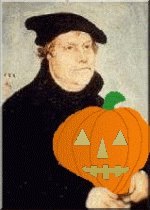 Since it began with Luther, and since Lutherans were the original Protestants, we traditionally celebrate the day with more zeal than does any other part of Christendom. Our annual commemorations may carry a strong, positive influence, reminding us of the core reason why it all happened: Martin Luther, convinced that the saving Gospel of Jesus Christ was being obscured by legalism and empty, unchristian ceremonialism, restored the doctrine of justification to its central position. Therefore, gathering to receive and confess salvation by grace through faith in Christ marks such celebrations as good.
However, when we use the the day to bash Catholicism, to boast upon ourselves, to almost worship Luther, or to attack other believers in a mean and petty fashion, we ignore our heritage and risk returning to the legalistic bondage from which the the Reformation brought escape. Also, we misunderstand both the purpose and the methods of the Luther's Reformation if we callously reject and stray from the ancient and good ceremonies and traditions that the reformers kept, just because some think of them as being "too old-fashioned" or "too Catholic." Luther sought no novelty. He wanted to restore the centrality of God's grace in Christ Jesus to the Church rather than radically altering her theology and practice.
See also Lutheran-Catholic Differences at Ask the Pastor.
Regarding what is often called the "Luther Rose," Martin Luther said of the emblem he chose for himself, "I shall ... tell you my original thoughts and reason about why my seal is a symbol of my theology. The first should be a black cross in a heart, which retains its natural color, so that I myself would be reminded that faith in the Crucified saves us. 'For one who believes from the heart will be justified' (Rom. 10:10). Although it is indeed a black cross, which mortifies and which should also cause pain, it leaves the heart in its natural color. It does not corrupt nature, that is, it does not kill but keeps alive. 'The just shall live by faith' (Rom. 1:17) but by faith in the crucified.
"Such a heart should stand in the middle of a white rose, to show that faith gives joy, comfort, and peace. In other words, it places the believer into a white, joyous rose, for this faith does not give peace and joy like the world gives (John 14:27). That is why the rose should be white and not red, for white is the color of the spirits and the angels (cf. Matthew 28:3; John 20:12).
"Such a rose should stand in a sky-blue field, symbolizing that such joy in spirit and faith is a beginning of the heavenly future joy, which begins already, but is grasped in hope, not yet revealed. And around this field is a golden ring, symbolizing that such blessedness in Heaven lasts forever and has no end. Such blessedness is exquisite, beyond all joy and goods, just as gold is the most valuable, most precious and best metal. This is my compendium theoligae [summary of theology]. I have wanted to show it to you in good friendship, hoping for your appreciation. May Christ, our beloved Lord, be with your spirit until the life hereafter. Amen."
Martin Luther, "Letter to Lazarus Spengler," July 8, 1530, as included in the translation by Amy Marga from "Luthers Siegel: Eine elementare Deutung seiner Theologie," in Luther 67 (1996):66–87. Translation printed in Lutheran Quarterly, Vol. XIV, Num. 4, Winter 2000, pg. 409-410.
The "Reforween" illustration was spurred by a brother pastor in my circuit. He noted that Luther gets the credit for the widespread popularity of the Christmas tree. He figures that with this picture we might also be able to promote a folk belief that he introduced the Halloween jack o' lantern. This could have the collateral benefit of providing our church youth groups with a new source of income, October pumpkin sales.
Lection
Psalm 46
Revelation 14:6-7
Romans 3:19-28
John 8:31-36 or Matthew 11:12-19
Collect
Almighty and gracious Lord, pour out Your Holy Spirit on Your faithful people. Keep us steadfast in Your grace and truth, protect and deliver us in times of temptation, defend us against all enemies, and grant to Your Church Your saving peace; through Jesus Christ, Your Son, our Lord, who lives and reigns with You and the Holy Spirit, one God, now and forever.
Labels: church history, commemoration, european history, faith, feasts, festivals, german history, gospel, grace, justification, lutheranism, martin luther, reformation
¶ 00:00 | 0 comments |
Pentecost, an Israelite festival connected to the spring harvest, was the time chosen by the Lord for the special outpouring of the Holy Spirit upon the disciples as they waited in Jerusalem.With wind and fire, the Holy Spirit manifested Himself upon the apostles. Immediately, they rushed out to begin proclaiming the Gospel of Jesus Christ crucified for our sins and raised for our justification. The account is in Acts 2:1-41. Such was the power of the Holy Spirit working through Law and Gospel preaching that He converted over 3000 people faith in Christ at one time.
In Christianity, Pentecost is a "movable feast." Under the Old Covenant, including among modern Jews, Pentecost was (and is) the fiftieth day of Passover. The Christian Church, as more Gentiles swelled its ranks, kept the idea of the fiftieth day but based the celebration on the date for Easter rather than for Passover. See the second question under Notes on the Christian Calendar for a bit more on how we arrive at a date each year.
If you're preaching on the Genesis text, take a look at Upon the Plain of Shinar, a hymn by Pastor Walter Snyder.
Lection: Three Year Cycle, Series C
Psalm 143
Genesis 11:1-9
Acts 2:1-21
John 14:23-31
Lection: One Year Cycle
Psalm 143
Genesis 11:1-9
Acts 2:1-21
John 14:23-31
Collect
O God, on this day You once taught the hearts of Your faithful people by sending them the light of Your Holy Spirit. Grant us in our day by the same Spirit to have a right understanding in all things and evermore to rejoice in His holy consolation; through Jesus Christ, Your Son, our Lord, who lives and reigns with You and the Holy Spirit, one God, now and forever.
Labels: acts, apostle, christ, church history, conversion, disciple, easter, feasts, festivals, gospel, holy ghost, holy spirit, jesus, new testament, pentecost, pneumatology, translation
¶ 00:00 | 0 comments |
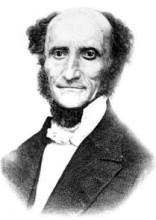 Carl Ferdinand Wilhelm Walther was a founding father of The Lutheran Church — Missouri Synod. He served as its first president from 1847 to 1850 and again from 1864 to 1878. Others who worked with him in the Synod's early days included Friedrich Wyneken and Wilhelm Sihler.
The son of a pastor, he was born in Langenchursdorf, Saxony on 25 October 1811. Walther's studies at the University of Leipzig and the influences of older Lutherans helped convince him that Lutheran teachings were correct expositions of Holy Scripture. However, some of his mentors were staunch Pietists, relying heavily on experience and emotion as part of conversion and sanctification. Walther rejected Pietism but seemed to always struggle against its encroachment in his theology.
Fearing a "union church" with the Reformed — as had been happening in Prussia — Walther joined with several other younger pastors under the leadership of Martin Stephan, who encouraged emigration to the United States in order to maintain confessional purity by avoiding imposed unionism. In 1839 he left Germany with other Lutherans. After a series of trials, the party settled along the Mississippi River south of Saint Louis, Missouri. Circumstances still clouded in a certain degree of ambiguity led the Saxons to depose Stephan as their leader and they finally settled upon Walther as his replacement.
He served as pastor of several congregations in St. Louis, founded Concordia Seminary, and in 1847 was instrumental in the formation of the LCMS (then called the Deutsche Evangelisch-Lutherische Synode von Missouri, Ohio und anderen Staaten — the German Evangelical Lutheran Synod of Missouri, Ohio, and Other States). Walther worked tirelessly to promote confessional Lutheran teaching and doctrinal agreement among all Lutherans in the United States.Walther was a prolific writer and speaker. Among his most influential works are Church and Office (aka Church and Ministry) and The Proper Distinction between Law and Gospel. He also published Der Lutheraner, the LCMS's official news magazine for most of the time the Synod spoke and understood German.
Walther was one of many who stood steadfast in confession of the Evangelical, Orthodox, Catholic, and Apostolic Faith. For a sampling of some of the others in Lutheranism, please see The Meanies of Grace.
Lection
Psalm 46
Isaiah 55:6-11
Romans 10:5-17
John 15:1-11
Collect
O Lord God, heavenly Father, we pray that, as You raised up C. F. W. Walther to lead the Lutherans in American into a renewed appreciation of their confessional heritage and trust in the saving Gospel of Jesus Christ, so You would continue to provide them with faithful pastors and leaders, keep them steadfast in Your grace and truth, defend them against all enemies of Your Word, and bestow on Christ's Church Militant Your saving peace; through Jesus Christ, Your Son, our Lord, who lives and reigns with You and the Holy Spirit, one God, now and forever.
Labels: american history, biography, church history, commemoration, gospel, hagiography, law, lcms, lutheranism, pietism, sihler, walther, wyneken
¶ 00:00 | 0 comments |
Adam was the first man, made in the image of God and given dominion over all the earth (Genesis 1:26). His name may be variously translated "earth," "dust," or "clay," all of which point to the substance of his making. [A brief digression: Adam may also mean "red." This is akin to "Edom," the later name for Esau, who received the title not only because of how he looked at birth (25:25) but also because he sold his birthright for the red stew (25:29-34).]Eve was the first woman, formed from one of Adam's ribs (may also be understood as from his side)to be his companion and helper (2:18-24). Her name seems related to the Hebrew words for "life giver" and "living." Interestingly, however, Adam didn't give her this name until after the Fall.
God placed Adam and Eve in the Garden of Eden to take care of the creation as His stewards, or representatives. But they forsook God's Word, ate the fruit of the one tree of which the Lord had placed off-limits to them, and plunged the world into sin (3:1-7). For this disobedience, God drove them from the Garden. Eve had to suffer the pain of childbirth and be subject to Adam; Adam had to toil amid thorns and thistles and return to the dust of the ground. Our burial rite recalls this curse, as does the traditional sentence pronounced during Ash Wednesday's imposition of ashes: "Remember that you are dust, and to dust you shall return. (LSB Altar Book)"
Despite Adam and Eve's attempt to overthrow their Creator and make themselves into gods, the Lord promised that the woman's Seed would crush the serpent's head while Himself suffering a mortal wound (3:8–24). While sin had entered God's perfect creation, decaying and changing it, God would restore it again through the perfect life and the bitter suffering and death of His beloved Son, the God-man Jesus Christ. And even though He died in the struggle, He rose to life on the Third Day and lives forevermore, as seal that we, too will rise and live in God's presence forever.Eve is the mother of the human race. Adam not only fathered all mankind but also represents all humanity and the Fall, as St. Paul writes, "For in Adam all die, so also in Christ shall all be made alive. (1 Corinthians 15:22)" The sinful corruption and rebellious natures which we have from conception and birth we sometimes call original (or "birth") sin. It clings to all descendants of Adam, save Jesus. Therefore, we often speak of our sinful natures as the Old Adam.
This date for the commemoration was chosen by the The Lutheran Church — Missouri Synod. For some of my personal observations on the First and Second Adams, I invite you to read Temptation: Adam and Adamant. Drawing on this account, Pastor Michael McCoy wrote an extended allegory of the Church and the Pastoral Office, beginning in the Garden and ending with the Final Judgment. The Bestman, the Bride, and the Wedding is available for purchase as a paperback or as a free download (1.66mb PDF). Pastor McCoy also provides a detailed study guide.
Labels: adam, biography, christology, commemoration, creation, eve, fall, gospel, hagiography, law, serpent
¶ 00:00 | 0 comments |


