
 The prophet Elijah, whose name means, "My God is Yahweh [the Lord]," prophesied in the northern kingdom of Israel, mostly during the reign of Ahab (874 – 853 B.C.).
Ahab, under the influence of his pagan wife Jezebel, had encouraged the worship of Baal throughout his kingdom, even as Jezebel sought to get rid of the worship of Yahweh. Elijah was called by God to denounce this idolatry and to call the people of Israel back to the worship Yahweh as the only true God (as he did in 1 Kings 18:20-40).
Elijah was a rugged and imposing figure, living in the wilderness and dressing in a garment of camel's hair and a leather belt (2 Kings 1:8). He was a prophet mighty in word and deed. The Lord worked many miracles through Elijah, including the raising of the dead (1 Kings 17:17-24) and the effecting of a long drought in Israel (1 Kings 17:1).
At the end of his ministry, he was taken up into heaven as Elisha, his successor, looked on (2 Kings 2:11). Later on, the Lord proclaimed through the prophet Malachi that Elijah would return before the coming of the Messiah (Malachi 4:5-6), a prophecy that was fulfilled in the prophetic ministry of John the Baptist (see Jesus' words in Matthew 11:1-19).
See Happenings for a hymn stanza written for the Commemoration of Elijah.
Labels: 1 kings, 2 kings, ahab, biography, commemorations, elijah, elisha, hagiography, israel, jezebel, john the baptist, old testament, prophet, transfiguration
¶ 00:00 | 0 comments |

 This major Christological feast commemorates the joyous visit Mary paid to her relative (probably her cousin) Elizabeth, following The Annunciation. Inspired by the amazing news that she was to become the mother of the Christ and in response to the joyous word that her old and previously barren kinswoman was also pregnant, she joined Elizabeth during her sixth month of pregnancy (see Luke 1:39-56).
After Mary declared the wondrously good news, Elizabeth replied to the Virgin, "Blessed are you among women, and blessed is the fruit of your womb! ... Behold, when the sound of your greeting came to my ears, the baby in my womb leaped for joy. (vv. 42, 44)" She concluded by giving full credit and glory to God while also commending her young cousin's hearty faith: "Blessed is she who believed that there would be a fulfillment of what was spoken to her from the Lord. (av. 45)"
Mary responded with the Magnificat, the beautiful song of praise beginning, "My soul magnifies the Lord. (vv. 46-55)" It's not clear whether Mary stayed there until after the birth of John or if she left immediately beforehand; Luke merely said that the Virgin "remained with her about three months and returned to her home. (v. 56)"
And so, as we encounter God sending the Forerunner and the Messiah into the world, we see a study in contrasts. Two women stand before each other. One seemingly too old to bear children now carries the final prophet of the Old Covenant. The other, youthful and as yet unwed — completely unprepared in the eyes of the world — carries the One who brings both the Advent and the Fulfillment of the New Testament. And again we see, in the fullness of time, one age passing away while another age begins — an age that has no end but which lasts unto eternity.
The reaction of Jesus' unborn cousin and the words of his mother also serve as reminders to many Christians about the sanctity of life. Christian pro-lifers point to John's celebration as clear evidence of the humanity and the consciousness of children who are still in utero.
In Roman Catholicism, Vatican II changed the date of the observation from 2 July to 31 May in order to more accurately reflect the Bible's chronology regarding the life of Christ. Several other Western churches followed suit. In The Lutheran Church —Missouri Synod, today is celebrated in the One Year Lectionary while the Three Year Lectionary moves the feast date to 31 May.
Note: This illustration by Albrecht Dürer is from the Web Gallery of Art.
Lection
Psalm 138
Isaiah 11:1-5
Romans 12:9-16
Luke 1:39-56
Collect
Almighty God, You chose the virgin Mary to be the mother of Your Son and made known through her Your regard for the poor and lowly and despised. Grant that we may receive Your Word in humility and faith, and so be made one with Jesus Christ, Your Son, our Lord, who lives and reigns with You and the Holy Spirit, one God, now and forever.
The Magnificat
My soul magnifies the Lord,
and my spirit rejoices in God my Savior,
for He has looked on the humble estate of his servant.
For behold, from now on all generations will call me blessed;
for He who is mighty has done great things for me,
and holy is His name.
And His mercy is for those who fear Him
from generation to generation.
He has shown strength with His arm;
He has scattered the proud in the thoughts of their hearts;
He has brought down the mighty from their thrones
and exalted those of humble estate;
He has filled the hungry with good things,
and the rich He has sent empty away.
He has helped His servant Israel,
in remembrance of His mercy,
as He spoke to our fathers,
to Abraham and to his offspring forever.
Labels: christianity, christology, church history, elizabeth, feasts, festivals, gospels, jesus, john the baptist, luke, magnificat, mary, new testament, visitation
¶ 00:00 | 0 comments |
 This day celebrates the birth of a son to the elderly and previously childless couple Elizabeth and Zechariah the priest. On the eighth day, his parents had him circumcised according the the Law and named him John ("Yahweh is gracious").
John would grow up to be the last prophet of the Old Testament and the Forerunner of the coming Messiah, his younger cousin Jesus. Notice that today's date is six months before Christmas — the Nativity of Our Lord — since the Annunciation to Saint Mary came "in the sixth month" of Elizabeth's pregnancy.
The Christian Church remembers Saint John the Baptizer's prophetic ministry and commemorates his martyrdom on 29 August.
Lection
Psalm 85:(1-6) 7-13
Isaiah 40:1-5
Acts 13:13-26
Luke 1:57-80
Collect
Almighty God, through John the Baptist, the forerunner of Christ, You once proclaimed salvation; now grant that we may know this salvation and serve You in holiness and righteousness all the days of our life; through Jesus Christ, Your Son, who lives and reigns with You and the Holy Spirit, one God, now and forever.
Additional Reading
Past Elder's post on The Nativity of St. John has some background material and some interesting notes about the Christian Calendar, the dating of Biblical events, and the kalends.
Labels: christology, elizabeth, feasts, festivals, forerunner, gospels, hagiography, jesus, john the baptist, luke, new testament, old testament, prophecy, zechariah
¶ 22:56 | 0 comments |
This major Christological feast commemorates the joyous visit Mary paid to her relative (probably her cousin) Elizabeth, following The Annunciation. Inspired by the amazing news that she was to become the mother of the Christ and in response to the joyous word that her old and previously barren kinswoman was also pregnant, she joined Elizabeth during her sixth month of pregnancy (see Luke 1:39-56).After Mary declared the wondrously good news, Elizabeth replied to the Virgin, "Blessed are you among women, and blessed is the fruit of your womb! ... Behold, when the sound of your greeting came to my ears, the baby in my womb leaped for joy. (vv. 42, 44)" She concluded by giving full credit and glory to God while also commending her young cousin's hearty faith: "Blessed is she who believed that there would be a fulfillment of what was spoken to her from the Lord. (v. 45)"
Mary responded with the Magnificat, the beautiful song of praise beginning, "My soul magnifies the Lord. (vv. 46-55)" It's not clear whether Mary stayed there until after the birth of John or if she left immediately beforehand; Luke merely said that the Virgin "remained with her about three months and returned to her home. (v. 56)"
And so, as we encounter God sending the Forerunner and the Messiah into the world, we see a study in contrasts. Two women stand before each other. One seemingly too old to bear children now carries the final prophet of the Old Covenant. The other, youthful and as yet unwed — completely unprepared in the eyes of the world — carries the One who brings both the Advent and the Fulfillment of the New Testament. And again we see, in the fullness of time, one age passing away while another age begins — an age that has no end but which lasts unto eternity.
The reaction of Jesus' unborn cousin and the words of his mother also serve as reminders to many Christians about the sanctity of life. Christian pro-lifers point to John's celebration as clear evidence of the humanity and the consciousness of children who are still in utero.
In Roman Catholicism, Vatican II changed the date of the observation from 2 July to 31 May in order to more accurately reflect the Bible's chronology regarding the life of Christ. Several other Western churches followed suit. In The Lutheran Church — Missouri Synod, today is celebrated in congregations following the Three Year Lectionary while the One Year Lectionary retains the July feast date.
Note: This illustration by Albrecht Dürer is from the Web Gallery of Art.
Lection
Psalm 138
Isaiah 11:1-5
Romans 12:9-16
Luke 1:39-56
Collect
Almighty God, You chose the virgin Mary to be the mother of Your Son and made known through her Your regard for the poor and lowly and despised. Grant that we may receive Your Word in humility and faith, and so be made one with Jesus Christ, Your Son, our Lord, who lives and reigns with You and the Holy Spirit, one God, now and forever.
The Magnificat
My soul magnifies the Lord,
and my spirit rejoices in God my Savior,
for He has looked on the humble estate of his servant.
For behold, from now on all generations will call me blessed;
for He who is mighty has done great things for me,
and holy is His name.
And His mercy is for those who fear Him
from generation to generation.
He has shown strength with His arm;
He has scattered the proud in the thoughts of their hearts;
He has brought down the mighty from their thrones
and exalted those of humble estate;
He has filled the hungry with good things,
and the rich He has sent empty away.
He has helped His servant Israel,
in remembrance of His mercy,
as He spoke to our fathers,
to Abraham and to his offspring forever.
Labels: christ, christology, elizabeth, feasts, festivals, gospels, incarnation, jesus, john the baptist, magnificat, mary, nativity, new testament, visitation
¶ 00:00 | 0 comments |
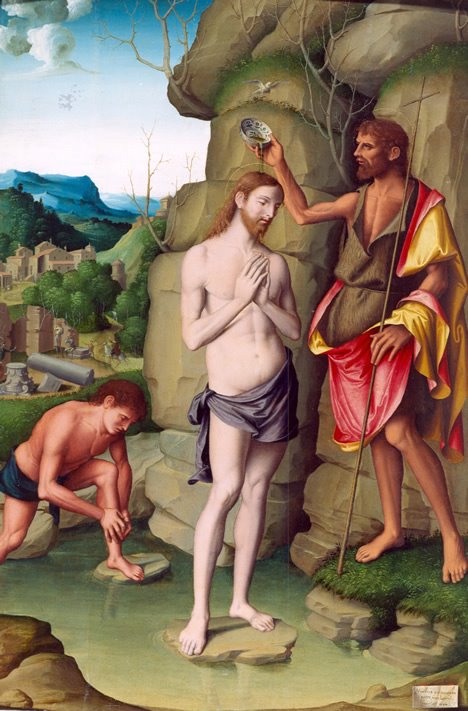 The Baptism of our Lord (Matthew 3:13-17; Mark 1:4-11; Luke 3:15-16, 21-22) is always celebrated on the first Sunday after the Epiphany. Christians remember how John baptized Jesus in the Jordan River. The Holy Spirit assumed the form of a dove and came down to rest on Jesus' head while the voice of the Father spoke from the heavens, saying, "This is my beloved Son, with whom I am well pleased. (Mark 1:11)"
His Baptism marks the first adult appearance of our Lord recorded in Holy Scripture. Prior to this day, the last we hear of Him was following His return from the temple as a twelve year old boy. Luke records, "And Jesus increased in wisdom and in stature and in favor with God and man. (2:52)"
 Following His baptism, "The Spirit immediately drove him out into the wilderness. (Mark 1:12)" There He remained for forty days of fasting and temptation by Satan. Once the time of temptation was over, Jesus entered into His public ministry as He called the disciples, worked miracles, preached and taught, forgave sins, and prepared Himself for the suffering and death awaiting Him.
With John, we might wonder why Jesus came to be baptized (see Matthew 3:14). However, Jesus told him, "It is fitting for us to fulfill all righteousness. (Matthew 3:15)" Jesus' baptism publicly marked Him as God's Anointed One (Messiah or Christ). He had nothing for which He needed to repent, so His entry into Baptism's waters was not to wash away sins. Instead, He took all the sins of mankind upon Himself. He identified Himself as one of us by being baptized and spent the rest of His earthly life fulfilling our righteousness, keeping the Law perfectly.
Lection
Series A
Psalm 29
Isaiah 42:1-9
Romans 6:1-11
Matthew 3:13-17
One Year Lectionary Cycle
Psalm 85
Joshua 3:1-3, 7-8, 13-17 or Isaiah 42:1-7
1 Corinthians 1:26-31
Matthew 3:13-17
Collect
Father in heaven, at the Baptism of Jesus in the Jordan River You proclaimed Him Your beloved Son and anointed Him with the Holy Spirit. Make all who are baptized in His name faithful in their calling as Your children and inheritors with Him of everlasting life; through the same Jesus Christ, our Lord, who lives and reigns with You and the Holy Spirit, one God, now and forever.
Labels: baptism, christ, christology, epiphany, epiphany 1, feasts, festivals, gospels, jesus, john the baptist, jordan river, messiah, synoptics
¶ 00:00 | 0 comments |
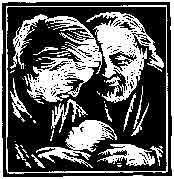 Zechariah (or Zachariah) and Elizabeth were "righteous before God, living blamelessly according to all the commandments and regulations of the Lord. (Luke 1:6)" The angel Gabriel greeted Zechariah, a priest in the temple in Jerusalem, announcing that Zechariah and Elizabeth would become parents of a son. Initially he didn't believe Gabriel because of their old age. For this, Zechariah became unable to speak.
After their son was born, Elizabeth named the boy John, which means "Yahweh (the Lord) is gracious." As friends and relatives sought to change her mind, thinking that he should be named for someone in their family, they asked Zechariah to write down what the boy's name should be. Suddenly, his voice returned and he confirmed his wife's choice.
In response to receiving his son and the return of his voice, Zechariah sang the Benedictus. This canticle beautifully summarizes God's Old Testament promises and predicts John's work as forerunner to the Messiah, who would be born in three more months (Luke 1:68-79).
We remember the faithful and pious examples of Zechariah and Elizabeth and honor them for raising the last great prophet of the coming Christ, Saint John the Baptist.
Those familiar with older English language Bibles might remember them slightly differently. That's because the Authorized Version (King James) and some other translations use the Greek form of their names, calling them Zacharias and Elisabeth.
The Benedictus
 Blessed be the Lord God of Israel,
for he has visited and redeemed his people
and has raised up a horn of salvation for us in the house of his servant David,
as he spoke by the mouth of his holy prophets from of old,
that we should be saved from our enemies
and from the hand of all who hate us;
to show the mercy promised to our fathers
and to remember his holy covenant,
the oath that he swore to our father Abraham,
to grant us that we, being delivered from the hand of our enemies,
might serve him without fear,
in holiness and righteousness before him all our days.
And you, child, will be called the prophet of the Most High;
for you will go before the Lord to prepare his ways,
to give knowledge of salvation to his people
in the forgiveness of their sins,
because of the tender mercy of our God,
whereby the sunrise shall visit us from on high
to give light to those who sit in darkness and in the shadow of death,
to guide our feet into the way of peace.
Labels: benedictus, biography, commemoration, elizabeth, gabriel, gospels, hagiography, jesus, john the baptist, new testament, zechariah
¶ 00:00 | 0 comments |
 According to the structure of the Christian calendar, the feast commemorating the death of St. John the Baptist comes only two months after the celebration of his nativity. His birth is observed by the liturgical color of white, standard for the principal Christological feasts since, as the Forerunner, John prepared the way for the coming Messiah. This day, however, is colored red, emblematic of the blood of the martyrs.
While all four Gospels mention John, only the three Synoptics tell of his beheading at the command of Herod Antipas. These accounts tell us that Herod imprisoned John because he strongly rebuked the king for divorcing his wife Phasaelis and then entering into an unlawful marriage with Herodias, who had been married to Herod Antipas's brother Philip I.
Mark makes it clear that Herodias held a stronger grudge than her new husband: "Herod feared John, knowing that he was a righteous and holy man, and he kept him safe. When he heard him, he was greatly perplexed, and yet he heard him gladly. (6:20)" However, when Herodias's daughter (traditionally named Salome*) danced for the king on his birthday, Herod was so pleased that he foolishly promised to give her anything she wanted, up to half of his kingdom. Her mother told her to ask for the head of John the Baptist on a platter. Although Herod was "exceedingly sorry" at her request, he reluctantly agreed "because of his oaths and his guests. (6:27)"
Herod had John beheaded in the prison. The executioner then placed the head on a platter and delivered it to the girl, who passed it on to her mother. John's followers then came and asked for his body, which they buried before going to tell Jesus. It was at least in part Jesus' sorrow over the death of John that led him to leave the crowds in Galilee: "He withdrew from there in a boat to a desolate place by himself. (Matthew 14:13)" However, the crowds followed Him, leading him to show compassion by healing the sick and then feeding the crowd of "five thousand men, besides women and children. (14:21)"
While Scripture is silent, some ancient traditions say that Herodius had John's head buried in a dung heap. These accounts claim that Joanna, wife of Herod's steward and a follower of Jesus, later retrieved the head and reburied it on the Mount of Olives. Later stories tell of three separate findings of his severed head. The first two later led to it being lost again for extended periods of time after being hidden. The third purported finding came in AD 850 and led to the head being transferred to a court church in Constantinople.
Jewish historian Flavius Josephus also tells of Herod's beheading of John the Baptist in his Jewish Antiquities. However, the reason he gives is different. Josephus wrote that the king killed John "lest the great influence John had over the people might put it into [John's] power and inclination to raise a rebellion, (for they seemed ready to do any thing he should advise), [so Herod] thought it best [to put] him to death." Josephus also said that many Jews believed that Aretas (Herod's father-in-law) dealt Herod a severe military defeat as divine punishment for his wickedness.
While not the first regularly observed Christian feast honoring a saint, the commemoration of the Martyrdom of John the Baptist is one of the earliest. It has been observed in both the Eastern and Western Church nearly as long as the celebration of his Nativity. Because of the differences in calendars, much of the East celebrates on the same date, but a different day. Also, many devout Eastern Christians remember keep John's feast by refusing to use a knife, eat from a flat plate, or eat any food that is round.
* Josephus wrote extensively on the entire Herodian family. It is from the Antiquities that we are fairly sure that Salome was, indeed, the girl who danced and who asked for the Baptist's head. Ironically, the root of her name in Hebrew is "shalom" (שלם), that is, "peace."
Lection
Revelation 6:9-11
Psalm 71:1-8
Romans 6:1-5
Mark 6:14-29
Collect
Almighty God, You gave Your servant John the Baptist to be the forerunner of Your Son, Jesus Christ, in both his preaching of repentance and his innocent death. Grant that we, who have died and risen with Christ in Holy Baptism, may daily repent of our sins, patiently suffer for the sake of the truth, and fearlessly bear witness to His victory over death; through the same Jesus Christ, our Lord, who lives and reigns with You and the Holy Spirit, one God, now and forever.
Labels: biography, christology, elijah, feasts, festivals, gospels, hagiography, herod, jesus, john the baptist, martyrdom, new testament, prophet
¶ 00:00 | 0 comments |
The prophet Elijah, whose name means, "My God is Yahweh [the Lord]," prophesied in the northern kingdom of Israel, mostly during the reign of Ahab (874 – 853 B.C.).Ahab, under the influence of his pagan wife Jezebel, had encouraged the worship of Baal throughout his kingdom, even as Jezebel sought to get rid of the worship of Yahweh. Elijah was called by God to denounce this idolatry and to call the people of Israel back to the worship Yahweh as the only true God (as he did in 1 Kings 18:20-40).
Elijah was a rugged and imposing figure, living in the wilderness and dressing in a garment of camel's hair and a leather belt (2 Kings 1:8). He was a prophet mighty in word and deed. The Lord worked many miracles through Elijah, including the raising of the dead (1 Kings 17:17-24) and the effecting of a long drought in Israel (1 Kings 17:1).
At the end of his ministry, he was taken up into heaven as Elisha, his successor, looked on (2 Kings 2:11). Later on, the Lord proclaimed through the prophet Malachi that Elijah would return before the coming of the Messiah (Malachi 4:5-6), a prophecy that was fulfilled in the prophetic ministry of John the Baptist (see Jesus' words in Matthew 11:1-19).
See Happenings for a hymn stanza written for the Commemoration of Elijah.
Labels: 1 kings, 2 kings, ahab, biography, commemorations, elijah, elisha, hagiography, israel, jezebel, john the baptist, old testament, prophet
¶ 00:00 | 0 comments |
This major Christological feast commemorates the joyous visit Mary paid to her relative (probably her cousin) Elizabeth, following The Annunciation. Inspired by the amazing news that she was to become the mother of the Christ and in response to the joyous word that her old and previously barren kinswoman was also pregnant, she joined Elizabeth during her sixth month of pregnancy (see Luke 1:39-56).After Mary declared the wondrously good news, Elizabeth replied to the Virgin, "Blessed are you among women, and blessed is the fruit of your womb! ... Behold, when the sound of your greeting came to my ears, the baby in my womb leaped for joy. (vv. 42, 44)" She concluded by giving full credit and glory to God while also commending her young cousin's hearty faith: "Blessed is she who believed that there would be a fulfillment of what was spoken to her from the Lord. (av. 45)"
Mary responded with the Magnificat, the beautiful song of praise beginning, "My soul magnifies the Lord. (vv. 46-55)" It's not clear whether Mary stayed there until after the birth of John or if she left immediately beforehand; Luke merely said that the Virgin "remained with her about three months and returned to her home. (v. 56)"
And so, as we encounter God sending the Forerunner and the Messiah into the world, we see a study in contrasts. Two women stand before each other. One seemingly too old to bear children now carries the final prophet of the Old Covenant. The other, youthful and as yet unwed — completely unprepared in the eyes of the world — carries the One who brings both the Advent and the Fulfillment of the New Testament. And again we see, in the fullness of time, one age passing away while another age begins — an age that has no end but which lasts unto eternity.
The reaction of Jesus' unborn cousin and the words of his mother also serve as reminders to many Christians about the sanctity of life. Christian pro-lifers point to John's celebration as clear evidence of the humanity and the consciousness of children who are still in utero.
In Roman Catholicism, Vatican II changed the date of the observation from 2 July to 31 May in order to more accurately reflect the Bible's chronology regarding the life of Christ. Several other Western churches followed suit. In The Lutheran Church —Missouri Synod, today is celebrated in the One Year Lectionary while the Three Year Lectionary moves the feast date to 31 May.
Note: This illustration by Albrecht Dürer is from the Web Gallery of Art.
Lection
Psalm 138
Isaiah 11:1-5
Romans 12:9-16
Luke 1:39-56
Collect
Almighty God, You chose the virgin Mary to be the mother of Your Son and made known through her Your regard for the poor and lowly and despised. Grant that we may receive Your Word in humility and faith, and so be made one with Jesus Christ, Your Son, our Lord, who lives and reigns with You and the Holy Spirit, one God, now and forever.
The Magnificat
My soul magnifies the Lord,
and my spirit rejoices in God my Savior,
for He has looked on the humble estate of his servant.
For behold, from now on all generations will call me blessed;
for He who is mighty has done great things for me,
and holy is His name.
And His mercy is for those who fear Him
from generation to generation.
He has shown strength with His arm;
He has scattered the proud in the thoughts of their hearts;
He has brought down the mighty from their thrones
and exalted those of humble estate;
He has filled the hungry with good things,
and the rich He has sent empty away.
He has helped His servant Israel,
in remembrance of His mercy,
as He spoke to our fathers,
to Abraham and to his offspring forever.
Labels: christianity, christology, church history, elizabeth, feasts, festivals, gospels, jesus, john the baptist, luke, magnificat, mary, new testament, visitation
¶ 00:00 | 0 comments |
This day celebrates the birth of a son to the elderly and previously childless couple Elizabeth and Zechariah the priest. On the eighth day, his parents had him circumcised according the the Law and named him John ("Yahweh is gracious").John would grow up to be the last prophet of the Old Testament and the Forerunner of the coming Messiah, his younger cousin Jesus. Notice that today's date is six months before Christmas — the Nativity of Our Lord — since the Annunciation to Saint Mary came "in the sixth month" of Elizabeth's pregnancy.
The Christian Church remembers Saint John the Baptizer's prophetic ministry and commemorates his martyrdom on 29 August.
Lection
Psalm 85:(1-6) 7-13
Isaiah 40:1-5
Acts 13:13-26
Luke 1:57-80
Collect
Almighty God, through John the Baptist, the forerunner of Christ, You once proclaimed salvation; now grant that we may know this salvation and serve You in holiness and righteousness all the days of our life; through Jesus Christ, Your Son, who lives and reigns with You and the Holy Spirit, one God, now and forever.
Additional Reading
Past Elder's post on The Nativity of St. John has some background material and some interesting notes about the Christian Calendar, the dating of Biblical events, and the kalends.
Labels: christology, elizabeth, feasts, festivals, forerunner, gospels, hagiography, jesus, john the baptist, luke, new testament, zechariah
¶ 00:00 | 0 comments |
This major Christological feast commemorates the joyous visit Mary paid to her relative (probably her cousin) Elizabeth, following The Annunciation. Inspired by the amazing news that she was to become the mother of the Christ and in response to the joyous word that her old and previously barren kinswoman was also pregnant, she joined Elizabeth during her sixth month of pregnancy (see Luke 1:39-56).After Mary declared the wondrously good news, Elizabeth replied to the Virgin, "Blessed are you among women, and blessed is the fruit of your womb! ... Behold, when the sound of your greeting came to my ears, the baby in my womb leaped for joy. (vv. 42, 44)" She concluded by giving full credit and glory to God while also commending her young cousin's hearty faith: "Blessed is she who believed that there would be a fulfillment of what was spoken to her from the Lord. (v. 45)"
Mary responded with the Magnificat, the beautiful song of praise beginning, "My soul magnifies the Lord. (vv. 46-55)" It's not clear whether Mary stayed there until after the birth of John or if she left immediately beforehand; Luke merely said that the Virgin "remained with her about three months and returned to her home. (v. 56)"
And so, as we encounter God sending the Forerunner and the Messiah into the world, we see a study in contrasts. Two women stand before each other. One seemingly too old to bear children now carries the final prophet of the Old Covenant. The other, youthful and as yet unwed — completely unprepared in the eyes of the world — carries the One who brings both the Advent and the Fulfillment of the New Testament. And again we see, in the fullness of time, one age passing away while another age begins — an age that has no end but which lasts unto eternity.
The reaction of Jesus' unborn cousin and the words of his mother also serve as reminders to many Christians about the sanctity of life. Christian pro-lifers point to John's celebration as clear evidence of the humanity and the consciousness of children who are still in utero.
In Roman Catholicism, Vatican II changed the date of the observation from 2 July to 31 May in order to more accurately reflect the Bible's chronology regarding the life of Christ. Several other Western churches followed suit. In The Lutheran Church — Missouri Synod, today is celebrated in congregations following the Three Year Lectionary while the One Year Lectionary retains the July feast date.
Note: This illustration by Albrecht Dürer is from the Web Gallery of Art.
Lection
Psalm 138
Isaiah 11:1-5
Romans 12:9-16
Luke 1:39-56
Collect
Almighty God, You chose the virgin Mary to be the mother of Your Son and made known through her Your regard for the poor and lowly and despised. Grant that we may receive Your Word in humility and faith, and so be made one with Jesus Christ, Your Son, our Lord, who lives and reigns with You and the Holy Spirit, one God, now and forever.
The Magnificat
My soul magnifies the Lord,
and my spirit rejoices in God my Savior,
for He has looked on the humble estate of his servant.
For behold, from now on all generations will call me blessed;
for He who is mighty has done great things for me,
and holy is His name.
And His mercy is for those who fear Him
from generation to generation.
He has shown strength with His arm;
He has scattered the proud in the thoughts of their hearts;
He has brought down the mighty from their thrones
and exalted those of humble estate;
He has filled the hungry with good things,
and the rich He has sent empty away.
He has helped His servant Israel,
in remembrance of His mercy,
as He spoke to our fathers,
to Abraham and to his offspring forever.
Labels: christ, christology, elizabeth, feasts, festivals, gospels, incarnation, jesus, john the baptist, magnificat, mary, nativity, new testament, visitation
¶ 00:00 | 0 comments |
The Baptism of our Lord (Matthew 3:13-17; Mark 1:4-11; Luke 3:15-16, 21-22) is always celebrated on the first Sunday after the Epiphany. Christians remember how John baptized Jesus in the Jordan River. The Holy Spirit assumed the form of a dove and came down to rest on Jesus' head while the voice of the Father spoke from the heavens, saying, "This is my beloved Son, with whom I am well pleased. (Mark 1:11)"His Baptism marks the first adult appearance of our Lord recorded in Holy Scripture. Prior to this day, the last we hear of Him was following His return from the temple as a twelve year old boy. Luke records, "And Jesus increased in wisdom and in stature and in favor with God and man. (2:52)"
Following His baptism, "The Spirit immediately drove him out into the wilderness. (Mark 1:12)" There He remained for forty days of fasting and temptation by Satan. Once the time of temptation was over, Jesus entered into His public ministry as He called the disciples, worked miracles, preached and taught, forgave sins, and prepared Himself for the suffering and death awaiting Him.With John, we might wonder why Jesus came to be baptized (see Matthew 3:14). However, Jesus told him, "It is fitting for us to fulfill all righteousness. (Matthew 3:15)" Jesus' baptism publicly marked Him as God's Anointed One (Messiah or Christ). He had nothing for which He needed to repent, so His entry into Baptism's waters was not to wash away sins. Instead, He took all the sins of mankind upon Himself. He identified Himself as one of us by being baptized and spent the rest of His earthly life fulfilling our righteousness, keeping the Law perfectly.
Lection (Series C)
Psalm 29
Isaiah 43:1-7
Romans 6:1-11
Luke 3:15-22
Collect
Father in heaven, at the Baptism of Jesus in the Jordan River You proclaimed Him Your beloved Son and anointed Him with the Holy Spirit. Make all who are baptized in His name faithful in their calling as Your children and inheritors with Him of everlasting life; through the same Jesus Christ, our Lord, who lives and reigns with You and the Holy Spirit, one God, now and forever.
Labels: baptism, christ, christology, epiphany, epiphany 1, feasts, festivals, gospels, jesus, john the baptist
¶ 00:00 | 0 comments |
Zechariah (or Zachariah) and Elizabeth were "righteous before God, living blamelessly according to all the commandments and regulations of the Lord. (Luke 1:6)" The angel Gabriel greeted Zechariah, a priest in the temple in Jerusalem, announcing that Zechariah and Elizabeth would become parents of a son. Initially he didn't believe Gabriel because of their old age. For this, Zechariah became unable to speak.
After their son was born, Elizabeth named the boy John, which means "Yahweh (the Lord) is gracious." As friends and relatives sought to change her mind, thinking that he should be named for someone in their family, they asked Zechariah to write down what the boy's name should be. Suddenly, his voice returned and he confirmed his wife's choice.
In response to receiving his son and the return of his voice, Zechariah sang the Benedictus. This canticle beautifully summarizes God's Old Testament promises and predicts John's work as forerunner to the Messiah, who would be born in three more months (Luke 1:68-79).
We remember the faithful and pious examples of Zechariah and Elizabeth and honor them for raising the last great prophet of the coming Christ, Saint John the Baptist.
Those familiar with older English language Bibles might remember them slightly differently. That's because the Authorized Version (King James) and some other translations use the Greek form of their names, calling them Zacharias and Elisabeth.
The Benedictus
Blessed be the Lord God of Israel,
for he has visited and redeemed his people
and has raised up a horn of salvation for us in the house of his servant David,
as he spoke by the mouth of his holy prophets from of old,
that we should be saved from our enemies
and from the hand of all who hate us;
to show the mercy promised to our fathers
and to remember his holy covenant,
the oath that he swore to our father Abraham,
to grant us that we, being delivered from the hand of our enemies,
might serve him without fear,
in holiness and righteousness before him all our days.
And you, child, will be called the prophet of the Most High;
for you will go before the Lord to prepare his ways,
to give knowledge of salvation to his people
in the forgiveness of their sins,
because of the tender mercy of our God,
whereby the sunrise shall visit us from on high
to give light to those who sit in darkness and in the shadow of death,
to guide our feet into the way of peace.
Labels: benedictus, biography, commemoration, elizabeth, gabriel, gospels, hagiography, jesus, john the baptist, new testament, zechariah
¶ 00:00 | 0 comments |
According to the structure of the Christian calendar, the feast commemorating the death of St. John the Baptist comes only two months after the celebration of his nativity. His birth is observed by the liturgical color of white, standard for the principal Christological feasts since, as the Forerunner, John prepared the way for the coming Messiah. This day, however, is colored red, emblematic of the blood of the martyrs.While all four Gospels mention John, only the three Synoptics tell of his beheading at the command of Herod Antipas. These accounts tell us that Herod imprisoned John because he strongly rebuked the king for divorcing his wife Phasaelis and then entering into an unlawful marriage with Herodias, who had been married to Herod Antipas's brother Philip I.
Mark makes it clear that Herodias held a stronger grudge than her new husband: "Herod feared John, knowing that he was a righteous and holy man, and he kept him safe. When he heard him, he was greatly perplexed, and yet he heard him gladly. (6:20)" However, when Herodias's daughter (traditionally named Salome*) danced for the king on his birthday, Herod was so pleased that he foolishly promised to give her anything she wanted, up to half of his kingdom. Her mother told her to ask for the head of John the Baptist on a platter. Although Herod was "exceedingly sorry" at her request, he reluctantly agreed "because of his oaths and his guests. (6:27)"
Herod had John beheaded in the prison. The executioner then placed the head on a platter and delivered it to the girl, who passed it on to her mother. John's followers then came and asked for his body, which they buried before going to tell Jesus. It was at least in part Jesus' sorrow over the death of John that led him to leave the crowds in Galilee: "He withdrew from there in a boat to a desolate place by himself. (Matthew 14:13)" However, the crowds followed Him, leading him to show compassion by healing the sick and then feeding the crowd of "five thousand men, besides women and children. (14:21)"
While Scripture is silent, some ancient traditions say that Herodius had John's head buried in a dung heap. These accounts claim that Joanna, wife of Herod's steward and a follower of Jesus, later retrieved the head and reburied it on the Mount of Olives. Later stories tell of three separate findings of his severed head. The first two later led to it being lost again for extended periods of time after being hidden. The third purported finding came in AD 850 and led to the head being transferred to a court church in Constantinople.
Jewish historian Flavius Josephus also tells of Herod's beheading of John the Baptist in his Jewish Antiquities. However, the reason he gives is different. Josephus wrote that the king killed John "lest the great influence John had over the people might put it into [John's] power and inclination to raise a rebellion, (for they seemed ready to do any thing he should advise), [so Herod] thought it best [to put] him to death." Josephus also said that many Jews believed that Aretas (Herod's father-in-law) dealt Herod a severe military defeat as divine punishment for his wickedness.
While not the first regularly observed Christian feast honoring a saint, the commemoration of the Martyrdom of John the Baptist is one of the earliest. It has been observed in both the Eastern and Western Church nearly as long as the celebration of his Nativity. Because of the differences in calendars, much of the East celebrates on the same date, but a different day. Also, many devout Eastern Christians remember keep John's feast by refusing to use a knife, eat from a flat plate, or eat any food that is round.
* Josephus wrote extensively on the entire Herodian family. It is from the Antiquities that we are fairly sure that Salome was, indeed, the girl who danced and who asked for the Baptist's head. Ironically, the root of her name in Hebrew is "shalom" (שלם), that is, "peace."
Lection
Revelation 6:9-11
Psalm 71:1-8
Romans 6:1-5
Mark 6:14-29
Collect
Almighty God, You gave Your servant John the Baptist to be the forerunner of Your Son, Jesus Christ, in both his preaching of repentance and his innocent death. Grant that we, who have died and risen with Christ in Holy Baptism, may daily repent of our sins, patiently suffer for the sake of the truth, and fearlessly bear witness to His victory over death; through the same Jesus Christ, our Lord, who lives and reigns with You and the Holy Spirit, one God, now and forever.
Labels: biography, christianity, feasts, festivals, gospels, hagiography, jesus, john the baptist, martyrdom, new testament
¶ 00:00 | 0 comments |
The prophet Elijah, whose name means, "My God is Yahweh [the Lord]," prophesied in the northern kingdom of Israel, mostly during the reign of Ahab (874 – 853 B.C.).Ahab, under the influence of his pagan wife Jezebel, had encouraged the worship of Baal throughout his kingdom, even as Jezebel sought to get rid of the worship of Yahweh. Elijah was called by God to denounce this idolatry and to call the people of Israel back to the worship Yahweh as the only true God (as he did in 1 Kings 18:20-40).
Elijah was a rugged and imposing figure, living in the wilderness and dressing in a garment of camel's hair and a leather belt (2 Kings 1:8). He was a prophet mighty in word and deed. The Lord worked many miracles through Elijah, including the raising of the dead (1 Kings 17:17-24) and the effecting of a long drought in Israel (1 Kings 17:1).
At the end of his ministry, he was taken up into heaven as Elisha, his successor, looked on (2 Kings 2:11). Later on, the Lord proclaimed through the prophet Malachi that Elijah would return before the coming of the Messiah (Malachi 4:5-6), a prophecy that was fulfilled in the prophetic ministry of John the Baptist (see Jesus' words in Matthew 11:1-19).
See Happenings for a hymn stanza written for the Commemoration of Elijah.
Labels: ahab, biography, commemorations, elijah, elisha, hagiography, israel, jezebel, john the baptist, old testament, prophet
¶ 00:00 | 0 comments |
This major Christological feast commemorates the joyous visit Mary paid to her relative (probably her cousin) Elizabeth, following The Annunciation. Inspired by the amazing news that she was to become the mother of the Christ and in response to the joyous word that her old and previously barren kinswoman was also pregnant, she joined Elizabeth during her sixth month of pregnancy (see Luke 1:39-56).After Mary declared the wondrously good news, Elizabeth replied to the Virgin, "Blessed are you among women, and blessed is the fruit of your womb! ... Behold, when the sound of your greeting came to my ears, the baby in my womb leaped for joy. (vv. 42, 44)" She concluded by giving full credit and glory to God while also commending her young cousin's hearty faith: "Blessed is she who believed that there would be a fulfillment of what was spoken to her from the Lord. (av. 45)"
Mary responded with the Magnificat, the beautiful song of praise beginning, "My soul magnifies the Lord. (vv. 46-55)" It's not clear whether Mary stayed there until after the birth of John or if she left immediately beforehand; Luke merely said that the Virgin "remained with her about three months and returned to her home. (v. 56)"
And so, as we encounter God sending the Forerunner and the Messiah into the world, we see a study in contrasts. Two women stand before each other. One seemingly too old to bear children now carries the final prophet of the Old Covenant. The other, youthful and as yet unwed — completely unprepared in the eyes of the world — carries the One who brings both the Advent and the Fulfillment of the New Testament. And again we see, in the fullness of time, one age passing away while another age begins — an age that has no end but which lasts unto eternity.
The reaction of Jesus' unborn cousin and the words of his mother also serve as reminders to many Christians about the sanctity of life. Christian pro-lifers point to John's celebration as clear evidence of the humanity and the consciousness of children who are still in utero.
In Roman Catholicism, Vatican II changed the date of the observation from 2 July to 31 May in order to more accurately reflect the Bible's chronology regarding the life of Christ. Several other Western churches followed suit. In The Lutheran Church —Missouri Synod, today is celebrated in the One Year Lectionary while the Three Year Lectionary moves the feast date to 31 May.
Note: This illustration by Albrecht Dürer is from the Web Gallery of Art.
Lection
Psalm 138
Isaiah 11:1-5
Romans 12:9-16
Luke 1:39-56
Collect
Almighty God, You chose the virgin Mary to be the mother of Your Son and made known through her Your regard for the poor and lowly and despised. Grant that we may receive Your Word in humility and faith, and so be made one with Jesus Christ, Your Son, our Lord, who lives and reigns with You and the Holy Spirit, one God, now and forever.
The Magnificat
My soul magnifies the Lord,
and my spirit rejoices in God my Savior,
for He has looked on the humble estate of his servant.
For behold, from now on all generations will call me blessed;
for He who is mighty has done great things for me,
and holy is His name.
And His mercy is for those who fear Him
from generation to generation.
He has shown strength with His arm;
He has scattered the proud in the thoughts of their hearts;
He has brought down the mighty from their thrones
and exalted those of humble estate;
He has filled the hungry with good things,
and the rich He has sent empty away.
He has helped His servant Israel,
in remembrance of His mercy,
as He spoke to our fathers,
to Abraham and to his offspring forever.
Labels: christianity, church history, elizabeth, feasts, festivals, jesus, john the baptist, magnificat, mary, visitation
¶ 00:00 | 0 comments |
This day celebrates the birth of a son to the elderly and previously childless couple Elizabeth and Zechariah the priest. On the eighth day, his parents had him circumcised according the the Law and named him John ("Yahweh is gracious").John would grow up to be the last prophet of the Old Testament and the Forerunner of the coming Messiah, his younger cousin Jesus. Notice that today's date is six months before Christmas — the Nativity of Our Lord — since the Annunciation to Saint Mary came "in the sixth month" of Elizabeth's pregnancy.
The Christian Church remembers Saint John the Baptizer's prophetic ministry and commemorates his martyrdom on 29 August.
Lection
Psalm 85:(1-6) 7-13
Isaiah 40:1-5
Acts 13:13-26
Luke 1:57-80
Collect
Almighty God, through John the Baptist, the forerunner of Christ, You once proclaimed salvation; now grant that we may know this salvation and serve You in holiness and righteousness all the days of our life; through Jesus Christ, Your Son, who lives and reigns with You and the Holy Spirit, one God, now and forever.
Additional Reading
Past Elder's post on The Nativity of St. John has some background material and some interesting notes about the Christian Calendar, the dating of Biblical events, and the kalends.
Labels: biography, christology, commemorations, elijah, elizabeth, feasts, forerunner, gospels, hagiography, jesus, john the baptist, luke 2, new testament, prophet, zechariah
¶ 00:00 | 0 comments |


