
 The book of Acts mentions a Mark, or John Mark, later called a kinsman of Barnabas (Colossians 4:10). The house of his mother Mary was a meeting place for Christians in Jerusalem (Acts 12:12). When Paul and Barnabas, who had been in Antioch, came to Jerusalem, they brought Mark back to Antioch with them (12:25), and he accompanied them on their first missionary journey (13:5), but left them prematurely and returned to Jerusalem (13:13).
When Paul and Barnabas were about to set out on a second missionary journey, Barnabas proposed to take Mark, but Paul thought him unreliable, so that eventually Barnabas made one journey taking Mark, and Paul another journey taking Silas (15:36-40). Mark is not mentioned again in Acts. However, it appears that he became more reliable, for Paul mentions him as a trusted assistant in Colossians 4:10 and again in 2 Timothy 4:11.
The Apostle Peter had a co-worker whom he refers to as "my son Mark" (1 Peter 5:13). Papias, an early second century writer, in describing the origins of the Gospels, tells us that Mark was the "interpreter" of Peter, and that he wrote down ("but not in order") the stories that he had heard Peter tell in his preaching about the life and teachings of Jesus. Debate continues as to the veracity of some of Papias' records, but this one is considered genuine by many scholars.
The Gospel According to Saint Mark, in describing the arrest of Jesus (14:43-52), speaks of a young man who followed the arresting party, wearing only a linen cloth wrapped around his body, whom the arresting party tried to seize, but who left the cloth in their hands and fled naked. Many think that this young man was the writer himself, since the detail is hardly worth mentioning if he were not.
Tradition holds that after Peter's death, Mark left Rome and went to preach in Alexandria, Egypt, where he was eventually martyred.
It is natural to identify the John Mark of Acts with the Gospel-writer and interpreter of Peter, and this identification is standard in liturgical references to Mark. However, "Mark" is the commonest of Latin first names, and they may well have been separate people.
Mark's symbol in Christian art is a often a lion, usually winged. In Revelation 4 and throughout much of his vision, John sees about the throne of God four winged creatures — a lion, an ox, a man, and an eagle. (Compare with the beings in Ezekiel 1 and 10.) Custom supposes that these represent the four Gospels or the four Evangelists (Gospel-writers).
One way to match the creatures with the Evangelists is to say that the man stands for Matthew, whose narrative begins with the human genealogy of Jesus and who often quotes Christ speaking of Himself as "the Son of Man"; the lion stands for Mark, whose narrative begins with John the Baptist crying out in the desert (a lion roars in the desert); the ox, a sacrificial animal, stands for Luke, whose narrative begins in the Temple; the eagle, then, stands for John, whose narrative begins in Heaven with the eternal Word and who writes in a lofty style.
Lection
Psalm 146
Isaiah 52:7-10
2 Timothy 4:5-18
Mark 16:14-20
Collect
O almighty God, You have enriched Your Church with the proclamation of the Gospel through the evangelist Mark. Grant that we may firmly believe these glad tidings and daily walk according to Your Word; through Jesus Christ, Your Son, our Lord, who lives and reigns with You and the Holy Spirit, one God, now and forever.
Labels: acts, evangelist, feasts, festivals, gethsemane, gospels, lion, mark, new testament, saint luke, saint mark, saint paul, saint peter
¶ 00:00 | 0 comments |

 Saint John, Apostle and Evangelist, a son of Zebedee, was one of the twelve apostles. With his brother James and Simon Peter, he formed an inner circle among the Twelve: Those three beheld the Great Catch of Fish (Luke 5:10), the healing of Peter's mother-in-law (Mark 1:29-31), the raising of Jairus' daughter(Mark 5:37; Luke 8:51), the Transfiguration (Matthew 17:1; Mark 9:2; Luke 9:28), and Gethsemane's agony (Matthew 26:37; Mark 14:33).
He expressed willingness to undergo martyrdom (Matthew 20:22; Mark 10:39) — as did the other apostles (Matthew 26:35; Mark 14:31). However, ancient testimony says that even though he was imprisoned and exiled, he was eventually released and died a natural death in Ephesus.
According to Mark 3:17, Jesus gave James and John "the name Boanerges, that is, Sons of Thunder." He is credited with the writing three epistles and one Gospel. He is also the probable author of Revelation, although this identification is less certain.
His symbol in ecclesiastical art is usually the eagle. This and the images used for the other evangelists come from the visions of the four living creatures around God's throne in heaven. See the biography of Saint Matthew for the specifics of each.
Lection
Psalm 11
Revelation 1:1-6
1 John 1:1-2:2
John 21:20-25
Collect
Merciful Lord, cast the bright beams of Your light upon Your Church that we, being instructed in the doctrine of Your blessed apostle and evangelist John, may come to the light of everlasting life; for You live and reign with the Father and the Holy Spirit, one God, now and forever.
Labels: apostle, boanerges, christ, disciple, evangelist, feasts, festivals, gospels, jesus, john, new testament, revelation
¶ 00:00 | 0 comments |
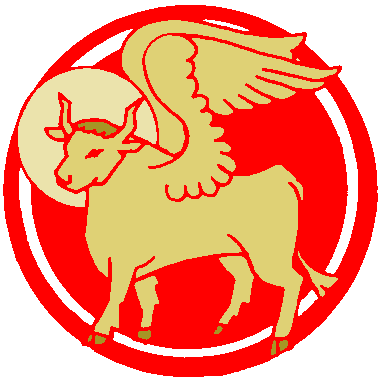 Saint Luke the Evangelist was a physician (Colossians 4:14) and a companion of St. Paul on some of his missionary journeys (see Acts 16:10ff; 20:5ff; 27-28).
Material found in his Gospel account and not elsewhere includes the Annunciation and almost all we know of Jesus' birth, infancy, and boyhood. He recounts some of the most moving parables, including the Good Samaritan and the Prodigal Son. He also provides three of the sayings of Christ on the Cross: "Father, forgive them (23:34)"; "Today, you will be with me in Paradise (23:43)"; and "Father, into your hands I commit my spirit! (23:46)"
Luke's Gospel account emphasizes the human love of Christ, His compassion for sinners and for suffering and unhappy persons, for outcasts such as the Samaritans, tax collectors, lepers, shepherds (not a respected profession), and for the poor. Christ's treatment of women and their important supporting role in His ministry is also emphasized in Luke more than in the other Gospels.
Much of Christianity uses each of the four living creatures (see Ezekiel 1 and Revelation 4) as a symbol one of the four evangelists. While attributions vary in parts of Christendom, most of the Western Church assigns the winged ox to Saint Luke. The association probably comes because the ox was one of the major sacrificial animals under the Old Covenant while Luke strongly highlighted the sacrificial elements of Christ's life, suffering, and death. See the commemoration of Saint Matthew for details of the other evangelists' symbols in ecclesiastical art.
Lection
Psalm 147:1-11
Isaiah 35:5-8
2 Timothy 4:5-18
Luke 10:1-9
Collect
Almighty God, our Father, Your blessed Son called Luke the physician to be an evangelist and physician of the soul. Grant that the healing medicine of the Gospel and the Sacraments may put to flight the diseases of our souls that with willing hearts we may ever love and serve You; through Jesus Christ, Your Son, our Lord, who lives and reigns with You and the Holy Spirit, one God, now and forever.
Scripture quoted from The Holy Bible, English Standard Version®, © 2001 by Crossway Bibles.
Labels: acts, biography, christianity, christology, church history, evangelist, feasts, festivals, gospels, hagiography, jesus, luke, new testament, paul
¶ 00:00 | 0 comments |
 One day Jesus was walking and saw a tax collector named Matthew sitting at a tax collection post, and said to him, "Follow Me." Matthew stood up and followed Him, becoming one of His twelve apostles (see Matthew 9:9-13; parallels Mark 2:13-17 and Luke 5:27-32).
Tax collectors in those days were social outcasts. Devout Jews avoided them because they were usually dishonest (they were expected to make their profits by cheating the people). Nationalistic Jews hated them because they were agents of the Roman government and doubly hated them if (like Matthew) they were Jews, because they had gone over to the enemy, betraying their own people for money.
Throughout the Gospels, we find tax collectors (publicans) mentioned as a standard type of sinful and despised outcast. Matthew brought many of his former associates to meet Jesus. They — as well as social outcasts and sinners in general — were shown that the love of God through His Son extended even to them.
The word Gospel comes from the Old English god-spell, or good tidings. The New Testament's Greek speaks of the euangelion (ευαγγελιον), a "good message." In English, this "Evangel" gives us words like evangelism and evangelist. From it we also received "Evangelical," which means "of or pertaining to the Gospel," via Germany. There, it was first applied to Martin Luther and his compatriots and later co-opted by the Calvinists and others.
 Certainly Matthew and his companions freed of sin and guilt by Jesus experienced this Good News — as do all others who trust in the forgiveness of sins for Christ's sake. The word angel is related, for an angelos (αγγελος) is a messenger.
The name "Matthew" means "gift of the Lord." Mark and Luke, in the story of his calling, name him "Levi." Perhaps this was his original name, and he received a new name from Jesus when he became a disciple. Perhaps he was a member of the tribe of Levi. Of Matthew's life after Pentecost, the Scriptures tell us nothing. Later accounts vary: Some report that he was martyred, others that he died a natural death. The Christian community since early times has commemorated him as a martyr.
Matthew's symbol in religious art is often a winged man, such as shown here. This representation comes from the visions of Ezekiel and John of the four living creatures around the throne of God (see examples in Ezekiel 1:5-14 and Revelation 4:6-11). While there is some variation in Christendom, we most often find the man standing for Matthew since his narrative begins with Jesus' human genealogy of Jesus. Also, Matthew often quotes Christ speaking of Himself as "the Son of Man." The lion represents Saint Mark, whose narrative begins with John the Baptist crying out in the desert, perhaps as a lion roars in the wilderness. The ox, a sacrificial animal, stands for Saint Luke, whose narrative begins in the Temple and is woven throughout with Jesus pointing Himself toward His own sacrificial death. Finally, the eagle often represents Saint John. John begins his narrative in Heaven with the eternal Word of God while also writing the Fourth Gospel in a soaring style.
Lection
Psalm 119:33-40
Ezekiel 2:8-3:11
Ephesians 4:7-16
Matthew 9:9-13
Collect
O Son of God, our blessed Savior Jesus Christ, You called Matthew the tax collector to be an apostle and evangelist. Through his faithful and inspired witness, grant that we also may follow You, leaving behind all covetous desires and love of riches; for You live and reign with the Father and the Holy Spirit, one God, now and forever.
Labels: apostle, christianity, christology, evangelist, feasts, festivals, gospels, hagiography, jesus, levi, matthew, new testament
¶ 00:00 | 0 comments |
The book of Acts mentions a Mark, or John Mark, later called a kinsman of Barnabas (Colossians 4:10). The house of his mother Mary was a meeting place for Christians in Jerusalem (Acts 12:12). When Paul and Barnabas, who had been in Antioch, came to Jerusalem, they brought Mark back to Antioch with them (12:25), and he accompanied them on their first missionary journey (13:5), but left them prematurely and returned to Jerusalem (13:13).When Paul and Barnabas were about to set out on a second missionary journey, Barnabas proposed to take Mark, but Paul thought him unreliable, so that eventually Barnabas made one journey taking Mark, and Paul another journey taking Silas (15:36-40). Mark is not mentioned again in Acts. However, it appears that he became more reliable, for Paul mentions him as a trusted assistant in Colossians 4:10 and again in 2 Timothy 4:11.
The Apostle Peter had a co-worker whom he refers to as "my son Mark" (1 Peter 5:13). Papias, an early second century writer, in describing the origins of the Gospels, tells us that Mark was the "interpreter" of Peter, and that he wrote down ("but not in order") the stories that he had heard Peter tell in his preaching about the life and teachings of Jesus. Debate continues as to the veracity of some of Papias' records, but this one is considered genuine by many scholars.
The Gospel According to Saint Mark, in describing the arrest of Jesus (14:43-52), speaks of a young man who followed the arresting party, wearing only a linen cloth wrapped around his body, whom the arresting party tried to seize, but who left the cloth in their hands and fled naked. Many think that this young man was the writer himself, since the detail is hardly worth mentioning if he were not.
Tradition holds that after Peter's death, Mark left Rome and went to preach in Alexandria, Egypt, where he was eventually martyred.
It is natural to identify the John Mark of Acts with the Gospel-writer and interpreter of Peter, and this identification is standard in liturgical references to Mark. However, "Mark" is the commonest of Latin first names, and they may well have been separate people.
Mark's symbol in Christian art is a often a lion, usually winged. In Revelation 4 and throughout much of his vision, John sees about the throne of God four winged creatures — a lion, an ox, a man, and an eagle. (Compare with the beings in Ezekiel 1 and 10.) Custom supposes that these represent the four Gospels or the four Evangelists (Gospel-writers).
One way to match the creatures with the Evangelists is to say that the man stands for Matthew, whose narrative begins with the human genealogy of Jesus and who often quotes Christ speaking of Himself as "the Son of Man"; the lion stands for Mark, whose narrative begins with John the Baptist crying out in the desert (a lion roars in the desert); the ox, a sacrificial animal, stands for Luke, whose narrative begins in the Temple; the eagle, then, stands for John, whose narrative begins in Heaven with the eternal Word and who writes in a lofty style.
Lection
Psalm 146
Isaiah 52:7-10
2 Timothy 4:5-18
Mark 16:14-20
Collect
O almighty God, You have enriched Your Church with the proclamation of the Gospel through the evangelist Mark. Grant that we may firmly believe these glad tidings and daily walk according to Your Word; through Jesus Christ, Your Son, our Lord, who lives and reigns with You and the Holy Spirit, one God, now and forever.
Labels: acts, evangelist, feasts, festivals, gethsemane, gospels, lion, mark, new testament, saint luke, saint mark, saint paul, saint peter
¶ 00:00 | 0 comments |
Saint John, Apostle and Evangelist, a son of Zebedee, was one of the twelve apostles. With his brother James and Simon Peter, he formed an inner circle among the Twelve: Those three beheld the Great Catch of Fish (Luke 5:10), the healing of Peter's mother-in-law (Mark 1:29-31), the raising of Jairus' daughter(Mark 5:37; Luke 8:51), the Transfiguration (Matthew 17:1; Mark 9:2; Luke 9:28), and Gethsemane's agony (Matthew 26:37; Mark 14:33).He expressed willingness to undergo martyrdom (Matthew 20:22; Mark 10:39) — as did the other apostles (Matthew 26:35; Mark 14:31). However, ancient testimony says that even though he was imprisoned and exiled, he was eventually released and died a natural death in Ephesus.
According to Mark 3:17, Jesus gave James and John "the name Boanerges, that is, Sons of Thunder." He is credited with the writing three epistles and one Gospel. He is also the probable author of Revelation, although this identification is less certain.
His symbol in ecclesiastical art is usually the eagle. This and the images used for the other evangelists come from the visions of the four living creatures around God's throne in heaven. See the biography of Saint Matthew for the specifics of each.
Lection
Psalm 11
Revelation 1:1-6
1 John 1:1-2:2
John 21:20-25
Collect
Merciful Lord, cast the bright beams of Your light upon Your Church that we, being instructed in the doctrine of Your blessed apostle and evangelist John, may come to the light of everlasting life; for You live and reign with the Father and the Holy Spirit, one God, now and forever.
Labels: apostle, boanerges, christ, disciple, evangelist, feasts, festivals, gospels, jesus, john, new testament, revelation
¶ 00:00 | 0 comments |
Saint Luke the Evangelist was a physician (Colossians 4:14) and a companion of St. Paul on some of his missionary journeys (see Acts 16:10ff; 20:5ff; 27-28).Material found in his Gospel account and not elsewhere includes the Annunciation and almost all we know of Jesus' birth, infancy, and boyhood. He recounts some of the most moving parables, including the Good Samaritan and the Prodigal Son. He also provides three of the sayings of Christ on the Cross: "Father, forgive them (23:34)"; "Today, you will be with me in Paradise (23:43)"; and "Father, into your hands I commit my spirit! (23:46)"
Luke's Gospel account emphasizes the human love of Christ, His compassion for sinners and for suffering and unhappy persons, for outcasts such as the Samaritans, tax collectors, lepers, shepherds (not a respected profession), and for the poor. Christ's treatment of women and their important supporting role in His ministry is also emphasized in Luke more than in the other Gospels.
Much of Christianity uses each of the four living creatures (see Ezekiel 1 and Revelation 4) as a symbol one of the four evangelists. While attributions vary in parts of Christendom, most of the Western Church assigns the winged ox to Saint Luke. The association probably comes because the ox was one of the major sacrificial animals under the Old Covenant while Luke strongly highlighted the sacrificial elements of Christ's life, suffering, and death. See the commemoration of Saint Matthew for details of the other evangelists' symbols in ecclesiastical art.
Lection
Psalm 147:1-11
Isaiah 35:5-8
2 Timothy 4:5-18
Luke 10:1-9
Collect
Almighty God, our Father, Your blessed Son called Luke the physician to be an evangelist and physician of the soul. Grant that the healing medicine of the Gospel and the Sacraments may put to flight the diseases of our souls that with willing hearts we may ever love and serve You; through Jesus Christ, Your Son, our Lord, who lives and reigns with You and the Holy Spirit, one God, now and forever.
Scripture quoted from The Holy Bible, English Standard Version®, © 2001 by Crossway Bibles.
Labels: acts, biography, christianity, christology, church history, evangelist, feasts, festivals, gospels, hagiography, jesus, luke, new testament, paul
¶ 00:00 | 0 comments |
One day Jesus was walking and saw a tax collector named Matthew sitting at a tax collection post, and said to him, "Follow Me." Matthew stood up and followed Him, becoming one of His twelve apostles (see Matthew 9:9-13; parallels Mark 2:13-17 and Luke 5:27-32).Tax collectors in those days were social outcasts. Devout Jews avoided them because they were usually dishonest (they were expected to make their profits by cheating the people). Nationalistic Jews hated them because they were agents of the Roman government and doubly hated them if (like Matthew) they were Jews, because they had gone over to the enemy, betraying their own people for money.
Throughout the Gospels, we find tax collectors (publicans) mentioned as a standard type of sinful and despised outcast. Matthew brought many of his former associates to meet Jesus. They — as well as social outcasts and sinners in general — were shown that the love of God through His Son extended even to them.
The word Gospel comes from the Old English god-spell, or good tidings. The New Testament's Greek speaks of the euangelion (ευαγγελιον), a "good message." In English, this "Evangel" gives us words like evangelism and evangelist. From it we also received "Evangelical," which means "of or pertaining to the Gospel," via Germany. There, it was first applied to Martin Luther and his compatriots and later co-opted by the Calvinists and others.
Certainly Matthew and his companions freed of sin and guilt by Jesus experienced this Good News — as do all others who trust in the forgiveness of sins for Christ's sake. The word angel is related, for an angelos (αγγελος) is a messenger.The name "Matthew" means "gift of the Lord." Mark and Luke, in the story of his calling, name him "Levi." Perhaps this was his original name, and he received a new name from Jesus when he became a disciple. Perhaps he was a member of the tribe of Levi. Of Matthew's life after Pentecost, the Scriptures tell us nothing. Later accounts vary: Some report that he was martyred, others that he died a natural death. The Christian community since early times has commemorated him as a martyr.
Matthew's symbol in religious art is often a winged man, such as shown here. This representation comes from the visions of Ezekiel and John of the four living creatures around the throne of God (see examples in Ezekiel 1:5-14 and Revelation 4:6-11). While there is some variation in Christendom, we most often find the man standing for Matthew since his narrative begins with Jesus' human genealogy of Jesus. Also, Matthew often quotes Christ speaking of Himself as "the Son of Man." The lion represents Saint Mark, whose narrative begins with John the Baptist crying out in the desert, perhaps as a lion roars in the wilderness. The ox, a sacrificial animal, stands for Saint Luke, whose narrative begins in the Temple and is woven throughout with Jesus pointing Himself toward His own sacrificial death. Finally, the eagle often represents Saint John. John begins his narrative in Heaven with the eternal Word of God while also writing the Fourth Gospel in a soaring style.
Lection
Psalm 119:33-40
Ezekiel 2:8-3:11
Ephesians 4:7-16
Matthew 9:9-13
Collect
O Son of God, our blessed Savior Jesus Christ, You called Matthew the tax collector to be an apostle and evangelist. Through his faithful and inspired witness, grant that we also may follow You, leaving behind all covetous desires and love of riches; for You live and reign with the Father and the Holy Spirit, one God, now and forever.
Labels: apostle, christianity, christology, evangelist, feasts, festivals, gospels, hagiography, jesus, levi, matthew, new testament
¶ 00:00 | 0 comments |


