
 Carl Ferdinand Wilhelm Walther was a founding father of The Lutheran Church — Missouri Synod. He served as its first president from 1847 to 1850 and again from 1864 to 1878. Others who worked with him in the Synod's early days included Friedrich Wyneken and Wilhelm Sihler.
The son of a pastor, he was born in Langenchursdorf, Saxony on 25 October 1811. Walther's studies at the University of Leipzig and the influences of older Lutherans helped convince him that Lutheran teachings were correct expositions of Holy Scripture. However, some of his mentors were staunch Pietists, relying heavily on experience and emotion as part of conversion and sanctification. Walther rejected Pietism but seemed to always struggle against its encroachment in his theology.
Fearing a "union church" with the Reformed — as had been happening in Prussia — Walther joined with several other younger pastors under the leadership of Martin Stephan, who encouraged emigration to the United States in order to maintain confessional purity by avoiding imposed unionism. In 1839 he left Germany with other Lutherans. After a series of trials, the party settled along the Mississippi River south of Saint Louis, Missouri. Circumstances still clouded in a certain degree of ambiguity led the Saxons to depose Stephan as their leader and they finally settled upon Walther as his replacement.
 He served as pastor of several congregations in St. Louis, founded Concordia Seminary, and in 1847 was instrumental in the formation of the LCMS (then called the Deutsche Evangelisch-Lutherische Synode von Missouri, Ohio und anderen Staaten — the German Evangelical Lutheran Synod of Missouri, Ohio, and Other States). Walther worked tirelessly to promote confessional Lutheran teaching and doctrinal agreement among all Lutherans in the United States.
Walther was a prolific writer and speaker. Among his most influential works are Church and Office (aka Church and Ministry) and The Proper Distinction between Law and Gospel. He also published Der Lutheraner, the LCMS's official news magazine for most of the time the Synod spoke and understood German.
Walther was one of many who stood steadfast in confession of the Evangelical, Orthodox, Catholic, and Apostolic Faith. For a sampling of some of the others in Lutheranism, please see The Meanies of Grace.
Lection
Psalm 46
Isaiah 55:6-11
Romans 10:5-17
John 15:1-11
Collect
O Lord God, heavenly Father, we pray that, as You raised up C. F. W. Walther to lead the Lutherans in American into a renewed appreciation of their confessional heritage and trust in the saving Gospel of Jesus Christ, so You would continue to provide them with faithful pastors and leaders, keep them steadfast in Your grace and truth, defend them against all enemies of Your Word, and bestow on Christ's Church Militant Your saving peace; through Jesus Christ, Your Son, our Lord, who lives and reigns with You and the Holy Spirit, one God, now and forever.
Labels: american history, biography, church history, commemoration, gospel, hagiography, law, lcms, lutheranism, pietism, sihler, walther, wyneken
¶ 00:00 | 2 comments |

 Friedrich Conrad Dietrich Wyneken stands along-side C.F.W. Walther and Wilhelm Sihler as one of the founding fathers of The Lutheran Church — Missouri Synod. He was born to Pastor Heinrich Christoph and Anne Catharine Louise Wyneken in on 13 May 1810 and baptized 22 May in St. Andreas Church, Verden, Kingdom of Hannover, Germany.
Wyneken came to Baltimore in 1838 and shortly thereafter accepted a call to be the pastor of congregations in Friedheim and Fort Wayne, Indiana. Supported by the mission society of Wilhelm Loehe, he served as an itinerant missionary in Indiana, Ohio, and Michigan, particularly among Native Americans.
Together with Loehe and Sihler, Wyneken founded Concordia Theological Seminary in 1846 in Fort Wayne, Ind. He later served as the second president of the LCMS during a period of significant growth (1850-64). His leadership strongly influenced the confessional character of the LCMS and its commitment to an authentic Lutheran witness.
Wyneken died of an apparent stroke suffered in San Francisco, California. He had at least three funeral sermons. The first was by his son-in-law Pastor Buehler in San Francisco. Walther preached the second in Saint Louis while Wyneken lay in state at Trinity Lutheran. Wilhelm Sihler preached the final funeral sermon at St. Paul's, Fort Wayne, Indiana. He was then buried in the Lutheran Cemetery, Cleveland, Ohio. A pulpit-shaped monument was erected over his grave.
Collect
Lord of the Living Harvest, Who sends workers into the harvest field of souls, we thank You for the gift of Your servant, Friedrich Conrad Dietrich Wyneken, who began his missionary ministry in Indiana 175 years ago. As you blessed the work of his hands, gathering scattered Germans into Lutheran congregations In Indiana, Illinois, Michigan and Ohio and forging the Lutheran Church — Missouri Synod into a warm fellowship united in doctrine, mercy and mission, bless our work as we seek to proclaim your word in our lost and dying generation, through Jesus Christ, Your Son, our Lord, Who lives and reigns with You and the Holy Spirit, one God, yesterday, today and forever. (Collect from Robert E. Smith of Concordia Theological Seminary)
Labels: american history, biography, church history, commemoration, hagiography, lcms, loehe, lutheranism, sihler, walther
¶ 00:00 | 0 comments |
 Matthias Loy (1828-1915) was born on 17 March to Matthias and Christina Loy, a pair of German immigrants. The family lived in near-poverty in Cumberland County, Pennsylvania, near Harrisburg. He was the fourth of seven children. Matthias, Senior was a lapsed Catholic who apparently held only nominal religious beliefs for most of his life. Christina came from pietistic Lutheran stock in Württemberg. She did what she could to give the family some semblance of a Christian education and made sure that all but the eldest child were baptized as infants. Even her first-born son eventually was confirmed into the Lutheran Church.
When Matthias was six years old, the family moved to Hogestown, Pennsylvania. He lived with his family until he was fourteen. They then apprenticed him to Baab and Hummel Printers of Harrisburg. During the next six years, he worked for them while attending school. Mr. Hummel brought Matthias to the attention of Harrisburg minister C. W. Schäffer. Pastor Schäffer urged Matthias to consider a pastoral vocation. To this end, he studied studied Greek and Latin under the Harrisburg Academy's principal. This led to enrollment as a full student at the Academy. He hoped to enter the Gettysburg Theological Seminary, perhaps the epicenter of Lutheran liberalism in America.
Illness led Loy's doctor to encourage the young man to move farther west. Matthias found an employment opportunity with the United Brethren Publishing House in Circleville, Ohio. There he would become printer for the Brethren's semimonthly German paper. Loy came to Circleville in 1847 and quickly met the Lutheran pastor. This good soul suggested that Matthias waste no more time getting on with his pastoral education and suggested that he enroll at the Theological Seminary in Columbus. The Evangelical Lutheran Synod of Ohio was much more conservative and confessional than the Lutherans he had left behind in Pennsylvania.
 With the promise of financial aid through the Lutheran pastor, Loy sought and received release from his printer's contract and left for Columbus. Of Matthias's time there, C. George Fry writes, "It was at this institution that he received the only two years of formal higher education deemed necessary to be a pastor. In 1849, after a two year 'cram course' that included academy, college, and seminary, Loy was graduated and installed as a minister in Delaware, Ohio."
Loy was finally surrounded by orthodox Lutheran theology and he made the most of his time at the seminary. As a student, he was immersed in Lutheran doctrine and began reading Der Lutheraner, edited by C. F. W. Walther. This led to a long relationship with Dr. Walther, a friendship that grew so great that even their eventual disagreements over predestination and the fracturing of the Synodical Conference couldn't destroy.
According to Fry, these two men, along with Charles Porterfield Krauth, "must be seen as a common effort to preserve traditional Lutheran theology from the corrosive effects of 'the acids of modernity' in the last half of the nineteenth century. These three titans — Walther in the West, Krauth in the East, and Loy in the middle — could be compared to three anchors holding fast the ship of Lutheran Confessionalism during the ferocious storms of the Modernist-Fundamentalist Controversy."
In 1860, the Joint Synod of Ohio elected Loy President. Four years later, he was appointed editor of the Lutheran Standard. After sixteen years in the ministry, Capital University, Columbus, Ohio called Loy as professor of theology. He resigned as president of the Ohio Synod in 1878. Around this time he also returned the call to become English-language professor of theology at Concordia Seminary, St. Louis. Wilhelm Friedrich Lehmann, Loy's successor as synodical president, died in 1880 and Loy returned to that office, succeeding him also as President of Capital University. He started the Columbus Theological Magazine in 1881. Loy retired as professor emeritus in 1902 and died on 26 January 1915.
 Loy was instrumental in the formation of the Synodical Conference. However, at the Ohio Synod meeting at Wheeling in 1881, the synod withdrew from the Conference. This came about over sharp differences in understanding Predestination. Many Ohio Synod pastors taught that God predestined people according to His foreknowledge of whether they would come to faith while the Missouri Synod condemned this as false doctrine.
During his life, Loy wrote several books. Of special note is his seminal work The Augsburg Confession: An Introduction to Its Study and an Exposition of Its Contents.
He also wrote at least twenty hymns, including An Awe-full Mystery Is Here, The Law of God Is Good and Wise, The Gospel Shows the Father's Grace, and Jesus, Thou Art Mine Forever. His hymn translations included All Mankind Fell in Adam's Fall, The Bridegroom Soon Will Call Us, Let Me Be Thine Forever, and Thy Table I Approach.
*Since his death date (26 January) and birth date (17 March) both conflict with long-standing festivals on the sanctorial calendar (Titus and Pádraig respectively) and since 27 January belongs to John Chrysostom, I moved Loy's commemoration the first open date, 28 January.
Sources
Quotes from C. George Fry's Matthias Loy: Theologian of American Lutheran Orthodoxy [PDF]. This excellent biography was printed in The Springfielder, October 1974, Volume 38, Number 4.
Additional Reading includes Loy's autobiography, The Story of My Life, which the Internet Archive has in several formats, including PDF, Nook (EPUB), and Kindle (MOBI). See also entries at Net Hymnal and the Christian Cyclopedia.
Suggested Lection
Psalm 46
Isaiah 55:6-11
Romans 10:5-17
John 15:1-11
Collect
O Lord God, heavenly Father, we pray that, as You raised up Matthias Loy to lead Lutherans in America into a renewed appreciation of their confessional heritage and to a fuller confidence in the saving Gospel of Jesus Christ, so You would continue to provide us with faithful pastors and leaders, keep us steadfast in Your grace and truth, defend us against all enemies of Your Word, and bestow on Christ's Church Militant Your saving peace; through Jesus Christ, Your Son, our Lord, who lives and reigns with You and the Holy Spirit, one God, now and forever.
Labels: american history, biography, commemoration, hagiography, hymnody, loy, lutheran confessions, lutheranism, matthias loy, synodical conference, theology
¶ 00:00 | 0 comments |
 Charles Porterfield Krauth was born in Martinsburg, Virginia (now West Virginia), on 17 March 1823. He was son of the noted Lutheran pastor Dr. Charles Philip Krauth. However, young Charles wasn't named for his father but for grandfathers Charles James Krauth and Robert Porterfield Augustus Heiskell.
In 1839, Krauth graduated from Pennsylvania (now Gettysburg) College. His father was the college's president at this time and also served on the theological faculty of the city's Lutheran Theological Seminary, so it's no surprise that young C. P. Krauth attended this school for his pastoral education. He graduated in 1841 and was ordained the following year, after which he served as parish pastor in Baltimore, the Shenandoah Valley, St. Thomas, Virgin Islands, and Pittsburgh, Pennsylvania.
Krauth was called to St. Mark's Church, Philadelphia in 1859 and served there for two years. However, his dissatisfaction with American Lutheranism led him to resign and assume editorship of the Lutheran and Missionary, a journal espousing a return to the theology of the Augsburg Confession. His movement away from his father's church seems to have been triggered by ... his own father! This wasn't the result of family strife but because Charles James Krauth had given Charles Porterfield Krauth the gift of Chemnitz.
The more he read from "the Second Martin," the more he was convinced that the General Synod and most of Americanized Lutheranism had departed the ways of "the First Martin"; i.e., Luther himself. C. P. Krauth became increasingly uncomfortable with Lutherans who were so concerned with ecumenism that they would downplay, abandon, or deny the theology of the Augsburg Confession and the rest of the Book of Concord. He recognized the strains of "Socinianism ... Universalism ... Unionism, Pietism, Moravianism, and Methodism"* and other non-Lutheran, even unchristian, philosopies and theologies that diluted and corrupted pure Evangelical Lutheranism away from what he was ever-increasingly growing to know, to believe, and to love.
 As he ventured farther into the "old" Lutheranism of the Reformation and the Age of Orthodoxy, Krauth started speaking more harshly about the "new" Lutheran leaders who were following the lead of Samuel Simon Schmucker. He claimed that the General Synod had become the playground of "moral weaklings." These "amiable inanities" only played at "neutrality and conservatism," ignored major theological differences, and generally espoused a healing through "a cataplasm of soft words and soft soap, or an ointment of love and lard."† Needless to say, the other side hated these criticisms and the cracks between their conflicting confessions quickly expanded to a major rift.
This new conservative and confessional wing of English-speaking American Lutheranism found itself needing its own organization and theological institutions. The confessional party established Lutheran Theological Seminary, Philadelphia in 1864 and asked Krauth to lead their new school and become its professor of systematic theology. In 1867, Krauth was instrumental in the establishment of the General Council of the Evangelical Lutheran Church in North America. He wrote the General Council's position papers and the foundational document and then drafted its constitution. Three years later, he was elected the Council's president, in which office he served for a decade, until 1880.
Krauth composed a series of theses on pulpit and altar fellowship under the title the “Akron-Galesburg Rule.” The summary is simple: "Lutheran pulpits for Lutheran pastors only, and Lutheran altars for Lutheran communicants only." While the Galesburg Rule permitted exceptions based on pastoral discretion, it still strongly repudiated the nearly blind ecumenism of the General Synod.
Krauth's theological arguments and personal appeal stood him in good stead. Over the course of time, both his own father and Beale Melanchthon Schmucker (Samuel Simon's grandson) joined him in a literal reading of the Scriptures and a quia adherence to the Lutheran Confessions. He also drew William Passavant, the pioneer of the American Lutheran deaconess movement, into the confessional camp.
 Krauth's scholarship and academic influence went beyond Lutheranism. He became a trustee of the University of Pennsylvania, serving from 1865 to 1868. He was made Professor of Intellectual and Moral Philosophy in 1868 and held that position until his death in 1883. From 1873-1882, he was also Penn's Vice Provost.
Over the course of his life, Charles Porterfield Krauth saw more than one hundred of his works in print. Chief among these was The Conservative Reformation and Its Theology: As Represented in the Augsburg Confession, and in the History and Literature of the Evangelical Lutheran Church (1875). His reputation as one of the great American Lutheran theologians remains secure. In fact, we might drop the "American" and name him as one of the great theologians throughout all Lutheranism.
Pastor David Jay Webber leads us to think thusly, claiming that if C. F. W. Walther justly deserves the title, of "the American Luther," then Krauth is the best candidate for "the American Chemnitz."†† Walther himself noted a Chemnitz-like mix of confessional theology and a conciliar nature in calling Krauth "the most eminent man in the English Lutheran Church of this country, a man of rare learning, at home no less in the old than in modern theology, and, what is of greatest import, whole-heartedly devoted to the pure doctrine of our Church, as he had learned to understand it, a noble man and without guile."†††
Finally, a few notes on his family: C. P. Krauth was married to Susan Reynolds from 1844 until her death in 1853. In 1855, he married Virginia Baker. He was blessed with five children through his two wives.
*Commemoration moved from 2 January (the LCMS calendar's remembrance of Wilhelm Loehe) to today. His birth date of 17 March conflicts with the commemoration of Saint Pádraig.
† "The General Council Before Its First Anniversary," The Lutheran Church Review, Vol. XXVI, No. 4 (October 1907)
†† David Jay Webber, Charles Porterfield Krauth: The American Chemnitz (2004)
††† Walther, Lehre und Wehre XXIX:1 (January 1883)
Sources and extended reading suggestions: Christian Cyclopedia, Wikipedia, Penn Biographies, The Conservative Reformation and Its Theology at Google Books, and, especially, David Jay Webber's Charles Porterfield Krauth: The American Chemnitz.
Suggested Lection
Psalm 46
Isaiah 55:6-11
Romans 10:5-17
John 15:1-11
Collect
O Lord God, heavenly Father, we pray that, as You raised up Charles Porterfield Krauth to lead Lutherans in American into a renewed appreciation of their confessional heritage and to a fuller confidence in the saving Gospel of Jesus Christ, so You would continue to provide us with faithful pastors and leaders, keep us steadfast in Your grace and truth, defend us against all enemies of Your Word, and bestow on Christ's Church Militant Your saving peace; through Jesus Christ, Your Son, our Lord, who lives and reigns with You and the Holy Spirit, one God, now and forever.
Labels: american history, biography, charles porterfield krauth, commemoration, conservative reformation, galesburg rule, general council, general synod, hagiography, lutheranism, samuel schmucker, william passavant
¶ 00:00 | 0 comments |
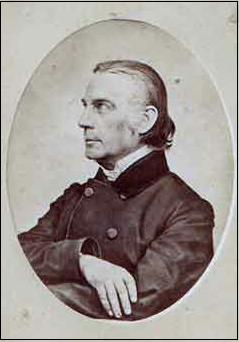 Christened Johann Konrad Wilhelm Löhe, he established a reputation already as a young pastor for being "too" theologically conservative and "too" politically progressive. This led to his being moved to at least twelve positions until he received his own parish in Neuendettelsau, Bavaria in 1837. Beginning his career with difficulty, he accomplished much from such a small place. Even though he had aspirations of a more prominent position in a major city, church and government officials never allowed that to pass.
The Catholic king of Bavaria was de facto leader of the Lutheran Church. His main desire was to keep the churches from becoming places of political unrest. Thus arose strict restrictions, such as an assembly of more than five people needing a police permit. He prohibited mission circles and other "subversive enterprises," thus relegating church activities to not much more than Sunday services only.
In 1840, Loehe read a newspaper account from America by Pastor Friedrich Wyneken. It told of German emigrants not having church or pastoral care — nobody could baptize their children, teach, visit the sick, or bury the dead. Pastor Loehe felt compelled to aid the German Lutherans in America and published an article in a church periodical asking for help. Beginning in the spring of 1841, several young men responded to Loehe's letter, expressing the desire help the settlers with their own skills and occupations. In the summer of 1842 he sent them to America at his own expense. He called them Nothelfer ("helpers in need") or "auxiliary saints", and trained them to be "emergency pastors."

After only six years of marriage, Loehe's wife died, leaving him to raise their four children alone. Even among such hardships, his dreams remained clear and his desire to serve the Lord strong. Indeed, recent years have brought recognition for his farsightedness. This contrasts sharply with the handed-down opinions of many contemporaries who, while recognizing him as a founder of social institutions and mission education in Neuendettelsau, regarded him as divisive, narrow-minded, or combative. Changes in attitude began taking place especially after 1985, when several thousand of his letters were published, many previously unknown to scholars in Germany.
Seeking to support and strengthen missions and pastoral ministry in the United States, Loehe established a large parish cooperative throughout Germany. As support grew, he could publish his 1845 "Letter from the Home Country to the German Lutheran Emigrants" which 946 people, including 350 theologians, signed.
With the home churches finally behind him, he could at last send pastors! Loehe saw to the training of twenty-two pastors for work in America. Due in large part to his direct influence a seminary was established in Fort Wayne, Indiana in 1846 as well as a teachers' institute in Saginaw, Michigan. Some of the men he sent to the U.S. helped to establish The Lutheran Church — Missouri Synod. Today, two LCMS seminaries, Concordia Theological Seminary, Fort Wayne, Indiana, and Concordia Seminary, St. Louis, Missouri continue equipping and forming men to send out into the Savior's harvest fields.
Besides his interest in the United States, Loehe also assisted in training and sending pastors to care for emigrants in Brazil and Australia, both of which still have relatively small but vital Lutheran populations. He will continue to be remembered for his confessional integrity and his interest in liturgy and catechetics. He also never forgot the physical needs of those less fortunate and his works of Christian charity include the establishment of a deaconess training house, homes for the aged, an asylum for the mentally ill, and other caring institutions.
Please see Loehe etexts translated through Project Wittenberg for his Sonntagsblatt Appeal, his 1842 Instructions of Adam Ernst and Georg Burger, a letter from C.F.W. Walther to Loehe About the Fort Wayne Seminary, and Loehe's Report of Walther's and Wyneken's Visit.
Suggested Lection
Psalm 46
Isaiah 55:6-11
Romans 10:5-17
John 15:1-11
Collect
O Lord God, heavenly Father, we pray that, as You led Wilhelm Loehe to establish and support Lutheran missions and ministry in the New World, so You would continue to raise up faithful Lutheran pastors and missionaries that the Gospel might be proclaimed in its truth and purity, the Sacraments rightly administered, believers ministered to, and unbelievers converted by Your saving Word and the power of the Holy Spirit, who lives and reigns with You and Your Son Jesus Christ, one God, now and forever.
Labels: american history, biography, commemoration, german history, hagiography, immigration, lcms, loehe, lutheranism, missouri synod, walther, wyneken
¶ 00:00 | 0 comments |
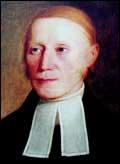 The early Church entrusted some women, particularly widows, with helping to carry out the "social work" of the Church, particularly caring for the sick and needy of the congregation. From reading 1 Timothy 5:1-16, it appears that certain of these women were specially consecrated and made a lifetime commitment to works of mercy. The idea of a female deaconate or service order largely died out by the 7th Century AD, although some groups of nuns and a few informally organized groups undertook similar work.
The modern deaconess movement came mainly through the work of Theodor Fliedner, a German Lutheran. Born in Eppstein, Germany, in 1800, he became pastor of a small parish in Kaiserswerth in 1821 or 1822. Fliedner took the work of England's Elizabeth Fry and Dutch Mennonites as inspiration. Encountering Moravian deaconesses, he also drew from their example.
He began serving the Düsseldorf Prison, walking to and from Düsseldorf on alternating Sundays until the appointment of a regular prison chaplain. This led to more prisons engaging chaplains and establishing regular worship and aid services for the prisoners. He envisioned and opened a nursery school; eventually it became a sort of teachers' college and a starting point for what would become his first deaconess school.
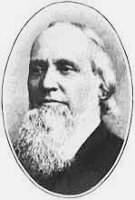 Becoming more involved in Christian social work among the disadvantaged, Fliedner convinced himself that he should revive the order of deaconesses. He opened a hospital and deaconess training center in Kaiserswerth on 13 October 1836. Florence Nightingale heard of his reputation, visited the school in the 1840s, came back to study nursing, and graduated in 1851.
The program was so successful that he could send deaconesses to other hospitals by 1838. New deaconess motherhouses grew up in Pittsburgh, Pennsylvania and in Jerusalem, Paris, Berlin, and Strasbourg, and elsewhere. When he died, 30 motherhouses already stood and over 1500 deaconesses served around the world. The middle of the 20th century saw more than 35,000 deaconesses serving world-wide.
Lutherans in the United States may also want to remember William Passavant, who pioneered the American deaconess movement in 1849. He also founded missions, hospitals, orphanages, and schools. Passavant died 3 January 1894.
Additional information available from Wikipedia and James Kiefer.
Labels: american history, biography, christianity, church history, commemoration, deaconess, german history, hagiography, lutheranism, theodor fliedner, william passavant
¶ 00:00 | 0 comments |
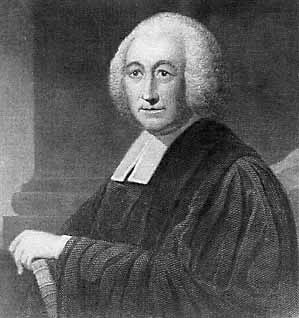 Moving from the Old World to the New, H. M. Muhlenberg established the shape of Lutheran parishes and Lutheranism in general in America during a 45-year ministry in Pennsylvania. Born at Einbeck, Germany, in 1711 and baptized Heinrich Melchior Mühlenberg, he came to the American colonies in 1742.
A tireless traveler, Muhlenberg helped to found many Lutheran congregations and was the guiding force behind the first American Lutheran synod, the Ministerium of Pennsylvania, established in 1748. He valued the role of music in Lutheran worship (often serving as his own organist) and was also largely responsible for preparing the first American Lutheran liturgy (also in 1748).
We remember Muhlenberg as church leader, journalist, liturgist, and — above all — as faithful pastor to those in his charge. He died in 1787, leaving behind a large extended family and a lasting ecclesiastical and familial heritage. Although his beliefs and practices may have been tinged with pietistic tendencies, Muhlenberg paved the way for a wide variety of Lutherans — from orthodox and doctrinally sound to Lutheran in name only — to establish their respective presences in the United States.
Among his heirs were churchmen, politicians, and soldiers, including sons Peter Muhlenberg, a major general in the Continental Army and Frederick Muhlenberg, the first United States Speaker of the House.
Collect
Heavenly Father, Shepherd of Your people, we thank You for Your servant Henry Melchior Muhlenberg, who was faithful in the care and nurture of Your flock, and we pray that, following his example and the teaching of his holy life, we may by Your grace grow into the stature of the fullness of our Lord and Savior Jesus Christ; who lives and reigns with You and the Holy Spirit, one God, now and forever.
Labels: american history, biography, christianity, church history, commemoration, hagiography, lutheranism, muhlenberg, pennsylvania, theology
¶ 00:00 | 0 comments |
The early Church entrusted some women, particularly widows, with helping to carry out the "social work" of the Church, particularly caring for the sick and needy of the congregation. From reading 1 Timothy 5:1-16, it appears that certain of these women were specially consecrated and made a lifetime commitment to works of mercy. The idea of a female deaconate or service order largely died out by the 7th Century AD, although some groups of nuns and a few informally organized groups undertook similar work.The modern deaconess movement came mainly through the work of Theodor Fliedner, a German Lutheran. Born in Eppstein, Germany, in 1800, he became pastor of a small parish in Kaiserswerth in 1821 or 1822. Fliedner took the work of England's Elizabeth Fry and Dutch Mennonites as inspiration. Encountering Moravian deaconesses, he also drew from their example.
He began serving the Düsseldorf Prison, walking to and from Düsseldorf on alternating Sundays until the appointment of a regular prison chaplain. This led to more prisons engaging chaplains and establishing regular worship and aid services for the prisoners. He envisioned and opened a nursery school; eventually it became a sort of teachers' college and a starting point for what would become his first deaconess school.
Becoming more involved in Christian social work among the disadvantaged, Fliedner convinced himself that he should revive the order of deaconesses. He opened a hospital and deaconess training center in Kaiserswerth on 13 October 1836. Florence Nightingale heard of his reputation, visited the school in the 1840s, came back to study nursing, and graduated in 1851.The program was so successful that he could send deaconesses to other hospitals by 1838. New deaconess motherhouses grew up in Pittsburgh, Pennsylvania and in Jerusalem, Paris, Berlin, and Strasbourg, and elsewhere. When he died, 30 motherhouses already stood and over 1500 deaconesses served around the world. The middle of the 20th century saw more than 35,000 deaconesses serving world-wide.
Lutherans in the United States may also want to remember William Passavant, who pioneered the American deaconess movement in 1849. He also founded missions, hospitals, orphanages, and schools. Passavant died 3 January 1894.
Additional information available from Wikipedia and James Kiefer.
Labels: american history, biography, christianity, church history, commemoration, deaconess, german history, hagiography, lutheranism, theodor fliedner, william passavant
¶ 00:00 | 0 comments |
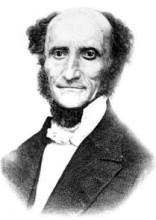 Carl Ferdinand Wilhelm Walther was a founding father of The Lutheran Church — Missouri Synod. He served as its first president from 1847 to 1850 and again from 1864 to 1878. Others who worked with him in the Synod's early days included Friedrich Wyneken and Wilhelm Sihler.
The son of a pastor, he was born in Langenchursdorf, Saxony on 25 October 1811. Walther's studies at the University of Leipzig and the influences of older Lutherans helped convince him that Lutheran teachings were correct expositions of Holy Scripture. However, some of his mentors were staunch Pietists, relying heavily on experience and emotion as part of conversion and sanctification. Walther rejected Pietism but seemed to always struggle against its encroachment in his theology.
Fearing a "union church" with the Reformed — as had been happening in Prussia — Walther joined with several other younger pastors under the leadership of Martin Stephan, who encouraged emigration to the United States in order to maintain confessional purity by avoiding imposed unionism. In 1839 he left Germany with other Lutherans. After a series of trials, the party settled along the Mississippi River south of Saint Louis, Missouri. Circumstances still clouded in a certain degree of ambiguity led the Saxons to depose Stephan as their leader and they finally settled upon Walther as his replacement.
He served as pastor of several congregations in St. Louis, founded Concordia Seminary, and in 1847 was instrumental in the formation of the LCMS (then called the Deutsche Evangelisch-Lutherische Synode von Missouri, Ohio und anderen Staaten — the German Evangelical Lutheran Synod of Missouri, Ohio, and Other States). Walther worked tirelessly to promote confessional Lutheran teaching and doctrinal agreement among all Lutherans in the United States.Walther was a prolific writer and speaker. Among his most influential works are Church and Office (aka Church and Ministry) and The Proper Distinction between Law and Gospel. He also published Der Lutheraner, the LCMS's official news magazine for most of the time the Synod spoke and understood German.
Walther was one of many who stood steadfast in confession of the Evangelical, Orthodox, Catholic, and Apostolic Faith. For a sampling of some of the others in Lutheranism, please see The Meanies of Grace.
Lection
Psalm 46
Isaiah 55:6-11
Romans 10:5-17
John 15:1-11
Collect
O Lord God, heavenly Father, we pray that, as You raised up C. F. W. Walther to lead the Lutherans in American into a renewed appreciation of their confessional heritage and trust in the saving Gospel of Jesus Christ, so You would continue to provide them with faithful pastors and leaders, keep them steadfast in Your grace and truth, defend them against all enemies of Your Word, and bestow on Christ's Church Militant Your saving peace; through Jesus Christ, Your Son, our Lord, who lives and reigns with You and the Holy Spirit, one God, now and forever.
Labels: american history, biography, church history, commemoration, gospel, hagiography, law, lcms, lutheranism, pietism, sihler, walther, wyneken
¶ 00:00 | 0 comments |
Friedrich Conrad Dietrich Wyneken stands along-side C.F.W. Walther and Wilhelm Sihler as one of the founding fathers of The Lutheran Church — Missouri Synod. He was born to Pastor Heinrich Christoph and Anne Catharine Louise Wyneken in on 13 May 1810 and baptized 22 May in St. Andreas Church, Verden, Kingdom of Hannover, Germany.Wyneken came to Baltimore in 1838 and shortly thereafter accepted a call to be the pastor of congregations in Friedheim and Fort Wayne, Indiana. Supported by the mission society of Wilhelm Loehe, he served as an itinerant missionary in Indiana, Ohio, and Michigan, particularly among Native Americans.
Together with Loehe and Sihler, Wyneken founded Concordia Theological Seminary in 1846 in Fort Wayne, Ind. He later served as the second president of the LCMS during a period of significant growth (1850-64). His leadership strongly influenced the confessional character of the LCMS and its commitment to an authentic Lutheran witness.
Wyneken died of an apparent stroke suffered in San Francisco, California. He had at least three funeral sermons. The first was by his son-in-law Pastor Buehler in San Francisco. Walther preached the second in Saint Louis while Wyneken lay in state at Trinity Lutheran. Wilhelm Sihler preached the final funeral sermon at St. Paul's, Fort Wayne, Indiana. He was then buried in the Lutheran Cemetery, Cleveland, Ohio. A pulpit-shaped monument was erected over his grave.
Collect
Lord of the Living Harvest, Who sends workers into the harvest field of souls, we thank You for the gift of Your servant, Friedrich Conrad Dietrich Wyneken, who began his missionary ministry in Indiana 175 years ago. As you blessed the work of his hands, gathering scattered Germans into Lutheran congregations In Indiana, Illinois, Michigan and Ohio and forging the Lutheran Church -- Missouri Synod into a warm fellowship united in doctrine, mercy and mission, bless our work as we seek to proclaim your word in our lost and dying generation, through Jesus Christ, Your Son, our Lord, Who lives and reigns with You and the Holy Spirit, one God, yesterday, today and forever. (Collect from Robert E. Smith of Concordia Theological Seminary)
Labels: american history, biography, church history, commemoration, hagiography, lcms, loehe, lutheranism, sihler, walther
¶ 00:00 | 0 comments |
Matthias Loy (1828-1915) was born on 17 March to Matthias and Christina Loy, a pair of German immigrants. The family lived in near-poverty in Cumberland County, Pennsylvania, near Harrisburg. He was the fourth of seven children. Matthias, Senior was a lapsed Catholic who apparently held only nominal religious beliefs for most of his life. Christina came from pietistic Lutheran stock in Württemberg. She did what she could to give the family some semblance of a Christian education and made sure that all but the eldest child were baptized as infants. Even her first-born son eventually was confirmed into the Lutheran Church.When Matthias was six years old, the family moved to Hogestown, Pennsylvania. He lived with his family until he was fourteen. They then apprenticed him to Baab and Hummel Printers of Harrisburg. During the next six years, he worked for them while attending school. Mr. Hummel brought Matthias to the attention of Harrisburg minister C. W. Schäffer. Pastor Schäffer urged Matthias to consider a pastoral vocation. To this end, he studied studied Greek and Latin under the Harrisburg Academy's principal. This led to enrollment as a full student at the Academy. He hoped to enter the Gettysburg Theological Seminary, perhaps the epicenter of Lutheran liberalism in America.
Illness led Loy's doctor to encourage the young man to move farther west. Matthias found an employment opportunity with the United Brethren Publishing House in Circleville, Ohio. There he would become printer for the Brethren's semimonthly German paper. Loy came to Circleville in 1847 and quickly met the Lutheran pastor. This good soul suggested that Matthias waste no more time getting on with his pastoral education and suggested that he enroll at the Theological Seminary in Columbus. The Evangelical Lutheran Synod of Ohio was much more conservative and confessional than the Lutherans he had left behind in Pennsylvania.
With the promise of financial aid through the Lutheran pastor, Loy sought and received release from his printer's contract and left for Columbus. Of Matthias's time there, C. George Fry writes, "It was at this institution that he received the only two years of formal higher education deemed necessary to be a pastor. In 1849, after a two year 'cram course' that included academy, college, and seminary, Loy was graduated and installed as a minister in Delaware, Ohio."Loy was finally surrounded by orthodox Lutheran theology and he made the most of his time at the seminary. As a student, he was immersed in Lutheran doctrine and began reading Der Lutheraner, edited by C. F. W. Walther. This led to a long relationship with Dr. Walther, a friendship that grew so great that even their eventual disagreements over predestination and the fracturing of the Synodical Conference couldn't destroy.
According to Fry, these two men, along with Charles Porterfield Krauth, "must be seen as a common effort to preserve traditional Lutheran theology from the corrosive effects of 'the acids of modernity' in the last half of the nineteenth century. These three titans — Walther in the West, Krauth in the East, and Loy in the middle — could be compared to three anchors holding fast the ship of Lutheran Confessionalism during the ferocious storms of the Modernist-Fundamentalist Controversy."
In 1860, the Joint Synod of Ohio elected Loy President. Four years later, he was appointed editor of the Lutheran Standard. After sixteen years in the ministry, Capital University, Columbus, Ohio called Loy as professor of theology. He resigned as president of the Ohio Synod in 1878. Around this time he also returned the call to become English-language professor of theology at Concordia Seminary, St. Louis. Wilhelm Friedrich Lehmann, Loy's successor as synodical president, died in 1880 and Loy returned to that office, succeeding him also as President of Capital University. He started the Columbus Theological Magazine in 1881. Loy retired as professor emeritus in 1902 and died on 26 January 1915.
Loy was instrumental in the formation of the Synodical Conference. However, at the Ohio Synod meeting at Wheeling in 1881, the synod withdrew from the Conference. This came about over sharp differences in understanding Predestination. Many Ohio Synod pastors taught that God predestined people according to His foreknowledge of whether they would come to faith while the Missouri Synod condemned this as false doctrine.During his life, Loy wrote several books. Of special note is his seminal work The Augsburg Confession: An Introduction to Its Study and an Exposition of Its Contents.
He also wrote at least twenty hymns, including An Awe-full Mystery Is Here, The Law of God Is Good and Wise, The Gospel Shows the Father's Grace, and Jesus, Thou Art Mine Forever. His hymn translations included All Mankind Fell in Adam's Fall, The Bridegroom Soon Will Call Us, Let Me Be Thine Forever, and Thy Table I Approach.
*Since his death date (26 January) and birth date (17 March) both conflict with long-standing festivals on the sanctorial calendar (Titus and Pádraig respectively) and since 27 January belongs to John Chrysostom, I moved Loy's commemoration the first open date, 28 January.
Sources
Quotes from C. George Fry's Matthias Loy: Theologian of American Lutheran Orthodoxy [PDF]. This excellent biography was printed in The Springfielder, October 1974, Volume 38, Number 4.
Additional Reading includes Loy's autobiography, The Story of My Life, which the Internet Archive has in several formats, including PDF, Nook (EPUB), and Kindle (MOBI). See also entries at Net Hymnal and the Christian Cyclopedia.
Suggested Lection
Psalm 46
Isaiah 55:6-11
Romans 10:5-17
John 15:1-11
Collect
O Lord God, heavenly Father, we pray that, as You raised up Matthias Loy to lead Lutherans in America into a renewed appreciation of their confessional heritage and to a fuller confidence in the saving Gospel of Jesus Christ, so You would continue to provide us with faithful pastors and leaders, keep us steadfast in Your grace and truth, defend us against all enemies of Your Word, and bestow on Christ's Church Militant Your saving peace; through Jesus Christ, Your Son, our Lord, who lives and reigns with You and the Holy Spirit, one God, now and forever.
Labels: american history, biography, commemoration, hagiography, hymnody, loy, lutheran confessions, lutheranism, matthias loy, synodical conference, theology
¶ 00:00 | 0 comments |
Charles Porterfield Krauth was born in Martinsburg, Virginia (now West Virginia), on 17 March 1823. He was son of the noted Lutheran pastor Dr. Charles Philip Krauth. However, young Charles wasn't named for his father but for grandfathers Charles James Krauth and Robert Porterfield Augustus Heiskell.In 1839, Krauth graduated from Pennsylvania (now Gettysburg) College. His father was the college's president at this time and also served on the theological faculty of the city's Lutheran Theological Seminary, so it's no surprise that young C. P. Krauth attended this school for his pastoral education. He graduated in 1841 and was ordained the following year, after which he served as parish pastor in Baltimore, the Shenandoah Valley, St. Thomas, Virgin Islands, and Pittsburgh, Pennsylvania.
Krauth was called to St. Mark's Church, Philadelphia in 1859 and served there for two years. However, his dissatisfaction with American Lutheranism led him to resign and assume editorship of the Lutheran and Missionary, a journal espousing a return to the theology of the Augsburg Confession. His movement away from his father's church seems to have been triggered by ... his own father! This wasn't the result of family strife but because Charles James Krauth had given Charles Porterfield Krauth the gift of Chemnitz.
The more he read from "the Second Martin," the more he was convinced that the General Synod and most of Americanized Lutheranism had departed the ways of "the First Martin"; i.e., Luther himself. C. P. Krauth became increasingly uncomfortable with Lutherans who were so concerned with ecumenism that they would downplay, abandon, or deny the theology of the Augsburg Confession and the rest of the Book of Concord. He recognized the strains of "Socinianism ... Universalism ... Unionism, Pietism, Moravianism, and Methodism"* and other non-Lutheran, even unchristian, philosopies and theologies that diluted and corrupted pure Evangelical Lutheranism away from what he was ever-increasingly growing to know, to believe, and to love.
As he ventured farther into the "old" Lutheranism of the Reformation and the Age of Orthodoxy, Krauth started speaking more harshly about the "new" Lutheran leaders who were following the lead of Samuel Simon Schmucker. He claimed that the General Synod had become the playground of "moral weaklings." These "amiable inanities" only played at "neutrality and conservatism," ignored major theological differences, and generally espoused a healing through "a cataplasm of soft words and soft soap, or an ointment of love and lard."† Needless to say, the other side hated these criticisms and the cracks between their conflicting confessions quickly expanded to a major rift.This new conservative and confessional wing of English-speaking American Lutheranism found itself needing its own organization and theological institutions. The confessional party established Lutheran Theological Seminary, Philadelphia in 1864 and asked Krauth to lead their new school and become its professor of systematic theology. In 1867, Krauth was instrumental in the establishment of the General Council of the Evangelical Lutheran Church in North America. He wrote the General Council's position papers and the foundational document and then drafted its constitution. Three years later, he was elected the Council's president, in which office he served for a decade, until 1880.
Krauth composed a series of theses on pulpit and altar fellowship under the title the “Akron-Galesburg Rule.” The summary is simple: "Lutheran pulpits for Lutheran pastors only, and Lutheran altars for Lutheran communicants only." While the Galesburg Rule permitted exceptions based on pastoral discretion, it still strongly repudiated the nearly blind ecumenism of the General Synod.
Krauth's theological arguments and personal appeal stood him in good stead. Over the course of time, both his own father and Beale Melanchthon Schmucker (Samuel Simon's grandson) joined him in a literal reading of the Scriptures and a quia adherence to the Lutheran Confessions. He also drew William Passavant, the pioneer of the American Lutheran deaconess movement, into the confessional camp.
Krauth's scholarship and academic influence went beyond Lutheranism. He became a trustee of the University of Pennsylvania, serving from 1865 to 1868. He was made Professor of Intellectual and Moral Philosophy in 1868 and held that position until his death in 1883. From 1873-1882, he was also Penn's Vice Provost.Over the course of his life, Charles Porterfield Krauth saw more than one hundred of his works in print. Chief among these was The Conservative Reformation and Its Theology: As Represented in the Augsburg Confession, and in the History and Literature of the Evangelical Lutheran Church (1875). His reputation as one of the great American Lutheran theologians remains secure. In fact, we might drop the "American" and name him as one of the great theologians throughout all Lutheranism.
Pastor David Jay Webber leads us to think thusly, claiming that if C. F. W. Walther justly deserves the title, of "the American Luther," then Krauth is the best candidate for "the American Chemnitz."†† Walther himself noted a Chemnitz-like mix of confessional theology and a conciliar nature in calling Krauth "the most eminent man in the English Lutheran Church of this country, a man of rare learning, at home no less in the old than in modern theology, and, what is of greatest import, whole-heartedly devoted to the pure doctrine of our Church, as he had learned to understand it, a noble man and without guile."†††
Finally, a few notes on his family: C. P. Krauth was married to Susan Reynolds from 1844 until her death in 1853. In 1855, he married Virginia Baker. He was blessed with five children through his two wives.
*Commemoration moved from 2 January (the LCMS calendar's remembrance of Wilhelm Loehe) to today. His birth date of 17 March conflicts with the commemoration of Saint Pádraig.
† "The General Council Before Its First Anniversary," The Lutheran Church Review, Vol. XXVI, No. 4 (October 1907)
†† David Jay Webber, Charles Porterfield Krauth: The American Chemnitz (2004)
††† Walther, Lehre und Wehre XXIX:1 (January 1883)
Sources and extended reading suggestions: Christian Cyclopedia, Wikipedia, Penn Biographies, The Conservative Reformation and Its Theology at Google Books, and, especially, David Jay Webber's Charles Porterfield Krauth: The American Chemnitz.
Suggested Lection
Psalm 46
Isaiah 55:6-11
Romans 10:5-17
John 15:1-11
Collect
O Lord God, heavenly Father, we pray that, as You raised up Charles Porterfield Krauth to lead Lutherans in American into a renewed appreciation of their confessional heritage and to a fuller confidence in the saving Gospel of Jesus Christ, so You would continue to provide us with faithful pastors and leaders, keep us steadfast in Your grace and truth, defend us against all enemies of Your Word, and bestow on Christ's Church Militant Your saving peace; through Jesus Christ, Your Son, our Lord, who lives and reigns with You and the Holy Spirit, one God, now and forever.
Labels: american history, biography, charles porterfield krauth, commemoration, conservative reformation, galesburg rule, general council, general synod, hagiography, lutheranism, samuel schmucker, william passavant
¶ 00:00 | 0 comments |
Christened Johann Konrad Wilhelm Löhe, he established a reputation already as a young pastor for being "too" theologically conservative and "too" politically progressive. This led to his being moved to at least twelve positions until he received his own parish in Neuendettelsau, Bavaria in 1837. Beginning his career with difficulty, he accomplished much from such a small place. Even though he had aspirations of a more prominent position in a major city, church and government officials never allowed that to pass.The Catholic king of Bavaria was de facto leader of the Lutheran Church. His main desire was to keep the churches from becoming places of political unrest. Thus arose strict restrictions, such as an assembly of more than five people needing a police permit. He prohibited mission circles and other "subversive enterprises," thus relegating church activities to not much more than Sunday services only.
In 1840, Loehe read a newspaper account from America by Pastor Friedrich Wyneken. It told of German emigrants not having church or pastoral care — nobody could baptize their children, teach, visit the sick, or bury the dead. Pastor Loehe felt compelled to aid the German Lutherans in America and published an article in a church periodical asking for help. Beginning in the spring of 1841, several young men responded to Loehe's letter, expressing the desire help the settlers with their own skills and occupations. In the summer of 1842 he sent them to America at his own expense. He called them Nothelfer ("helpers in need") or "auxiliary saints", and trained them to be "emergency pastors."
After only six years of marriage, Loehe's wife died, leaving him to raise their four children alone. Even among such hardships, his dreams remained clear and his desire to serve the Lord strong. Indeed, recent years have brought recognition for his farsightedness. This contrasts sharply with the handed-down opinions of many contemporaries who, while recognizing him as a founder of social institutions and mission education in Neuendettelsau, regarded him as divisive, narrow-minded, or combative. Changes in attitude began taking place especially after 1985, when several thousand of his letters were published, many previously unknown to scholars in Germany.
Seeking to support and strengthen missions and pastoral ministry in the United States, Loehe established a large parish cooperative throughout Germany. As support grew, he could publish his 1845 "Letter from the Home Country to the German Lutheran Emigrants" which 946 people, including 350 theologians, signed.
With the home churches finally behind him, he could at last send pastors! Loehe saw to the training of twenty-two pastors for work in America. Due in large part to his direct influence a seminary was established in Fort Wayne, Indiana in 1846 as well as a teachers' institute in Saginaw, Michigan. Some of the men he sent to the U.S. helped to establish The Lutheran Church — Missouri Synod. Today, two LCMS seminaries, Concordia Theological Seminary, Fort Wayne, Indiana, and Concordia Seminary, St. Louis, Missouri continue equipping and forming men to send out into the Savior's harvest fields.
Besides his interest in the United States, Loehe also assisted in training and sending pastors to care for emigrants in Brazil and Australia, both of which still have relatively small but vital Lutheran populations. He will continue to be remembered for his confessional integrity and his interest in liturgy and catechetics. He also never forgot the physical needs of those less fortunate and his works of Christian charity include the establishment of a deaconess training house, homes for the aged, an asylum for the mentally ill, and other caring institutions.
Please see Loehe etexts translated through Project Wittenberg for his Sonntagsblatt Appeal, his 1842 Instructions of Adam Ernst and Georg Burger, a letter from C.F.W. Walther to Loehe About the Fort Wayne Seminary, and Loehe's Report of Walther's and Wyneken's Visit.
Suggested Lection
Psalm 46
Isaiah 55:6-11
Romans 10:5-17
John 15:1-11
Collect
O Lord God, heavenly Father, we pray that, as You led Wilhelm Loehe to establish and support Lutheran missions and ministry in the New World, so You would continue to raise up faithful Lutheran pastors and missionaries that the Gospel might be proclaimed in its truth and purity, the Sacraments rightly administered, believers ministered to, and unbelievers converted by Your saving Word and the power of the Holy Spirit, who lives and reigns with You and Your Son Jesus Christ, one God, now and forever.
Labels: american history, biography, commemoration, hagiography, lcms, loehe, lutheranism, missouri synod, walther, wyneken
¶ 00:00 | 1 comments |
Moving from the Old World to the New, H. M. Muhlenberg established the shape of Lutheran parishes and Lutheranism in general in America during a 45-year ministry in Pennsylvania. Born at Einbeck, Germany, in 1711 and baptized Heinrich Melchior Mühlenberg, he came to the American colonies in 1742.A tireless traveler, Muhlenberg helped to found many Lutheran congregations and was the guiding force behind the first American Lutheran synod, the Ministerium of Pennsylvania, established in 1748. He valued the role of music in Lutheran worship (often serving as his own organist) and was also largely responsible for preparing the first American Lutheran liturgy (also in 1748).
We remember Muhlenberg as church leader, journalist, liturgist, and — above all — as faithful pastor to those in his charge. He died in 1787, leaving behind a large extended family and a lasting ecclesiastical and familial heritage. Although his beliefs and practices may have been tinged with pietistic tendencies, Muhlenberg paved the way for a wide variety of Lutherans — from orthodox and doctrinally sound to Lutheran in name only — to establish their respective presences in the United States.
Among his heirs were churchmen, politicians, and soldiers, including sons Peter Muhlenberg, a major general in the Continental Army and Frederick Muhlenberg, the first United States Speaker of the House.
Collect
Heavenly Father, Shepherd of Your people, we thank You for Your servant Henry Melchior Muhlenberg, who was faithful in the care and nurture of Your flock, and we pray that, following his example and the teaching of his holy life, we may by Your grace grow into the stature of the fullness of our Lord and Savior Jesus Christ; who lives and reigns with You and the Holy Spirit, one God, now and forever.
Labels: american history, biography, christianity, church history, commemoration, hagiography, lutheranism, muhlenberg, pennsylvania, theology
¶ 00:00 | 0 comments |
The early Church entrusted some women, particularly widows, with helping to carry out the "social work" of the Church, particularly caring for the sick and needy of the congregation. From reading 1 Timothy 5:1-16, it appears that certain of these women were specially consecrated and made a lifetime commitment to works of mercy. The idea of a female deaconate or service order largely died out by the 7th Century AD, although some groups of nuns and a few informally organized groups undertook similar work.The modern deaconess movement came mainly through the work of Theodor Fliedner, a German Lutheran. Born in Eppstein, Germany, in 1800, he became pastor of a small parish in Kaiserswerth in 1821 or 1822. Fliedner took the work of England's Elizabeth Fry and Dutch Mennonites as inspiration. Encountering Moravian deaconesses, he also drew from their example.
He began serving the Düsseldorf Prison, walking to and from Düsseldorf on alternating Sundays until the appointment of a regular prison chaplain. This led to more prisons engaging chaplains and establishing regular worship and aid services for the prisoners. He envisioned and opened a nursery school; eventually it became a sort of teachers' college and a starting point for what would become his first deaconess school.
Becoming more involved in Christian social work among the disadvantaged, Fliedner convinced himself that he should revive the order of deaconesses. He opened a hospital and deaconess training center in Kaiserswerth on 13 October 1836. Florence Nightingale heard of his reputation, visited the school in the 1840s, came back to study nursing, and graduated in 1851.The program was so successful that he could send deaconesses to other hospitals by 1838. New deaconess motherhouses grew up in Pittsburgh, Pennsylvania and in Jerusalem, Paris, Berlin, and Strasbourg, and elsewhere. When he died, 30 motherhouses already stood and over 1500 deaconesses served around the world. The middle of the 20th century saw more than 35,000 deaconesses serving world-wide.
Lutherans in the United States may also want to remember William Passavant, who pioneered the American deaconess movement in 1849. He also founded missions, hospitals, orphanages, and schools. Passavant died 3 January 1894.
Additional information available from Wikipedia and James Kiefer.
Labels: american history, biography, christianity, church history, commemoration, deaconess, german history, hagiography, lutheranism, theodor fliedner, william passavant
¶ 00:00 | 0 comments |


