Aardvark Alley

Confessional Lutheran theology, hagiography, philosophy, music, culture, sports, education,
and whatever else is on the fevered mind of Orycteropus Afer
07 May 2017
+ C. F. W. Walther, Doctor and Confessor +
7 May AD 1887
 Carl Ferdinand Wilhelm Walther was a founding father of The Lutheran Church — Missouri Synod. He served as its first president from 1847 to 1850 and again from 1864 to 1878. Others who worked with him in the Synod's early days included Friedrich Wyneken and Wilhelm Sihler.
The son of a pastor, he was born in Langenchursdorf, Saxony on 25 October 1811. Walther's studies at the University of Leipzig and the influences of older Lutherans helped convince him that Lutheran teachings were correct expositions of Holy Scripture. However, some of his mentors were staunch Pietists, relying heavily on experience and emotion as part of conversion and sanctification. Walther rejected Pietism but seemed to always struggle against its encroachment in his theology.
Fearing a "union church" with the Reformed — as had been happening in Prussia — Walther joined with several other younger pastors under the leadership of Martin Stephan, who encouraged emigration to the United States in order to maintain confessional purity by avoiding imposed unionism. In 1839 he left Germany with other Lutherans. After a series of trials, the party settled along the Mississippi River south of Saint Louis, Missouri. Circumstances still clouded in a certain degree of ambiguity led the Saxons to depose Stephan as their leader and they finally settled upon Walther as his replacement.
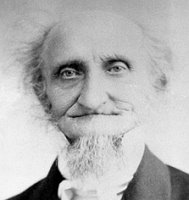 He served as pastor of several congregations in St. Louis, founded Concordia Seminary, and in 1847 was instrumental in the formation of the LCMS (then called the Deutsche Evangelisch-Lutherische Synode von Missouri, Ohio und anderen Staaten — the German Evangelical Lutheran Synod of Missouri, Ohio, and Other States). Walther worked tirelessly to promote confessional Lutheran teaching and doctrinal agreement among all Lutherans in the United States.
Walther was a prolific writer and speaker. Among his most influential works are Church and Office (aka Church and Ministry) and The Proper Distinction between Law and Gospel. He also published Der Lutheraner, the LCMS's official news magazine for most of the time the Synod spoke and understood German.
Walther was one of many who stood steadfast in confession of the Evangelical, Orthodox, Catholic, and Apostolic Faith. For a sampling of some of the others in Lutheranism, please see The Meanies of Grace.
Lection
Psalm 46
Isaiah 55:6-11
Romans 10:5-17
John 15:1-11
Collect
O Lord God, heavenly Father, we pray that, as You raised up C. F. W. Walther to lead the Lutherans in American into a renewed appreciation of their confessional heritage and trust in the saving Gospel of Jesus Christ, so You would continue to provide them with faithful pastors and leaders, keep them steadfast in Your grace and truth, defend them against all enemies of Your Word, and bestow on Christ's Church Militant Your saving peace; through Jesus Christ, Your Son, our Lord, who lives and reigns with You and the Holy Spirit, one God, now and forever.


Carl Ferdinand Wilhelm Walther was a founding father of The Lutheran Church — Missouri Synod. He served as its first president from 1847 to 1850 and again from 1864 to 1878. Others who worked with him in the Synod's early days included Friedrich Wyneken and Wilhelm Sihler.The son of a pastor, he was born in Langenchursdorf, Saxony on 25 October 1811. Walther's studies at the University of Leipzig and the influences of older Lutherans helped convince him that Lutheran teachings were correct expositions of Holy Scripture. However, some of his mentors were staunch Pietists, relying heavily on experience and emotion as part of conversion and sanctification. Walther rejected Pietism but seemed to always struggle against its encroachment in his theology.
Fearing a "union church" with the Reformed — as had been happening in Prussia — Walther joined with several other younger pastors under the leadership of Martin Stephan, who encouraged emigration to the United States in order to maintain confessional purity by avoiding imposed unionism. In 1839 he left Germany with other Lutherans. After a series of trials, the party settled along the Mississippi River south of Saint Louis, Missouri. Circumstances still clouded in a certain degree of ambiguity led the Saxons to depose Stephan as their leader and they finally settled upon Walther as his replacement.
 He served as pastor of several congregations in St. Louis, founded Concordia Seminary, and in 1847 was instrumental in the formation of the LCMS (then called the Deutsche Evangelisch-Lutherische Synode von Missouri, Ohio und anderen Staaten — the German Evangelical Lutheran Synod of Missouri, Ohio, and Other States). Walther worked tirelessly to promote confessional Lutheran teaching and doctrinal agreement among all Lutherans in the United States.
Walther was a prolific writer and speaker. Among his most influential works are Church and Office (aka Church and Ministry) and The Proper Distinction between Law and Gospel. He also published Der Lutheraner, the LCMS's official news magazine for most of the time the Synod spoke and understood German.
Walther was one of many who stood steadfast in confession of the Evangelical, Orthodox, Catholic, and Apostolic Faith. For a sampling of some of the others in Lutheranism, please see The Meanies of Grace.
Lection
Psalm 46
Isaiah 55:6-11
Romans 10:5-17
John 15:1-11
Collect
O Lord God, heavenly Father, we pray that, as You raised up C. F. W. Walther to lead the Lutherans in American into a renewed appreciation of their confessional heritage and trust in the saving Gospel of Jesus Christ, so You would continue to provide them with faithful pastors and leaders, keep them steadfast in Your grace and truth, defend them against all enemies of Your Word, and bestow on Christ's Church Militant Your saving peace; through Jesus Christ, Your Son, our Lord, who lives and reigns with You and the Holy Spirit, one God, now and forever.
Labels: american history, biography, church history, commemoration, gospel, hagiography, law, lcms, lutheranism, pietism, sihler, walther, wyneken
¶ 00:00 | 2 comments |
01 February 2017
+ Claus Harms +
1 February AD 1855
 German pastor and theologian Klaus Harms was born at Fahrstedt, Schleswig-Holstein on 25 May 1778 and baptized the next day in the neighboring community of Marne. Before entering university, he worked in his father's mill. He also farmed for a brief time.
His early religious and philosophical leanings tended strongly toward Rationalism but change commenced after he began studies at the University of Kiel. First, Friedrich Schleiermacher led Harms toward a less extreme, slightly more Evangelical understanding of Christianity. Further study of Scripture and older Lutheran writers pulled him away from the liberal, inner-conscious Christianity of Schleiermacher toward traditional, orthodox Lutheranism.
By the time of his graduation, it's unlikely that Harms would have been certified for the ministry by the crass Rationalists or the disciples of Schleiermacher. Therefore, he took his oral and written examinations before J. L. Callisen, the orthodox Lutheran superintendent of Holstein.
Following his studies and a stint as tutor and guest preacher, Harms was married in Probsteierhagen in 1806. Later that year, he was called as deacon (assitant pastor) at Lunden. After serving there for ten years, he accepted a call to serve the St. Nikolai Church in Kiel as archdeacon. He became chief pastor and superintendent in 1835. All through this period he continued to distance himself from Rationalism and the feeling- and experience-based theology of Schleiermacher to increasingly espouse the pure Lutheran doctrine of the 16th Century.
 Harms's personality and preaching style led to growing popularity in Kiel and beyond. He drew international attention in 1817. On the 300th anniversary of the Reformation, he published Luther's original Ninety-five Theses and ninety-five additional theses of his own composition, "directed against all sorts of false and confused knowledge within the Lutheran church." These latter attacked Rationalism and unionism and called for a return to pure Lutheran theology and practice.
Much as Luther condemned the magisterial use of reason which placed rational thought above faith in Christ, Harms wrote, "We could call reason our time's pope, our antichrist.... (Thesis 9)" He claimed the right of Lutherans to have authentic Lutheran clergy: "Reason rages in the Lutheran church: it tears Christ from the altar, throws God's word from the pulpit, casts excrements into the baptismal water, mixes all sorts of people when it comes to God-parents, erases the address of the confessional chair, hisses out the priests, and all people with them, and has been doing this for a long time. (Thesis 71)"
Furthermore, Harms lauded a proper balance in Word and Sacrament ministry. Theses 92-94 say, "The evangelical-catholic church is a glorious church. It rests on and builds itself preferably by the sacrament. The evangelical-reformed church is a glorious church. It rests on and builds itself by God's word. More glorious than both is the evangelical-Lutheran church. It rests on and builds itself by the sacrament as well as God's word."
While Harms had considerable influence throughout Germany, we must also recognize his huge, albeit indirect, contribution to American Lutheranism. His Christ-centered, confessional Lutheranism led C. F. W. Walther and others to their awakening into true Lutheranism later during the 19th Century.
Besides his credentials as a theologian, Harms was a qualified musician. As such, his growing Lutheran identity led him to restore Lutheran hymnody to the church. Many of his textual reforms remain to present times. However, he never had the same success with the restoration of the original melodies and the bold syncopation of the traditional chorales stayed buried under the bland metrical style for many years following.
Among his writings are the aforementioned Theses, volumes of his sermons, an autobiography, and his 1830 Pastoraltheologie. Due to blindness, Harms resigned his pastorate in 1849. He died on 1 February 1855.
Quotes from The 95 Theses of Claus Harms at the Internet Archive's copy of LutheranWiki.
See also the articles at Christian Cyclopedia, the 1911 Encyclopædia Britannica, and Wikipedia.
German pastor and theologian Klaus Harms was born at Fahrstedt, Schleswig-Holstein on 25 May 1778 and baptized the next day in the neighboring community of Marne. Before entering university, he worked in his father's mill. He also farmed for a brief time.His early religious and philosophical leanings tended strongly toward Rationalism but change commenced after he began studies at the University of Kiel. First, Friedrich Schleiermacher led Harms toward a less extreme, slightly more Evangelical understanding of Christianity. Further study of Scripture and older Lutheran writers pulled him away from the liberal, inner-conscious Christianity of Schleiermacher toward traditional, orthodox Lutheranism.
By the time of his graduation, it's unlikely that Harms would have been certified for the ministry by the crass Rationalists or the disciples of Schleiermacher. Therefore, he took his oral and written examinations before J. L. Callisen, the orthodox Lutheran superintendent of Holstein.
Following his studies and a stint as tutor and guest preacher, Harms was married in Probsteierhagen in 1806. Later that year, he was called as deacon (assitant pastor) at Lunden. After serving there for ten years, he accepted a call to serve the St. Nikolai Church in Kiel as archdeacon. He became chief pastor and superintendent in 1835. All through this period he continued to distance himself from Rationalism and the feeling- and experience-based theology of Schleiermacher to increasingly espouse the pure Lutheran doctrine of the 16th Century.
Harms's personality and preaching style led to growing popularity in Kiel and beyond. He drew international attention in 1817. On the 300th anniversary of the Reformation, he published Luther's original Ninety-five Theses and ninety-five additional theses of his own composition, "directed against all sorts of false and confused knowledge within the Lutheran church." These latter attacked Rationalism and unionism and called for a return to pure Lutheran theology and practice.Much as Luther condemned the magisterial use of reason which placed rational thought above faith in Christ, Harms wrote, "We could call reason our time's pope, our antichrist.... (Thesis 9)" He claimed the right of Lutherans to have authentic Lutheran clergy: "Reason rages in the Lutheran church: it tears Christ from the altar, throws God's word from the pulpit, casts excrements into the baptismal water, mixes all sorts of people when it comes to God-parents, erases the address of the confessional chair, hisses out the priests, and all people with them, and has been doing this for a long time. (Thesis 71)"
Furthermore, Harms lauded a proper balance in Word and Sacrament ministry. Theses 92-94 say, "The evangelical-catholic church is a glorious church. It rests on and builds itself preferably by the sacrament. The evangelical-reformed church is a glorious church. It rests on and builds itself by God's word. More glorious than both is the evangelical-Lutheran church. It rests on and builds itself by the sacrament as well as God's word."
While Harms had considerable influence throughout Germany, we must also recognize his huge, albeit indirect, contribution to American Lutheranism. His Christ-centered, confessional Lutheranism led C. F. W. Walther and others to their awakening into true Lutheranism later during the 19th Century.
Besides his credentials as a theologian, Harms was a qualified musician. As such, his growing Lutheran identity led him to restore Lutheran hymnody to the church. Many of his textual reforms remain to present times. However, he never had the same success with the restoration of the original melodies and the bold syncopation of the traditional chorales stayed buried under the bland metrical style for many years following.
Among his writings are the aforementioned Theses, volumes of his sermons, an autobiography, and his 1830 Pastoraltheologie. Due to blindness, Harms resigned his pastorate in 1849. He died on 1 February 1855.
Quotes from The 95 Theses of Claus Harms at the Internet Archive's copy of LutheranWiki.
See also the articles at Christian Cyclopedia, the 1911 Encyclopædia Britannica, and Wikipedia.
Labels: biography, claus harms, commemoration, hagiography, hymnody, lutheranism, pietism, rationalism, schleiermacher, theology, walther
¶ 00:00 | 0 comments |
07 May 2016
+ C. F. W. Walther, Doctor and Confessor +
7 May AD 1887
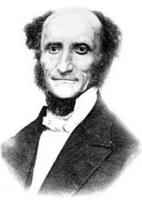 Carl Ferdinand Wilhelm Walther was a founding father of The Lutheran Church — Missouri Synod. He served as its first president from 1847 to 1850 and again from 1864 to 1878. Others who worked with him in the Synod's early days included Friedrich Wyneken and Wilhelm Sihler.
The son of a pastor, he was born in Langenchursdorf, Saxony on 25 October 1811. Walther's studies at the University of Leipzig and the influences of older Lutherans helped convince him that Lutheran teachings were correct expositions of Holy Scripture. However, some of his mentors were staunch Pietists, relying heavily on experience and emotion as part of conversion and sanctification. Walther rejected Pietism but seemed to always struggle against its encroachment in his theology.
Fearing a "union church" with the Reformed — as had been happening in Prussia — Walther joined with several other younger pastors under the leadership of Martin Stephan, who encouraged emigration to the United States in order to maintain confessional purity by avoiding imposed unionism. In 1839 he left Germany with other Lutherans. After a series of trials, the party settled along the Mississippi River south of Saint Louis, Missouri. Circumstances still clouded in a certain degree of ambiguity led the Saxons to depose Stephan as their leader and they finally settled upon Walther as his replacement.
He served as pastor of several congregations in St. Louis, founded Concordia Seminary, and in 1847 was instrumental in the formation of the LCMS (then called the Deutsche Evangelisch-Lutherische Synode von Missouri, Ohio und anderen Staaten — the German Evangelical Lutheran Synod of Missouri, Ohio, and Other States). Walther worked tirelessly to promote confessional Lutheran teaching and doctrinal agreement among all Lutherans in the United States.
Walther was a prolific writer and speaker. Among his most influential works are Church and Office (aka Church and Ministry) and The Proper Distinction between Law and Gospel. He also published Der Lutheraner, the LCMS's official news magazine for most of the time the Synod spoke and understood German.
Walther was one of many who stood steadfast in confession of the Evangelical, Orthodox, Catholic, and Apostolic Faith. For a sampling of some of the others in Lutheranism, please see The Meanies of Grace.
Lection
Psalm 46
Isaiah 55:6-11
Romans 10:5-17
John 15:1-11
Collect
O Lord God, heavenly Father, we pray that, as You raised up C. F. W. Walther to lead the Lutherans in American into a renewed appreciation of their confessional heritage and trust in the saving Gospel of Jesus Christ, so You would continue to provide them with faithful pastors and leaders, keep them steadfast in Your grace and truth, defend them against all enemies of Your Word, and bestow on Christ's Church Militant Your saving peace; through Jesus Christ, Your Son, our Lord, who lives and reigns with You and the Holy Spirit, one God, now and forever.
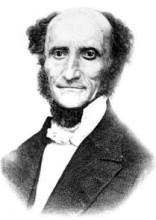 Carl Ferdinand Wilhelm Walther was a founding father of The Lutheran Church — Missouri Synod. He served as its first president from 1847 to 1850 and again from 1864 to 1878. Others who worked with him in the Synod's early days included Friedrich Wyneken and Wilhelm Sihler.
The son of a pastor, he was born in Langenchursdorf, Saxony on 25 October 1811. Walther's studies at the University of Leipzig and the influences of older Lutherans helped convince him that Lutheran teachings were correct expositions of Holy Scripture. However, some of his mentors were staunch Pietists, relying heavily on experience and emotion as part of conversion and sanctification. Walther rejected Pietism but seemed to always struggle against its encroachment in his theology.
Fearing a "union church" with the Reformed — as had been happening in Prussia — Walther joined with several other younger pastors under the leadership of Martin Stephan, who encouraged emigration to the United States in order to maintain confessional purity by avoiding imposed unionism. In 1839 he left Germany with other Lutherans. After a series of trials, the party settled along the Mississippi River south of Saint Louis, Missouri. Circumstances still clouded in a certain degree of ambiguity led the Saxons to depose Stephan as their leader and they finally settled upon Walther as his replacement.
He served as pastor of several congregations in St. Louis, founded Concordia Seminary, and in 1847 was instrumental in the formation of the LCMS (then called the Deutsche Evangelisch-Lutherische Synode von Missouri, Ohio und anderen Staaten — the German Evangelical Lutheran Synod of Missouri, Ohio, and Other States). Walther worked tirelessly to promote confessional Lutheran teaching and doctrinal agreement among all Lutherans in the United States.Walther was a prolific writer and speaker. Among his most influential works are Church and Office (aka Church and Ministry) and The Proper Distinction between Law and Gospel. He also published Der Lutheraner, the LCMS's official news magazine for most of the time the Synod spoke and understood German.
Walther was one of many who stood steadfast in confession of the Evangelical, Orthodox, Catholic, and Apostolic Faith. For a sampling of some of the others in Lutheranism, please see The Meanies of Grace.
Lection
Psalm 46
Isaiah 55:6-11
Romans 10:5-17
John 15:1-11
Collect
O Lord God, heavenly Father, we pray that, as You raised up C. F. W. Walther to lead the Lutherans in American into a renewed appreciation of their confessional heritage and trust in the saving Gospel of Jesus Christ, so You would continue to provide them with faithful pastors and leaders, keep them steadfast in Your grace and truth, defend them against all enemies of Your Word, and bestow on Christ's Church Militant Your saving peace; through Jesus Christ, Your Son, our Lord, who lives and reigns with You and the Holy Spirit, one God, now and forever.
Labels: american history, biography, church history, commemoration, gospel, hagiography, law, lcms, lutheranism, pietism, sihler, walther, wyneken
¶ 00:00 | 0 comments |
01 February 2016
+ Claus Harms +
1 February AD 1855
German pastor and theologian Klaus Harms was born at Fahrstedt, Schleswig-Holstein on 25 May 1778 and baptized the next day in the neighboring community of Marne. Before entering university, he worked in his father's mill. He also farmed for a brief time.
His early religious and philosophical leanings tended strongly toward Rationalism but change commenced after he began studies at the University of Kiel. First, Friedrich Schleiermacher led Harms toward a less extreme, slightly more Evangelical understanding of Christianity. Further study of Scripture and older Lutheran writers pulled him away from the liberal, inner-conscious Christianity of Schleiermacher toward traditional, orthodox Lutheranism.
By the time of his graduation, it's unlikely that Harms would have been certified for the ministry by the crass Rationalists or the disciples of Schleiermacher. Therefore, he took his oral and written examinations before J. L. Callisen, the orthodox Lutheran superintendent of Holstein.
Following his studies and a stint as tutor and guest preacher, Harms was married in Probsteierhagen in 1806. Later that year, he was called as deacon (assitant pastor) at Lunden. After serving there for ten years, he accepted a call to serve the St. Nikolai Church in Kiel as archdeacon. He became chief pastor and superintendent in 1835. All through this period he continued to distance himself from Rationalism and the feeling- and experience-based theology of Schleiermacher to increasingly espouse the pure Lutheran doctrine of the 16th Century.
Harms's personality and preaching style led to growing popularity in Kiel and beyond. He drew international attention in 1817. On the 300th anniversary of the Reformation, he published Luther's original Ninety-five Theses and ninety-five additional theses of his own composition, "directed against all sorts of false and confused knowledge within the Lutheran church." These latter attacked Rationalism and unionism and called for a return to pure Lutheran theology and practice.
Much as Luther condemned the magisterial use of reason which placed rational thought above faith in Christ, Harms wrote, "We could call reason our time's pope, our antichrist.... (Thesis 9)" He claimed the right of Lutherans to have authentic Lutheran clergy: "Reason rages in the Lutheran church: it tears Christ from the altar, throws God's word from the pulpit, casts excrements into the baptismal water, mixes all sorts of people when it comes to God-parents, erases the address of the confessional chair, hisses out the priests, and all people with them, and has been doing this for a long time. (Thesis 71)"
Furthermore, Harms lauded a proper balance in Word and Sacrament ministry. Theses 92-94 say, "The evangelical-catholic church is a glorious church. It rests on and builds itself preferably by the sacrament. The evangelical-reformed church is a glorious church. It rests on and builds itself by God's word. More glorious than both is the evangelical-Lutheran church. It rests on and builds itself by the sacrament as well as God's word."
While Harms had considerable influence throughout Germany, we must also recognize his huge, albeit indirect, contribution to American Lutheranism. His Christ-centered, confessional Lutheranism led C. F. W. Walther and others to their awakening into true Lutheranism later during the 19th Century.
Besides his credentials as a theologian, Harms was a qualified musician. As such, his growing Lutheran identity led him to restore Lutheran hymnody to the church. Many of his textual reforms remain to present times. However, he never had the same success with the restoration of the original melodies and the bold syncopation of the traditional chorales stayed buried under the bland metrical style for many years following.
Among his writings are the aforementioned Theses, volumes of his sermons, an autobiography, and his 1830 Pastoraltheologie. Due to blindness, Harms resigned his pastorate in 1849. He died on 1 February 1855.
Quotes from The 95 Theses of Claus Harms at the Internet Archive's copy of LutheranWiki.
See also the articles at Christian Cyclopedia, the 1911 Encyclopædia Britannica, and Wikipedia.
German pastor and theologian Klaus Harms was born at Fahrstedt, Schleswig-Holstein on 25 May 1778 and baptized the next day in the neighboring community of Marne. Before entering university, he worked in his father's mill. He also farmed for a brief time.His early religious and philosophical leanings tended strongly toward Rationalism but change commenced after he began studies at the University of Kiel. First, Friedrich Schleiermacher led Harms toward a less extreme, slightly more Evangelical understanding of Christianity. Further study of Scripture and older Lutheran writers pulled him away from the liberal, inner-conscious Christianity of Schleiermacher toward traditional, orthodox Lutheranism.
By the time of his graduation, it's unlikely that Harms would have been certified for the ministry by the crass Rationalists or the disciples of Schleiermacher. Therefore, he took his oral and written examinations before J. L. Callisen, the orthodox Lutheran superintendent of Holstein.
Following his studies and a stint as tutor and guest preacher, Harms was married in Probsteierhagen in 1806. Later that year, he was called as deacon (assitant pastor) at Lunden. After serving there for ten years, he accepted a call to serve the St. Nikolai Church in Kiel as archdeacon. He became chief pastor and superintendent in 1835. All through this period he continued to distance himself from Rationalism and the feeling- and experience-based theology of Schleiermacher to increasingly espouse the pure Lutheran doctrine of the 16th Century.
Harms's personality and preaching style led to growing popularity in Kiel and beyond. He drew international attention in 1817. On the 300th anniversary of the Reformation, he published Luther's original Ninety-five Theses and ninety-five additional theses of his own composition, "directed against all sorts of false and confused knowledge within the Lutheran church." These latter attacked Rationalism and unionism and called for a return to pure Lutheran theology and practice.Much as Luther condemned the magisterial use of reason which placed rational thought above faith in Christ, Harms wrote, "We could call reason our time's pope, our antichrist.... (Thesis 9)" He claimed the right of Lutherans to have authentic Lutheran clergy: "Reason rages in the Lutheran church: it tears Christ from the altar, throws God's word from the pulpit, casts excrements into the baptismal water, mixes all sorts of people when it comes to God-parents, erases the address of the confessional chair, hisses out the priests, and all people with them, and has been doing this for a long time. (Thesis 71)"
Furthermore, Harms lauded a proper balance in Word and Sacrament ministry. Theses 92-94 say, "The evangelical-catholic church is a glorious church. It rests on and builds itself preferably by the sacrament. The evangelical-reformed church is a glorious church. It rests on and builds itself by God's word. More glorious than both is the evangelical-Lutheran church. It rests on and builds itself by the sacrament as well as God's word."
While Harms had considerable influence throughout Germany, we must also recognize his huge, albeit indirect, contribution to American Lutheranism. His Christ-centered, confessional Lutheranism led C. F. W. Walther and others to their awakening into true Lutheranism later during the 19th Century.
Besides his credentials as a theologian, Harms was a qualified musician. As such, his growing Lutheran identity led him to restore Lutheran hymnody to the church. Many of his textual reforms remain to present times. However, he never had the same success with the restoration of the original melodies and the bold syncopation of the traditional chorales stayed buried under the bland metrical style for many years following.
Among his writings are the aforementioned Theses, volumes of his sermons, an autobiography, and his 1830 Pastoraltheologie. Due to blindness, Harms resigned his pastorate in 1849. He died on 1 February 1855.
Quotes from The 95 Theses of Claus Harms at the Internet Archive's copy of LutheranWiki.
See also the articles at Christian Cyclopedia, the 1911 Encyclopædia Britannica, and Wikipedia.
Labels: biography, claus harms, commemoration, hagiography, hymnody, lutheranism, pietism, rationalism, schleiermacher, theology, walther
¶ 00:00 | 0 comments |


