Aardvark Alley

Confessional Lutheran theology, hagiography, philosophy, music, culture, sports, education,
and whatever else is on the fevered mind of Orycteropus Afer
21 July 2017
+ The Holy Prophet Ezekiel +
21 July, Old Testament
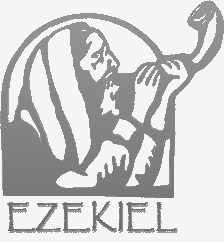 Ezekiel, the son of Buzi, was a priest, called by God to be a prophet to the exiles during the Babylonian captivity (Ezekiel 1:3). In 597 B.C. King Nebuchadnezzar and the Babylonian army brought the king of Judah and thousands of the best citizens of Jerusalem — including Ezekiel — to Babylon (2 Kings 24:8-16).
Ezekiel's priestly background profoundly stamped his prophecy, as the holiness of God and the Temple figure prominently in his messages (for example, Ezekiel 9-10 and 40-48). From 593 B.C. to the destruction of Jerusalem and the temple in 586 B.C., Ezekiel prophesied the inevitability of divine judgment on Jerusalem, on the exiles in Babylon, and on seven nations that surrounded Israel (Ezekiel 1–32). Jerusalem would certainly fall and the exiles would not quickly return — the just consequences of their sins.
Especially in the early part of the book, much of what the Lord "said" to His people was delivered in the form of action prophecies. In these, Ezekiel acted out representations of coming events pertaining to the fall of Judah, the destruction of the temple, and the seeming end of the Davidic line of kings. These action prophecies included the eating of the scroll (3:1-2), being struck with dumbness (3:22-27), sketching of the city of Jerusalem (4:1-3), lying on one side and then the other (4:4-8), eating restricted rations cooked on a fire of dried dung (4:9-17), and shaving his hair and beard with a sword before dividing the hair (5:1-4). Some seem a bit strange at first glance, once we understand their meaning and context, their messages are quite easily comprehended.
Once word reached Ezekiel that Jerusalem and the temple were destroyed, his message became one of comfort and hope. Through him God promised that his people would experience future restoration, renewal, and revival in the coming Messianic kingdom (Ezekiel 33-48).
Much of the strange symbolism of Ezekiel's prophecies was later employed in the Revelation to Saint John. Among these are the visions of the four living creatures as seen in Ezekiel 1 and Revelation 4.
See Happenings for a hymn stanza written for the Commemoration of Ezekiel.


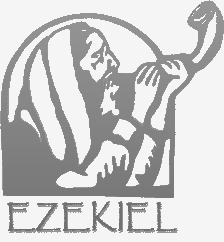 Ezekiel, the son of Buzi, was a priest, called by God to be a prophet to the exiles during the Babylonian captivity (Ezekiel 1:3). In 597 B.C. King Nebuchadnezzar and the Babylonian army brought the king of Judah and thousands of the best citizens of Jerusalem — including Ezekiel — to Babylon (2 Kings 24:8-16).
Ezekiel's priestly background profoundly stamped his prophecy, as the holiness of God and the Temple figure prominently in his messages (for example, Ezekiel 9-10 and 40-48). From 593 B.C. to the destruction of Jerusalem and the temple in 586 B.C., Ezekiel prophesied the inevitability of divine judgment on Jerusalem, on the exiles in Babylon, and on seven nations that surrounded Israel (Ezekiel 1–32). Jerusalem would certainly fall and the exiles would not quickly return — the just consequences of their sins.
Especially in the early part of the book, much of what the Lord "said" to His people was delivered in the form of action prophecies. In these, Ezekiel acted out representations of coming events pertaining to the fall of Judah, the destruction of the temple, and the seeming end of the Davidic line of kings. These action prophecies included the eating of the scroll (3:1-2), being struck with dumbness (3:22-27), sketching of the city of Jerusalem (4:1-3), lying on one side and then the other (4:4-8), eating restricted rations cooked on a fire of dried dung (4:9-17), and shaving his hair and beard with a sword before dividing the hair (5:1-4). Some seem a bit strange at first glance, once we understand their meaning and context, their messages are quite easily comprehended.
Once word reached Ezekiel that Jerusalem and the temple were destroyed, his message became one of comfort and hope. Through him God promised that his people would experience future restoration, renewal, and revival in the coming Messianic kingdom (Ezekiel 33-48).
Much of the strange symbolism of Ezekiel's prophecies was later employed in the Revelation to Saint John. Among these are the visions of the four living creatures as seen in Ezekiel 1 and Revelation 4.
See Happenings for a hymn stanza written for the Commemoration of Ezekiel.
Labels: babylonian captivity, bible, biography, christianity, christology, commemorations, ezekiel, hagiography, israel, old testament, prophet, revelation
¶ 00:00 | 0 comments |
27 December 2016
+Saint John, Apostle and Evangelist +
27 December, New Testament
 Saint John, Apostle and Evangelist, a son of Zebedee, was one of the twelve apostles. With his brother James and Simon Peter, he formed an inner circle among the Twelve: Those three beheld the Great Catch of Fish (Luke 5:10), the healing of Peter's mother-in-law (Mark 1:29-31), the raising of Jairus' daughter(Mark 5:37; Luke 8:51), the Transfiguration (Matthew 17:1; Mark 9:2; Luke 9:28), and Gethsemane's agony (Matthew 26:37; Mark 14:33).
He expressed willingness to undergo martyrdom (Matthew 20:22; Mark 10:39) — as did the other apostles (Matthew 26:35; Mark 14:31). However, ancient testimony says that even though he was imprisoned and exiled, he was eventually released and died a natural death in Ephesus.
According to Mark 3:17, Jesus gave James and John "the name Boanerges, that is, Sons of Thunder." He is credited with the writing three epistles and one Gospel. He is also the probable author of Revelation, although this identification is less certain.
His symbol in ecclesiastical art is usually the eagle. This and the images used for the other evangelists come from the visions of the four living creatures around God's throne in heaven. See the biography of Saint Matthew for the specifics of each.
Lection
Psalm 11
Revelation 1:1-6
1 John 1:1-2:2
John 21:20-25
Collect
Merciful Lord, cast the bright beams of Your light upon Your Church that we, being instructed in the doctrine of Your blessed apostle and evangelist John, may come to the light of everlasting life; for You live and reign with the Father and the Holy Spirit, one God, now and forever.
Saint John, Apostle and Evangelist, a son of Zebedee, was one of the twelve apostles. With his brother James and Simon Peter, he formed an inner circle among the Twelve: Those three beheld the Great Catch of Fish (Luke 5:10), the healing of Peter's mother-in-law (Mark 1:29-31), the raising of Jairus' daughter(Mark 5:37; Luke 8:51), the Transfiguration (Matthew 17:1; Mark 9:2; Luke 9:28), and Gethsemane's agony (Matthew 26:37; Mark 14:33).He expressed willingness to undergo martyrdom (Matthew 20:22; Mark 10:39) — as did the other apostles (Matthew 26:35; Mark 14:31). However, ancient testimony says that even though he was imprisoned and exiled, he was eventually released and died a natural death in Ephesus.
According to Mark 3:17, Jesus gave James and John "the name Boanerges, that is, Sons of Thunder." He is credited with the writing three epistles and one Gospel. He is also the probable author of Revelation, although this identification is less certain.
His symbol in ecclesiastical art is usually the eagle. This and the images used for the other evangelists come from the visions of the four living creatures around God's throne in heaven. See the biography of Saint Matthew for the specifics of each.
Lection
Psalm 11
Revelation 1:1-6
1 John 1:1-2:2
John 21:20-25
Collect
Merciful Lord, cast the bright beams of Your light upon Your Church that we, being instructed in the doctrine of Your blessed apostle and evangelist John, may come to the light of everlasting life; for You live and reign with the Father and the Holy Spirit, one God, now and forever.
Labels: apostle, boanerges, christ, disciple, evangelist, feasts, festivals, gospels, jesus, john, new testament, revelation
¶ 00:00 | 0 comments |
21 July 2016
+ The Holy Prophet Ezekiel +
21 July, Old Testament
Ezekiel, the son of Buzi, was a priest, called by God to be a prophet to the exiles during the Babylonian captivity (Ezekiel 1:3). In 597 B.C. King Nebuchadnezzar and the Babylonian army brought the king of Judah and thousands of the best citizens of Jerusalem — including Ezekiel — to Babylon (2 Kings 24:8-16).
Ezekiel's priestly background profoundly stamped his prophecy, as the holiness of God and the Temple figure prominently in his messages (for example, Ezekiel 9-10 and 40-48). From 593 B.C. to the destruction of Jerusalem and the temple in 586 B.C., Ezekiel prophesied the inevitability of divine judgment on Jerusalem, on the exiles in Babylon, and on seven nations that surrounded Israel (Ezekiel 1–32). Jerusalem would certainly fall and the exiles would not quickly return — the just consequences of their sins.
Especially in the early part of the book, much of what the Lord "said" to His people was delivered in the form of action prophecies. In these, Ezekiel acted out representations of coming events pertaining to the fall of Judah, the destruction of the temple, and the seeming end of the Davidic line of kings. These action prophecies included the eating of the scroll (3:1-2), being struck with dumbness (3:22-27), sketching of the city of Jerusalem (4:1-3), lying on one side and then the other (4:4-8), eating restricted rations cooked on a fire of dried dung (4:9-17), and shaving his hair and beard with a sword before dividing the hair (5:1-4). Some seem a bit strange at first glance, once we understand their meaning and context, their messages are quite easily comprehended.
Once word reached Ezekiel that Jerusalem and the temple were destroyed, his message became one of comfort and hope. Through him God promised that his people would experience future restoration, renewal, and revival in the coming Messianic kingdom (Ezekiel 33-48).
Much of the strange symbolism of Ezekiel's prophecies was later employed in the Revelation to Saint John. Among these are the visions of the four living creatures as seen in Ezekiel 1 and Revelation 4.
See Happenings for a hymn stanza written for the Commemoration of Ezekiel.
Ezekiel, the son of Buzi, was a priest, called by God to be a prophet to the exiles during the Babylonian captivity (Ezekiel 1:3). In 597 B.C. King Nebuchadnezzar and the Babylonian army brought the king of Judah and thousands of the best citizens of Jerusalem — including Ezekiel — to Babylon (2 Kings 24:8-16).Ezekiel's priestly background profoundly stamped his prophecy, as the holiness of God and the Temple figure prominently in his messages (for example, Ezekiel 9-10 and 40-48). From 593 B.C. to the destruction of Jerusalem and the temple in 586 B.C., Ezekiel prophesied the inevitability of divine judgment on Jerusalem, on the exiles in Babylon, and on seven nations that surrounded Israel (Ezekiel 1–32). Jerusalem would certainly fall and the exiles would not quickly return — the just consequences of their sins.
Especially in the early part of the book, much of what the Lord "said" to His people was delivered in the form of action prophecies. In these, Ezekiel acted out representations of coming events pertaining to the fall of Judah, the destruction of the temple, and the seeming end of the Davidic line of kings. These action prophecies included the eating of the scroll (3:1-2), being struck with dumbness (3:22-27), sketching of the city of Jerusalem (4:1-3), lying on one side and then the other (4:4-8), eating restricted rations cooked on a fire of dried dung (4:9-17), and shaving his hair and beard with a sword before dividing the hair (5:1-4). Some seem a bit strange at first glance, once we understand their meaning and context, their messages are quite easily comprehended.
Once word reached Ezekiel that Jerusalem and the temple were destroyed, his message became one of comfort and hope. Through him God promised that his people would experience future restoration, renewal, and revival in the coming Messianic kingdom (Ezekiel 33-48).
Much of the strange symbolism of Ezekiel's prophecies was later employed in the Revelation to Saint John. Among these are the visions of the four living creatures as seen in Ezekiel 1 and Revelation 4.
See Happenings for a hymn stanza written for the Commemoration of Ezekiel.
Labels: babylonian captivity, biography, christianity, christology, commemorations, ezekiel, hagiography, israel, old testament, prophet, revelation
¶ 00:00 | 0 comments |
27 December 2015
+Saint John, Apostle and Evangelist +
27 December, New Testament
Saint John, Apostle and Evangelist, a son of Zebedee, was one of the twelve apostles. With his brother James and Simon Peter, he formed an inner circle among the Twelve: Those three beheld the Great Catch of Fish (Luke 5:10), the healing of Peter's mother-in-law (Mark 1:29-31), the raising of Jairus' daughter(Mark 5:37; Luke 8:51), the Transfiguration (Matthew 17:1; Mark 9:2; Luke 9:28), and Gethsemane's agony (Matthew 26:37; Mark 14:33).
He expressed willingness to undergo martyrdom (Matthew 20:22; Mark 10:39) — as did the other apostles (Matthew 26:35; Mark 14:31). However, ancient testimony says that even though he was imprisoned and exiled, he was eventually released and died a natural death in Ephesus.
According to Mark 3:17, Jesus gave James and John "the name Boanerges, that is, Sons of Thunder." He is credited with the writing three epistles and one Gospel. He is also the probable author of Revelation, although this identification is less certain.
His symbol in ecclesiastical art is usually the eagle. This and the images used for the other evangelists come from the visions of the four living creatures around God's throne in heaven. See the biography of Saint Matthew for the specifics of each.
Lection
Psalm 11
Revelation 1:1-6
1 John 1:1-2:2
John 21:20-25
Collect
Merciful Lord, cast the bright beams of Your light upon Your Church that we, being instructed in the doctrine of Your blessed apostle and evangelist John, may come to the light of everlasting life; for You live and reign with the Father and the Holy Spirit, one God, now and forever.
Saint John, Apostle and Evangelist, a son of Zebedee, was one of the twelve apostles. With his brother James and Simon Peter, he formed an inner circle among the Twelve: Those three beheld the Great Catch of Fish (Luke 5:10), the healing of Peter's mother-in-law (Mark 1:29-31), the raising of Jairus' daughter(Mark 5:37; Luke 8:51), the Transfiguration (Matthew 17:1; Mark 9:2; Luke 9:28), and Gethsemane's agony (Matthew 26:37; Mark 14:33).He expressed willingness to undergo martyrdom (Matthew 20:22; Mark 10:39) — as did the other apostles (Matthew 26:35; Mark 14:31). However, ancient testimony says that even though he was imprisoned and exiled, he was eventually released and died a natural death in Ephesus.
According to Mark 3:17, Jesus gave James and John "the name Boanerges, that is, Sons of Thunder." He is credited with the writing three epistles and one Gospel. He is also the probable author of Revelation, although this identification is less certain.
His symbol in ecclesiastical art is usually the eagle. This and the images used for the other evangelists come from the visions of the four living creatures around God's throne in heaven. See the biography of Saint Matthew for the specifics of each.
Lection
Psalm 11
Revelation 1:1-6
1 John 1:1-2:2
John 21:20-25
Collect
Merciful Lord, cast the bright beams of Your light upon Your Church that we, being instructed in the doctrine of Your blessed apostle and evangelist John, may come to the light of everlasting life; for You live and reign with the Father and the Holy Spirit, one God, now and forever.
Labels: apostle, boanerges, christ, disciple, evangelist, feasts, festivals, gospels, jesus, john, new testament, revelation
¶ 00:00 | 0 comments |
21 July 2015
+ The Holy Prophet Ezekiel +
21 July, Old Testament
 Ezekiel, the son of Buzi, was a priest, called by God to be a prophet to the exiles during the Babylonian captivity (Ezekiel 1:3). In 597 B.C. King Nebuchadnezzar and the Babylonian army brought the king of Judah and thousands of the best citizens of Jerusalem — including Ezekiel — to Babylon (2 Kings 24:8-16).
Ezekiel's priestly background profoundly stamped his prophecy, as the holiness of God and the Temple figure prominently in his messages (for example, Ezekiel 9-10 and 40-48). From 593 B.C. to the destruction of Jerusalem and the temple in 586 B.C., Ezekiel prophesied the inevitability of divine judgment on Jerusalem, on the exiles in Babylon, and on seven nations that surrounded Israel (Ezekiel 1–32). Jerusalem would certainly fall and the exiles would not quickly return — the just consequences of their sins.
Especially in the early part of the book, much of what the Lord "said" to His people was delivered in the form of action prophecies. In these, Ezekiel acted out representations of coming events pertaining to the fall of Judah, the destruction of the temple, and the seeming end of the Davidic line of kings. These action prophecies included the eating of the scroll (3:1-2), being struck with dumbness (3:22-27), sketching of the city of Jerusalem (4:1-3), lying on one side and then the other (4:4-8), eating restricted rations cooked on a fire of dried dung (4:9-17), and shaving his hair and beard with a sword before dividing the hair (5:1-4). Some seem a bit strange at first glance, once we understand their meaning and context, their messages are quite easily comprehended.
Once word reached Ezekiel that Jerusalem and the temple were destroyed, his message became one of comfort and hope. Through him God promised that his people would experience future restoration, renewal, and revival in the coming Messianic kingdom (Ezekiel 33-48).
Much of the strange symbolism of Ezekiel's prophecies was later employed in the Revelation to Saint John. Among these are the visions of the four living creatures as seen in Ezekiel 1 and Revelation 4.
See Happenings for a hymn stanza written for the Commemoration of Ezekiel.
Ezekiel, the son of Buzi, was a priest, called by God to be a prophet to the exiles during the Babylonian captivity (Ezekiel 1:3). In 597 B.C. King Nebuchadnezzar and the Babylonian army brought the king of Judah and thousands of the best citizens of Jerusalem — including Ezekiel — to Babylon (2 Kings 24:8-16).Ezekiel's priestly background profoundly stamped his prophecy, as the holiness of God and the Temple figure prominently in his messages (for example, Ezekiel 9-10 and 40-48). From 593 B.C. to the destruction of Jerusalem and the temple in 586 B.C., Ezekiel prophesied the inevitability of divine judgment on Jerusalem, on the exiles in Babylon, and on seven nations that surrounded Israel (Ezekiel 1–32). Jerusalem would certainly fall and the exiles would not quickly return — the just consequences of their sins.
Especially in the early part of the book, much of what the Lord "said" to His people was delivered in the form of action prophecies. In these, Ezekiel acted out representations of coming events pertaining to the fall of Judah, the destruction of the temple, and the seeming end of the Davidic line of kings. These action prophecies included the eating of the scroll (3:1-2), being struck with dumbness (3:22-27), sketching of the city of Jerusalem (4:1-3), lying on one side and then the other (4:4-8), eating restricted rations cooked on a fire of dried dung (4:9-17), and shaving his hair and beard with a sword before dividing the hair (5:1-4). Some seem a bit strange at first glance, once we understand their meaning and context, their messages are quite easily comprehended.
Once word reached Ezekiel that Jerusalem and the temple were destroyed, his message became one of comfort and hope. Through him God promised that his people would experience future restoration, renewal, and revival in the coming Messianic kingdom (Ezekiel 33-48).
Much of the strange symbolism of Ezekiel's prophecies was later employed in the Revelation to Saint John. Among these are the visions of the four living creatures as seen in Ezekiel 1 and Revelation 4.
See Happenings for a hymn stanza written for the Commemoration of Ezekiel.
Labels: babylonian captivity, biography, christianity, christology, commemorations, ezekiel, hagiography, israel, old testament, prophet, revelation
¶ 00:00 | 0 comments |


