Aardvark Alley

Confessional Lutheran theology, hagiography, philosophy, music, culture, sports, education,
and whatever else is on the fevered mind of Orycteropus Afer
18 February 2017
+ Martin Luther, Doctor and Reformer +
18 February AD 1546
 Martin Luther, born on 10 November 1483, in Eisleben, Germany, initially began studies leading toward a degree in law. However, after a close encounter with death, he switched to the study of theology, entered an Augustinian monastery, was ordained a priest in 1505, and received a doctorate in theology in 1512.
As a professor at the newly-established University of Wittenberg, his Scriptural studies led him to question many of the church's teachings and practices, especially the selling of indulgences. His refusal to back down from his convictions resulted in his excommunication in 1521. Following a period of seclusion at the Wartburg castle, Luther returned to Wittenberg, where he spent the rest of his life preaching and teaching, translating the Scriptures, and writing hymns and numerous theological treatises.
Of course, Luther didn't work alone. First of all, he knew that the Holy Spirit, working through the Word, was principal actor in the Reformation, and said, "While I slept, or drank Wittenberg beer with my friends ... the Word so greatly weakened the papacy that no prince or emperor ever inflicted such losses upon it. I did nothing; the Word did everything." However, his "friends," including Philipp Melanchthon, Nicholas Amsdorf, Johannes Bugenhagen, and others contributed mightily to the cause. Meanwhile, his prince, Frederick III of Saxony, defended him. Finally, he probably received no earthly support greater than that of his beloved wife Katie.
We remember and honor his lifelong emphasis on the Biblical truth that for Christ's sake God declares us righteous by grace through faith alone. He died on 18 February 1546, while visiting the town of his birth.
Please visit Xrysostom for The Life of Martin Luther: A Chronology. A number of recommended books and web sites are included along with this biographical outline.
Lection
Psalm 46
Isaiah 55:6-11
Romans 10:5-17
John 15:1-11
Collect
O Lord God, heavenly Father, pour our Your Holy Spirit on Your faithful people, keep them steadfast in Your grace and truth, protect and comfort them in all temptation, defend them against all enemies of Your Word, and bestow on Christ's Church Militant Your saving peace; through Jesus Christ, Your Son, our Lord, who lives and reigns with You and the Holy Spirit, one God, now and forever.
Tags: Martin Luther | Doctor Martin Luther | Dr. Martin Luther | Lutheran | Lutheranism | Christianity | Christian | Reformation | Lutheran Reformation | Book of Concord | Lutheran Confessions | Small Catechism | Large Catechism | Smalcald Articles | hagiography | biography | Church history | historical theology | exegetical theology | Bible translation | practical theology | hymn writing | liturgics | German history | European history| Aardvark Alley

Martin Luther, born on 10 November 1483, in Eisleben, Germany, initially began studies leading toward a degree in law. However, after a close encounter with death, he switched to the study of theology, entered an Augustinian monastery, was ordained a priest in 1505, and received a doctorate in theology in 1512.As a professor at the newly-established University of Wittenberg, his Scriptural studies led him to question many of the church's teachings and practices, especially the selling of indulgences. His refusal to back down from his convictions resulted in his excommunication in 1521. Following a period of seclusion at the Wartburg castle, Luther returned to Wittenberg, where he spent the rest of his life preaching and teaching, translating the Scriptures, and writing hymns and numerous theological treatises.
Of course, Luther didn't work alone. First of all, he knew that the Holy Spirit, working through the Word, was principal actor in the Reformation, and said, "While I slept, or drank Wittenberg beer with my friends ... the Word so greatly weakened the papacy that no prince or emperor ever inflicted such losses upon it. I did nothing; the Word did everything." However, his "friends," including Philipp Melanchthon, Nicholas Amsdorf, Johannes Bugenhagen, and others contributed mightily to the cause. Meanwhile, his prince, Frederick III of Saxony, defended him. Finally, he probably received no earthly support greater than that of his beloved wife Katie.
We remember and honor his lifelong emphasis on the Biblical truth that for Christ's sake God declares us righteous by grace through faith alone. He died on 18 February 1546, while visiting the town of his birth.
Please visit Xrysostom for The Life of Martin Luther: A Chronology. A number of recommended books and web sites are included along with this biographical outline.
Lection
Psalm 46
Isaiah 55:6-11
Romans 10:5-17
John 15:1-11
Collect
O Lord God, heavenly Father, pour our Your Holy Spirit on Your faithful people, keep them steadfast in Your grace and truth, protect and comfort them in all temptation, defend them against all enemies of Your Word, and bestow on Christ's Church Militant Your saving peace; through Jesus Christ, Your Son, our Lord, who lives and reigns with You and the Holy Spirit, one God, now and forever.
Tags: Martin Luther | Doctor Martin Luther | Dr. Martin Luther | Lutheran | Lutheranism | Christianity | Christian | Reformation | Lutheran Reformation | Book of Concord | Lutheran Confessions | Small Catechism | Large Catechism | Smalcald Articles | hagiography | biography | Church history | historical theology | exegetical theology | Bible translation | practical theology | hymn writing | liturgics | German history | European history| Aardvark Alley
Labels: biography, bugenhagen, commemoration, frederick the wise, german history, hagiography, hymnody, katharina luther, lutheran confessions, lutheranism, martin luther, philipp melanchthon, reformation, theology
¶ 00:00 | 0 comments |
20 December 2016
+ Katharina von Bora Luther +
20 December AD 1552
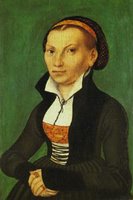 Financial and marital circumstances led Katharina von Bora's (b.1499) parents to place her in a convent when she was but a child of five. In 1515, she became a nun. Later, she and some of her associates heard clear proclamation of Gospel through the Lutheran Reformation. This Gospel message soon changed their beliefs and their lives.
Convinced that the vows they had taken were contrary to God's word, Katharina joined eight other nuns who desired to renounce the cloistered life. In April 1523 they were rescued from the convent and smuggled away to Wittenberg among empty herring barrels. Martin Luther and his associates helped some of these women return to their former homes while placing others with good families. Most of them were soon married.
However, Luther and friends found that dealing with "Katie" was no easy task. She rejected a number of prospective husbands, finally declaring that she'd marry either Martin or Nikolaus von Amsdorf — and nobody else. While he worried that a violent death would soon part him from any bride, Martin gave in to the stubborn young woman. They were married on 13 June 1525. Their happy marriage was blessed with six children. Katie skillfully managed the Luther household, which seemed to grow ever larger because of his generous hospitality.
 Martin and Katie certainly butted heads at times. Perhaps that's why Luther sometimes called her kette (chain). However, the reformer truly adored his bride, also naming her "my Rib" and "my lord Katie." The freedom and joy that he experienced in his marriage received testimony from his 1535 Commentary on Galatians, which Luther lovingly called, "My Katie von Bora."
After Martin's death in 1546, Katie remained in Wittenberg. Sadly, she lived most of her remaining years in poverty. Her 1552 death came after an accident she suffered while traveling with her children to Torgau in order to escape the plague.
Katharina Luther remains a wonderful example of godly womanhood, beautifully portraying the "excellent wife" celebrated in Proverbs 31:10-31.
For more on Katie Luther, visit the online exhibit at Concordia Historical Institute. These portraits of Martin and Katharina Luther were painted by Lucas Cranach the Elder during the first year of their marriage. The originals are in the Wartburg Collection in Eisenach.
Lection
Psalm 128
Proverbs 31:10-31 or 31:10-12, 17, 20, 23, 25-31
1 Corinthians 7:1-9
John 3:25-30
Collect
Dear heavenly Father, You establish marriage to bless and benefit all mankind and to testify to the world of the marriage of Christ and His Bride the Church. Grant that, as You led Katharina von Bora to become the wife of Martin Luther and, through her, blessed not only him but all Christendom, so You would also seal and protect marriages in our day, that families, society, and Church would be strengthened, stabilized, and nurtured until You call us to the wedding feast of the Lamb in His kingdom, which has no end; through this same Bridegroom, our Lord Jesus Christ, who lives and reigns with You and the Holy Spirit, one God, now and forever.
Hymn Stanza
A world that disregarded The gift of married life
Saw God call saintly Katie As Martin’s faithful wife.
Her self she gave completely To him, who loved his Rib;
Submission, strength, and courage, Her testaments, still live.
Commemorative hymn stanza from Ask the Pastor is © 2006 by Walter P. Snyder and used according to permission granted.
 Financial and marital circumstances led Katharina von Bora's (b.1499) parents to place her in a convent when she was but a child of five. In 1515, she became a nun. Later, she and some of her associates heard clear proclamation of Gospel through the Lutheran Reformation. This Gospel message soon changed their beliefs and their lives.
Convinced that the vows they had taken were contrary to God's word, Katharina joined eight other nuns who desired to renounce the cloistered life. In April 1523 they were rescued from the convent and smuggled away to Wittenberg among empty herring barrels. Martin Luther and his associates helped some of these women return to their former homes while placing others with good families. Most of them were soon married.
However, Luther and friends found that dealing with "Katie" was no easy task. She rejected a number of prospective husbands, finally declaring that she'd marry either Martin or Nikolaus von Amsdorf — and nobody else. While he worried that a violent death would soon part him from any bride, Martin gave in to the stubborn young woman. They were married on 13 June 1525. Their happy marriage was blessed with six children. Katie skillfully managed the Luther household, which seemed to grow ever larger because of his generous hospitality.
 Martin and Katie certainly butted heads at times. Perhaps that's why Luther sometimes called her kette (chain). However, the reformer truly adored his bride, also naming her "my Rib" and "my lord Katie." The freedom and joy that he experienced in his marriage received testimony from his 1535 Commentary on Galatians, which Luther lovingly called, "My Katie von Bora."
After Martin's death in 1546, Katie remained in Wittenberg. Sadly, she lived most of her remaining years in poverty. Her 1552 death came after an accident she suffered while traveling with her children to Torgau in order to escape the plague.
Katharina Luther remains a wonderful example of godly womanhood, beautifully portraying the "excellent wife" celebrated in Proverbs 31:10-31.
For more on Katie Luther, visit the online exhibit at Concordia Historical Institute. These portraits of Martin and Katharina Luther were painted by Lucas Cranach the Elder during the first year of their marriage. The originals are in the Wartburg Collection in Eisenach.
Lection
Psalm 128
Proverbs 31:10-31 or 31:10-12, 17, 20, 23, 25-31
1 Corinthians 7:1-9
John 3:25-30
Collect
Dear heavenly Father, You establish marriage to bless and benefit all mankind and to testify to the world of the marriage of Christ and His Bride the Church. Grant that, as You led Katharina von Bora to become the wife of Martin Luther and, through her, blessed not only him but all Christendom, so You would also seal and protect marriages in our day, that families, society, and Church would be strengthened, stabilized, and nurtured until You call us to the wedding feast of the Lamb in His kingdom, which has no end; through this same Bridegroom, our Lord Jesus Christ, who lives and reigns with You and the Holy Spirit, one God, now and forever.
Hymn Stanza
A world that disregarded The gift of married life
Saw God call saintly Katie As Martin’s faithful wife.
Her self she gave completely To him, who loved his Rib;
Submission, strength, and courage, Her testaments, still live.
Commemorative hymn stanza from Ask the Pastor is © 2006 by Walter P. Snyder and used according to permission granted.
Labels: biography, church history, commemoration, hagiography, katharina luther, katie luther, marriage, martin luther, reformation, von bora
¶ 00:00 | 0 comments |
20 December 2015
+ Katharina von Bora Luther +
20 December AD 1552
Financial and marital circumstances led Katharina von Bora's (b.1499) parents to place her in a convent when she was but a child of five. In 1515, she became a nun. Later, she and some of her associates heard clear proclamation of Gospel through the Lutheran Reformation. This Gospel message soon changed their beliefs and their lives.
Convinced that the vows they had taken were contrary to God's word, Katharina joined eight other nuns who desired to renounce the cloistered life. In April 1523 they were rescued from the convent and smuggled away to Wittenberg among empty herring barrels. Martin Luther and his associates helped some of these women return to their former homes while placing others with good families. Most of them were soon married.
However, Luther and friends found that dealing with "Katie" was no easy task. She rejected a number of prospective husbands, finally declaring that she'd marry either Martin or Nikolaus von Amsdorf — and nobody else. While he worried that a violent death would soon part him from any bride, Martin gave in to the stubborn young woman. They were married on 13 June 1525. Their happy marriage was blessed with six children. Katie skillfully managed the Luther household, which seemed to grow ever larger because of his generous hospitality.
Martin and Katie certainly butted heads at times. Perhaps that's why Luther sometimes called her kette (chain). However, the reformer truly adored his bride, also naming her "my Rib" and "my lord Katie." The freedom and joy that he experienced in his marriage received testimony from his 1535 Commentary on Galatians, which Luther lovingly called, "My Katie von Bora."
After Martin's death in 1546, Katie remained in Wittenberg. Sadly, she lived most of her remaining years in poverty. Her 1552 death came after an accident she suffered while traveling with her children to Torgau in order to escape the plague.
Katharina Luther remains a wonderful example of godly womanhood, beautifully portraying the "excellent wife" celebrated in Proverbs 31:10-31.
For more on Katie Luther, visit the online exhibit at Concordia Historical Institute. These portraits of Martin and Katharina Luther were painted by Lucas Cranach the Elder during the first year of their marriage. The originals are in the Wartburg Collection in Eisenach.
Lection
Psalm 128
Proverbs 31:10-31 or 31:10-12, 17, 20, 23, 25-31
1 Corinthians 7:1-9
John 3:25-30
Collect
Dear heavenly Father, You establish marriage to bless and benefit all mankind and to testify to the world of the marriage of Christ and His Bride the Church. Grant that, as You led Katharina von Bora to become the wife of Martin Luther and, through her, blessed not only him but all Christendom, so You would also seal and protect marriages in our day, that families, society, and Church would be strengthened, stabilized, and nurtured until You call us to the wedding feast of the Lamb in His kingdom, which has no end; through this same Bridegroom, our Lord Jesus Christ, who lives and reigns with You and the Holy Spirit, one God, now and forever.
Hymn Stanza
A world that disregarded The gift of married life
Saw God call saintly Katie As Martin’s faithful wife.
Her self she gave completely To him, who loved his Rib;
Submission, strength, and courage, Her testaments, still live.
Commemorative hymn stanza from Ask the Pastor is © 2006 by Walter P. Snyder and used according to permission granted.
Financial and marital circumstances led Katharina von Bora's (b.1499) parents to place her in a convent when she was but a child of five. In 1515, she became a nun. Later, she and some of her associates heard clear proclamation of Gospel through the Lutheran Reformation. This Gospel message soon changed their beliefs and their lives.Convinced that the vows they had taken were contrary to God's word, Katharina joined eight other nuns who desired to renounce the cloistered life. In April 1523 they were rescued from the convent and smuggled away to Wittenberg among empty herring barrels. Martin Luther and his associates helped some of these women return to their former homes while placing others with good families. Most of them were soon married.
However, Luther and friends found that dealing with "Katie" was no easy task. She rejected a number of prospective husbands, finally declaring that she'd marry either Martin or Nikolaus von Amsdorf — and nobody else. While he worried that a violent death would soon part him from any bride, Martin gave in to the stubborn young woman. They were married on 13 June 1525. Their happy marriage was blessed with six children. Katie skillfully managed the Luther household, which seemed to grow ever larger because of his generous hospitality.
Martin and Katie certainly butted heads at times. Perhaps that's why Luther sometimes called her kette (chain). However, the reformer truly adored his bride, also naming her "my Rib" and "my lord Katie." The freedom and joy that he experienced in his marriage received testimony from his 1535 Commentary on Galatians, which Luther lovingly called, "My Katie von Bora."After Martin's death in 1546, Katie remained in Wittenberg. Sadly, she lived most of her remaining years in poverty. Her 1552 death came after an accident she suffered while traveling with her children to Torgau in order to escape the plague.
Katharina Luther remains a wonderful example of godly womanhood, beautifully portraying the "excellent wife" celebrated in Proverbs 31:10-31.
For more on Katie Luther, visit the online exhibit at Concordia Historical Institute. These portraits of Martin and Katharina Luther were painted by Lucas Cranach the Elder during the first year of their marriage. The originals are in the Wartburg Collection in Eisenach.
Lection
Psalm 128
Proverbs 31:10-31 or 31:10-12, 17, 20, 23, 25-31
1 Corinthians 7:1-9
John 3:25-30
Collect
Dear heavenly Father, You establish marriage to bless and benefit all mankind and to testify to the world of the marriage of Christ and His Bride the Church. Grant that, as You led Katharina von Bora to become the wife of Martin Luther and, through her, blessed not only him but all Christendom, so You would also seal and protect marriages in our day, that families, society, and Church would be strengthened, stabilized, and nurtured until You call us to the wedding feast of the Lamb in His kingdom, which has no end; through this same Bridegroom, our Lord Jesus Christ, who lives and reigns with You and the Holy Spirit, one God, now and forever.
Hymn Stanza
A world that disregarded The gift of married life
Saw God call saintly Katie As Martin’s faithful wife.
Her self she gave completely To him, who loved his Rib;
Submission, strength, and courage, Her testaments, still live.
Commemorative hymn stanza from Ask the Pastor is © 2006 by Walter P. Snyder and used according to permission granted.
Labels: biography, church history, commemoration, hagiography, katharina luther, katie luther, marriage, martin luther, reformation, von bora
¶ 00:00 | 0 comments |


