Aardvark Alley

Confessional Lutheran theology, hagiography, philosophy, music, culture, sports, education,
and whatever else is on the fevered mind of Orycteropus Afer
27 June 2017
+ Cyril of Alexandria, Bishop and Confessor +
27 June AD 444
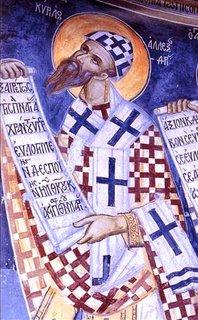 Saint Cyril (ca. AD 376-444) became Patriarch of Alexandria, Egypt in 412. Throughout his career he defended a number of orthodox doctrines, among them the teaching that Mary, the mother of Jesus, is "rightly called and truly is the Mother of God" — Theotokos, "the God-Bearer" (Formula of Concord, Epitome, VIII:12). In 431 the Council of Ephesus affirmed this teaching that the Son of Mary is also true God.
The Council was responding to the Nestorian heresy, which distinguished so completely between the divine and human natures of Christ that claims were made that the divine Christ did some things while the human Jesus did others.
Some of the differences are quite subtle; perhaps even Nestorius himself could not have foreseen the full ramifications of his position, including a "resurrection" of only the divine nature. Ephesus condemned the title of "Christ-Bearer" (Christotokos) for the Virgin, since the Nestorians would only claim that Mary bore the Christ, but not God Himself.
Cyril receives almost as many brickbats as he does bouquets, even from orthodox Christians, because he's also known for being what one person calls "an ill-tempered, quarrelsome, hasty, and violent man." This seems especially so during his early years as Bishop of Alexandria.
A particularly acute example of his extreme rigidity comes from his closing of Novatianist churches, although the Novationists weren't particularly unorthodox. Their "fault" was as much one of pride as of theology — they descended from those who'd stood firm in the persecutions of earlier years and refused to associate or worship with the heirs of those who recanted the Faith under persecution. Their main theological aberration were insisting upon rebaptism of converts from "lapsed" Christianity and an attitude that was, perhaps, less than Christ-like in dealing with erring brothers.
Cyril also ran the Jews out of town. The reason given was that they were seditious and violent, although we're left with little evidence. This action likely contributed to an ongoing feud with Orestes, the imperial prefect. These disagreements seemingly spilled over into a quarrel with the prefect's friend, the neo-platonist scholar Hypatia, who was later murdered by a mob.
Few have directly condemned Cyril for her death but the leaders of the mob certainly claimed the bishop as their leader. In modern times, Carl Sagan, in his book Cosmos, blamed Hypatia's death (and the destruction of the great Library of Alexandria) on dogmatic Christianity's desire to root out rational paganism. However, other scholars see the whole feud as an internal Church struggle and no one has yet established a definitive cause (or date) for the final destruction of Alexandria's library.
At any rate, and despite the considerable rancor that accompanied his early years as bishop, the mature Cyril worked diligently to reconcile the Nestorian and Orthodox parties. His efforts led many of the less virulent Nestorians back to full communion.
The writings of Cyril on the doctrines of the Trinity and the person of Christ reveal him to be one of the most able theologians of his time. Cyril's Christology influenced subsequent church councils and was a primary source for Lutheran confessional writings. He still speaks clearly to our age, especially as the old Christological heresies are trotted out under new guises.
Collect
Heavenly Father, You used Your servant Cyril to confess the mysteries of the Holy Trinity and of Your Son being one person with fully divine and human natures. Grant that we, also, might be constant in Your Word, bold in Your confession, and steadfast in Your worship, to the glory of Your holy Name; through Jesus Christ our Lord, who lives and reigns with You and the Holy Spirit, one God, now and forever.


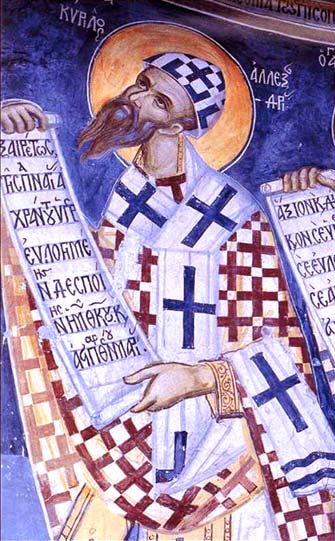 Saint Cyril (ca. AD 376-444) became Patriarch of Alexandria, Egypt in 412. Throughout his career he defended a number of orthodox doctrines, among them the teaching that Mary, the mother of Jesus, is "rightly called and truly is the Mother of God" — Theotokos, "the God-Bearer" (Formula of Concord, Epitome, VIII:12). In 431 the Council of Ephesus affirmed this teaching that the Son of Mary is also true God.
The Council was responding to the Nestorian heresy, which distinguished so completely between the divine and human natures of Christ that claims were made that the divine Christ did some things while the human Jesus did others.
Some of the differences are quite subtle; perhaps even Nestorius himself could not have foreseen the full ramifications of his position, including a "resurrection" of only the divine nature. Ephesus condemned the title of "Christ-Bearer" (Christotokos) for the Virgin, since the Nestorians would only claim that Mary bore the Christ, but not God Himself.
Cyril receives almost as many brickbats as he does bouquets, even from orthodox Christians, because he's also known for being what one person calls "an ill-tempered, quarrelsome, hasty, and violent man." This seems especially so during his early years as Bishop of Alexandria.
A particularly acute example of his extreme rigidity comes from his closing of Novatianist churches, although the Novationists weren't particularly unorthodox. Their "fault" was as much one of pride as of theology — they descended from those who'd stood firm in the persecutions of earlier years and refused to associate or worship with the heirs of those who recanted the Faith under persecution. Their main theological aberration were insisting upon rebaptism of converts from "lapsed" Christianity and an attitude that was, perhaps, less than Christ-like in dealing with erring brothers.
Cyril also ran the Jews out of town. The reason given was that they were seditious and violent, although we're left with little evidence. This action likely contributed to an ongoing feud with Orestes, the imperial prefect. These disagreements seemingly spilled over into a quarrel with the prefect's friend, the neo-platonist scholar Hypatia, who was later murdered by a mob.
Few have directly condemned Cyril for her death but the leaders of the mob certainly claimed the bishop as their leader. In modern times, Carl Sagan, in his book Cosmos, blamed Hypatia's death (and the destruction of the great Library of Alexandria) on dogmatic Christianity's desire to root out rational paganism. However, other scholars see the whole feud as an internal Church struggle and no one has yet established a definitive cause (or date) for the final destruction of Alexandria's library.
At any rate, and despite the considerable rancor that accompanied his early years as bishop, the mature Cyril worked diligently to reconcile the Nestorian and Orthodox parties. His efforts led many of the less virulent Nestorians back to full communion.
The writings of Cyril on the doctrines of the Trinity and the person of Christ reveal him to be one of the most able theologians of his time. Cyril's Christology influenced subsequent church councils and was a primary source for Lutheran confessional writings. He still speaks clearly to our age, especially as the old Christological heresies are trotted out under new guises.
Collect
Heavenly Father, You used Your servant Cyril to confess the mysteries of the Holy Trinity and of Your Son being one person with fully divine and human natures. Grant that we, also, might be constant in Your Word, bold in Your confession, and steadfast in Your worship, to the glory of Your holy Name; through Jesus Christ our Lord, who lives and reigns with You and the Holy Spirit, one God, now and forever.
Labels: alexandria, biography, christianity, church history, commemorations, cyril, hagiography, lutheranism, nestorianism, patristics, theotokos
¶ 00:00 | 0 comments |
02 May 2017
+ Athanasius of Alexandria +
2 May AD 373
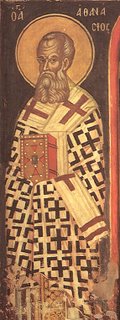 Athanasius was born in Alexandria in Egypt in AD.295. He served as a church leader in a time of great controversy and ecclesiastical disagreements. While he was still a deacon, around the year 319, a presbyter (pastor) named Arius began a non-Biblical teaching about Jesus Christ. At the Council of Nicaea in 325, Athanasius, despite his relative inexperience in ecclesiastical office, defended Christian orthodoxy against the proponents of the Arian heresy. This belief denied the full divinity of Jesus Christ, claiming that there was a time when the Son was not and that He was thus inferior to the Father according to His "essence."
Results of the Orthodox party's eventual victory included the Nicene Creed.
During his 45-year tenure as bishop of Alexandria, Athanasius wrote numerous works that defended the orthodox teaching. His enemies had him exiled five times; on two occasions he was almost murdered.
Looking back, we see that there were times when Athanasius equaled his opponents' misbehavior, going so far as to engage mercenaries to enforce his episcopacy in Alexandria. Yet Athanasius remained steadfast and ended his days restored fully to his church responsibilities. The Athanasian Creed, though not composed by him, is named in his honor because it confesses the doctrinal orthodoxy he championed throughout his life.
Athanasius became known in the West as one of the four Easterners among the Eight Great Doctors of the Undivided Church. See the biography of Saint Ambrose for all eight.
Lection
Psalm 71:1-8 or 112:1-9
1 John 5:1-5
Matthew 10:22-32
Collect
Uphold Your Church, O God of truth, as You upheld Your servant Athanasius, to maintain and proclaim boldly the catholic faith against all opposition, trusting solely in the grace of Your eternal Word, who took upon Himself our humanity that we might share His holiness; who lives and reigns with you and the Holy Spirit, one God, now and forever.
 Athanasius was born in Alexandria in Egypt in AD.295. He served as a church leader in a time of great controversy and ecclesiastical disagreements. While he was still a deacon, around the year 319, a presbyter (pastor) named Arius began a non-Biblical teaching about Jesus Christ. At the Council of Nicaea in 325, Athanasius, despite his relative inexperience in ecclesiastical office, defended Christian orthodoxy against the proponents of the Arian heresy. This belief denied the full divinity of Jesus Christ, claiming that there was a time when the Son was not and that He was thus inferior to the Father according to His "essence."
Results of the Orthodox party's eventual victory included the Nicene Creed.
During his 45-year tenure as bishop of Alexandria, Athanasius wrote numerous works that defended the orthodox teaching. His enemies had him exiled five times; on two occasions he was almost murdered.
Looking back, we see that there were times when Athanasius equaled his opponents' misbehavior, going so far as to engage mercenaries to enforce his episcopacy in Alexandria. Yet Athanasius remained steadfast and ended his days restored fully to his church responsibilities. The Athanasian Creed, though not composed by him, is named in his honor because it confesses the doctrinal orthodoxy he championed throughout his life.
Athanasius became known in the West as one of the four Easterners among the Eight Great Doctors of the Undivided Church. See the biography of Saint Ambrose for all eight.
Lection
Psalm 71:1-8 or 112:1-9
1 John 5:1-5
Matthew 10:22-32
Collect
Uphold Your Church, O God of truth, as You upheld Your servant Athanasius, to maintain and proclaim boldly the catholic faith against all opposition, trusting solely in the grace of Your eternal Word, who took upon Himself our humanity that we might share His holiness; who lives and reigns with you and the Holy Spirit, one God, now and forever.
Labels: alexandria, arianism, arius, athanasius, biography, church history, commemoration, creed, doctors of the church, hagiography, nicaea, nicene creed, patristics
¶ 00:00 | 0 comments |
27 June 2016
+ Cyril of Alexandria, Bishop and Confessor +
27 June AD 444
Saint Cyril (ca. AD 376-444) became Patriarch of Alexandria, Egypt in 412. Throughout his career he defended a number of orthodox doctrines, among them the teaching that Mary, the mother of Jesus, is "rightly called and truly is the Mother of God" — Theotokos, "the God-Bearer" (Formula of Concord, Epitome, VIII:12). In 431 the Council of Ephesus affirmed this teaching that the Son of Mary is also true God.
The Council was responding to the Nestorian heresy, which distinguished so completely between the divine and human natures of Christ that claims were made that the divine Christ did some things while the human Jesus did others.
Some of the differences are quite subtle; perhaps even Nestorius himself could not have foreseen the full ramifications of his position, including a "resurrection" of only the divine nature. Ephesus condemned the title of "Christ-Bearer" (Christotokos) for the Virgin, since the Nestorians would only claim that Mary bore the Christ, but not God Himself.
Cyril receives almost as many brickbats as he does bouquets, even from orthodox Christians, because he's also known for being what one person calls "an ill-tempered, quarrelsome, hasty, and violent man." This seems especially so during his early years as Bishop of Alexandria.
A particularly acute example of his extreme rigidity comes from his closing of Novatianist churches, although the Novationists weren't particularly unorthodox. Their "fault" was as much one of pride as of theology — they descended from those who'd stood firm in the persecutions of earlier years and refused to associate or worship with the heirs of those who recanted the Faith under persecution. Their main theological aberration were insisting upon rebaptism of converts from "lapsed" Christianity and an attitude that was, perhaps, less than Christ-like in dealing with erring brothers.
Cyril also ran the Jews out of town. The reason given was that they were seditious and violent, although we're left with little evidence. This action likely contributed to an ongoing feud with Orestes, the imperial prefect. These disagreements seemingly spilled over into a quarrel with the prefect's friend, the neo-platonist scholar Hypatia, who was later murdered by a mob.
Few have directly condemned Cyril for her death but the leaders of the mob certainly claimed the bishop as their leader. In modern times, Carl Sagan, in his book Cosmos, blamed Hypatia's death (and the destruction of the great Library of Alexandria) on dogmatic Christianity's desire to root out rational paganism. However, other scholars see the whole feud as an internal Church struggle and no one has yet established a definitive cause (or date) for the final destruction of Alexandria's library.
At any rate, and despite the considerable rancor that accompanied his early years as bishop, the mature Cyril worked diligently to reconcile the Nestorian and Orthodox parties. His efforts led many of the less virulent Nestorians back to full communion.
The writings of Cyril on the doctrines of the Trinity and the person of Christ reveal him to be one of the most able theologians of his time. Cyril's Christology influenced subsequent church councils and was a primary source for Lutheran confessional writings. He still speaks clearly to our age, especially as the old Christological heresies are trotted out under new guises.
Collect
Heavenly Father, You used Your servant Cyril to confess the mysteries of the Holy Trinity and of Your Son being one person with fully divine and human natures. Grant that we, also, might be constant in Your Word, bold in Your confession, and steadfast in Your worship, to the glory of Your holy Name; through Jesus Christ our Lord, who lives and reigns with You and the Holy Spirit, one God, now and forever.
Saint Cyril (ca. AD 376-444) became Patriarch of Alexandria, Egypt in 412. Throughout his career he defended a number of orthodox doctrines, among them the teaching that Mary, the mother of Jesus, is "rightly called and truly is the Mother of God" — Theotokos, "the God-Bearer" (Formula of Concord, Epitome, VIII:12). In 431 the Council of Ephesus affirmed this teaching that the Son of Mary is also true God.The Council was responding to the Nestorian heresy, which distinguished so completely between the divine and human natures of Christ that claims were made that the divine Christ did some things while the human Jesus did others.
Some of the differences are quite subtle; perhaps even Nestorius himself could not have foreseen the full ramifications of his position, including a "resurrection" of only the divine nature. Ephesus condemned the title of "Christ-Bearer" (Christotokos) for the Virgin, since the Nestorians would only claim that Mary bore the Christ, but not God Himself.
Cyril receives almost as many brickbats as he does bouquets, even from orthodox Christians, because he's also known for being what one person calls "an ill-tempered, quarrelsome, hasty, and violent man." This seems especially so during his early years as Bishop of Alexandria.
A particularly acute example of his extreme rigidity comes from his closing of Novatianist churches, although the Novationists weren't particularly unorthodox. Their "fault" was as much one of pride as of theology — they descended from those who'd stood firm in the persecutions of earlier years and refused to associate or worship with the heirs of those who recanted the Faith under persecution. Their main theological aberration were insisting upon rebaptism of converts from "lapsed" Christianity and an attitude that was, perhaps, less than Christ-like in dealing with erring brothers.
Cyril also ran the Jews out of town. The reason given was that they were seditious and violent, although we're left with little evidence. This action likely contributed to an ongoing feud with Orestes, the imperial prefect. These disagreements seemingly spilled over into a quarrel with the prefect's friend, the neo-platonist scholar Hypatia, who was later murdered by a mob.
Few have directly condemned Cyril for her death but the leaders of the mob certainly claimed the bishop as their leader. In modern times, Carl Sagan, in his book Cosmos, blamed Hypatia's death (and the destruction of the great Library of Alexandria) on dogmatic Christianity's desire to root out rational paganism. However, other scholars see the whole feud as an internal Church struggle and no one has yet established a definitive cause (or date) for the final destruction of Alexandria's library.
At any rate, and despite the considerable rancor that accompanied his early years as bishop, the mature Cyril worked diligently to reconcile the Nestorian and Orthodox parties. His efforts led many of the less virulent Nestorians back to full communion.
The writings of Cyril on the doctrines of the Trinity and the person of Christ reveal him to be one of the most able theologians of his time. Cyril's Christology influenced subsequent church councils and was a primary source for Lutheran confessional writings. He still speaks clearly to our age, especially as the old Christological heresies are trotted out under new guises.
Collect
Heavenly Father, You used Your servant Cyril to confess the mysteries of the Holy Trinity and of Your Son being one person with fully divine and human natures. Grant that we, also, might be constant in Your Word, bold in Your confession, and steadfast in Your worship, to the glory of Your holy Name; through Jesus Christ our Lord, who lives and reigns with You and the Holy Spirit, one God, now and forever.
Labels: alexandria, biography, christianity, church history, commemorations, cyril, hagiography, lutheranism, nestorianism, patristics, theotokos
¶ 00:00 | 0 comments |
27 June 2015
+ Cyril of Alexandria, Bishop and Confessor +
27 June AD 444
 Saint Cyril (ca. AD 376-444) became Patriarch of Alexandria, Egypt in 412. Throughout his career he defended a number of orthodox doctrines, among them the teaching that Mary, the mother of Jesus, is "rightly called and truly is the Mother of God" — Theotokos, "the God-Bearer" (Formula of Concord, Epitome, VIII:12). In 431 the Council of Ephesus affirmed this teaching that the Son of Mary is also true God.
The Council was responding to the Nestorian heresy, which distinguished so completely between the divine and human natures of Christ that claims were made that the divine Christ did some things while the human Jesus did others.
Some of the differences are quite subtle; perhaps even Nestorius himself could not have foreseen the full ramifications of his position, including a "resurrection" of only the divine nature. Ephesus condemned the title of "Christ-Bearer" (Christotokos) for the Virgin, since the Nestorians would only claim that Mary bore the Christ, but not God Himself.
Cyril receives almost as many brickbats as he does bouquets, even from orthodox Christians, because he's also known for being what one person calls "an ill-tempered, quarrelsome, hasty, and violent man." This seems especially so during his early years as Bishop of Alexandria.
A particularly acute example of his extreme rigidity comes from his closing of Novatianist churches, although the Novationists weren't particularly unorthodox. Their "fault" was as much one of pride as of theology — they descended from those who'd stood firm in the persecutions of earlier years and refused to associate or worship with the heirs of those who recanted the Faith under persecution. Their main theological aberration were insisting upon rebaptism of converts from "lapsed" Christianity and an attitude that was, perhaps, less than Christ-like in dealing with erring brothers.
Cyril also ran the Jews out of town. The reason given was that they were seditious and violent, although we're left with little evidence. This action likely contributed to an ongoing feud with Orestes, the imperial prefect. These disagreements seemingly spilled over into a quarrel with the prefect's friend, the neo-platonist scholar Hypatia, who was later murdered by a mob.
Few have directly condemned Cyril for her death but the leaders of the mob certainly claimed the bishop as their leader. In modern times, Carl Sagan, in his book Cosmos, blamed Hypatia's death (and the destruction of the great Library of Alexandria) on dogmatic Christianity's desire to root out rational paganism. However, other scholars see the whole feud as an internal Church struggle and no one has yet established a definitive cause (or date) for the final destruction of Alexandria's library.
At any rate, and despite the considerable rancor that accompanied his early years as bishop, the mature Cyril worked diligently to reconcile the Nestorian and Orthodox parties. His efforts led many of the less virulent Nestorians back to full communion.
The writings of Cyril on the doctrines of the Trinity and the person of Christ reveal him to be one of the most able theologians of his time. Cyril's Christology influenced subsequent church councils and was a primary source for Lutheran confessional writings. He still speaks clearly to our age, especially as the old Christological heresies are trotted out under new guises.
Collect
Heavenly Father, You used Your servant Cyril to confess the mysteries of the Holy Trinity and of Your Son being one person with fully divine and human natures. Grant that we, also, might be constant in Your Word, bold in Your confession, and steadfast in Your worship, to the glory of Your holy Name; through Jesus Christ our Lord, who lives and reigns with You and the Holy Spirit, one God, now and forever.
Saint Cyril (ca. AD 376-444) became Patriarch of Alexandria, Egypt in 412. Throughout his career he defended a number of orthodox doctrines, among them the teaching that Mary, the mother of Jesus, is "rightly called and truly is the Mother of God" — Theotokos, "the God-Bearer" (Formula of Concord, Epitome, VIII:12). In 431 the Council of Ephesus affirmed this teaching that the Son of Mary is also true God.The Council was responding to the Nestorian heresy, which distinguished so completely between the divine and human natures of Christ that claims were made that the divine Christ did some things while the human Jesus did others.
Some of the differences are quite subtle; perhaps even Nestorius himself could not have foreseen the full ramifications of his position, including a "resurrection" of only the divine nature. Ephesus condemned the title of "Christ-Bearer" (Christotokos) for the Virgin, since the Nestorians would only claim that Mary bore the Christ, but not God Himself.
Cyril receives almost as many brickbats as he does bouquets, even from orthodox Christians, because he's also known for being what one person calls "an ill-tempered, quarrelsome, hasty, and violent man." This seems especially so during his early years as Bishop of Alexandria.
A particularly acute example of his extreme rigidity comes from his closing of Novatianist churches, although the Novationists weren't particularly unorthodox. Their "fault" was as much one of pride as of theology — they descended from those who'd stood firm in the persecutions of earlier years and refused to associate or worship with the heirs of those who recanted the Faith under persecution. Their main theological aberration were insisting upon rebaptism of converts from "lapsed" Christianity and an attitude that was, perhaps, less than Christ-like in dealing with erring brothers.
Cyril also ran the Jews out of town. The reason given was that they were seditious and violent, although we're left with little evidence. This action likely contributed to an ongoing feud with Orestes, the imperial prefect. These disagreements seemingly spilled over into a quarrel with the prefect's friend, the neo-platonist scholar Hypatia, who was later murdered by a mob.
Few have directly condemned Cyril for her death but the leaders of the mob certainly claimed the bishop as their leader. In modern times, Carl Sagan, in his book Cosmos, blamed Hypatia's death (and the destruction of the great Library of Alexandria) on dogmatic Christianity's desire to root out rational paganism. However, other scholars see the whole feud as an internal Church struggle and no one has yet established a definitive cause (or date) for the final destruction of Alexandria's library.
At any rate, and despite the considerable rancor that accompanied his early years as bishop, the mature Cyril worked diligently to reconcile the Nestorian and Orthodox parties. His efforts led many of the less virulent Nestorians back to full communion.
The writings of Cyril on the doctrines of the Trinity and the person of Christ reveal him to be one of the most able theologians of his time. Cyril's Christology influenced subsequent church councils and was a primary source for Lutheran confessional writings. He still speaks clearly to our age, especially as the old Christological heresies are trotted out under new guises.
Collect
Heavenly Father, You used Your servant Cyril to confess the mysteries of the Holy Trinity and of Your Son being one person with fully divine and human natures. Grant that we, also, might be constant in Your Word, bold in Your confession, and steadfast in Your worship, to the glory of Your holy Name; through Jesus Christ our Lord, who lives and reigns with You and the Holy Spirit, one God, now and forever.
Labels: alexandria, biography, christianity, church history, commemorations, cyril, hagiography, lutheranism, nestorianism, patristics, theotokos
¶ 00:00 | 0 comments |


