Aardvark Alley

Confessional Lutheran theology, hagiography, philosophy, music, culture, sports, education,
and whatever else is on the fevered mind of Orycteropus Afer
21 May 2017
+ Constantine the Great and Helena +
Emperor Constantine, 21 May AD 337
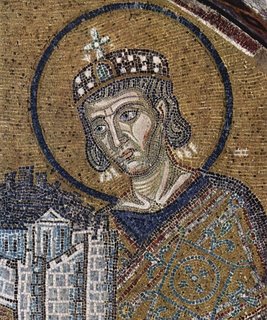
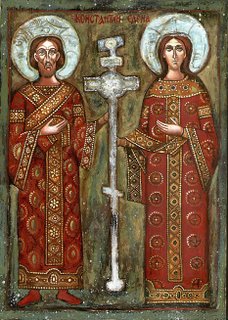 Flavius Valerius Aurelius Constantinus served as Roman Emperor from AD 306 to 337. During his reign the persecution of Christians was forbidden by the Edict of Milan in 313. Ultimately, the faith gained full imperial support.
Constantine took an active interest in the life and teachings of the church. He called the First Council of Nicaea in 325 at which Saint Athanasius and others defended and defined orthodox Christianity. Among the fruits of this council was one of Christendom's major confessions of faith, the Nicene Creed.
Some argue that Constantine may not have been true believer since he wasn't baptized until his death bed. However, he actively supported Christianity in his later life and even preached upon occasion. Other scholars speculate that he delayed baptism for the same reason as did many others during portions of the Church's history, that of a general misunderstanding of Holy Baptism.
 Many theologians spoke of the need for "satisfaction" — making amends for sins committed during one's life — and warned about time that would be spent in Purgatory by those who didn't make full satisfaction while still living. Indeed, some even taught that unless proper penance was done, one might find himself forever barred from Heaven!
Since Baptism truly washes away all sin — both that of our birth nature and any transgressions committed later — some thought the best way to avoid Purgatory (or Hell) was to be baptized when one was at death's door. In so doing, people believed that there would be no unrepented, unsatisfied sins remaining that would leave one waiting for eternal bliss or forever denied its blessings.
I'll not argue here the reasons why Lutherans reject the notion of satisfaction or the idea of Purgatory. I'll merely say that if Constantine had such worries, he wasn't alone during his day, and his decision to delay would be understandable in light of such teaching.
Saint Helena, ca. AD 255-329
Constantine's mother Helena strongly influenced her son throughout his life. Her great interest in locating the holy sites of the Christian faith led her to become one of the first Christian pilgrims to the Holy Land. Her research led to the identification of Biblical locations in Jerusalem, Bethlehem, and beyond, which are still maintained as places of worship today. One of Christianity's annual festivals, Holy Cross Day, has its origin in her explorations of Palestine.
Collects
O Lord, our God, King of the universe, who raises up earthly rulers to work Your will in this life, You called Constantine to the imperial throne and ended wide-spread persecution of Your Son's Church; grant that as he served You by fulfilling his vocation, so we would continue to receive from You rulers who allow the Church to proclaim the saving Gospel of Your Son, Jesus Christ, our Lord, who lives and reigns with You and the Holy Spirit, one God, now and forever.
Almighty God, who called your servant Helena to an earthly position of authority so that she might advance your heavenly kingdom, filling her with zeal for your Church and love for Your people, grant that we may be fruitful in good works and steadfast in our faith in Your Son, and finally by your mercy attain everlasting life; through Jesus Christ our Lord, who lives and reigns with you and the Holy Spirit, one God, now and forever.


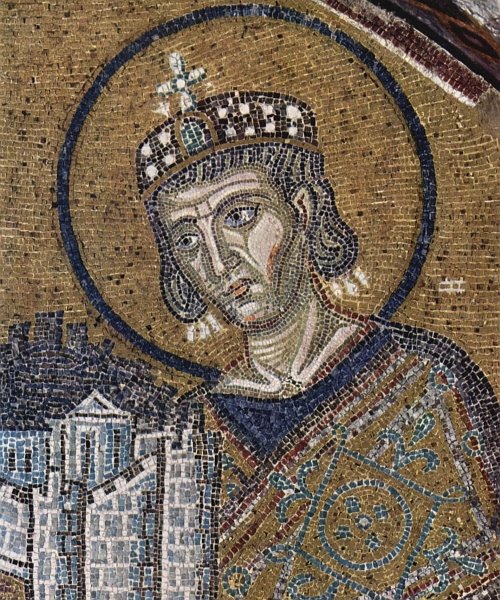
 Flavius Valerius Aurelius Constantinus served as Roman Emperor from AD 306 to 337. During his reign the persecution of Christians was forbidden by the Edict of Milan in 313. Ultimately, the faith gained full imperial support.
Constantine took an active interest in the life and teachings of the church. He called the First Council of Nicaea in 325 at which Saint Athanasius and others defended and defined orthodox Christianity. Among the fruits of this council was one of Christendom's major confessions of faith, the Nicene Creed.
Some argue that Constantine may not have been true believer since he wasn't baptized until his death bed. However, he actively supported Christianity in his later life and even preached upon occasion. Other scholars speculate that he delayed baptism for the same reason as did many others during portions of the Church's history, that of a general misunderstanding of Holy Baptism.
 Many theologians spoke of the need for "satisfaction" — making amends for sins committed during one's life — and warned about time that would be spent in Purgatory by those who didn't make full satisfaction while still living. Indeed, some even taught that unless proper penance was done, one might find himself forever barred from Heaven!
Since Baptism truly washes away all sin — both that of our birth nature and any transgressions committed later — some thought the best way to avoid Purgatory (or Hell) was to be baptized when one was at death's door. In so doing, people believed that there would be no unrepented, unsatisfied sins remaining that would leave one waiting for eternal bliss or forever denied its blessings.
I'll not argue here the reasons why Lutherans reject the notion of satisfaction or the idea of Purgatory. I'll merely say that if Constantine had such worries, he wasn't alone during his day, and his decision to delay would be understandable in light of such teaching.
Saint Helena, ca. AD 255-329
Constantine's mother Helena strongly influenced her son throughout his life. Her great interest in locating the holy sites of the Christian faith led her to become one of the first Christian pilgrims to the Holy Land. Her research led to the identification of Biblical locations in Jerusalem, Bethlehem, and beyond, which are still maintained as places of worship today. One of Christianity's annual festivals, Holy Cross Day, has its origin in her explorations of Palestine.
Collects
O Lord, our God, King of the universe, who raises up earthly rulers to work Your will in this life, You called Constantine to the imperial throne and ended wide-spread persecution of Your Son's Church; grant that as he served You by fulfilling his vocation, so we would continue to receive from You rulers who allow the Church to proclaim the saving Gospel of Your Son, Jesus Christ, our Lord, who lives and reigns with You and the Holy Spirit, one God, now and forever.
Almighty God, who called your servant Helena to an earthly position of authority so that she might advance your heavenly kingdom, filling her with zeal for your Church and love for Your people, grant that we may be fruitful in good works and steadfast in our faith in Your Son, and finally by your mercy attain everlasting life; through Jesus Christ our Lord, who lives and reigns with you and the Holy Spirit, one God, now and forever.
Labels: athanasius, biography, church history, commemoration, constantine, edict of milan, european history, hagiography, helena, holy cross, nicaea, nicene creed, patristics, roman empire
¶ 00:00 | 0 comments |
14 September 2016
Holy Cross Day
14 September AD 335
 During the reign of Constantine the Great, the first Roman Emperor to profess the Christian faith, his mother Helena went to Israel, hoping to find the places especially significant to Christians. Having located, close together, what she believed to be the sites of the Crucifixion and of the Burial (at locations that many modern archaeologists think may be correct), she then had built over them the Church of the Holy Sepulcher, which was dedicated on 13 September 335.
On the next day, the purported section of the cross was brought outside the church for others to view. Thus began a day for recognizing the cross of Christ in a festal atmosphere that would be inappropriate on Good Friday. It stands as a symbol of triumph, as a sign of Christ's victory over death, and a reminder of His promise, "And I, when I am lifted up from the earth, will draw all people to myself. (John 12:32)"
The day is known by different names in various parts of Christendom. The Eastern Orthodox and Eastern Rite Catholic Churches know it as "Feast of the Exaltation of the Cross" while the Latin Rite of the Roman Catholic Church calls it the "Triumph of the Cross." Most other liturgical churches simply call it "Holy Cross Day."
 The Christian custom of tracing the sign of the cross on people and things as a sign of blessing is very old. Some think that it goes back to the very origins of Christianity and earlier. In Ezekiel 9, we read that Ezekiel had a vision of the throne-room of God, in which an angel was sent to go through Jerusalem and put a mark on the foreheads of the faithful few who mourned for the sins of the city. Afterwards, other angels were sent through the city to destroy all those who had not the mark.
We find similar visionary material in Revelation 7:2-4; 9:4; and 14:1, where the mark on the forehead again protects the faithful few in the day of wrath. There, it is said to be the name of the Lamb and of His Father.
What is the significance of the sign of the cross? In the first place, we often place our initials or other personal mark on something to show that it belongs to us. The cross is the personal mark of Our Lord Jesus Christ, often traced upon our foreheads and hearts at our baptisms. We mark it on ourselves as a sign that we belong to Him, just as in the book of Revelation, as noted above, the servants of God are sealed or marked on their foreheads as a sign that they are His.
One pastor noted that, if you were telling someone how to make a cross, you might say, "Draw an 'I' and then cross it out." As we make the sign, we first draw a vertical stroke, as if to say to God, "Lord, here am I." Then we cancel it with a horizontal stroke, as if to say, "Help me, Lord, to abandon my self-centeredness and self-will; make Yourself the center of my life instead. Fix all my attention and all my desire on You, Lord, that I may forget my self, cancel my self, abandon myself completely to Your love and service."
Lection
Psalm 40:1-11
Numbers 21:4-9
1 Corinthians 1:18-25
John 12:20-33
Collect of the Day
Merciful God, Your Son, Jesus Christ, was lifted high upon the cross that He might bear the sins of the world and draw all people to Himself. Grant that we who glory in His death for our redemption may faithfully heed His call to bear the cross and follow Him, who lives and reigns with You and the Holy Spirit, one God, now and forever.
 During the reign of Constantine the Great, the first Roman Emperor to profess the Christian faith, his mother Helena went to Israel, hoping to find the places especially significant to Christians. Having located, close together, what she believed to be the sites of the Crucifixion and of the Burial (at locations that many modern archaeologists think may be correct), she then had built over them the Church of the Holy Sepulcher, which was dedicated on 13 September 335.
On the next day, the purported section of the cross was brought outside the church for others to view. Thus began a day for recognizing the cross of Christ in a festal atmosphere that would be inappropriate on Good Friday. It stands as a symbol of triumph, as a sign of Christ's victory over death, and a reminder of His promise, "And I, when I am lifted up from the earth, will draw all people to myself. (John 12:32)"
The day is known by different names in various parts of Christendom. The Eastern Orthodox and Eastern Rite Catholic Churches know it as "Feast of the Exaltation of the Cross" while the Latin Rite of the Roman Catholic Church calls it the "Triumph of the Cross." Most other liturgical churches simply call it "Holy Cross Day."
 The Christian custom of tracing the sign of the cross on people and things as a sign of blessing is very old. Some think that it goes back to the very origins of Christianity and earlier. In Ezekiel 9, we read that Ezekiel had a vision of the throne-room of God, in which an angel was sent to go through Jerusalem and put a mark on the foreheads of the faithful few who mourned for the sins of the city. Afterwards, other angels were sent through the city to destroy all those who had not the mark.
We find similar visionary material in Revelation 7:2-4; 9:4; and 14:1, where the mark on the forehead again protects the faithful few in the day of wrath. There, it is said to be the name of the Lamb and of His Father.
What is the significance of the sign of the cross? In the first place, we often place our initials or other personal mark on something to show that it belongs to us. The cross is the personal mark of Our Lord Jesus Christ, often traced upon our foreheads and hearts at our baptisms. We mark it on ourselves as a sign that we belong to Him, just as in the book of Revelation, as noted above, the servants of God are sealed or marked on their foreheads as a sign that they are His.
One pastor noted that, if you were telling someone how to make a cross, you might say, "Draw an 'I' and then cross it out." As we make the sign, we first draw a vertical stroke, as if to say to God, "Lord, here am I." Then we cancel it with a horizontal stroke, as if to say, "Help me, Lord, to abandon my self-centeredness and self-will; make Yourself the center of my life instead. Fix all my attention and all my desire on You, Lord, that I may forget my self, cancel my self, abandon myself completely to Your love and service."
Lection
Psalm 40:1-11
Numbers 21:4-9
1 Corinthians 1:18-25
John 12:20-33
Collect of the Day
Merciful God, Your Son, Jesus Christ, was lifted high upon the cross that He might bear the sins of the world and draw all people to Himself. Grant that we who glory in His death for our redemption may faithfully heed His call to bear the cross and follow Him, who lives and reigns with You and the Holy Spirit, one God, now and forever.
Labels: christianity, christology, church history, constantine, crucifixion, feasts, festivals, good friday, helena, holy cross
¶ 00:00 | 0 comments |
21 May 2016
+ Constantine the Great and Helena +
Emperor Constantine, 21 May AD 337
Flavius Valerius Aurelius Constantinus served as Roman Emperor from AD 306 to 337. During his reign the persecution of Christians was forbidden by the Edict of Milan in 313. Ultimately, the faith gained full imperial support.
Constantine took an active interest in the life and teachings of the church and. He called the First Council of Nicaea in 325 at which Saint Athanasius and others defended and defined orthodox Christianity. Among the fruits of this council was one of Christendom's major confessions of faith, the Nicene Creed.
Some argue that Constantine may not have been true believer since he wasn't baptized until his death bed. However, he actively supported Christianity in his later life and even preached upon occasion. Other scholars speculate that he delayed baptism for the same reason as did many others during portions of the Church's history, that of a general misunderstanding of Holy Baptism.
Many theologians spoke of the need for "satisfaction" — making amends for sins committed during one's life — and warned about time that would be spent in Purgatory by those who didn't make full satisfaction while still living. Indeed, some even taught that unless proper penance was done, one might find himself forever barred from Heaven!
Since Baptism truly washes away all sin — both that of our birth nature and any transgressions committed later — some thought the best way to avoid Purgatory (or Hell) was to be baptized when one was at death's door. In so doing, people believed that there would be no unrepented, unsatisfied sins remaining that would leave one waiting for eternal bliss or forever denied its blessings.
I'll not argue here the reasons why Lutherans reject the notion of satisfaction or the idea of Purgatory. I'll merely say that if Constantine had such worries, he wasn't alone during his day, and his decision to delay would be understandable in light of such teaching.
Saint Helena, ca. AD 255-329
Constantine's mother Helena strongly influenced her son throughout his life. Her great interest in locating the holy sites of the Christian faith led her to become one of the first Christian pilgrims to the Holy Land. Her research led to the identification of Biblical locations in Jerusalem, Bethlehem, and beyond, which are still maintained as places of worship today. One of Christianity's annual festivals, Holy Cross Day, has its origin in her explorations of Palestine.
Collects
O Lord, our God, King of the universe, who raises up earthly rulers to work Your will in this life, You called Constantine to the imperial throne and ended wide-spread persecution of Your Son's Church; grant that as he served You by fulfilling his vocation, so we would continue to receive from You rulers who allow the Church to proclaim the saving Gospel of Your Son, Jesus Christ, our Lord, who lives and reigns with You and the Holy Spirit, one God, now and forever.
Almighty God, who called your servant Helena to an earthly position of authority so that she might advance your heavenly kingdom, filling her with zeal for your Church and love for Your people, grant that we may be fruitful in good works and steadfast in our faith in Your Son, and finally by your mercy attain everlasting life; through Jesus Christ our Lord, who lives and reigns with you and the Holy Spirit, one God, now and forever.
Flavius Valerius Aurelius Constantinus served as Roman Emperor from AD 306 to 337. During his reign the persecution of Christians was forbidden by the Edict of Milan in 313. Ultimately, the faith gained full imperial support.Constantine took an active interest in the life and teachings of the church and. He called the First Council of Nicaea in 325 at which Saint Athanasius and others defended and defined orthodox Christianity. Among the fruits of this council was one of Christendom's major confessions of faith, the Nicene Creed.
Some argue that Constantine may not have been true believer since he wasn't baptized until his death bed. However, he actively supported Christianity in his later life and even preached upon occasion. Other scholars speculate that he delayed baptism for the same reason as did many others during portions of the Church's history, that of a general misunderstanding of Holy Baptism.
Many theologians spoke of the need for "satisfaction" — making amends for sins committed during one's life — and warned about time that would be spent in Purgatory by those who didn't make full satisfaction while still living. Indeed, some even taught that unless proper penance was done, one might find himself forever barred from Heaven!Since Baptism truly washes away all sin — both that of our birth nature and any transgressions committed later — some thought the best way to avoid Purgatory (or Hell) was to be baptized when one was at death's door. In so doing, people believed that there would be no unrepented, unsatisfied sins remaining that would leave one waiting for eternal bliss or forever denied its blessings.
I'll not argue here the reasons why Lutherans reject the notion of satisfaction or the idea of Purgatory. I'll merely say that if Constantine had such worries, he wasn't alone during his day, and his decision to delay would be understandable in light of such teaching.
Saint Helena, ca. AD 255-329
Constantine's mother Helena strongly influenced her son throughout his life. Her great interest in locating the holy sites of the Christian faith led her to become one of the first Christian pilgrims to the Holy Land. Her research led to the identification of Biblical locations in Jerusalem, Bethlehem, and beyond, which are still maintained as places of worship today. One of Christianity's annual festivals, Holy Cross Day, has its origin in her explorations of Palestine.
Collects
O Lord, our God, King of the universe, who raises up earthly rulers to work Your will in this life, You called Constantine to the imperial throne and ended wide-spread persecution of Your Son's Church; grant that as he served You by fulfilling his vocation, so we would continue to receive from You rulers who allow the Church to proclaim the saving Gospel of Your Son, Jesus Christ, our Lord, who lives and reigns with You and the Holy Spirit, one God, now and forever.
Almighty God, who called your servant Helena to an earthly position of authority so that she might advance your heavenly kingdom, filling her with zeal for your Church and love for Your people, grant that we may be fruitful in good works and steadfast in our faith in Your Son, and finally by your mercy attain everlasting life; through Jesus Christ our Lord, who lives and reigns with you and the Holy Spirit, one God, now and forever.
Labels: athanasius, biography, church history, commemoration, constantine, edict of milan, european history, hagiography, helena, holy cross, nicaea, nicene creed, patristics, roman empire
¶ 00:00 | 0 comments |
14 September 2015
Holy Cross Day
14 September AD 335
During the reign of Constantine the Great, the first Roman Emperor to profess the Christian faith, his mother Helena went to Israel, hoping to find the places especially significant to Christians. Having located, close together, what she believed to be the sites of the Crucifixion and of the Burial (at locations that many modern archaeologists think may be correct), she then had built over them the Church of the Holy Sepulcher, which was dedicated on 13 September 335.
On the next day, the purported section of the cross was brought outside the church for others to view. Thus began a day for recognizing the cross of Christ in a festal atmosphere that would be inappropriate on Good Friday. It stands as a symbol of triumph, as a sign of Christ's victory over death, and a reminder of His promise, "And I, when I am lifted up from the earth, will draw all people to myself. (John 12:32)"
The day is known by different names in various parts of Christendom. The Eastern Orthodox and Eastern Rite Catholic Churches know it as "Feast of the Exaltation of the Cross" while the Latin Rite of the Roman Catholic Church calls it the "Triumph of the Cross." Most other liturgical churches simply call it "Holy Cross Day."
The Christian custom of tracing the sign of the cross on people and things as a sign of blessing is very old. Some think that it goes back to the very origins of Christianity and earlier. In Ezekiel 9, we read that Ezekiel had a vision of the throne-room of God, in which an angel was sent to go through Jerusalem and put a mark on the foreheads of the faithful few who mourned for the sins of the city. Afterwards, other angels were sent through the city to destroy all those who had not the mark.
We find similar visionary material in Revelation 7:2-4; 9:4; and 14:1, where the mark on the forehead again protects the faithful few in the day of wrath. There, it is said to be the name of the Lamb and of His Father.
What is the significance of the sign of the cross? In the first place, we often place our initials or other personal mark on something to show that it belongs to us. The cross is the personal mark of Our Lord Jesus Christ, often traced upon our foreheads and hearts at our baptisms. We mark it on ourselves as a sign that we belong to Him, just as in the book of Revelation, as noted above, the servants of God are sealed or marked on their foreheads as a sign that they are His.
One pastor noted that, if you were telling someone how to make a cross, you might say, "Draw an 'I' and then cross it out." As we make the sign, we first draw a vertical stroke, as if to say to God, "Lord, here am I." Then we cancel it with a horizontal stroke, as if to say, "Help me, Lord, to abandon my self-centeredness and self-will; make Yourself the center of my life instead. Fix all my attention and all my desire on You, Lord, that I may forget my self, cancel my self, abandon myself completely to Your love and service."
Lection
Psalm 40:1-11
Numbers 21:4-9
1 Corinthians 1:18-25
John 12:20-33
Collect of the Day
Merciful God, Your Son, Jesus Christ, was lifted high upon the cross that He might bear the sins of the world and draw all people to Himself. Grant that we who glory in His death for our redemption may faithfully heed His call to bear the cross and follow Him, who lives and reigns with You and the Holy Spirit, one God, now and forever.
During the reign of Constantine the Great, the first Roman Emperor to profess the Christian faith, his mother Helena went to Israel, hoping to find the places especially significant to Christians. Having located, close together, what she believed to be the sites of the Crucifixion and of the Burial (at locations that many modern archaeologists think may be correct), she then had built over them the Church of the Holy Sepulcher, which was dedicated on 13 September 335.On the next day, the purported section of the cross was brought outside the church for others to view. Thus began a day for recognizing the cross of Christ in a festal atmosphere that would be inappropriate on Good Friday. It stands as a symbol of triumph, as a sign of Christ's victory over death, and a reminder of His promise, "And I, when I am lifted up from the earth, will draw all people to myself. (John 12:32)"
The day is known by different names in various parts of Christendom. The Eastern Orthodox and Eastern Rite Catholic Churches know it as "Feast of the Exaltation of the Cross" while the Latin Rite of the Roman Catholic Church calls it the "Triumph of the Cross." Most other liturgical churches simply call it "Holy Cross Day."
The Christian custom of tracing the sign of the cross on people and things as a sign of blessing is very old. Some think that it goes back to the very origins of Christianity and earlier. In Ezekiel 9, we read that Ezekiel had a vision of the throne-room of God, in which an angel was sent to go through Jerusalem and put a mark on the foreheads of the faithful few who mourned for the sins of the city. Afterwards, other angels were sent through the city to destroy all those who had not the mark.We find similar visionary material in Revelation 7:2-4; 9:4; and 14:1, where the mark on the forehead again protects the faithful few in the day of wrath. There, it is said to be the name of the Lamb and of His Father.
What is the significance of the sign of the cross? In the first place, we often place our initials or other personal mark on something to show that it belongs to us. The cross is the personal mark of Our Lord Jesus Christ, often traced upon our foreheads and hearts at our baptisms. We mark it on ourselves as a sign that we belong to Him, just as in the book of Revelation, as noted above, the servants of God are sealed or marked on their foreheads as a sign that they are His.
One pastor noted that, if you were telling someone how to make a cross, you might say, "Draw an 'I' and then cross it out." As we make the sign, we first draw a vertical stroke, as if to say to God, "Lord, here am I." Then we cancel it with a horizontal stroke, as if to say, "Help me, Lord, to abandon my self-centeredness and self-will; make Yourself the center of my life instead. Fix all my attention and all my desire on You, Lord, that I may forget my self, cancel my self, abandon myself completely to Your love and service."
Lection
Psalm 40:1-11
Numbers 21:4-9
1 Corinthians 1:18-25
John 12:20-33
Collect of the Day
Merciful God, Your Son, Jesus Christ, was lifted high upon the cross that He might bear the sins of the world and draw all people to Himself. Grant that we who glory in His death for our redemption may faithfully heed His call to bear the cross and follow Him, who lives and reigns with You and the Holy Spirit, one God, now and forever.
Labels: christianity, church history, constantine, crucifixion, feasts, festivals, helena, holy cross
¶ 00:00 | 0 comments |


