Aardvark Alley

Confessional Lutheran theology, hagiography, philosophy, music, culture, sports, education,
and whatever else is on the fevered mind of Orycteropus Afer
26 February 2017
+ David Chytraeus +
Born 26 February AD 1530; transferred from 25 June
 David Chytraeus (Chyträus) was born in Ingelfingen, Württemberg on 26 February 1531 to Matthew and Barbara Kochhafe. Kochhafe (German) and χυτρα (Greek) both mean "cook pot" and Chytraeus is a Latinized form of the Greek. It was common at that time for men to take Greek names after becoming noted scholars and young David achieved that status rather quickly.
Around the age of eight or nine, he began to study law, philology, philosophy, and theology at the University of Tübingen. By fourteen, he already held his master's degree and decided to move to Wittenberg in order to study under Philipp Melanchthon and Martin Luther. He became a favorite student of Melanchthon and boarded with him for much of his time there. He also gave great credit for his theological formation to Luther's lectures on Genesis and his sermons.
In 1551, Duke Heinrich V and Duke Johann Albrecht I of Mecklenburg offered him a teaching position at the University of Rostock. The university became his home and he spurned nine subsequent invitations to academic positions elsewhere. His earliest lectures were on classical Greek literature, concerning the works of the historians Herodotus and Thucydides. He began lectures on both the Old and the New Testament in 1553 although he didn't earn his Doctor of Theology until 29 April 1561.
Chytraeus married Margaretha Smedes in 1553. Of their seven children, only two daughters reached adulthood. Margaretha died in 1571 and he married Margaretha Pegel the following year. She bore him two sons, Ulrich and David. Chytraeus was known as a faithful husband and loving father. Doubtless this attitude and behavior was tested by the trials of losing wife and children and his own illnesses but the Lord certainly preserved and strengthened him through the Gospel and taught him a depth of understanding for the Theology of the Cross.
 Most of Chytraeus's adult life corresponded with the flux in Evangelical (Lutheran) theology following the Reformer's death in 1546. Like Martin Chemnitz and other centrists, he appreciated the unswerving confession of the Gnesio-Lutherans on the right but also embraced a more irenic attitude, resembling that of Melanchthon. However, we find no evidence that he ever was tempted à la Melanchthon to surrender key doctrinal points in order to achieve a surface agreement among church factions.
Because of his intellect and his positions in time, geography, and theology, Chytraeus became actively involved in events leading to the development and adoption of the Formula of Concord. In 1574, he completely rewrote the articles on Free will and the Lord's Supper from the Swabian Concord. This work was integrated with the Maulbronn Formula and led to the 1576 Torgau Book. While he completely approved of this confession, he saw it transformed over the next year into the Bergic Book, our present-day Formula of Concord. While he was uncomfortable with the vehemence of some of this book's statements, he still considered it a true and orthodox exposition of Scripture and Luther's teachings and signed it as one of the six theologian co-authors.
While Chytraeus wrote many books, only few have been translated. Two are available through Repristination Press, A Summary of the Christian Faith (translated by Richard Dinda) and On Sacrifice (translated by John Warwick Montgomery).
Generally heralded as "The last of the fathers of the Lutheran Church," David Chytraeus entered eternal rest on 25 June 1600, the 70th anniversary of the Presentation of the Augsburg Confession. Because of this date conflict and since the following several days are occupied on the LCMS sanctorial calendar, I've chosen to commemorate him on his birthday.
Jack Kilcrease posted a brief apologetic, David Chytraeus' Proof of Christian Teaching at Theologia Crucis. Biographical references: Nathaniel Biebert at Studium Excitare, the Christian Cyclopedia, and Wikipedia.


David Chytraeus (Chyträus) was born in Ingelfingen, Württemberg on 26 February 1531 to Matthew and Barbara Kochhafe. Kochhafe (German) and χυτρα (Greek) both mean "cook pot" and Chytraeus is a Latinized form of the Greek. It was common at that time for men to take Greek names after becoming noted scholars and young David achieved that status rather quickly.Around the age of eight or nine, he began to study law, philology, philosophy, and theology at the University of Tübingen. By fourteen, he already held his master's degree and decided to move to Wittenberg in order to study under Philipp Melanchthon and Martin Luther. He became a favorite student of Melanchthon and boarded with him for much of his time there. He also gave great credit for his theological formation to Luther's lectures on Genesis and his sermons.
In 1551, Duke Heinrich V and Duke Johann Albrecht I of Mecklenburg offered him a teaching position at the University of Rostock. The university became his home and he spurned nine subsequent invitations to academic positions elsewhere. His earliest lectures were on classical Greek literature, concerning the works of the historians Herodotus and Thucydides. He began lectures on both the Old and the New Testament in 1553 although he didn't earn his Doctor of Theology until 29 April 1561.
Chytraeus married Margaretha Smedes in 1553. Of their seven children, only two daughters reached adulthood. Margaretha died in 1571 and he married Margaretha Pegel the following year. She bore him two sons, Ulrich and David. Chytraeus was known as a faithful husband and loving father. Doubtless this attitude and behavior was tested by the trials of losing wife and children and his own illnesses but the Lord certainly preserved and strengthened him through the Gospel and taught him a depth of understanding for the Theology of the Cross.
Most of Chytraeus's adult life corresponded with the flux in Evangelical (Lutheran) theology following the Reformer's death in 1546. Like Martin Chemnitz and other centrists, he appreciated the unswerving confession of the Gnesio-Lutherans on the right but also embraced a more irenic attitude, resembling that of Melanchthon. However, we find no evidence that he ever was tempted à la Melanchthon to surrender key doctrinal points in order to achieve a surface agreement among church factions.Because of his intellect and his positions in time, geography, and theology, Chytraeus became actively involved in events leading to the development and adoption of the Formula of Concord. In 1574, he completely rewrote the articles on Free will and the Lord's Supper from the Swabian Concord. This work was integrated with the Maulbronn Formula and led to the 1576 Torgau Book. While he completely approved of this confession, he saw it transformed over the next year into the Bergic Book, our present-day Formula of Concord. While he was uncomfortable with the vehemence of some of this book's statements, he still considered it a true and orthodox exposition of Scripture and Luther's teachings and signed it as one of the six theologian co-authors.
While Chytraeus wrote many books, only few have been translated. Two are available through Repristination Press, A Summary of the Christian Faith (translated by Richard Dinda) and On Sacrifice (translated by John Warwick Montgomery).
Generally heralded as "The last of the fathers of the Lutheran Church," David Chytraeus entered eternal rest on 25 June 1600, the 70th anniversary of the Presentation of the Augsburg Confession. Because of this date conflict and since the following several days are occupied on the LCMS sanctorial calendar, I've chosen to commemorate him on his birthday.
Jack Kilcrease posted a brief apologetic, David Chytraeus' Proof of Christian Teaching at Theologia Crucis. Biographical references: Nathaniel Biebert at Studium Excitare, the Christian Cyclopedia, and Wikipedia.
Labels: biography, book of concord, commemoration, formula of concord, hagiography, lutheran confessions, lutheransim, martin chemnitz, melanchthon, theology
¶ 00:00 | 0 comments |
07 January 2017
+ Jakob Andreae, Theologian +
7 January AD 1590
 Born 25 March 1528 to blacksmith Jakob Endriß and his wife Anna (née Weißkopf) in Waiblingen in the dukedom of Württemberg, Jakob Andreae (also Andreæ or Andreä) came from a family seemingly too poor to support any higher education. However, it was his good fortune to come of age at a time when Duke Ulrich began Evangelical reform in the duchy. Württemberg's mayor, aware of the young man's potential, procured for him a ducal scholarship.
In 1539 Andreae attended a preparatory school in Stuttgart, and two years later he entered the University of Tübingen — at the tender age of thirteen years. In 1545 he began his study of theology under the Tübingen faculty. He stayed only briefly. Württemberg was critically short of pastors and he was placed in the parish after one year of study. His enemies found ample ammunition for their opposition of him due in part to his arrested academic career.
The religious sea change that Martin Luther began with the German Reformation had spread through Europe. In many parts of the continent, the changes went much deeper than did those of the Lutherans. New ways of thinking and of doing theology led to new sects and confessions within Christendom. With all the change around them, some Lutherans began following other ways of thinking, although many remained orthodox followers of Luther.
The signing of the Augsburg Confession in 1530 appeared to signal full doctrinal consent among the Lutherans but agreement was brief. The interpretation of the Scriptures and the roles of the Augsburg Confession, its Apology, the Smalcald Articles, and the Catechisms became controverted. While Philipp Melanchthon and others were already altering the Confessions to suit their shifting interpretations of Scripture, Luther's death in 1546 hastened Lutheran disunity. Into the turmoil of the middle and latter Sixteenth Century stepped Jakob Andreae.
 Andreae began this time in theology's public sphere with the intention of conciliation among Protestant Christianity. Yet even at his most irenic, Andreae never forsook fidelity to orthodox Lutheranism. Convinced that it was God's will that the Church would be one (cf. John 17:11-12, 20-23), he sought to reach out to those outside the Lutheran party while also challenging errorists within. The hardliners among the Gnesio-Lutherans unswervingly believed that anyone teaching falsely deserved immediate and absolute condemnation.
This caught Andreae in a bind: He could continue his gentle methods in dealing with errorists, including John Calvin and invite the wrath of the staunchest Lutherans or he could be more forceful with the false teachers and alienate them completely from Luther's heirs.
The actions of others finally led him to give up hope of full unity. A 1570 meeting of theologians in Zerbst in agreed to espouse unity based upon the Augsburg Confession, the Apology, the Smalcald Articles, and the Catechisms. Initially elated with the agreement, Andreae soon saw the Wittenberg theologians qualifying their confessional subscription according to Melanchthon's revisions. This was followed by a series of Crypto-Calvinist reinterpretations of the Lutheran Confessions and led Andreae to realize that it would be impossible to build and maintain a truly Lutheran Electoral Saxony with such errorists in place.
With the entire spectrum of Germanic Protestantism calling upon the Augsburg Confession to support wildly contradictory theological positions, Andreae began arguing for a new confession around which true Lutherans could gather and which could be used to screen and reject errorists. Need for such a confession became even more apparent after Andreae visited Wittenberg and discovered for himself the depth of their Christological differences and found that on their home turf, these theologians had no interest in the unity he desired.
Finding himself stymied by these least Lutheran Protestants, Andreae turned his attention to those who still wanted to fully follow the reforms and the theology of Luther. He finally took of the gloves and started forceful condemnation of the Philippists and Crypto-Calvinists through the series Six Christian Sermons. Martin Chemnitz, David Chytraeus, and others read the copies sent them by Andreae, which asked that the sermons be used as the basis of the new confession. While they agreed with Andreae's theology, they didn't think that sermons were the proper means of making a confessional statement. They asked instead for a thesis-antithesis form.
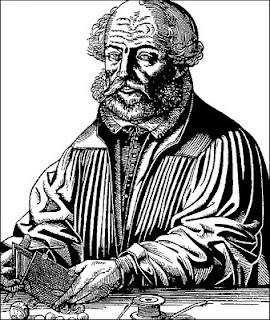 Andreae responded by writing the Swabian Concord, built on the foundation of his Six Sermons. The finished document became the first draft of the Formula of Concord. After Chemnitz and Chytraeus read the document, they worked it into a revision known as the Swabian-Saxon Concord. Into this was assimilated Württemberg's Maulbronn Formula. Next came the Torgic Book, followed by the Bergic Book, developed in the years 1576-1577. The Bergic Book became the Solid Declaration of the Formula of Concord.
The Formula was included in the Book of Concord, which was published on 25 June 1580, the fiftieth anniversary of the presentation of the Augsburg Confession. Included with the Solid Declaration was the Formula's Epitome, the Augsburg Confession, the Apology, the Smalcald Articles, the Treatise on the Power and Primacy of the Pope, Luther's Catechisms, and the three Ecumenical Creeds. Finally, German Lutheranism had the theological consensus which Andreae had so long desired.
Andreae's efforts for church unity based on doctrinal agreement didn't end with the Formula of Concord. In his later years, he continued to espouse pure Lutheran theology and to oppose all who denied or compromised it. This included his 1586 debate on the ubiquity of Christ with Calvinist theologian Theodore de Beza in Mömpelgard, Württemberg (now Montbéliard, France).
In addition to his tireless work on behalf of Lutheran unity, Jakob Andreae also found time for a large family. He married Anna Entringer in Tübingen in June 1546. She bore him twenty children between 1547 and 1579. Of these, eleven reached adulthood. Anna died in 1583. In 1585, he married Regensburg widow Regina Reitter, nee Schachner. Andreae died on 7 January 1590, followed 2 ½ years later by Regina.
 Born 25 March 1528 to blacksmith Jakob Endriß and his wife Anna (née Weißkopf) in Waiblingen in the dukedom of Württemberg, Jakob Andreae (also Andreæ or Andreä) came from a family seemingly too poor to support any higher education. However, it was his good fortune to come of age at a time when Duke Ulrich began Evangelical reform in the duchy. Württemberg's mayor, aware of the young man's potential, procured for him a ducal scholarship.
In 1539 Andreae attended a preparatory school in Stuttgart, and two years later he entered the University of Tübingen — at the tender age of thirteen years. In 1545 he began his study of theology under the Tübingen faculty. He stayed only briefly. Württemberg was critically short of pastors and he was placed in the parish after one year of study. His enemies found ample ammunition for their opposition of him due in part to his arrested academic career.
The religious sea change that Martin Luther began with the German Reformation had spread through Europe. In many parts of the continent, the changes went much deeper than did those of the Lutherans. New ways of thinking and of doing theology led to new sects and confessions within Christendom. With all the change around them, some Lutherans began following other ways of thinking, although many remained orthodox followers of Luther.
The signing of the Augsburg Confession in 1530 appeared to signal full doctrinal consent among the Lutherans but agreement was brief. The interpretation of the Scriptures and the roles of the Augsburg Confession, its Apology, the Smalcald Articles, and the Catechisms became controverted. While Philipp Melanchthon and others were already altering the Confessions to suit their shifting interpretations of Scripture, Luther's death in 1546 hastened Lutheran disunity. Into the turmoil of the middle and latter Sixteenth Century stepped Jakob Andreae.
 Andreae began this time in theology's public sphere with the intention of conciliation among Protestant Christianity. Yet even at his most irenic, Andreae never forsook fidelity to orthodox Lutheranism. Convinced that it was God's will that the Church would be one (cf. John 17:11-12, 20-23), he sought to reach out to those outside the Lutheran party while also challenging errorists within. The hardliners among the Gnesio-Lutherans unswervingly believed that anyone teaching falsely deserved immediate and absolute condemnation.
This caught Andreae in a bind: He could continue his gentle methods in dealing with errorists, including John Calvin and invite the wrath of the staunchest Lutherans or he could be more forceful with the false teachers and alienate them completely from Luther's heirs.
The actions of others finally led him to give up hope of full unity. A 1570 meeting of theologians in Zerbst in agreed to espouse unity based upon the Augsburg Confession, the Apology, the Smalcald Articles, and the Catechisms. Initially elated with the agreement, Andreae soon saw the Wittenberg theologians qualifying their confessional subscription according to Melanchthon's revisions. This was followed by a series of Crypto-Calvinist reinterpretations of the Lutheran Confessions and led Andreae to realize that it would be impossible to build and maintain a truly Lutheran Electoral Saxony with such errorists in place.
With the entire spectrum of Germanic Protestantism calling upon the Augsburg Confession to support wildly contradictory theological positions, Andreae began arguing for a new confession around which true Lutherans could gather and which could be used to screen and reject errorists. Need for such a confession became even more apparent after Andreae visited Wittenberg and discovered for himself the depth of their Christological differences and found that on their home turf, these theologians had no interest in the unity he desired.
Finding himself stymied by these least Lutheran Protestants, Andreae turned his attention to those who still wanted to fully follow the reforms and the theology of Luther. He finally took of the gloves and started forceful condemnation of the Philippists and Crypto-Calvinists through the series Six Christian Sermons. Martin Chemnitz, David Chytraeus, and others read the copies sent them by Andreae, which asked that the sermons be used as the basis of the new confession. While they agreed with Andreae's theology, they didn't think that sermons were the proper means of making a confessional statement. They asked instead for a thesis-antithesis form.
 Andreae responded by writing the Swabian Concord, built on the foundation of his Six Sermons. The finished document became the first draft of the Formula of Concord. After Chemnitz and Chytraeus read the document, they worked it into a revision known as the Swabian-Saxon Concord. Into this was assimilated Württemberg's Maulbronn Formula. Next came the Torgic Book, followed by the Bergic Book, developed in the years 1576-1577. The Bergic Book became the Solid Declaration of the Formula of Concord.
The Formula was included in the Book of Concord, which was published on 25 June 1580, the fiftieth anniversary of the presentation of the Augsburg Confession. Included with the Solid Declaration was the Formula's Epitome, the Augsburg Confession, the Apology, the Smalcald Articles, the Treatise on the Power and Primacy of the Pope, Luther's Catechisms, and the three Ecumenical Creeds. Finally, German Lutheranism had the theological consensus which Andreae had so long desired.
Andreae's efforts for church unity based on doctrinal agreement didn't end with the Formula of Concord. In his later years, he continued to espouse pure Lutheran theology and to oppose all who denied or compromised it. This included his 1586 debate on the ubiquity of Christ with Calvinist theologian Theodore de Beza in Mömpelgard, Württemberg (now Montbéliard, France).
In addition to his tireless work on behalf of Lutheran unity, Jakob Andreae also found time for a large family. He married Anna Entringer in Tübingen in June 1546. She bore him twenty children between 1547 and 1579. Of these, eleven reached adulthood. Anna died in 1583. In 1585, he married Regensburg widow Regina Reitter, nee Schachner. Andreae died on 7 January 1590, followed 2 ½ years later by Regina.
Labels: book of concord, david chytraeus, formula of concord, german history, jakob andreae, lutheran confessions, lutheranism, martin chemnitz, melanchthon, reformation, theology
¶ 00:00 | 0 comments |
26 February 2016
+ David Chytraeus +
Born 26 February AD 1530; transferred from 25 June
David Chytraeus (Chyträus) was born in Ingelfingen, Württemberg on 26 February 1531 to Matthew and Barbara Kochhafe. Kochhafe (German) and χυτρα (Greek) both mean "cook pot" and Chytraeus is a Latinized form of the Greek. It was common at that time for men to take Greek names after becoming noted scholars and young David achieved that status rather quickly.
Around the age of eight or nine, he began to study law, philology, philosophy, and theology at the University of Tübingen. By fourteen, he already held his master's degree and decided to move to Wittenberg in order to study under Philipp Melanchthon and Martin Luther. He became a favorite student of Melanchthon and boarded with him for much of his time there. He also gave great credit for his theological formation to Luther's lectures on Genesis and his sermons.
In 1551, Duke Heinrich V and Duke Johann Albrecht I of Mecklenburg offered him a teaching position at the University of Rostock. The university became his home and he spurned nine subsequent invitations to academic positions elsewhere. His earliest lectures were on classical Greek literature, concerning the works of the historians Herodotus and Thucydides. He began lectures on both the Old and the New Testament in 1553 although he didn't earn his Doctor of Theology until 29 April 1561.
Chytraeus married Margaretha Smedes in 1553. Of their seven children, only two daughters reached adulthood. Margaretha died in 1571 and he married Margaretha Pegel the following year. She bore him two sons, Ulrich and David. Chytraeus was known as a faithful husband and loving father. Doubtless this attitude and behavior was tested by the trials of losing wife and children and his own illnesses but the Lord certainly preserved and strengthened him through the Gospel and taught him a depth of understanding for the Theology of the Cross.
Most of Chytraeus's adult life corresponded with the flux in Evangelical (Lutheran) theology following the Reformer's death in 1546. Like Martin Chemnitz and other centrists, he appreciated the unswerving confession of the Gnesio-Lutherans on the right but also embraced a more irenic attitude, resembling that of Melanchthon. However, we find no evidence that he ever was tempted à la Melanchthon to surrender key doctrinal points in order to achieve a surface agreement among church factions.
Because of his intellect and his positions in time, geography, and theology, Chytraeus became actively involved in events leading to the development and adoption of the Formula of Concord. In 1574, he completely rewrote the articles on Free will and the Lord's Supper from the Swabian Concord. This work was integrated with the Maulbronn Formula and led to the 1576 Torgau Book. While he completely approved of this confession, he saw it transformed over the next year into the Bergic Book, our present-day Formula of Concord. While he was uncomfortable with the vehemence of some of this book's statements, he still considered it a true and orthodox exposition of Scripture and Luther's teachings and signed it as one of the six theologian co-authors.
While Chytraeus wrote many books, only few have been translated. Two are available through Repristination Press, A Summary of the Christian Faith (translated by Richard Dinda) and On Sacrifice (translated by John Warwick Montgomery).
Generally heralded as "The last of the fathers of the Lutheran Church," David Chytraeus entered eternal rest on 25 June 1600, the 70th anniversary of the Presentation of the Augsburg Confession. Because of this date conflict and since the following several days are occupied on the LCMS sanctorial calendar, I've chosen to commemorate him on his birthday.
Jack Kilcrease posted a brief apologetic, David Chytraeus' Proof of Christian Teaching at Theologia Crucis. Biographical references: Nathaniel Biebert at Studium Excitare, the Christian Cyclopedia, and Wikipedia.
David Chytraeus (Chyträus) was born in Ingelfingen, Württemberg on 26 February 1531 to Matthew and Barbara Kochhafe. Kochhafe (German) and χυτρα (Greek) both mean "cook pot" and Chytraeus is a Latinized form of the Greek. It was common at that time for men to take Greek names after becoming noted scholars and young David achieved that status rather quickly.Around the age of eight or nine, he began to study law, philology, philosophy, and theology at the University of Tübingen. By fourteen, he already held his master's degree and decided to move to Wittenberg in order to study under Philipp Melanchthon and Martin Luther. He became a favorite student of Melanchthon and boarded with him for much of his time there. He also gave great credit for his theological formation to Luther's lectures on Genesis and his sermons.
In 1551, Duke Heinrich V and Duke Johann Albrecht I of Mecklenburg offered him a teaching position at the University of Rostock. The university became his home and he spurned nine subsequent invitations to academic positions elsewhere. His earliest lectures were on classical Greek literature, concerning the works of the historians Herodotus and Thucydides. He began lectures on both the Old and the New Testament in 1553 although he didn't earn his Doctor of Theology until 29 April 1561.
Chytraeus married Margaretha Smedes in 1553. Of their seven children, only two daughters reached adulthood. Margaretha died in 1571 and he married Margaretha Pegel the following year. She bore him two sons, Ulrich and David. Chytraeus was known as a faithful husband and loving father. Doubtless this attitude and behavior was tested by the trials of losing wife and children and his own illnesses but the Lord certainly preserved and strengthened him through the Gospel and taught him a depth of understanding for the Theology of the Cross.
Most of Chytraeus's adult life corresponded with the flux in Evangelical (Lutheran) theology following the Reformer's death in 1546. Like Martin Chemnitz and other centrists, he appreciated the unswerving confession of the Gnesio-Lutherans on the right but also embraced a more irenic attitude, resembling that of Melanchthon. However, we find no evidence that he ever was tempted à la Melanchthon to surrender key doctrinal points in order to achieve a surface agreement among church factions.Because of his intellect and his positions in time, geography, and theology, Chytraeus became actively involved in events leading to the development and adoption of the Formula of Concord. In 1574, he completely rewrote the articles on Free will and the Lord's Supper from the Swabian Concord. This work was integrated with the Maulbronn Formula and led to the 1576 Torgau Book. While he completely approved of this confession, he saw it transformed over the next year into the Bergic Book, our present-day Formula of Concord. While he was uncomfortable with the vehemence of some of this book's statements, he still considered it a true and orthodox exposition of Scripture and Luther's teachings and signed it as one of the six theologian co-authors.
While Chytraeus wrote many books, only few have been translated. Two are available through Repristination Press, A Summary of the Christian Faith (translated by Richard Dinda) and On Sacrifice (translated by John Warwick Montgomery).
Generally heralded as "The last of the fathers of the Lutheran Church," David Chytraeus entered eternal rest on 25 June 1600, the 70th anniversary of the Presentation of the Augsburg Confession. Because of this date conflict and since the following several days are occupied on the LCMS sanctorial calendar, I've chosen to commemorate him on his birthday.
Jack Kilcrease posted a brief apologetic, David Chytraeus' Proof of Christian Teaching at Theologia Crucis. Biographical references: Nathaniel Biebert at Studium Excitare, the Christian Cyclopedia, and Wikipedia.
Labels: book of concord, formula of concord, lutheran confessions, lutheransim, martin chemnitz, melanchthon, theology
¶ 00:00 | 0 comments |
07 January 2016
+ Jakob Andreae, Theologian +
7 January AD 1590
Born 25 March 1528 to blacksmith Jakob Endriß and his wife Anna (née Weißkopf) in Waiblingen in the dukedom of Württemberg, Jakob Andreae (also Andreæ or Andreä) came from a family seemingly too poor to support any higher education. However, it was his good fortune to come of age at a time when Duke Ulrich began Evangelical reform in the duchy. Württemberg's mayor, aware of the young man's potential, procured for him a ducal scholarship.
In 1539 Andreae attended a preparatory school in Stuttgart, and two years later he entered the University of Tübingen — at the tender age of thirteen years. In 1545 he began his study of theology under the Tübingen faculty. He stayed only briefly. Württemberg was critically short of pastors and he was placed in the parish after one year of study. His enemies found ample ammunition for their opposition of him due in part to his arrested academic career.
The religious sea change that Martin Luther began with the German Reformation had spread through Europe. In many parts of the continent, the changes went much deeper than did those of the Lutherans. New ways of thinking and of doing theology led to new sects and confessions within Christendom. With all the change around them, some Lutherans began following other ways of thinking, although many remained orthodox followers of Luther.
The signing of the Augsburg Confession in 1530 appeared to signal full doctrinal consent among the Lutherans but agreement was brief. The interpretation of the Scriptures and the roles of the Augsburg Confession, its Apology, the Smalcald Articles, and the Catechisms became controverted. While Philipp Melanchthon and others were already altering the Confessions to suit their shifting interpretations of Scripture, Luther's death in 1546 hastened Lutheran disunity. Into the turmoil of the middle and latter Sixteenth Century stepped Jakob Andreae.
Andreae began this time in theology's public sphere with the intention of conciliation among Protestant Christianity. Yet even at his most irenic, Andreae never forsook fidelity to orthodox Lutheranism. Convinced that it was God's will that the Church would be one (cf. John 17:11-12, 20-23), he sought to reach out to those outside the Lutheran party while also challenging errorists within. The hardliners among the Gnesio-Lutherans unswervingly believed that anyone teaching falsely deserved immediate and absolute condemnation.
This caught Andreae in a bind: He could continue his gentle methods in dealing with errorists, including John Calvin and invite the wrath of the staunchest Lutherans or he could be more forceful with the false teachers and alienate them completely from Luther's heirs.
The actions of others finally led him to give up hope of full unity. A 1570 meeting of theologians in Zerbst in agreed to espouse unity based upon the Augsburg Confession, the Apology, the Smalcald Articles, and the Catechisms. Initially elated with the agreement, Andreae soon saw the Wittenberg theologians qualifying their confessional subscription according to Melanchthon's revisions. This was followed by a series of Crypto-Calvinist reinterpretations of the Lutheran Confessions and led Andreae to realize that it would be impossible to build and maintain a truly Lutheran Electoral Saxony with such errorists in place.
With the entire spectrum of Germanic Protestantism calling upon the Augsburg Confession to support wildly contradictory theological positions, Andreae began arguing for a new confession around which true Lutherans could gather and which could be used to screen and reject errorists. Need for such a confession became even more apparent after Andreae visited Wittenberg and discovered for himself the depth of their Christological differences and found that on their home turf, these theologians had no interest in the unity he desired.
Finding himself stymied by these least Lutheran Protestants, Andreae turned his attention to those who still wanted to fully follow the reforms and the theology of Luther. He finally took of the gloves and started forceful condemnation of the Philippists and Crypto-Calvinists through the series Six Christian Sermons. Martin Chemnitz, David Chytraeus, and others read the copies sent them by Andreae, which asked that the sermons be used as the basis of the new confession. While they agreed with Andreae's theology, they didn't think that sermons were the proper means of making a confessional statement. They asked instead for a thesis-antithesis form.
Andreae responded by writing the Swabian Concord, built on the foundation of his Six Sermons. The finished document became the first draft of the Formula of Concord. After Chemnitz and Chytraeus read the document, they worked it into a revision known as the Swabian-Saxon Concord. Into this was assimilated Württemberg's Maulbronn Formula. Next came the Torgic Book, followed by the Bergic Book, developed in the years 1576-1577. The Bergic Book became the Solid Declaration of the Formula of Concord.
The Formula was included in the Book of Concord, which was published on 25 June 1580, the fiftieth anniversary of the presentation of the Augsburg Confession. Included with the Solid Declaration was the Formula's Epitome, the Augsburg Confession, the Apology, the Smalcald Articles, the Treatise on the Power and Primacy of the Pope, Luther's Catechisms, and the three Ecumenical Creeds. Finally, German Lutheranism had the theological consensus which Andreae had so long desired.
Andreae's efforts for church unity based on doctrinal agreement didn't end with the Formula of Concord. In his later years, he continued to espouse pure Lutheran theology and to oppose all who denied or compromised it. This included his 1586 debate on the ubiquity of Christ with Calvinist theologian Theodore de Beza in Mömpelgard, Württemberg (now Montbéliard, France).
In addition to his tireless work on behalf of Lutheran unity, Jakob Andreae also found time for a large family. He married Anna Entringer in Tübingen in June 1546. She bore him twenty children between 1547 and 1579. Of these, eleven reached adulthood. Anna died in 1583. In 1585, he married Regensburg widow Regina Reitter, nee Schachner. Andreae died on 7 January 1590, followed 2 ½ years later by Regina.
Born 25 March 1528 to blacksmith Jakob Endriß and his wife Anna (née Weißkopf) in Waiblingen in the dukedom of Württemberg, Jakob Andreae (also Andreæ or Andreä) came from a family seemingly too poor to support any higher education. However, it was his good fortune to come of age at a time when Duke Ulrich began Evangelical reform in the duchy. Württemberg's mayor, aware of the young man's potential, procured for him a ducal scholarship.In 1539 Andreae attended a preparatory school in Stuttgart, and two years later he entered the University of Tübingen — at the tender age of thirteen years. In 1545 he began his study of theology under the Tübingen faculty. He stayed only briefly. Württemberg was critically short of pastors and he was placed in the parish after one year of study. His enemies found ample ammunition for their opposition of him due in part to his arrested academic career.
The religious sea change that Martin Luther began with the German Reformation had spread through Europe. In many parts of the continent, the changes went much deeper than did those of the Lutherans. New ways of thinking and of doing theology led to new sects and confessions within Christendom. With all the change around them, some Lutherans began following other ways of thinking, although many remained orthodox followers of Luther.
The signing of the Augsburg Confession in 1530 appeared to signal full doctrinal consent among the Lutherans but agreement was brief. The interpretation of the Scriptures and the roles of the Augsburg Confession, its Apology, the Smalcald Articles, and the Catechisms became controverted. While Philipp Melanchthon and others were already altering the Confessions to suit their shifting interpretations of Scripture, Luther's death in 1546 hastened Lutheran disunity. Into the turmoil of the middle and latter Sixteenth Century stepped Jakob Andreae.
Andreae began this time in theology's public sphere with the intention of conciliation among Protestant Christianity. Yet even at his most irenic, Andreae never forsook fidelity to orthodox Lutheranism. Convinced that it was God's will that the Church would be one (cf. John 17:11-12, 20-23), he sought to reach out to those outside the Lutheran party while also challenging errorists within. The hardliners among the Gnesio-Lutherans unswervingly believed that anyone teaching falsely deserved immediate and absolute condemnation.This caught Andreae in a bind: He could continue his gentle methods in dealing with errorists, including John Calvin and invite the wrath of the staunchest Lutherans or he could be more forceful with the false teachers and alienate them completely from Luther's heirs.
The actions of others finally led him to give up hope of full unity. A 1570 meeting of theologians in Zerbst in agreed to espouse unity based upon the Augsburg Confession, the Apology, the Smalcald Articles, and the Catechisms. Initially elated with the agreement, Andreae soon saw the Wittenberg theologians qualifying their confessional subscription according to Melanchthon's revisions. This was followed by a series of Crypto-Calvinist reinterpretations of the Lutheran Confessions and led Andreae to realize that it would be impossible to build and maintain a truly Lutheran Electoral Saxony with such errorists in place.
With the entire spectrum of Germanic Protestantism calling upon the Augsburg Confession to support wildly contradictory theological positions, Andreae began arguing for a new confession around which true Lutherans could gather and which could be used to screen and reject errorists. Need for such a confession became even more apparent after Andreae visited Wittenberg and discovered for himself the depth of their Christological differences and found that on their home turf, these theologians had no interest in the unity he desired.
Finding himself stymied by these least Lutheran Protestants, Andreae turned his attention to those who still wanted to fully follow the reforms and the theology of Luther. He finally took of the gloves and started forceful condemnation of the Philippists and Crypto-Calvinists through the series Six Christian Sermons. Martin Chemnitz, David Chytraeus, and others read the copies sent them by Andreae, which asked that the sermons be used as the basis of the new confession. While they agreed with Andreae's theology, they didn't think that sermons were the proper means of making a confessional statement. They asked instead for a thesis-antithesis form.
Andreae responded by writing the Swabian Concord, built on the foundation of his Six Sermons. The finished document became the first draft of the Formula of Concord. After Chemnitz and Chytraeus read the document, they worked it into a revision known as the Swabian-Saxon Concord. Into this was assimilated Württemberg's Maulbronn Formula. Next came the Torgic Book, followed by the Bergic Book, developed in the years 1576-1577. The Bergic Book became the Solid Declaration of the Formula of Concord.The Formula was included in the Book of Concord, which was published on 25 June 1580, the fiftieth anniversary of the presentation of the Augsburg Confession. Included with the Solid Declaration was the Formula's Epitome, the Augsburg Confession, the Apology, the Smalcald Articles, the Treatise on the Power and Primacy of the Pope, Luther's Catechisms, and the three Ecumenical Creeds. Finally, German Lutheranism had the theological consensus which Andreae had so long desired.
Andreae's efforts for church unity based on doctrinal agreement didn't end with the Formula of Concord. In his later years, he continued to espouse pure Lutheran theology and to oppose all who denied or compromised it. This included his 1586 debate on the ubiquity of Christ with Calvinist theologian Theodore de Beza in Mömpelgard, Württemberg (now Montbéliard, France).
In addition to his tireless work on behalf of Lutheran unity, Jakob Andreae also found time for a large family. He married Anna Entringer in Tübingen in June 1546. She bore him twenty children between 1547 and 1579. Of these, eleven reached adulthood. Anna died in 1583. In 1585, he married Regensburg widow Regina Reitter, nee Schachner. Andreae died on 7 January 1590, followed 2 ½ years later by Regina.
Labels: book of concord, david chytraeus, formula of concord, german history, jakob andreae, lutheran confessions, lutheranism, martin chemnitz, melanchthon, reformation, theology
¶ 00:00 | 0 comments |


