Aardvark Alley

Confessional Lutheran theology, hagiography, philosophy, music, culture, sports, education,
and whatever else is on the fevered mind of Orycteropus Afer
14 May 2017
+ Nikolaus von Amsdorf, Theologian and Reformer +
14 May AD 1565
 Nikolaus von Amsdorf was one of the members of the German nobility who came to follow Martin Luther and to support his reforms. While some questions remain, it's likely that he was born in Torgau on the Elbe River. As he left childhood, he came first to study in Leipzig in 1500. However, he left there two years later and went to the newly established University of Wittenberg. As one of the school's first students, he fell under Luther's influence and quickly abandoned the medieval scholasticism into which he'd been previously educated.
He soon became an intimate friend of Luther and held tightly to the Reformer's teachings. When Luther attended the Leipzig Disputation (1519), Amsdorf accompanied him. He also followed with him to the Diet of Worms in 1521, and was one of the few who knew of Luther's whereabouts during his time at the Wartburg.
He became pastor and superintendent of the church Magdeburg in 1524 and actively introduced and championed the Reformation in that city. His church order closely paralled that of Wittenberg. He went on to similar positions in Goslar and Einbeck, where he continued to support reform. He participated in the Schmalkald discussions in 1537 and, in 1539, strongly opposed Philip of Hesse's bigamy.
His theological position, once firmly established, stayed in strict adherence with that of Luther. This led to dogmatic and ferocious opposition to Philipp Melanchthon, Martin Bucer, and others who represented a policy of conciliation and compromise both among other reformers and toward Roman Catholicism. Amsdorf's opposition was largely credited for the conciliatory Regensburg Conference of 1541. In that same year, and against strong opposition, Elector John Frederick appointed him Bishop of Naumburg-Zeitz.
The Battle of Mühlberg (1547) led him to seek refuge in from the Duke of Weimar. Seeing Wittenberg turn in a Melanchthonian direction, he worked under the Duke of Weimar to establish a new university at Jena in 1548. Theological differences likewise led him to take charge of compiling and editing the Jena Edition of Luther's works, as he sought to correct errors and omissions which Luther's staunchest followers claimed had crept into the Wittenberg edition.
 In 1552, he was made superintendent at Eisenach. There he joined with Matthias Flacius against the Philippists and Adiaphorists. Amsdorf's support led Jena to call Flacius to head its theological department.
Amsdorf deserves much of the credit — or blame, in the minds of some — for precipitating a formal and complete break between the Gnesio-Lutheran (orthodox) party and followers of Melanchthon at the colloquy of Worms (1557). Throughout much of his later career, he argued against those who claimed that good works were in any way responsible for salvation. Among the conflicts of this ongoing war were the Majoristic Controversy, the Osiandrian Controversy, and the Synergistic Controversy.
During these struggles, his theology and his personality led Amsdorf espouse the extreme position that good works are actually detrimental to the welfare of the soul. He seems to have meant those works that man thinks are good, God-pleasing, and done in order to attain salvation. However, other Lutherans judged that he and others of like mind had gone beyond (and even against) Scripture in this matter.
Flacius allowed his distrust of good works to become an extreme position regarding Original Sin. This led to his expulsion, along with others, from Jena in 1561. However, Amsdorf was spared because of his advanced age, his great service to Lutheranism, and the general opinion that he'd overreacted but likely didn't profess the same understanding of original sin as espoused by the Flacian party.
Nicolaus von Amsdorf died at Eisenach in 1565 and was buried in the Church of Saint George. There his effigy remains, showing a well-knit frame and sharp-cut features.


He soon became an intimate friend of Luther and held tightly to the Reformer's teachings. When Luther attended the Leipzig Disputation (1519), Amsdorf accompanied him. He also followed with him to the Diet of Worms in 1521, and was one of the few who knew of Luther's whereabouts during his time at the Wartburg.
He became pastor and superintendent of the church Magdeburg in 1524 and actively introduced and championed the Reformation in that city. His church order closely paralled that of Wittenberg. He went on to similar positions in Goslar and Einbeck, where he continued to support reform. He participated in the Schmalkald discussions in 1537 and, in 1539, strongly opposed Philip of Hesse's bigamy.
His theological position, once firmly established, stayed in strict adherence with that of Luther. This led to dogmatic and ferocious opposition to Philipp Melanchthon, Martin Bucer, and others who represented a policy of conciliation and compromise both among other reformers and toward Roman Catholicism. Amsdorf's opposition was largely credited for the conciliatory Regensburg Conference of 1541. In that same year, and against strong opposition, Elector John Frederick appointed him Bishop of Naumburg-Zeitz.
The Battle of Mühlberg (1547) led him to seek refuge in from the Duke of Weimar. Seeing Wittenberg turn in a Melanchthonian direction, he worked under the Duke of Weimar to establish a new university at Jena in 1548. Theological differences likewise led him to take charge of compiling and editing the Jena Edition of Luther's works, as he sought to correct errors and omissions which Luther's staunchest followers claimed had crept into the Wittenberg edition.

Amsdorf deserves much of the credit — or blame, in the minds of some — for precipitating a formal and complete break between the Gnesio-Lutheran (orthodox) party and followers of Melanchthon at the colloquy of Worms (1557). Throughout much of his later career, he argued against those who claimed that good works were in any way responsible for salvation. Among the conflicts of this ongoing war were the Majoristic Controversy, the Osiandrian Controversy, and the Synergistic Controversy.
During these struggles, his theology and his personality led Amsdorf espouse the extreme position that good works are actually detrimental to the welfare of the soul. He seems to have meant those works that man thinks are good, God-pleasing, and done in order to attain salvation. However, other Lutherans judged that he and others of like mind had gone beyond (and even against) Scripture in this matter.
Flacius allowed his distrust of good works to become an extreme position regarding Original Sin. This led to his expulsion, along with others, from Jena in 1561. However, Amsdorf was spared because of his advanced age, his great service to Lutheranism, and the general opinion that he'd overreacted but likely didn't profess the same understanding of original sin as espoused by the Flacian party.
Nicolaus von Amsdorf died at Eisenach in 1565 and was buried in the Church of Saint George. There his effigy remains, showing a well-knit frame and sharp-cut features.
Labels: biography, commemoration, flacius, hagiography, john frederick, lutheranism, martin luther, philipp melanchthon, reformation
¶ 00:00 | 0 comments |
03 March 2017
+ John Frederick I, Elector of Saxony +
3 March AD 1554
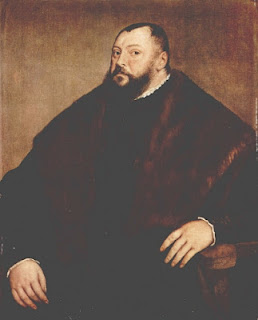 John Frederick (Johann Friedrich), eldest son of John the Steadfast and nephew of Frederick the Wise of Saxony, was born in Torgau on 30 June 1503. He earned the appellation "John the Magnanimous" (der Grossmütige) because of his generous spirit and gracious bearing during trials.
John Frederick studied under George Spalatin and through him became an early supporter of Martin Luther. In 1530, he traveled to the Diet of Augsburg and joined his father in signing the Augsburg Confession. In 1532, he and his half-brother John Ernest (Johann Ernst) succeeded John the Steadfast He became sole Elector of Ernestine Saxony 1542, ruling until 1547.
Impulsive by nature, he lacked the foresight and forbearance of many politicians and he often ignored the wise counsel of Chancellor Brück, who had also worked under his father. Because of his staunch Lutheranism, he couldn't abide Philip of Hesse's desire to extend the Schmalkaldic League to include Swiss and Strasburg reformers. His personal piety also recoiled at Philip's bigamy and he insisted that the League retain a strict Evangelical (Lutheran) theology.
John Frederick set aside the 1541 election of Julius von Pflug to the see of Naumburg-Zeitz, promoting avowed Lutheran Nicholas von Amsdorf in his stead. In 1542, he unilaterally attempted to introduce the Reformation to the city of Wurzen, a city under the joint protection of Electoral and Ducal Saxony. This antagonized Maurice, Duke of Saxony. Only the efforts of Luther and Philip of Hesse were able to avert war between the two Saxonies.
His suspicious nature led him to doubt the efficacy of councils and colloquies and he neglected to attend diets and other meetings where he might have gained support and built alliances.
As Charles V prepared his attack on the Schmalkaldic League, John Frederick was misled and reacted slowly to the Emperor's threat. When the Schmalkaldic War broke out in July 1546, he took his army from Saxony to engage the imperial forces but returned when Maurice, who had joined with Charles V, invaded Electoral Saxony. He was able to repel Maurice and retake most of his lost lands but then suffered defeat at the hands of imperial forces at Mühlberg on 24 April 1547.
Charles V initially condemned him to death for his part in the rebellion against the Holy Roman Empire. However, the sentence was commuted to life in prison when Wittenberg surrendered. Maurice released him in 1552 after he defeated and drove off Charles V. However, his title remained in Maurice's hands.
To the end, John Frederick refused under any circumstances to renounce or compromise his Evangelical understanding of Scripture and his complete adherence to Lutheran doctrine.
 John Frederick (Johann Friedrich), eldest son of John the Steadfast and nephew of Frederick the Wise of Saxony, was born in Torgau on 30 June 1503. He earned the appellation "John the Magnanimous" (der Grossmütige) because of his generous spirit and gracious bearing during trials.
John Frederick studied under George Spalatin and through him became an early supporter of Martin Luther. In 1530, he traveled to the Diet of Augsburg and joined his father in signing the Augsburg Confession. In 1532, he and his half-brother John Ernest (Johann Ernst) succeeded John the Steadfast He became sole Elector of Ernestine Saxony 1542, ruling until 1547.
Impulsive by nature, he lacked the foresight and forbearance of many politicians and he often ignored the wise counsel of Chancellor Brück, who had also worked under his father. Because of his staunch Lutheranism, he couldn't abide Philip of Hesse's desire to extend the Schmalkaldic League to include Swiss and Strasburg reformers. His personal piety also recoiled at Philip's bigamy and he insisted that the League retain a strict Evangelical (Lutheran) theology.
John Frederick set aside the 1541 election of Julius von Pflug to the see of Naumburg-Zeitz, promoting avowed Lutheran Nicholas von Amsdorf in his stead. In 1542, he unilaterally attempted to introduce the Reformation to the city of Wurzen, a city under the joint protection of Electoral and Ducal Saxony. This antagonized Maurice, Duke of Saxony. Only the efforts of Luther and Philip of Hesse were able to avert war between the two Saxonies.
His suspicious nature led him to doubt the efficacy of councils and colloquies and he neglected to attend diets and other meetings where he might have gained support and built alliances.
As Charles V prepared his attack on the Schmalkaldic League, John Frederick was misled and reacted slowly to the Emperor's threat. When the Schmalkaldic War broke out in July 1546, he took his army from Saxony to engage the imperial forces but returned when Maurice, who had joined with Charles V, invaded Electoral Saxony. He was able to repel Maurice and retake most of his lost lands but then suffered defeat at the hands of imperial forces at Mühlberg on 24 April 1547.
Charles V initially condemned him to death for his part in the rebellion against the Holy Roman Empire. However, the sentence was commuted to life in prison when Wittenberg surrendered. Maurice released him in 1552 after he defeated and drove off Charles V. However, his title remained in Maurice's hands.
To the end, John Frederick refused under any circumstances to renounce or compromise his Evangelical understanding of Scripture and his complete adherence to Lutheran doctrine.
Labels: biography, commemoration, elector john, frederick the wise, german history, hagiography, john frederick, lutheranism, martin luther, reformation
¶ 00:00 | 0 comments |
03 March 2016
+ John Frederick I, Elector of Saxony +
3 March AD 1554
John Frederick (Johann Friedrich), eldest son of John the Steadfast and nephew of Frederick the Wise of Saxony, was born in Torgau on 30 June 1503. He earned the appellation "John the Magnanimous" (der Grossmütige) because of his generous spirit and gracious bearing during trials.
John Frederick studied under George Spalatin and through him became an early supporter of Martin Luther. In 1530, he traveled to the Diet of Augsburg and joined his father in signing the Augsburg Confession. In 1532, he and his half-brother John Ernest (Johann Ernst) succeeded John the Steadfast He became sole Elector of Ernestine Saxony 1542, ruling until 1547.
Impulsive by nature, he lacked the foresight and forbearance of many politicians and he often ignored the wise counsel of Chancellor Brück, who had also worked under his father. Because of his staunch Lutheranism, he couldn't abide Philip of Hesse's desire to extend the Schmalkaldic League to include Swiss and Strasburg reformers. His personal piety also recoiled at Philip's bigamy and he insisted that the League retain a strict Evangelical (Lutheran) theology.
John Frederick set aside the 1541 election of Julius von Pflug to the see of Naumburg-Zeitz, promoting avowed Lutheran Nicholas von Amsdorf in his stead. In 1542, he unilaterally attempted to introduce the Reformation to the city of Wurzen, a city under the joint protection of Electoral and Ducal Saxony. This antagonized Maurice, Duke of Saxony. Only the efforts of Luther and Philip of Hesse were able to avert war between the two Saxonies.
His suspicious nature led him to doubt the efficacy of councils and colloquies and he neglected to attend diets and other meetings where he might have gained support and built alliances.
As Charles V prepared his attack on the Schmalkaldic League, John Frederick was misled and reacted slowly to the Emperor's threat. When the Schmalkaldic War broke out in July 1546, he took his army from Saxony to engage the imperial forces but returned when Maurice, who had joined with Charles V, invaded Electoral Saxony. He was able to repel Maurice and retake most of his lost lands but then suffered defeat at the hands of imperial forces at Mühlberg on 24 April 1547.
Charles V initially condemned him to death for his part in the rebellion against the Holy Roman Empire. However, the sentence was commuted to life in prison when Wittenberg surrendered. Maurice released him in 1552 after he defeated and drove off Charles V. However, his title remained in Maurice's hands.
To the end, John Frederick refused under any circumstances to renounce or compromise his Evangelical understanding of Scripture and his complete adherence to Lutheran doctrine.
John Frederick (Johann Friedrich), eldest son of John the Steadfast and nephew of Frederick the Wise of Saxony, was born in Torgau on 30 June 1503. He earned the appellation "John the Magnanimous" (der Grossmütige) because of his generous spirit and gracious bearing during trials.John Frederick studied under George Spalatin and through him became an early supporter of Martin Luther. In 1530, he traveled to the Diet of Augsburg and joined his father in signing the Augsburg Confession. In 1532, he and his half-brother John Ernest (Johann Ernst) succeeded John the Steadfast He became sole Elector of Ernestine Saxony 1542, ruling until 1547.
Impulsive by nature, he lacked the foresight and forbearance of many politicians and he often ignored the wise counsel of Chancellor Brück, who had also worked under his father. Because of his staunch Lutheranism, he couldn't abide Philip of Hesse's desire to extend the Schmalkaldic League to include Swiss and Strasburg reformers. His personal piety also recoiled at Philip's bigamy and he insisted that the League retain a strict Evangelical (Lutheran) theology.
John Frederick set aside the 1541 election of Julius von Pflug to the see of Naumburg-Zeitz, promoting avowed Lutheran Nicholas von Amsdorf in his stead. In 1542, he unilaterally attempted to introduce the Reformation to the city of Wurzen, a city under the joint protection of Electoral and Ducal Saxony. This antagonized Maurice, Duke of Saxony. Only the efforts of Luther and Philip of Hesse were able to avert war between the two Saxonies.
His suspicious nature led him to doubt the efficacy of councils and colloquies and he neglected to attend diets and other meetings where he might have gained support and built alliances.
As Charles V prepared his attack on the Schmalkaldic League, John Frederick was misled and reacted slowly to the Emperor's threat. When the Schmalkaldic War broke out in July 1546, he took his army from Saxony to engage the imperial forces but returned when Maurice, who had joined with Charles V, invaded Electoral Saxony. He was able to repel Maurice and retake most of his lost lands but then suffered defeat at the hands of imperial forces at Mühlberg on 24 April 1547.
Charles V initially condemned him to death for his part in the rebellion against the Holy Roman Empire. However, the sentence was commuted to life in prison when Wittenberg surrendered. Maurice released him in 1552 after he defeated and drove off Charles V. However, his title remained in Maurice's hands.
To the end, John Frederick refused under any circumstances to renounce or compromise his Evangelical understanding of Scripture and his complete adherence to Lutheran doctrine.
Labels: elector john, frederick the wise, german history, john frederick, lutheranism, martin luther, reformation
¶ 00:00 | 0 comments |


