Aardvark Alley

Confessional Lutheran theology, hagiography, philosophy, music, culture, sports, education,
and whatever else is on the fevered mind of Orycteropus Afer
20 August 2017
+ Samuel, Judge and Prophet +
20 August, Old Testament
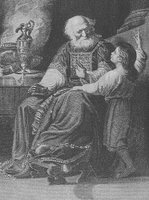 Samuel was the final Old Testament judge. Besides Deborah and an anonymous man in Judges 6:7-10, he is the first prophet mentioned after Moses, although we could consider some of the other judges among the prophets. He lived during the 11th century B.C. Samuel's mother Hannah was unable to have children and she prayed desperately before the tabernacle that the Lord would grant her to bear children to her husband Elkanah, an Ephraimite. Because the Lord heard and answered, Hannah called her son "Samuel," which can be translated "heard by God." This account is in the first chapter of 1 Samuel.
In response to God's love for them, Samuel's parents dedicated him to the Lord's service: "And when she had weaned him, she took him up with her, along with a three-year-old bull, an ephah of flour, and a skin of wine, and she brought him to the house of the Lord at Shiloh. And the child was young. Then they slaughtered the bull, and they brought the child to Eli [the priest in the Lord's house]. And she said, 'Oh, my lord! As you live, my lord, I am the woman who was standing here in your presence, praying to the Lord. For this child I prayed, and the Lord has granted me my petition that I made to him. Therefore I have lent him to the Lord. As long as he lives, he is lent to the Lord.' (1:24-28)" He entered sacred service and trained in the house of the Lord at Shiloh under Eli.
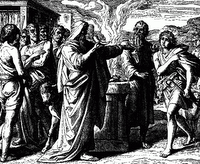 God called Samuel to speak for Him in a series of night messages and established him as His prophet. One of Samuel's most difficult assignments came immediately after his call. Eli was allowing his sons to abuse their priestly offices and through the young man, the Lord condemned their behavior and pronounced God's judgment upon them (see chapter 3).
Samuel's own life didn't always go smoothly. Just as Eli's sons had betrayed their sacred trust as priests, so also "Joel and ... Abijah ..." the sons of Samuel, became unrighteous judges who "took bribes and perverted justice. (8:1-3)" Perceiving this as a problem in God's leadership as well as that of Samuel, Israel demanded that they be given a king such as the surrounding nations had. Samuel warned them that this would lead to even more problems and woes, but when they kept insisting, the Lord told him to do as the people requested.
Samuel anointed Saul to be Israel's first king (10:1). Because of Saul's continuing, flagrant disregard for God's Word, Samuel repudiated Saul's leadership and traveled to the house of Jesse, where he anointed David to be king in place of Saul (16:13).
Samuel's loyalty to God, his spiritual insight, and his ability to inspire others made him one of Israel's great leaders. When he died, "all Israel assembled and mourned for him, and they buried him in his house at Ramah. (25:1a)"
For more on this man of God, see an earlier post that focuses on a series of deceiving appearances in his life.


 Samuel was the final Old Testament judge. Besides Deborah and an anonymous man in Judges 6:7-10, he is the first prophet mentioned after Moses, although we could consider some of the other judges among the prophets. He lived during the 11th century B.C. Samuel's mother Hannah was unable to have children and she prayed desperately before the tabernacle that the Lord would grant her to bear children to her husband Elkanah, an Ephraimite. Because the Lord heard and answered, Hannah called her son "Samuel," which can be translated "heard by God." This account is in the first chapter of 1 Samuel.
In response to God's love for them, Samuel's parents dedicated him to the Lord's service: "And when she had weaned him, she took him up with her, along with a three-year-old bull, an ephah of flour, and a skin of wine, and she brought him to the house of the Lord at Shiloh. And the child was young. Then they slaughtered the bull, and they brought the child to Eli [the priest in the Lord's house]. And she said, 'Oh, my lord! As you live, my lord, I am the woman who was standing here in your presence, praying to the Lord. For this child I prayed, and the Lord has granted me my petition that I made to him. Therefore I have lent him to the Lord. As long as he lives, he is lent to the Lord.' (1:24-28)" He entered sacred service and trained in the house of the Lord at Shiloh under Eli.
 God called Samuel to speak for Him in a series of night messages and established him as His prophet. One of Samuel's most difficult assignments came immediately after his call. Eli was allowing his sons to abuse their priestly offices and through the young man, the Lord condemned their behavior and pronounced God's judgment upon them (see chapter 3).
Samuel's own life didn't always go smoothly. Just as Eli's sons had betrayed their sacred trust as priests, so also "Joel and ... Abijah ..." the sons of Samuel, became unrighteous judges who "took bribes and perverted justice. (8:1-3)" Perceiving this as a problem in God's leadership as well as that of Samuel, Israel demanded that they be given a king such as the surrounding nations had. Samuel warned them that this would lead to even more problems and woes, but when they kept insisting, the Lord told him to do as the people requested.
Samuel anointed Saul to be Israel's first king (10:1). Because of Saul's continuing, flagrant disregard for God's Word, Samuel repudiated Saul's leadership and traveled to the house of Jesse, where he anointed David to be king in place of Saul (16:13).
Samuel's loyalty to God, his spiritual insight, and his ability to inspire others made him one of Israel's great leaders. When he died, "all Israel assembled and mourned for him, and they buried him in his house at Ramah. (25:1a)"
For more on this man of God, see an earlier post that focuses on a series of deceiving appearances in his life.
Labels: biography, commemoration, david, eli, hagiography, hannah, israel, judges, old testament, prophet, samuel, saul
¶ 00:00 | 23 comments |
02 September 2016
+ Hannah +
2 September, Old Testament
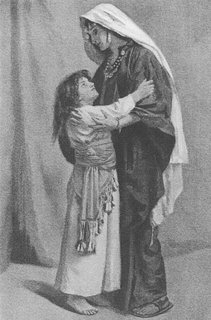 Hannah was the favored wife of Elkanah the Ephraimite. For many years she remained barren, suffering the insults of Elkanah's other wife, Peninnah — even though he said what he could to try comforting Hannah.
Finally the Lord relieved her of her bitterness (1 Samuel 1:6-8). After she poured herself out in prayer before the Tabernacle, the priest Eli sent her on the way with the promise that the Lord would hear and answer her prayer.
While Scripture gives no indication that Eli even knew the specifics of her petitions, his promise to the distraught woman came to pass and she bore a son, whom she named Samuel ("Heard by God"), "for she said, 'I have asked for him from the Lord.' (vv. 9-21)"
After weaning him, Hannah expressed gratitude by returning Samuel for a life of service in the House of the Lord with Elkanah's consent and blessing (1:24-28). Her prayer of thanksgiving (2:1-10) foreshadows the Magnificat, the Song of Mary which would be sung centuries later during the Visitation to her cousin Elizabeth (Luke 1:46-55).
The name Hannah comes from the Hebrew word for "grace" or "favor," the same root as the name John. We remember Hannah for joyfully keeping the vow she made before her son's birth. We also praise our God who lavished His favor upon a childless woman and upon the Children of Israel — both through the gift of Samuel.
 Hannah was the favored wife of Elkanah the Ephraimite. For many years she remained barren, suffering the insults of Elkanah's other wife, Peninnah — even though he said what he could to try comforting Hannah.
Finally the Lord relieved her of her bitterness (1 Samuel 1:6-8). After she poured herself out in prayer before the Tabernacle, the priest Eli sent her on the way with the promise that the Lord would hear and answer her prayer.
While Scripture gives no indication that Eli even knew the specifics of her petitions, his promise to the distraught woman came to pass and she bore a son, whom she named Samuel ("Heard by God"), "for she said, 'I have asked for him from the Lord.' (vv. 9-21)"
After weaning him, Hannah expressed gratitude by returning Samuel for a life of service in the House of the Lord with Elkanah's consent and blessing (1:24-28). Her prayer of thanksgiving (2:1-10) foreshadows the Magnificat, the Song of Mary which would be sung centuries later during the Visitation to her cousin Elizabeth (Luke 1:46-55).
The name Hannah comes from the Hebrew word for "grace" or "favor," the same root as the name John. We remember Hannah for joyfully keeping the vow she made before her son's birth. We also praise our God who lavished His favor upon a childless woman and upon the Children of Israel — both through the gift of Samuel.
Labels: biography, commemoration, eli, hagiography, hannah, judges, magnificat, old testament, prophet, samuel
¶ 00:00 | 0 comments |
20 August 2016
+ Samuel, Judge and Prophet +
20 August, Old Testament
Samuel was the final Old Testament judge. Besides Deborah and an anonymous man in Judges 6:7-10, he is the first prophet mentioned after Moses, although we could consider some of the other judges among the prophets. He lived during the 11th century B.C. Samuel's mother Hannah was unable to have children and she prayed desperately before the tabernacle that the Lord would grant her to bear children to her husband Elkanah, an Ephraimite. Because the Lord heard and answered, Hannah called her son "Samuel," which can be translated "heard by God." This account is in the first chapter of 1 Samuel.
In response to God's love for them, Samuel's parents dedicated him to the Lord's service: "And when she had weaned him, she took him up with her, along with a three-year-old bull, an ephah of flour, and a skin of wine, and she brought him to the house of the Lord at Shiloh. And the child was young. Then they slaughtered the bull, and they brought the child to Eli [the priest in the Lord's house]. And she said, 'Oh, my lord! As you live, my lord, I am the woman who was standing here in your presence, praying to the Lord. For this child I prayed, and the Lord has granted me my petition that I made to him. Therefore I have lent him to the Lord. As long as he lives, he is lent to the Lord.' (1:24-28)" He entered sacred service and trained in the house of the Lord at Shiloh under Eli.
God called Samuel to speak for Him in a series of night messages and established him as His prophet. One of Samuel's most difficult assignments came immediately after his call. Eli was allowing his sons to abuse their priestly offices and through the young man, the Lord condemned their behavior and pronounced God's judgment upon them (see chapter 3).
Samuel's own life didn't always go smoothly. Just as Eli's sons had betrayed their sacred trust as priests, so also "Joel and ... Abijah ..." the sons of Samuel, became unrighteous judges who "took bribes and perverted justice. (8:1-3)" Perceiving this as a problem in God's leadership as well as that of Samuel, Israel demanded that they be given a king such as the surrounding nations had. Samuel warned them that this would lead to even more problems and woes, but when they kept insisting, the Lord told him to do as the people requested.
Samuel anointed Saul to be Israel's first king (10:1). Because of Saul's continuing, flagrant disregard for God's Word, Samuel repudiated Saul's leadership and traveled to the house of Jesse, where he anointed David to be king in place of Saul (16:13).
Samuel's loyalty to God, his spiritual insight, and his ability to inspire others made him one of Israel's great leaders. When he died, "all Israel assembled and mourned for him, and they buried him in his house at Ramah. (25:1a)"
For more on this man of God, see an earlier post that focuses on a series of deceiving appearances in his life.
Samuel was the final Old Testament judge. Besides Deborah and an anonymous man in Judges 6:7-10, he is the first prophet mentioned after Moses, although we could consider some of the other judges among the prophets. He lived during the 11th century B.C. Samuel's mother Hannah was unable to have children and she prayed desperately before the tabernacle that the Lord would grant her to bear children to her husband Elkanah, an Ephraimite. Because the Lord heard and answered, Hannah called her son "Samuel," which can be translated "heard by God." This account is in the first chapter of 1 Samuel.In response to God's love for them, Samuel's parents dedicated him to the Lord's service: "And when she had weaned him, she took him up with her, along with a three-year-old bull, an ephah of flour, and a skin of wine, and she brought him to the house of the Lord at Shiloh. And the child was young. Then they slaughtered the bull, and they brought the child to Eli [the priest in the Lord's house]. And she said, 'Oh, my lord! As you live, my lord, I am the woman who was standing here in your presence, praying to the Lord. For this child I prayed, and the Lord has granted me my petition that I made to him. Therefore I have lent him to the Lord. As long as he lives, he is lent to the Lord.' (1:24-28)" He entered sacred service and trained in the house of the Lord at Shiloh under Eli.
God called Samuel to speak for Him in a series of night messages and established him as His prophet. One of Samuel's most difficult assignments came immediately after his call. Eli was allowing his sons to abuse their priestly offices and through the young man, the Lord condemned their behavior and pronounced God's judgment upon them (see chapter 3).Samuel's own life didn't always go smoothly. Just as Eli's sons had betrayed their sacred trust as priests, so also "Joel and ... Abijah ..." the sons of Samuel, became unrighteous judges who "took bribes and perverted justice. (8:1-3)" Perceiving this as a problem in God's leadership as well as that of Samuel, Israel demanded that they be given a king such as the surrounding nations had. Samuel warned them that this would lead to even more problems and woes, but when they kept insisting, the Lord told him to do as the people requested.
Samuel anointed Saul to be Israel's first king (10:1). Because of Saul's continuing, flagrant disregard for God's Word, Samuel repudiated Saul's leadership and traveled to the house of Jesse, where he anointed David to be king in place of Saul (16:13).
Samuel's loyalty to God, his spiritual insight, and his ability to inspire others made him one of Israel's great leaders. When he died, "all Israel assembled and mourned for him, and they buried him in his house at Ramah. (25:1a)"
For more on this man of God, see an earlier post that focuses on a series of deceiving appearances in his life.
Labels: biography, commemoration, david, eli, hagiography, hannah, judges, old testament, prophet, samuel, saul
¶ 00:00 | 0 comments |
02 September 2015
+ Hannah +
2 September, Old Testament
 Hannah was the favored wife of Elkanah the Ephraimite. For many years she remained barren, suffering the insults of Elkanah's other wife, Peninnah — even though he said what he could to try comforting Hannah.
Finally the Lord relieved her of her bitterness (1 Samuel 1:6-8). After she poured herself out in prayer before the Tabernacle, the priest Eli sent her on the way with the promise that the Lord would hear and answer her prayer.
While Scripture gives no indication that Eli even knew the specifics of her petitions, his promise to the distraught woman came to pass and she bore a son, whom she named Samuel ("Heard by God"), "for she said, 'I have asked for him from the Lord.' (vv. 9-21)"
After weaning him, Hannah expressed gratitude by returning Samuel for a life of service in the House of the Lord with Elkanah's consent and blessing (1:24-28). Her prayer of thanksgiving (2:1-10) foreshadows the Magnificat, the Song of Mary which would be sung centuries later during the Visitation to her cousin Elizabeth (Luke 1:46-55).
The name Hannah comes from the Hebrew word for "grace" or "favor," the same root as the name John. We remember Hannah for joyfully keeping the vow she made before her son's birth. We also praise our God who lavished His favor upon a childless woman and upon the Children of Israel — both through the gift of Samuel.
Hannah was the favored wife of Elkanah the Ephraimite. For many years she remained barren, suffering the insults of Elkanah's other wife, Peninnah — even though he said what he could to try comforting Hannah.Finally the Lord relieved her of her bitterness (1 Samuel 1:6-8). After she poured herself out in prayer before the Tabernacle, the priest Eli sent her on the way with the promise that the Lord would hear and answer her prayer.
While Scripture gives no indication that Eli even knew the specifics of her petitions, his promise to the distraught woman came to pass and she bore a son, whom she named Samuel ("Heard by God"), "for she said, 'I have asked for him from the Lord.' (vv. 9-21)"
After weaning him, Hannah expressed gratitude by returning Samuel for a life of service in the House of the Lord with Elkanah's consent and blessing (1:24-28). Her prayer of thanksgiving (2:1-10) foreshadows the Magnificat, the Song of Mary which would be sung centuries later during the Visitation to her cousin Elizabeth (Luke 1:46-55).
The name Hannah comes from the Hebrew word for "grace" or "favor," the same root as the name John. We remember Hannah for joyfully keeping the vow she made before her son's birth. We also praise our God who lavished His favor upon a childless woman and upon the Children of Israel — both through the gift of Samuel.
Labels: biography, commemoration, eli, hagiography, hannah, judges, magnificat, old testament, prophet, samuel
¶ 00:00 | 0 comments |
20 August 2015
+ Samuel, Judge and Prophet +
20 August, Old Testament
 Samuel was the final Old Testament judge. Besides Deborah and an anonymous man in Judges 6:7-10, he is the first prophet mentioned after Moses, although we could consider some of the other judges among the prophets. He lived during the 11th century B.C. Samuel's mother Hannah was unable to have children and she prayed desperately before the tabernacle that the Lord would grant her to bear children to her husband Elkanah, an Ephraimite. Because the Lord heard and answered, Hannah called her son "Samuel," which can be translated "heard by God." This account is in the first chapter of 1 Samuel.
In response to God's love for them, Samuel's parents dedicated him to the Lord's service: "And when she had weaned him, she took him up with her, along with a three-year-old bull, an ephah of flour, and a skin of wine, and she brought him to the house of the Lord at Shiloh. And the child was young. Then they slaughtered the bull, and they brought the child to Eli [the priest in the Lord's house]. And she said, 'Oh, my lord! As you live, my lord, I am the woman who was standing here in your presence, praying to the Lord. For this child I prayed, and the Lord has granted me my petition that I made to him. Therefore I have lent him to the Lord. As long as he lives, he is lent to the Lord.' (1:24-28)" He entered sacred service and trained in the house of the Lord at Shiloh under Eli.
 God called Samuel to speak for Him in a series of night messages and established him as His prophet. One of Samuel's most difficult assignments came immediately after his call. Eli was allowing his sons to abuse their priestly offices and through the young man, the Lord condemned their behavior and pronounced God's judgment upon them (see chapter 3).
Samuel's own life didn't always go smoothly. Just as Eli's sons had betrayed their sacred trust as priests, so also "Joel and ... Abijah ..." the sons of Samuel, became unrighteous judges who "took bribes and perverted justice. (8:1-3)" Perceiving this as a problem in God's leadership as well as that of Samuel, Israel demanded that they be given a king such as the surrounding nations had. Samuel warned them that this would lead to even more problems and woes, but when they kept insisting, the Lord told him to do as the people requested.
Samuel anointed Saul to be Israel's first king (10:1). Because of Saul's continuing, flagrant disregard for God's Word, Samuel repudiated Saul's leadership and traveled to the house of Jesse, where he anointed David to be king in place of Saul (16:13).
Samuel's loyalty to God, his spiritual insight, and his ability to inspire others made him one of Israel's great leaders. When he died, "all Israel assembled and mourned for him, and they buried him in his house at Ramah. (25:1a)"
For more on this man of God, see an earlier post that focuses on a series of deceiving appearances in his life.
Samuel was the final Old Testament judge. Besides Deborah and an anonymous man in Judges 6:7-10, he is the first prophet mentioned after Moses, although we could consider some of the other judges among the prophets. He lived during the 11th century B.C. Samuel's mother Hannah was unable to have children and she prayed desperately before the tabernacle that the Lord would grant her to bear children to her husband Elkanah, an Ephraimite. Because the Lord heard and answered, Hannah called her son "Samuel," which can be translated "heard by God." This account is in the first chapter of 1 Samuel.In response to God's love for them, Samuel's parents dedicated him to the Lord's service: "And when she had weaned him, she took him up with her, along with a three-year-old bull, an ephah of flour, and a skin of wine, and she brought him to the house of the Lord at Shiloh. And the child was young. Then they slaughtered the bull, and they brought the child to Eli [the priest in the Lord's house]. And she said, 'Oh, my lord! As you live, my lord, I am the woman who was standing here in your presence, praying to the Lord. For this child I prayed, and the Lord has granted me my petition that I made to him. Therefore I have lent him to the Lord. As long as he lives, he is lent to the Lord.' (1:24-28)" He entered sacred service and trained in the house of the Lord at Shiloh under Eli.
God called Samuel to speak for Him in a series of night messages and established him as His prophet. One of Samuel's most difficult assignments came immediately after his call. Eli was allowing his sons to abuse their priestly offices and through the young man, the Lord condemned their behavior and pronounced God's judgment upon them (see chapter 3).Samuel's own life didn't always go smoothly. Just as Eli's sons had betrayed their sacred trust as priests, so also "Joel and ... Abijah ..." the sons of Samuel, became unrighteous judges who "took bribes and perverted justice. (8:1-3)" Perceiving this as a problem in God's leadership as well as that of Samuel, Israel demanded that they be given a king such as the surrounding nations had. Samuel warned them that this would lead to even more problems and woes, but when they kept insisting, the Lord told him to do as the people requested.
Samuel anointed Saul to be Israel's first king (10:1). Because of Saul's continuing, flagrant disregard for God's Word, Samuel repudiated Saul's leadership and traveled to the house of Jesse, where he anointed David to be king in place of Saul (16:13).
Samuel's loyalty to God, his spiritual insight, and his ability to inspire others made him one of Israel's great leaders. When he died, "all Israel assembled and mourned for him, and they buried him in his house at Ramah. (25:1a)"
For more on this man of God, see an earlier post that focuses on a series of deceiving appearances in his life.
Labels: biography, commemoration, david, eli, hagiography, hannah, judges, old testament, prophet, samuel, saul
¶ 00:00 | 0 comments |


